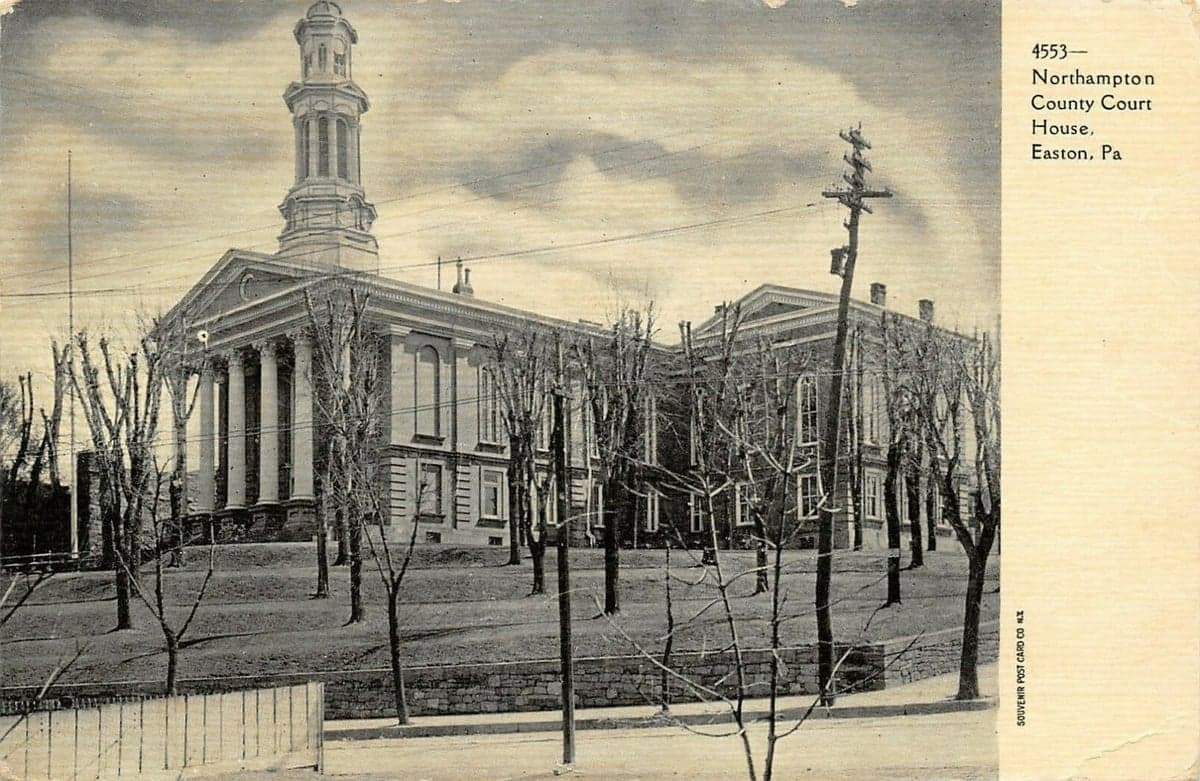
Photo: Wikipedia
Demographics of Northampton County
Affluence Level in Northampton County
A middle-class area roughly in line with national averages across income, home values, education, and employment.
People of Northampton County
Today, Northampton County, Pennsylvania is home to roughly 315,927 residents, a population shaped by over three centuries of industrial and agricultural migration. The county retains a strong Pennsylvania Dutch and Eastern European cultural foundation, particularly in its historic cities like Bethlehem, Easton, and Nazareth, while experiencing a steady increase in Hispanic and Asian communities. Its character is defined by a mix of dense, historic river towns and sprawling suburban developments, with a population that is 73.1% white, 14.9% Hispanic, and 5.3% Black, reflecting a region in gradual but noticeable demographic transition. For those moving in, Northampton County offers a blend of deep-rooted local tradition and the quiet diversification common to mid-Atlantic manufacturing suburbs.
Settlement & growth (pre-1960)
Before European colonization, the area now known as Northampton County was the homeland of the Lenape people, particularly the Munsee-speaking bands who lived along the Delaware and Lehigh Rivers. The first permanent European settlers were German-speaking Protestants, primarily from the Palatinate region, who began arriving in the 1720s and 1730s. These Pennsylvania Dutch farmers established the agricultural backbone of the county, founding communities like Nazareth (settled by Moravians in 1740) and Hecktown, and their descendants remain a significant cultural presence today, especially in the rural townships and boroughs north of Bethlehem.
The 19th century brought a dramatic industrial transformation. The discovery of anthracite coal and the construction of the Lehigh Canal and later railroads turned the Lehigh Valley into a powerhouse of iron and steel production. Bethlehem became the epicenter of this boom, with the Bethlehem Steel Corporation (founded 1857) drawing massive waves of immigrants. Between the 1880s and 1920s, tens of thousands of Eastern and Southern Europeans arrived: Poles, Slovaks, Hungarians, and Italians settled in dense ethnic neighborhoods in Bethlehem's South Side and in Easton's West Ward. These groups built distinct parish churches, social clubs, and fraternal organizations that still define parts of the county's social fabric. At the same time, Irish immigrants came to work on the canals and railroads, settling in places like Freemansburg and along the Lehigh River corridor.
By the early 20th century, Northampton County was a classic industrial melting pot. The county's population grew from about 72,000 in 1870 to over 200,000 by 1950, driven almost entirely by industrial employment. The Great Migration of Black Americans from the South brought a smaller but notable wave to Bethlehem and Easton, primarily between 1940 and 1960, seeking work in the steel mills and related industries. This period cemented the county's identity as a blue-collar, union-strong, ethnically diverse (by European standards) manufacturing hub.
Modern era (post-1965)
The collapse of Bethlehem Steel in the 1970s and 1980s triggered a profound demographic shift. The county lost tens of thousands of manufacturing jobs, and many descendants of the earlier European immigrant groups moved away to the Sun Belt or to suburban counties in New Jersey. However, the 1965 Hart-Cellar Act and subsequent immigration reforms began reshaping the population in new ways. The most significant post-1965 change has been the growth of the Hispanic population, which now stands at 14.9% of the county. This community is primarily of Puerto Rican and Dominican origin, with a smaller but growing Mexican presence. The largest concentrations are in Bethlehem's South Side (historically the steel mill neighborhood) and in Easton, where Hispanic-owned businesses and churches have revitalized older commercial corridors.
Asian and Indian immigration, while smaller, has been notable. East and Southeast Asian communities (1.8% of the population) include a mix of Chinese, Vietnamese, and Korean families, many drawn to professional and healthcare jobs in the Lehigh Valley's expanding medical and education sectors. They are most visible in Bethlehem Township and Hanover Township, where newer subdivisions and shopping centers have grown. The Indian subcontinent community (1.3%) is a more recent arrival, largely post-2000, concentrated among engineers and IT professionals working at companies like B. Braun Medical and Lehigh Valley Health Network, with clusters in Lower Nazareth Township and Forks Township.
Domestically, the county has seen a steady influx of former New Jersey and New York residents seeking lower taxes and more space. This "suburban flight" has driven rapid development in the eastern townships — Palmer Township, Forks Township, and Lower Mount Bethel Township — where new housing developments have attracted mostly white, middle-class families. The Black population (5.3%) remains relatively stable, concentrated in Bethlehem and Easton, with some movement to suburban areas like Bethlehem Township. The county's foreign-born share is just 3.1%, well below the national average, indicating that most demographic change is driven by domestic migration and natural increase among existing minority populations.
The future
Northampton County is projected to become more diverse, but slowly. The Hispanic share is expected to continue rising, potentially reaching 20-22% by 2040, driven by higher birth rates and continued migration from Puerto Rico and the Northeast corridor. The Asian and Indian populations will likely grow modestly as the Lehigh Valley's healthcare and logistics sectors expand, but they will remain small relative to national trends. The white population, while still the majority, is aging and declining in absolute numbers, particularly in the older industrial neighborhoods of Bethlehem and Easton.
Geographically, the county is becoming more suburban and less urban. The historic cities are seeing reinvestment — Easton's downtown has revitalized, and Bethlehem's South Side is attracting new residents — but the fastest growth is in the eastern and northern townships, where farmland is being converted to housing developments. This is creating a cultural divide between the older, more diverse urban cores and the newer, whiter suburbs. The county's cultural identity is evolving from a blue-collar, European-ethnic manufacturing base toward a more mixed identity: part suburban commuter region for the Lehigh Valley and New Jersey, part Hispanic-influenced urban center, with a lingering Pennsylvania Dutch rural character in the north.
For someone moving in now, Northampton County offers a relatively affordable, safe, and family-friendly environment compared to nearby New Jersey or the Philadelphia suburbs. The schools in the suburban townships are generally strong, and the county's location — within 90 minutes of both New York City and Philadelphia — is a major draw. The demographic changes are gradual enough that the area retains a strong sense of local history and community, while becoming slowly more diverse and cosmopolitan. It is not a rapidly transforming region, but one where the next decade will likely see continued suburban expansion, a growing Hispanic presence in the cities, and a slow but steady diversification of the professional class.

* Values derived from national, state, county, city and local statistics and may differ in a specific area. Last updated: 2026-06-22T21:42:36.000Z
Narrative content on this page is AI-generated and may contain mistakes. Verify any details that matter before acting on them.
ReloMaps may earn a commission from affiliate links at no extra cost to you.

