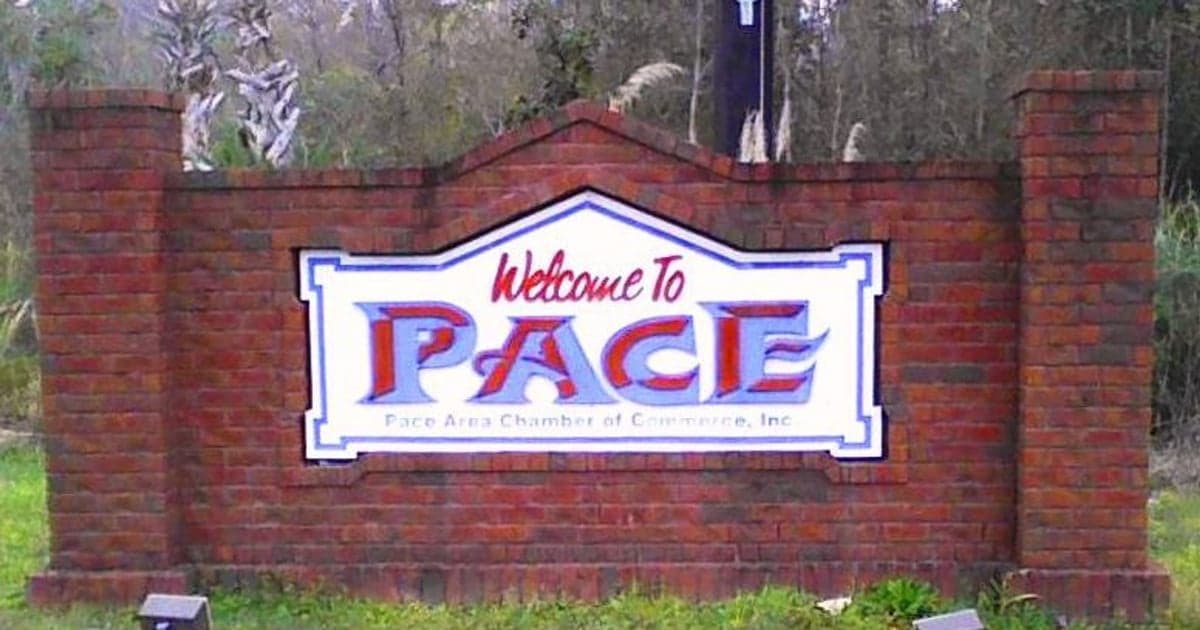
Photo: Wikipedia
Political ClimatePolitical Climate in Pace, FL
District shown is the primary district for this city’s centroid. Cities may span multiple districts.
Inherited from parent county — no local data available.
* Lean and PVI are calculated from Pace, FL’s own 2020 presidential results (precinct returns summed to the city), with 2024 estimated from the surrounding county’s 2020–2024 shift, Cook-style. Sources: state election offices; VEST 2020 precinct results (CC BY 4.0).
Political rankings in Florida
- Most Conservative Cities in Florida
- Most Liberal Cities in Florida
- Best Liberal-Leaning Towns in the South
- Safest Liberal-Leaning Towns in the South
- Safest Conservative-Leaning Towns in the South
- Safest Liberal-Leaning Towns on the East Coast
- Safest Conservative-Leaning Towns on the East Coast
- Affordable Small Towns for Conservatives
- Most Conservative Counties in Florida
- Most Liberal Counties in Florida
Local Political AnalysisPolitical Analysis of Pace, FL
Pace, Florida, leans heavily Republican, with a Cook Partisan Voting Index (PVI) of R+18, making it one of the most conservative corners of the Florida Panhandle. This isn’t a recent shift—it’s been a reliably red area for decades, but the intensity has deepened since the 2016 election. You’ll see Trump signs in yards year-round, and local GOP candidates often run unopposed in primaries. The surrounding Santa Rosa County voted about 68% for Trump in 2020, and the trend hasn’t softened. If you’re a conservative, you’ll feel right at home; if you’re a liberal, you’ll quickly learn which topics to avoid at the neighborhood barbecue.
How it compares
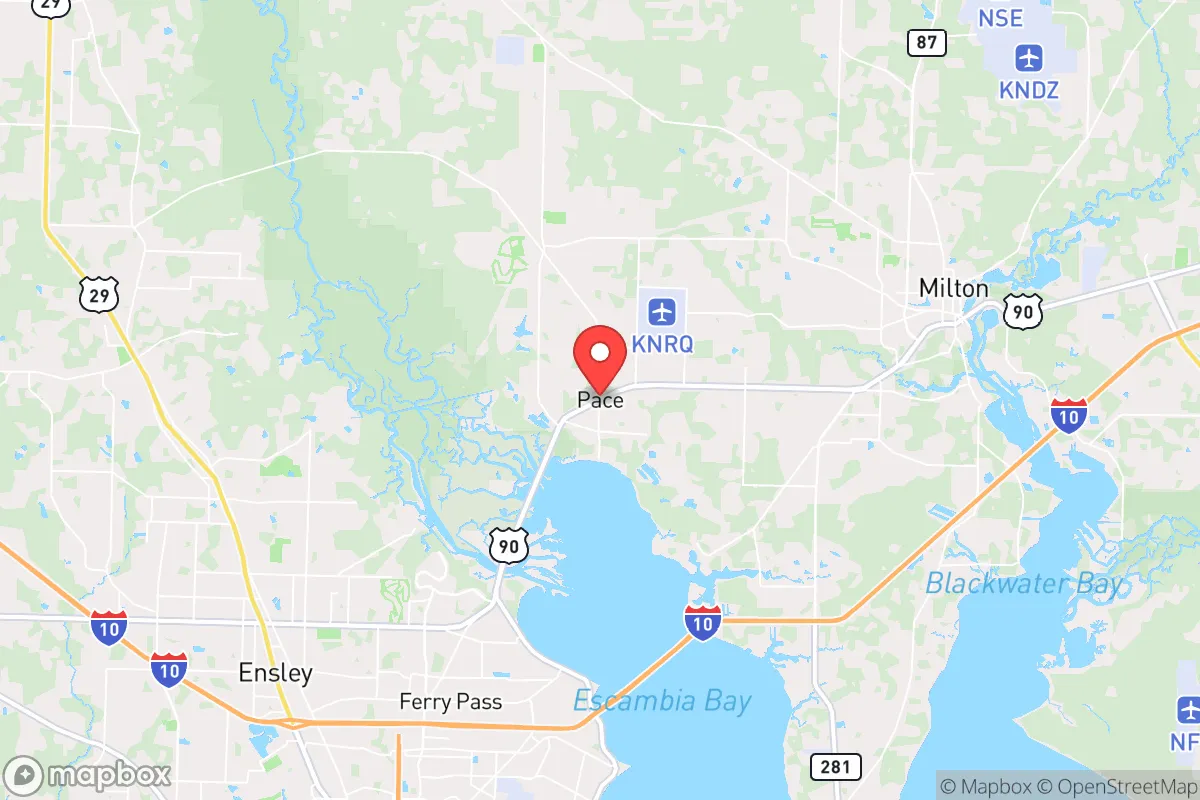
Compared to the rest of Florida, Pace is an outlier. The state as a whole is a purple battleground—think Miami-Dade’s Democratic lean or the swing counties like Pinellas and Hillsborough. Pace, by contrast, sits in a deep-red bubble. Drive 20 minutes south to Pensacola (Escambia County), and you’ll find a more mixed political scene, with a stronger Democratic base in the city proper and around the university. Head east to Milton, the county seat, and it’s still conservative but slightly less intense—more “country club Republican” than Pace’s “pickup truck Republican” vibe. The real contrast is with places like Tallahassee (two hours east) or Orlando (five hours southeast), where you’ll see progressive activism, rainbow flags, and “In This House We Believe” signs. Pace has none of that. It’s a place where the local school board meetings get heated over library books, not over zoning or taxes.
What this means for residents
For conservative residents, Pace offers a sense of cultural alignment. Churches are central to community life, gun rights are widely respected, and local officials—from the county commission to the sheriff—are reliably pro-Second Amendment and anti-tax. Property taxes are low, and there’s little appetite for new public spending unless it’s for roads or law enforcement. For liberal residents, the reality is more isolating. You’ll find few openly progressive neighbors, and political discussions at work or school can feel risky. The local Democratic Party is small and often struggles to field candidates. That said, the area is not hostile in a personal sense—most people are polite and neighborly—but there’s a clear social cost to being outspokenly left-leaning. The trajectory suggests this gap will widen: as Florida’s coastal cities grow more diverse and Democratic, Pace’s rural-suburban character will likely harden its conservative identity.
Culturally, Pace stands apart from much of Florida in its lack of transient, tourist-driven energy. There are no beachfront condos or spring break crowds. Instead, the pace of life (pun intended) is slower, more family-oriented, and deeply tied to local churches and high school football. Policy-wise, the area mirrors the state’s broader conservative trends—no state income tax, limited COVID-era restrictions, and a “live and let live” ethos that mostly applies to gun owners and small businesses. But there’s a distinct local flavor: the county commission recently debated a resolution opposing “critical race theory” in schools, and the sheriff’s office publicly refused to enforce any future federal gun bans. For newcomers, the key takeaway is simple: if you’re looking for a place where your politics will be the norm, Pace delivers. If you’re hoping for a politically diverse community, you’ll find that two hours east in Tallahassee or south in Pensacola.

State Political ClimatePolitical Climate in Florida
State Political AnalysisPolitical Environment in the State
Florida has transformed from a quintessential swing state into a solidly Republican-leaning powerhouse over the last decade, driven by a massive influx of conservative-leaning transplants from the Northeast and Midwest. The state now consistently votes for Republican presidential candidates by margins of 3-5 points, with Governor Ron DeSantis winning re-election in 2022 by a commanding 19-point margin. This shift is not just a blip; it represents a fundamental realignment where the state's growing population of retirees, Latino voters (especially Cuban-Americans and Venezuelans in Miami-Dade), and culturally conservative families have created a durable GOP majority that looks likely to persist.
Urban vs. rural divide
The political map of Florida is a study in stark contrasts. The major urban centers—Miami, Fort Lauderdale, Orlando, Tampa, and Jacksonville—remain Democratic strongholds, with Miami-Dade County still delivering large raw vote totals for Democrats despite trending right. However, the real story is the suburban and exurban explosion of red votes. Counties like St. Johns (south of Jacksonville), Collier (Naples), and Sarasota are among the most reliably Republican in the nation, while the once-purple Palm Beach County has shifted right as wealthy retirees from New York and Connecticut settle in. The rural Panhandle—places like Panama City and Tallahassee's surrounding counties—is deeply conservative, but the real driver of the GOP's dominance is the I-4 corridor between Tampa and Orlando, where fast-growing suburbs like Lakeland and The Villages have flipped from purple to deep red. The urban cores still vote blue, but they are increasingly islands in a sea of red.
Policy environment
Florida's policy environment is aggressively conservative on most fronts, with a low-tax, low-regulation ethos that has been supercharged under the current administration. There is no state income tax, which is a major draw for relocators. Property taxes are moderate, and the state's homestead exemption offers significant relief for primary residences. The regulatory climate is business-friendly, with minimal red tape for new construction and professional licensing. Education policy has been a flashpoint: the state leads the nation in school choice, with a robust voucher program and a heavy emphasis on parental rights in curriculum and library materials. Healthcare is a mixed bag—the state did not expand Medicaid under the Affordable Care Act, and insurance premiums are high, but there is a thriving market for direct primary care and concierge medicine. Election laws have been tightened significantly, with strict voter ID requirements, limits on drop boxes, and a ban on ballot harvesting, which has drawn both praise for security and criticism for accessibility.
Recent policy direction
The last three years have seen a flurry of legislation that has reshaped the state's legal landscape. On gun rights, Florida enacted permitless carry in 2023, allowing any law-abiding adult to carry a concealed firearm without a permit. Self-defense laws are strong, with a robust "Stand Your Ground" statute that has been tested and upheld in court. Parental rights have been codified through the Parental Rights in Education Act (often called "Don't Say Gay"), which restricts classroom instruction on sexual orientation and gender identity through third grade. Speech and privacy have been addressed through a law banning social media censorship of political viewpoints and a strict biometric privacy law. Medical and bodily autonomy saw a major shift with the passage of a 6-week abortion ban in 2023, which replaced the previous 15-week ban. Property rights are strongly protected, with no state-level rent control and a streamlined process for challenging local land-use restrictions. Tax policy remains static—no income tax, and the state has resisted any talk of a sales tax expansion. Ballot access has been tightened, with new restrictions on third-party voter registration groups and a requirement that all mail-in ballots be requested every two years.
Civil unrest & political movements
Florida has seen its share of political flashpoints, but large-scale civil unrest has been relatively contained compared to other states. The 2020 George Floyd protests in Miami and Orlando were significant but did not spiral into the prolonged violence seen in Portland or Seattle. The state has become a magnet for organized conservative activism, with groups like Moms for Liberty and the Florida Citizens Alliance wielding significant influence at the local school board level. Immigration politics are front and center, with Governor DeSantis making national headlines for transporting migrants to Martha's Vineyard and signing a tough anti-sanctuary city law that requires local law enforcement to cooperate with ICE. There is no serious secession or nullification movement, but there is a strong strain of "state sovereignty" rhetoric, particularly around COVID-19 mandates and federal environmental regulations. Election integrity remains a hot-button issue, with the state's new election police force—the Office of Election Crimes and Security—actively investigating and prosecuting voter fraud cases, though critics argue it is a solution in search of a problem. A new resident will notice that political bumper stickers and yard signs are common, and conversations about politics are more open and less tense than in deeply divided swing states.
Projection
Looking ahead five to ten years, Florida's political trajectory points toward continued conservative dominance, but with some important caveats. The state is growing by roughly 300,000 people per year, and the vast majority of new residents are coming from high-tax, high-regulation states like New York, California, and Illinois. These transplants are not all conservative—many are moderate Democrats fleeing crime and taxes—but they tend to be more culturally conservative than the voters they left behind. The Latino vote, particularly in Miami-Dade, is likely to continue trending Republican as younger Cuban-Americans and Venezuelans prioritize economic freedom and anti-socialism rhetoric. However, the state's growing population of young professionals in Orlando and Tampa could eventually shift the needle leftward, especially on social issues like abortion and marijuana legalization. The biggest wildcard is climate change: rising sea levels and stronger hurricanes could eventually dampen growth in coastal areas, potentially slowing the in-migration that has fueled the GOP's rise. For now, a relocator should expect Florida to remain a solidly red state with a conservative policy environment that is unlikely to see major reversals in the next decade.
For a new resident, the bottom line is this: Florida offers a stable, predictable political environment that leans heavily conservative on taxes, regulation, and cultural issues. If you are a conservative, you will find your values reflected in state law and local governance. If you are a liberal, you will find vibrant blue cities like Miami and Orlando where you can live comfortably, but you will have limited influence on state-level policy. The state's political trajectory is clear, and anyone moving here should be comfortable with the idea that Florida will remain a red state for the foreseeable future.
* Values derived from national, state, county, city and local statistics and may differ in a specific area. Last updated: 2026-11-08T00:46:37.000Z
Narrative content on this page is AI-generated and may contain mistakes. Verify any details that matter before acting on them.
ReloMaps may earn a commission from affiliate links at no extra cost to you.

