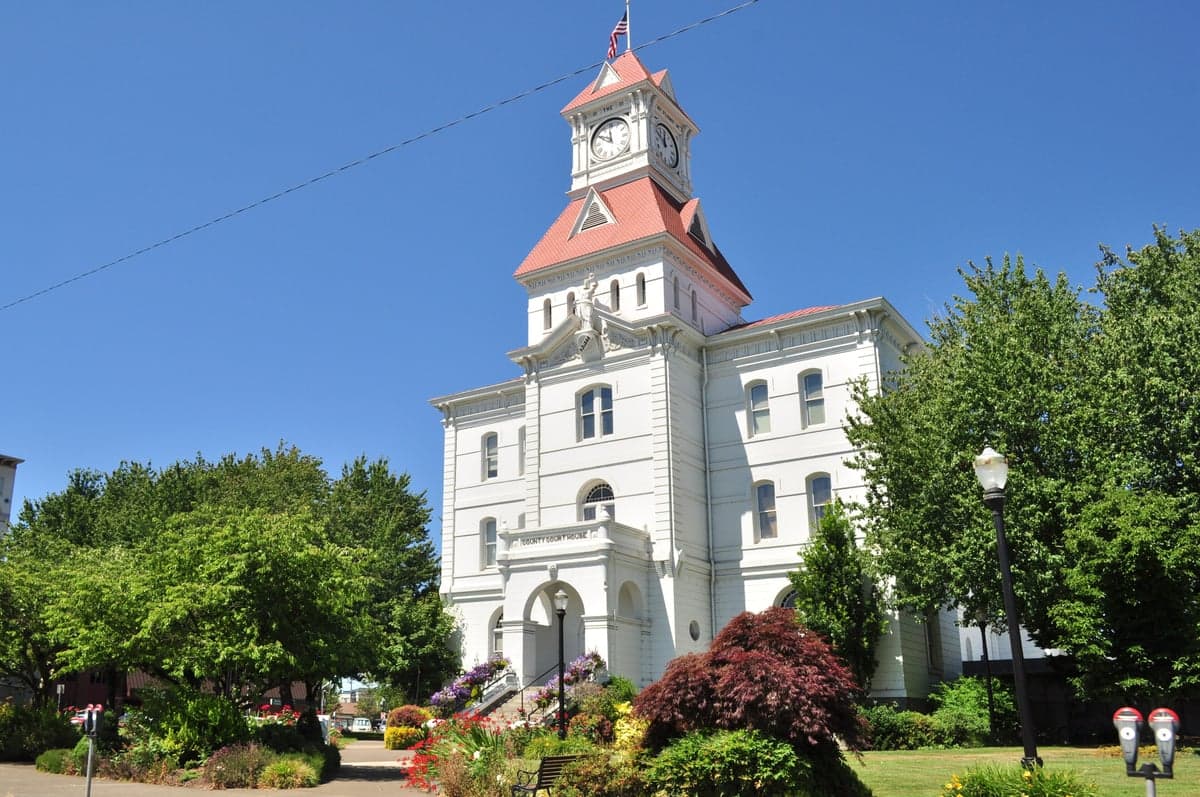
Photo: Wikipedia
Political ClimatePolitical Climate in Benton County
Showing district-level results — no local-only data available.
Local Political AnalysisPolitical Analysis of Benton County
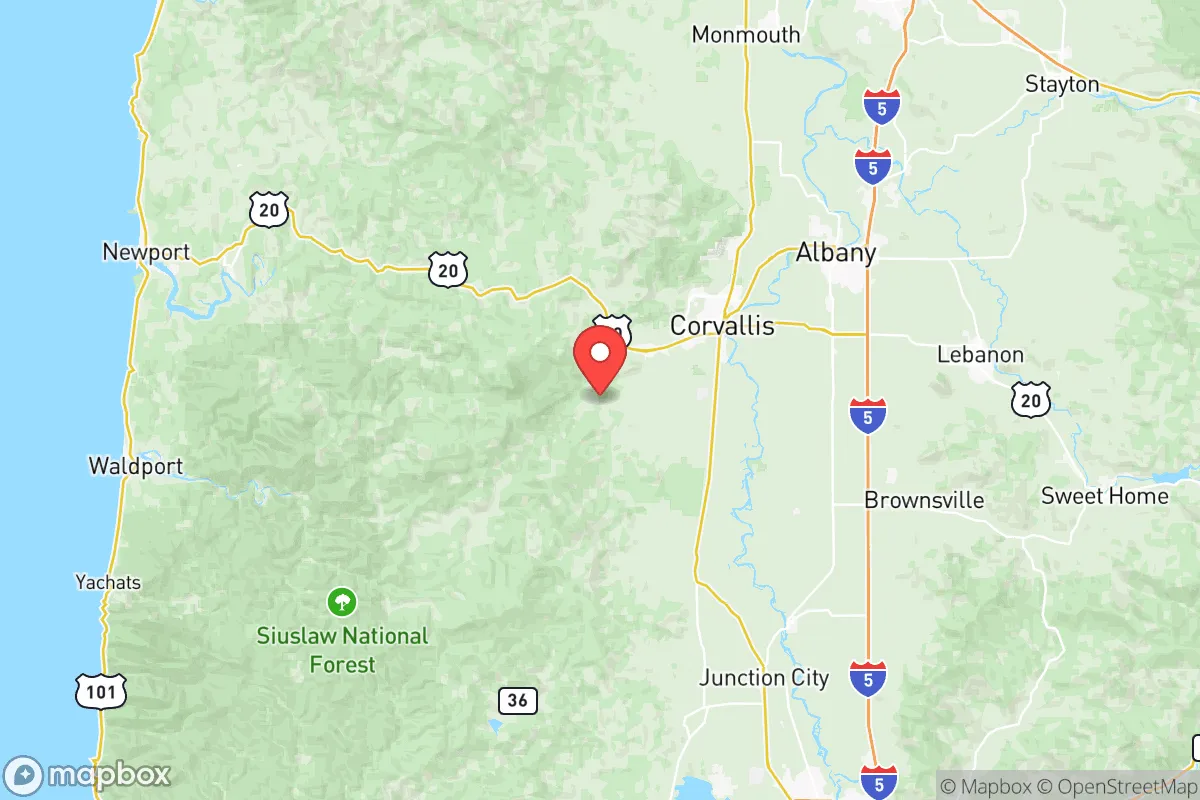
Benton County leans Democratic with a Cook PVI of D+6, making it slightly less blue than Oregon’s statewide D+8 — but that number hides a sharp internal divide. Corvallis, home to Oregon State University, is deep blue, while rural towns like Monroe, Alsea, and parts of Philomath vote reliably Republican. If you’ve lived here long enough, you know that the county’s politics are really a tale of two valleys: the Willamette corridor near Corvallis and the timber-and-farm communities to the south and west.
How it compares
Statewide, Oregon has drifted further left over the last decade, but Benton County has stayed fairly stable at D+6. The gap between county and state is small — two points — but it matters. Corvallis’s Democratic margins are enormous (often 70-80% in city precincts), but those are offset by rural precincts that go 60-65% Republican. Philomath, the county’s second-largest town, is the bellwether: its precincts often split within a few points, and it can swing between parties in local races. Monroe and Alsea are consistently red, with Trump winning those precincts by 20+ points in 2020. What that means is Benton County as a whole is blue, but not as blue as Portland or Eugene — and it’s been resistant to the statewide leftward shift you see in Multnomah County.
What this means for residents
For liberal residents, especially in Corvallis, daily life feels decidedly progressive: City Council and county commission seats are held by Democrats, public discourse leans left, and policies on climate, housing, and social equity are actively pursued. But if you drive 15 minutes south to Monroe, the vibe flips. Conservative residents there have strong community institutions — churches, granges, local FFA chapters — and they hold most local offices in those unincorporated areas. The practical reality is that county-wide elections are competitive at the margins: Democrats usually win, but they have to appeal to rural voters on timber policy and property rights to avoid getting blown out in the southern precincts. School board and land-use votes often split along geographic lines, with Corvallis pushing denser development and rural areas resisting.
A notable cultural and policy distinction is the county’s land-use planning. Benton County has some of the most restrictive rural zoning in the state, a legacy of the 1970s Oregon land-use system. That’s popular in Corvallis but deeply resented in Monroe and Alsea, where ranchers and loggers see it as a constraint on livelihoods. Similarly, the county’s approach to cannabis regulation — permissive in Corvallis, stricter in unincorporated areas — reflects the same urban-rural split. Over the long term, I see the county staying D+6-ish, because OSU keeps drawing young liberals while the rural communities remain stubbornly Republican. The tension is baked in, and for both sides, it means you can’t take anything for granted — which honestly makes politics feel more real here than in a deep-blue echo chamber.

State Political ClimatePolitical Climate in Oregon
State Political AnalysisPolitical Environment in the State
Oregon has a statewide partisan lean of D+8, but that number flattens a deeply complex political landscape that's been shifting for the last two decades. The state is basically two nations: the liberal Willamette Valley corridor—Portland, Salem, Eugene—and a vast, conservative rural and eastern expanse where ranchers, timber workers, and small-town voters feel increasingly alienated. Over the past 20 years, the Democratic coalition has consolidated power through population growth in the metro areas, while rural counties have trended hard red, creating one of the sharpest urban-rural divides in the country. For a conservative relocator, Oregon is a place where your experience of local governance will depend almost entirely on which zip code you choose.
Urban vs. rural divide
The political map of Oregon is a story of two corridors. The I-5 corridor from Portland down through Salem and Eugene is the Democratic engine, with Multnomah County (Portland) delivering about 75% of its vote to Democratic presidential candidates and Lane County (Eugene) not far behind. Washington County west of Portland, once a swing area, has shifted blue as tech workers from Intel, Nike, and a growing semiconductor cluster have moved in. On the flip side, the entire eastern half of the state—places like Bend, Redmond, Klamath Falls, and Pendleton—votes Republican by wide margins. Deschutes County (Bend) is actually the most interesting battleground: it flipped red in 2020 after trending purple for years, as Californians and Portland refugees moved in but then voted conservative on local issues. The southern Oregon coast, places like Coos Bay and Brookings, is reliably red, while the northern coast around Astoria leans blue. The urban-rural split is not just about population—it's about a gulf in worldview that shapes every policy debate.
Policy environment
Oregon's policy environment is a mixed bag that reflects its progressive urban core. The state has no sales tax, which sounds great until you realize property taxes are moderate-to-high and income taxes are among the steepest in the nation—top marginal rate of 9.9%. The regulatory environment is heavy: land-use laws (the famous Urban Growth Boundary) restrict development and drive up housing costs, especially in Portland and Bend. Education policy leans progressive, with a state-funded preschool program and free community college for many, but K-12 outcomes are mediocre relative to spending. Healthcare: Oregon has a robust Medicaid expansion and a state-run insurance marketplace, but rural residents complain about access and wait times. Election laws are heavily mail-in ballot (every registered voter gets a ballot) and same-day voter registration, which Democrats argue boosts turnout and conservatives argue invites fraud—though no widespread fraud has been documented in Oregon's vote-by-mail system since its adoption in 1998.
Recent policy direction
The last five years have seen Oregon swing hard in one direction on several fronts, then partially recoil. On gun law, the state passed Measure 114 in 2022, requiring a permit to purchase and banning magazines over 10 rounds—it's currently blocked by courts. Second Amendment activists are furious, and many rural sheriffs have pledged not to enforce it. On parental and education rights, Oregon passed a law that prohibits school districts from notifying parents if their child changes gender identity or pronouns at school, a flashpoint that energized conservative voters in the 2024 midterms. Speech and privacy: Oregon has strong privacy laws, including a 2023 data privacy act, but also a law that criminalizes "bias incidents" broadly, which some worry chills free speech. Medical autonomy: the state has legalized recreational cannabis and psychedelic-assisted therapy (psilocybin), but also mandates vaccine requirements for schoolchildren that are stricter than many states. Property rights are constrained by the aforementioned land-use laws, and a 2024 law effectively bans new gas stations in much of the Willamette Valley as part of a push to electrify transportation. Tax policy: the 2023 legislature passed a major corporate tax increase via the "Student Success Act," which funds education but adds cost to businesses. Ballot access is easy: same-day registration, automatic voter registration with DMV visits, and no voter ID requirement for in-person voting (though ID is needed for registration).
Civil unrest & political movements
Oregon has a long history of political volatility. The 2020 Portland protests—George Floyd demonstrations that turned into nightly clashes with federal agents—made international headlines and shifted the national image of the city. Since then, organized leftist movements (like antifa and the tenants' rights group PDX Action) have lower visibility but remain active. On the right, the Oregon Citizens Alliance and later the III% security militia have been vocal, especially in rural areas. The state's sanctuary law—which prohibits local law enforcement from cooperating with federal immigration authorities—dates to 1987 and remains a point of tension, especially in counties like Jackson (Medford) and Josephine (Grants Pass) that passed symbolic anti-sanctuary resolutions. Election integrity controversies: after the 2020 election, some rural counties considered joining a "secession" movement to form a "Greater Idaho," where eastern Oregon would join the red state of Idaho. That movement has gained real traction, with multiple county commissions passing resolutions in favor of the idea, though the state legislature has not taken it up seriously. A new resident in a suburb like West Linn (blue-leaning) versus a town like John Day (deep red) will see very different levels of political signage, activist presence, and everyday cultural tension.
Projection
Over the next 5-10 years, Oregon is likely to remain a Democratic-controlled state at the statewide level, but the margin will narrow. In-migration from California and other blue states has slowed, and the exodus to Texas and Idaho has accelerated, with Oregon losing about 10,000 more residents per year to domestic out-migration than it gains since 2021. The demographic shift is toward a more Republican-leaning electorate in the suburbs around Portland and in Bend, as housing costs push younger liberal voters out and attract remote workers who care about lower crime and taxes. The Greater Idaho movement won't succeed, but it will keep rural-urban tensions high. Expect continued legislative battles over gun laws, education parental rights, and land use. The most likely outcome: Oregon will become a lean-D+4 state within a decade, with the Portland metro still solidly blue but the rest of the state reddening. A conservative family moving to Sherwood or Wilsonville will find a reasonably comfortable suburban environment with good schools and a red-leaning city council—a far cry from the Portland headlines.
Bottom line for a new resident: If you're conservative, you can live a good life in Oregon by choosing a red-leaning town like Redmond, Canby, or Sandy. You'll pay high income taxes and deal with state-level policies you dislike, but local politics will often align with your values. If you're liberal, Portland and Eugene offer a dense ecosystem of progressive policy and culture. Either way, be prepared for the state's political character to feel like a battleground—Oregonians are passionate, engaged, and not shy about telling you exactly where they stand. Choose your zip code carefully, and you'll find your people.
* Values derived from national, state, county, city and local statistics and may differ in a specific area. Last updated: 2026-06-23T04:29:23.000Z
Narrative content on this page is AI-generated and may contain mistakes. Verify any details that matter before acting on them.
ReloMaps may earn a commission from affiliate links at no extra cost to you.

