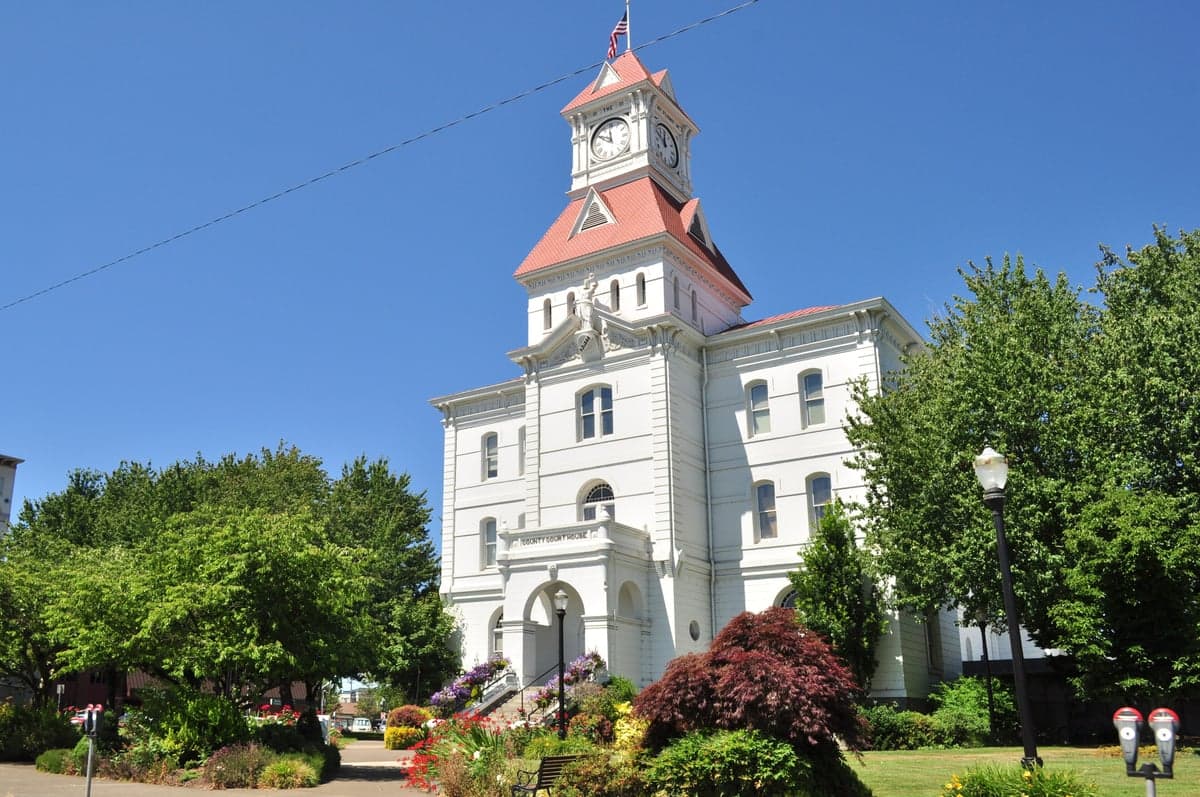
Photo: Wikipedia
Personal Sovereignty in Benton County
Viable for self-reliance. Generally workable, though some barriers may limit total independence.
What does Personal Sovereignty tell us?
Personal Sovereignty measures your capacity for self-reliance and independence with minimal government friction. Higher scores mean fewer barriers between you and the way you want to live... but it assumes you have the space you need and good neighbors.
What does this tell us?
Personal Sovereignty measures your capacity for self-reliance and independence with minimal government friction. Higher scores mean fewer barriers between you and the way you want to live... but it assumes you have the space you need and good neighbors.
State Policy
Energy independence: Importer (35% of energy produced in-state)
Personal Liberty
Homesteading

Personal Liberty Analysis
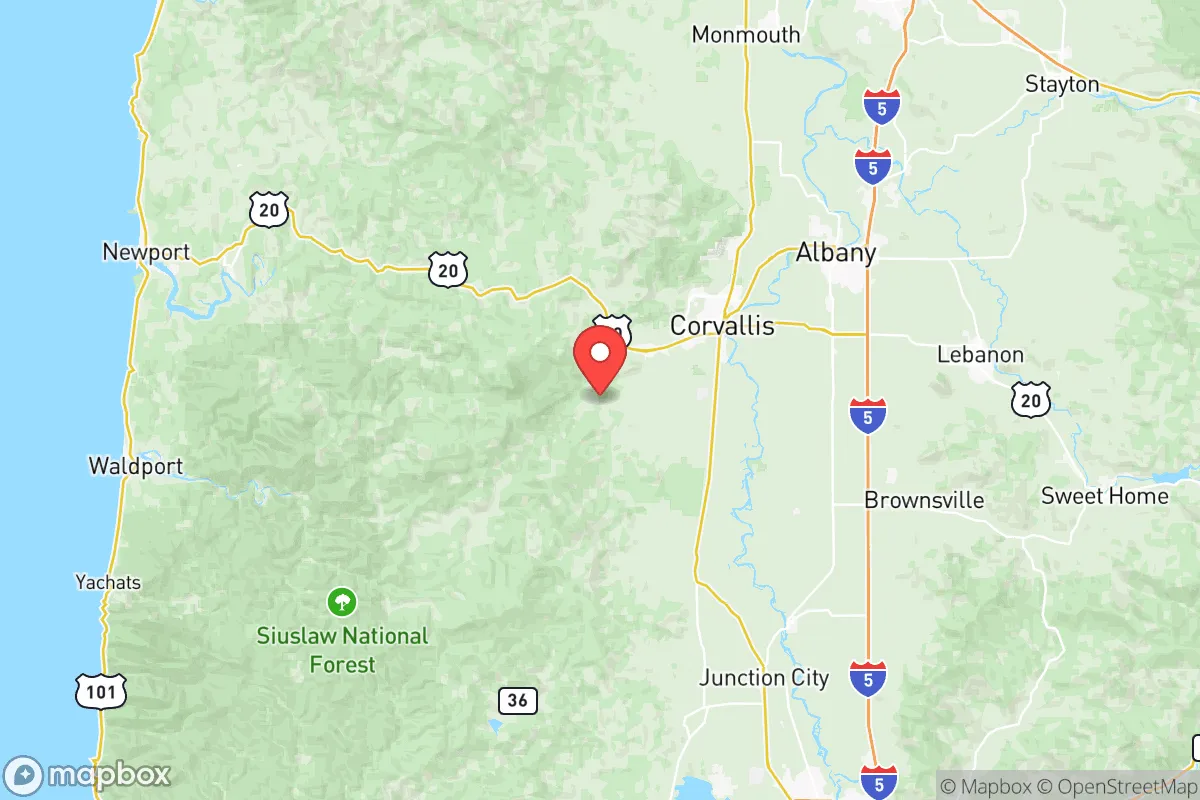
Benton County, Oregon, offers a nuanced autonomy environment that blends Oregon’s progressive state-level framework with a distinctly rural, self-reliant local character. The county’s personal sovereignty landscape is shaped by the competing influences of Corvallis, a university town with a dense, liberal-leaning population, and the surrounding unincorporated areas and smaller towns like Philomath, Monroe, and Alpine, where personal freedoms—from firearm ownership to property use—are more lightly regulated in practice. For individuals and families prioritizing independence, the key is understanding where within Benton County you choose to ground your life, as local enforcement patterns and land-use rules vary significantly from the Corvallis city limits to the farmlands and forests beyond.
Tax burden and regulatory posture: a split between state and local
Oregon has no statewide sales tax, which provides a direct benefit to personal spending freedom, but it offsets this with a state income tax that is among the highest in the nation, topping 9.9% for top earners as of 2026. Benton County levies a property tax rate that is moderate for the state, with the effective rate hovering around 1.1% of assessed value. However, Oregon’s property tax system, governed by Measure 5 and Measure 50, caps annual increases on assessed value at 3%, which protects long-term owners from steep spikes but can create disparities for new buyers. The regulatory posture in unincorporated Benton County is lighter than in Corvallis, where building permits, zoning overlays, and environmental review processes are more stringent. In towns like Philomath and Monroe, the county’s planning department applies state land-use goals that prioritize farmland protection, meaning that dividing a large parcel for homesteading requires navigating Oregon’s strict land-use system, which is one of the most prescriptive in the West. Small-acreage farms (5-20 acres) are common outside urban growth boundaries, and the county’s zoning code allows accessory dwelling units (ADUs) and limited home businesses with fewer hurdles than in the Corvallis urban zone.
Self-defense and gun law specifics: rural freedom within a state framework
Oregon generally requires a permit to carry a concealed handgun in public, obtained from the county sheriff’s office. Benton County is shall-issue, meaning the sheriff must approve a permit if the applicant meets basic eligibility criteria—no additional “good cause” or character references are required. The permit process typically takes 4-6 weeks for residents and costs about $50 for a four-year license. Open carry is legal in unincorporated areas and most towns, though Corvallis has an ordinance that prohibits open carry within city parks and public buildings. In practice, the gun culture differs: in Alpine and Blodgett, open carry is common and socially unremarkable, while in Corvallis it is rare and can draw police attention. There is no county-level magazine capacity ban or assault weapon restriction, though statewide ballot measures have tightened background checks and waiting periods (currently 7 days for handguns). No state preemption law exists, so cities can pass their own gun ordinances, but Benton County does not actively enforce any restrictions beyond Corvallis’s park and building bans. For new residents, the standout fact is that the county does not require a firearms safety course for a concealed carry permit, though practical training is strongly recommended.
Self-reliance and homesteading viability: lot sizes, zoning, and off-grid feasibility
Homesteading viability in Benton County is highly location-dependent. Outside the urban growth boundary, minimum lot sizes in exclusive farm use (EFU) zones are typically 20-80 acres, making small-scale self-sufficiency challenging for those seeking a few acres. However, rural residential zones—common near Philomath and Monroe—allow parcels as small as 2 to 5 acres, which are far more accessible. Off-grid systems are legal but regulated: Oregon bans graywater discharge to the surface but permits graywater systems for irrigation under state administrative rules; rainwater catchment is legal for non-potable uses without a permit. Solar panels are common and can be installed with a simple building permit, but net metering with Pacific Power (the region’s dominant utility) is capped at 25 kW for residential systems. Well drilling for irrigation requires a water right permit, which can take months to years to process, a major bottleneck for new homesteaders. Septic systems are mandatory for any dwelling not connected to municipal sewer, and Benton County’s environmental health division enforces standards that require percolation tests and setbacks from wells and property lines. Alpine and Blodgett are the most homestead-friendly areas, with lower land costs and greater tolerance for unorthodox structures like yurts or tiny houses, though official code requires minimum square footage for permanent dwellings (typically 500 square feet for a single-family home).
Personal liberties: parental rights, medical autonomy, speech, and property
Oregon is among the most permissive states for medical autonomy, with legalized medical and recreational cannabis, a robust right-to-try law, and no state-level vaccine mandates for adults (school attendance requires certain childhood immunizations unless exempted). Parental rights in the education system are less absolute than in some other states: Oregon has enacted laws requiring school districts to adopt curricula that include LGBTQ+ history and to allow students to use chosen names and pronouns without parental notification—a point of tension in conservative-leaning areas like Monroe and Philomath, where local school boards have resisted some state directives. Speech and property rights are generally robust, with no county-level hate speech ordinances, though Corvallis’s noise and sign ordinances are more restrictive than in the unincorporated areas. Property rights are complicated by Oregon’s statewide land-use goals (Goal 3 and Goal 4) that limit development on farm and forest land, but within rural residential zones, owners can install fences, build structures, and keep livestock with minimal red tape. The county does not have rent control, preempting any city-level efforts, which protects landlord autonomy but offers no price caps for renters. For those valuing medical choice, the presence of Corvallis’s cannabis dispensaries and proximity to Eugene’s broader alternative medicine scene add convenience.
Overall, Benton County offers a mixed autonomy profile: it is less sovereign than Texas or Idaho in terms of state-level tax burden and land-use restrictions, but more permissive than California or Washington in self-defense and medical privacy. The county’s rural towns—especially Alpine, Blodgett, and Monroe—provide a practical sanctuary for families and individuals who accept Oregon’s higher taxes in exchange for a relatively light local regulatory footprint, reasonable gun access, and a culture that welcomes off-grid experimentation within statutory bounds. For the reader who prioritizes personal sovereignty above all, the county’s unincorporated areas are a viable choice, but only if the state’s income tax and land-use system are seen as tolerable constraints rather than dealbreakers.

* Values derived from national, state, county, city and local statistics and may differ in a specific area. Last updated: 2026-06-23T04:29:23.000Z
Narrative content on this page is AI-generated and may contain mistakes. Verify any details that matter before acting on them.
ReloMaps may earn a commission from affiliate links at no extra cost to you.

