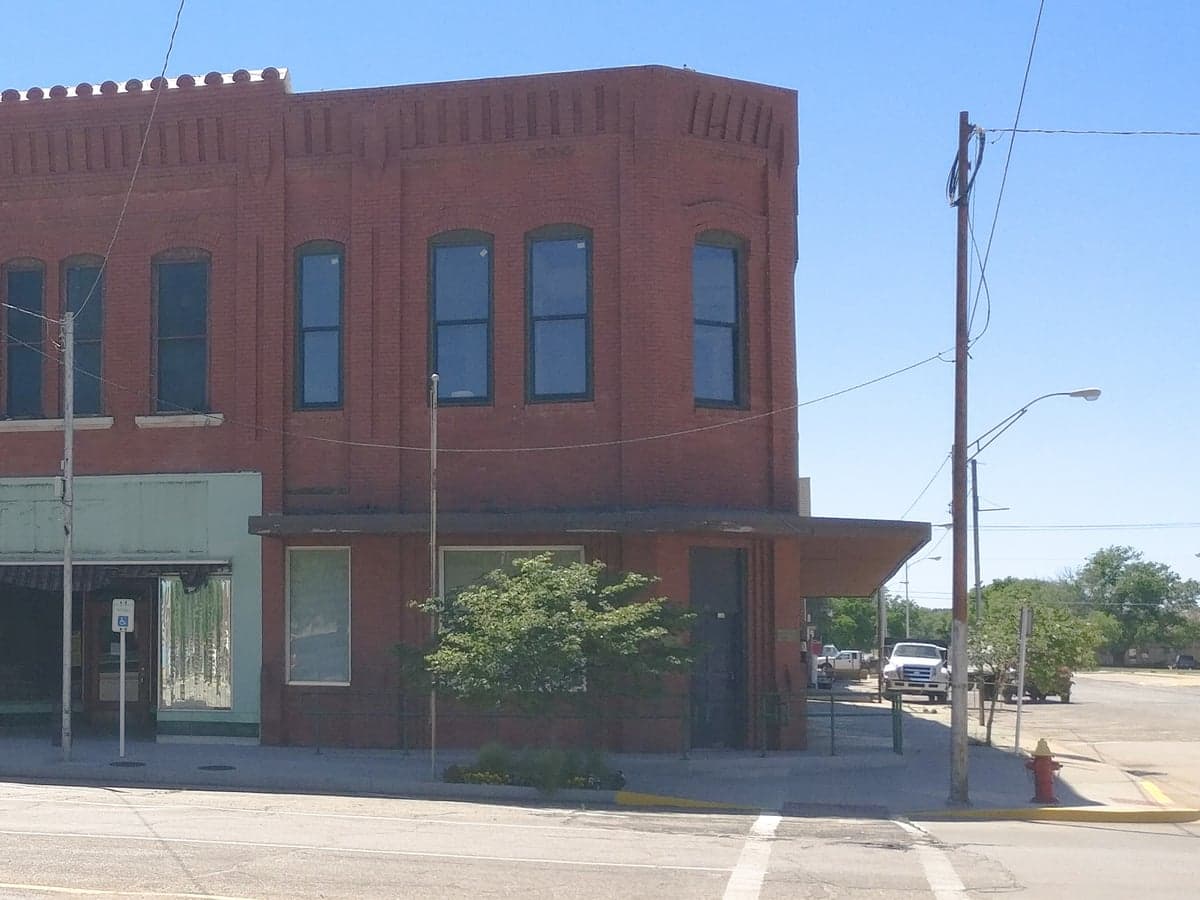
Photo: Wikipedia
Political ClimatePolitical Climate in Woods County
Showing county-level results — no local-only data available.
Lean and PVI are calculated from this county’s 2020 and 2024 presidential results, Cook-style.
Political rankings in Oklahoma
- Most Conservative Cities in Oklahoma
- Most Liberal Cities in Oklahoma
- Best Liberal-Leaning Towns in the South
- Safest Liberal-Leaning Towns in the South
- Safest Conservative-Leaning Towns in the South
- Affordable Small Towns for Conservatives
- Most Affordable Liberal-Leaning Small Towns in the U.S.
- Safest Conservative-Leaning Cities in the U.S.
- Most Conservative Counties in Oklahoma
- Most Liberal Counties in Oklahoma
Local Political AnalysisPolitical Analysis of Woods County
Woods County, Oklahoma, is about as reliably Republican as a place gets in this part of the country, with a Cook Partisan Voting Index (PVI) of R+23 — a full five points redder than the state of Oklahoma’s already deep R+18. That gap isn’t just a number; it reflects a political culture that’s been consistently conservative for generations, with very little of the suburban drift or urban-leftward pull you see in places like Oklahoma City or Tulsa. The county’s voting patterns have held steady through the Trump and post-Trump eras, and there’s no real sign of a blue shift on the horizon — if anything, the rural tilt has gotten a bit more pronounced since 2020.
How it compares
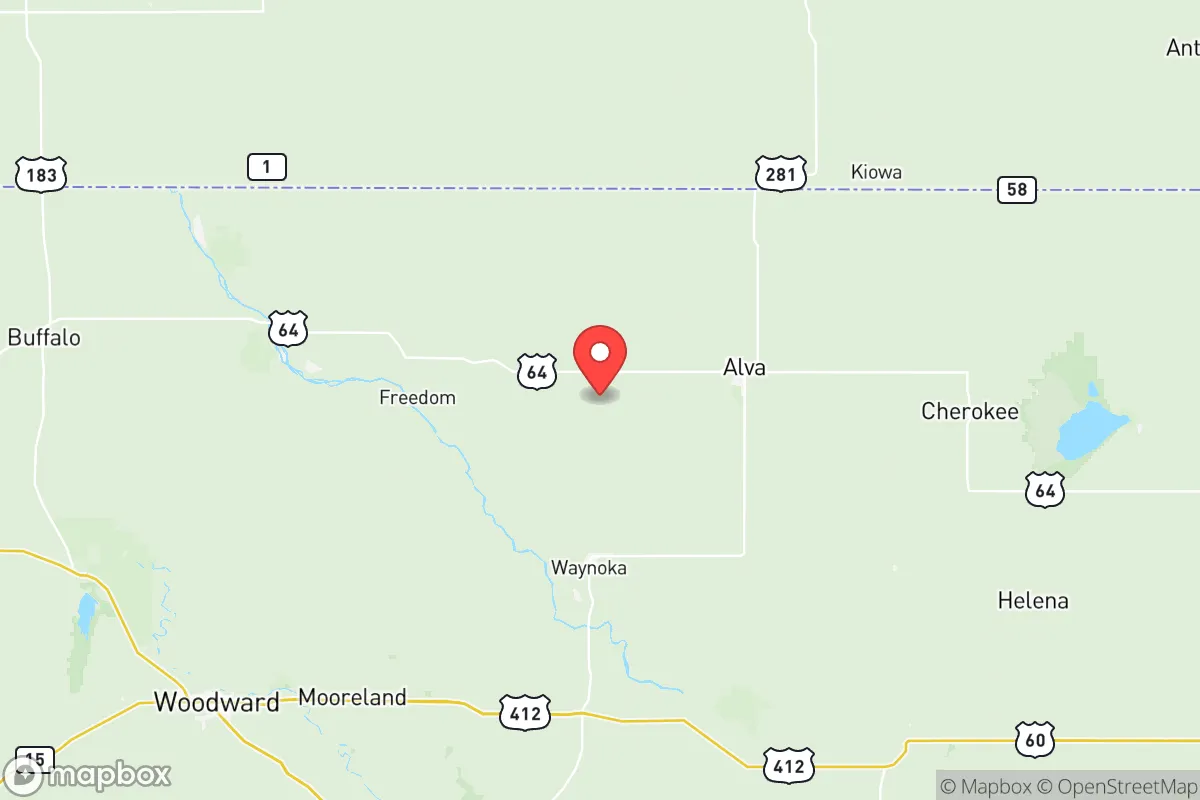
When you stack Woods County against the state as a whole, the difference comes down to a few key factors. Oklahoma’s R+18 PVI is already deeply red, but it’s tempered by the presence of Oklahoma City and Tulsa, which have Democratic-leaning precincts and a growing number of swing voters. Woods County doesn’t have that counterweight. The county seat, Alva, is the largest town (around 5,000 people) and votes solidly Republican, though it’s not a monolith — the precincts around Northwestern Oklahoma State University in Alva occasionally show a few more votes for Democrats, especially in presidential years, but they’re still comfortably red. Smaller towns like Waynoka and Freedom are even more conservative, with precincts that routinely go 80% or more Republican. There are no real “blue” towns in Woods County; the closest you get is a handful of precincts in Alva that might hit 35-40% Democratic in a good year for the party. The rural precincts outside town limits are among the reddest in the state, often voting 85-90% Republican. So while Oklahoma overall has a few competitive legislative districts, Woods County is a safe Republican stronghold where primaries are often the real election.
What this means for residents
For conservative residents, the political climate is comfortable and affirming. Local offices — county commissioners, sheriff, school board — are almost always held by Republicans, and policy debates tend to focus on tax cuts, Second Amendment rights, and agricultural issues. There’s little pressure to moderate views, and the local GOP is active but not fractious. For liberal or moderate residents, the reality is more about finding your niche. You won’t face open hostility, but you’ll be in a clear minority. The university in Alva provides a small, informal community of more progressive-leaning folks — faculty, students, and a few local professionals — who tend to socialize among themselves. Political conversations in public settings like coffee shops or church gatherings are generally avoided unless you know the room well. That said, Woods County isn’t a place where political differences lead to personal conflict; it’s more a quiet, unspoken understanding that most people share the same basic outlook.
Culturally, Woods County stands apart from the state’s urban centers in a few notable ways. There’s a stronger emphasis on local self-reliance and a wariness of state-level mandates, whether from Oklahoma City or Washington. The county’s economy is heavily tied to agriculture and oil, so policy debates around land use, water rights, and energy regulation hit closer to home than in metro areas. You’ll also find a more pronounced libertarian streak — folks here tend to support the GOP, but they’re skeptical of big government in any form, including from Republican-controlled state government. That’s a subtle but real distinction from, say, suburban Tulsa, where the GOP is more establishment-friendly. Looking ahead, the county’s political trajectory seems locked in: as long as the rural-urban divide in Oklahoma widens, Woods County will only get redder relative to the state, even if the state itself stays deeply conservative.

State Political ClimatePolitical Climate in Oklahoma
State Political AnalysisPolitical Environment in the State
Oklahoma is one of the most reliably Republican states in the country, with a Cook Partisan Voting Index of R+18, meaning it votes about 18 points more Republican than the national average in presidential elections. The state hasn’t voted for a Democratic presidential candidate since 1968, and over the last 20 years, the GOP has tightened its grip from a competitive two-party state in the 1990s to a deep-red stronghold where Republicans hold every statewide office and supermajorities in both legislative chambers. The shift has been driven by the collapse of the old Democratic “Big Tent” in rural areas, the rise of evangelical and Tea Party activism, and a steady exodus of moderate voters from the state’s urban cores.
Urban vs. rural divide
The political map of Oklahoma is a classic story of islands of blue in a sea of red. Oklahoma City and Tulsa are the two major Democratic-leaning metros, but even they are not uniformly liberal. Oklahoma County (Oklahoma City) voted for Joe Biden in 2020 by a narrow 50-48 margin, but that’s largely driven by the city’s core and its growing Hispanic and African American populations. The suburbs around OKC—places like Edmond and Yukon—are solidly Republican, often voting 65-70% for GOP candidates. Tulsa County is more competitive, with the city of Tulsa itself trending blue in recent cycles, but the surrounding suburbs like Broken Arrow and Jenks are deeply conservative. The rest of the state—the vast rural plains, the Panhandle, and the southeastern “Little Dixie” region—is overwhelmingly Republican. Counties like Texas County in the Panhandle and McCurtain County in the southeast routinely deliver 80-85% of the vote for GOP candidates. The only other notable blue pocket is Norman, home to the University of Oklahoma, which has become a reliably Democratic stronghold in Cleveland County, though the county as a whole still leans Republican.
Policy environment
Oklahoma’s policy environment is a textbook example of conservative governance. The state has a flat income tax of 4.75% (down from 5% in 2022), with ongoing legislative efforts to phase it out entirely. There is no state property tax on vehicles, and property taxes are among the lowest in the nation, capped at a 5% annual increase. The regulatory posture is business-friendly, with a right-to-work law and a tort reform system that caps non-economic damages in civil cases. Education policy is a major flashpoint: the state has one of the most expansive school voucher programs in the country, the Oklahoma Parental Choice Tax Credit, which provides up to $7,500 per student for private school tuition. Public school funding, however, has lagged, leading to teacher walkouts in 2018 and ongoing debates about teacher pay. Healthcare is a mixed bag: Oklahoma expanded Medicaid under the Affordable Care Act via a 2020 ballot measure (State Question 802), but the state has also passed some of the strictest abortion laws in the nation, including a near-total ban with no exceptions for rape or incest. Election laws are restrictive: voter ID is required, absentee ballot drop boxes are banned, and early voting is limited to three days before an election.
Recent policy direction
The last five years have seen Oklahoma move aggressively to the right on nearly every front. On gun rights, the state enacted permitless carry in 2019 (HB 2597), allowing any adult who can legally possess a firearm to carry it openly or concealed without a license. On education and parental rights, the 2022 “Save Women’s Sports Act” (HB 6156) bans transgender girls from female school sports, and the 2023 “Parental Bill of Rights” (HB 1440) requires schools to notify parents of any curriculum involving sexual orientation or gender identity. On speech and privacy, the state passed a law in 2023 (SB 613) that prohibits social media platforms from censoring users based on political viewpoints, though it faces legal challenges. Medical and bodily autonomy is heavily restricted: abortion is banned at conception, and the state has also restricted gender-affirming care for minors (SB 613, 2023). Property rights are generally strong, with no statewide zoning mandates, though local governments retain control over land use. Taxation is trending downward: the flat income tax rate has been cut from 5% to 4.75%, and a 2024 law (HB 1020) sets a trigger for further cuts if revenue targets are met. Voting access has tightened: a 2023 law (SB 440) requires absentee ballots to be notarized or accompanied by a copy of a voter ID, and early voting hours were reduced in some counties.
Civil unrest & political movements
Oklahoma has seen its share of political activism, though it rarely reaches the level of sustained unrest seen in larger states. The 2018 teacher walkout, which lasted nine days and drew tens of thousands to the state capitol, was the largest labor action in state history and forced a $6,000 teacher pay raise. On the right, the “Oklahoma Freedom Caucus” has become a powerful force in the legislature, pushing for further tax cuts, school vouchers, and restrictions on immigration. Immigration politics are a hot-button issue: the state passed a law in 2024 (HB 4156) that makes it a state crime to be in Oklahoma without legal status, mirroring Texas’s SB 4, though it is currently blocked by court order. There is no sanctuary city movement in Oklahoma; in fact, several cities like Enid and Woodward have passed resolutions declaring themselves “Second Amendment Sanctuary” cities. Election integrity controversies have been minimal compared to other states, though the 2020 election saw some local GOP officials question the results, and the state legislature passed a 2021 law (SB 440) that tightened absentee ballot rules. Secession or nullification rhetoric is rare, but there is a strong strain of “state sovereignty” sentiment, particularly in rural areas.
Projection
Over the next 5-10 years, Oklahoma is likely to remain deeply Republican, but the margins may narrow slightly as the urban cores of Oklahoma City and Tulsa continue to grow and diversify. The Hispanic population, concentrated in the Panhandle and Oklahoma City, is growing rapidly and could shift some counties from deep red to light red. However, the rural exodus—young people leaving for college and not returning—will likely accelerate the GOP’s dominance in the legislature, as rural districts become even more conservative. The biggest wildcard is the state’s budget: if the oil and gas industry (which still accounts for about 25% of state revenue) takes a hit, the push for further tax cuts could stall, and education funding could become a crisis. In-migration is modest compared to Texas or Florida, but retirees and remote workers from California and Colorado are trickling into places like Stillwater and Bartlesville, drawn by low housing costs. A new resident moving in now should expect a state that is politically stable but increasingly polarized between the urban islands and the rural sea.
For a new resident, the bottom line is this: if you’re a conservative, you’ll find a state that largely aligns with your values on taxes, guns, education, and regulation. If you’re a liberal, you’ll find a state where your vote counts most in Oklahoma City, Tulsa, or Norman, but where state policy will often feel hostile to your views. Either way, the cost of living is low, the politics are predictable, and the pace of change is slow—for better or worse. Just know that the culture wars are real here, and they show up in everything from school board meetings to the state legislature.
* Values derived from national, state, county, city and local statistics and may differ in a specific area. Last updated: 2026-10-27T19:20:28.000Z
Narrative content on this page is AI-generated and may contain mistakes. Verify any details that matter before acting on them.
ReloMaps may earn a commission from affiliate links at no extra cost to you.

