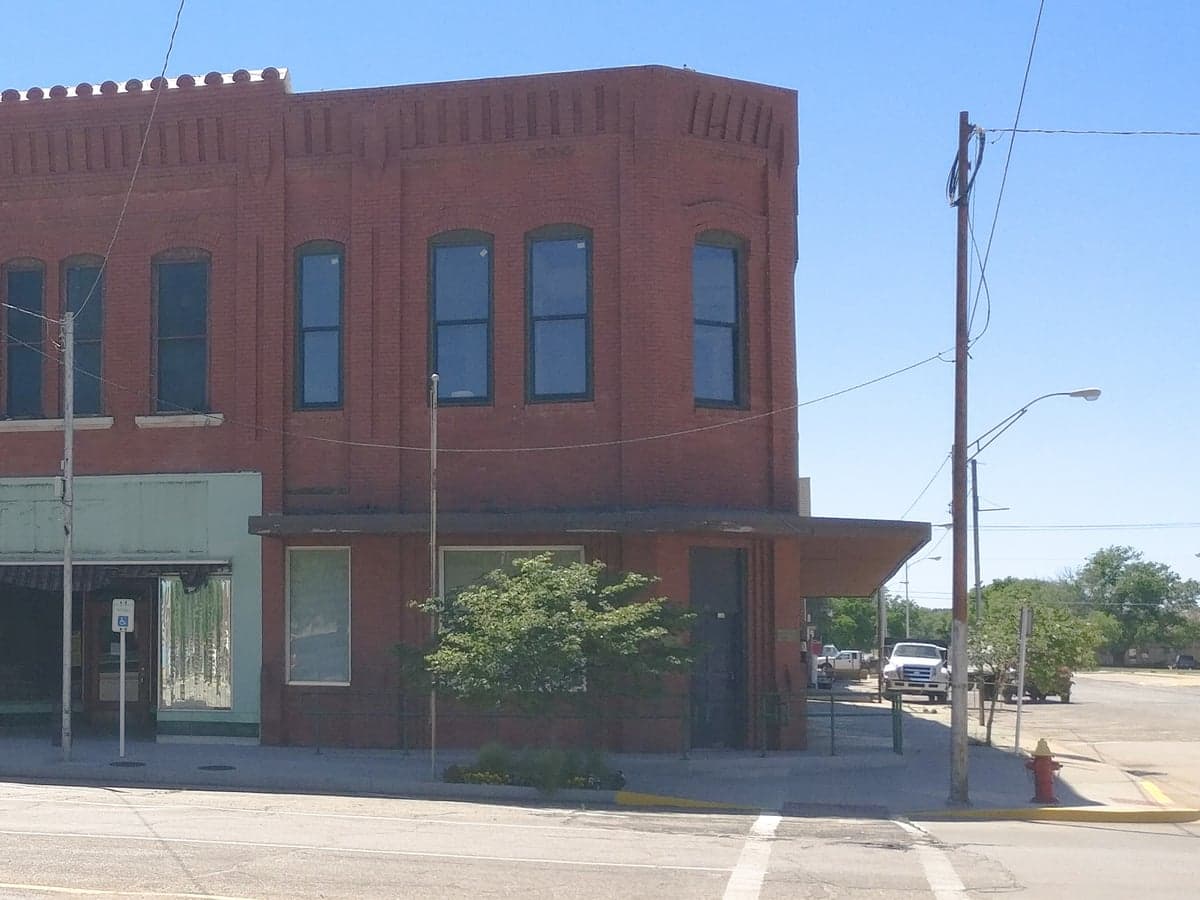
Photo: Wikipedia
Personal Sovereignty in Woods County
Strong independent fundamentals that actively favor personal liberty and low regulation.
What does Personal Sovereignty tell us?
Personal Sovereignty measures your capacity for self-reliance and independence with minimal government friction. Higher scores mean fewer barriers between you and the way you want to live... but it assumes you have the space you need and good neighbors.
What does this tell us?
Personal Sovereignty measures your capacity for self-reliance and independence with minimal government friction. Higher scores mean fewer barriers between you and the way you want to live... but it assumes you have the space you need and good neighbors.
State Policy
Energy independence: Net exporter (277% of energy produced in-state)
Personal Liberty
Homesteading

Personal Liberty Analysis
Woods County, Oklahoma, offers a notably high degree of personal sovereignty, grounded in the state’s strong constitutional protections for individual rights and a deeply ingrained culture of self-reliance. For those prioritizing autonomy—whether in financial decisions, self-defense, or lifestyle choices—the county presents a regulatory environment that is among the lightest in the nation, with local governance in towns like Alva, Waynoka, and Freedom generally deferring to individual judgment rather than imposing prescriptive codes. This analysis examines the specific dimensions of personal sovereignty in Woods County, from tax burden and gun laws to homesteading feasibility and personal liberties, providing a concrete picture for relocation-minded individuals and families.
Tax burden and regulatory posture: How Woods County compares to surrounding areas
Woods County benefits from Oklahoma’s consistently low-tax framework, which is a cornerstone of its appeal for freedom-oriented residents. The state’s individual income tax rate is a flat 4.75%, and there is no state-level property tax on personal property like vehicles or business inventory. Property taxes in Woods County are among the lowest in the nation, with effective rates typically ranging from 0.6% to 0.9% of assessed home value—far below the national average of roughly 1.1%. For a $200,000 home, annual property taxes might be around $1,200 to $1,800, a fraction of what one would pay in neighboring Kansas or Colorado. Sales tax in the county seat of Alva is 8.5% (state plus local), while smaller communities like Capron and Freedom have slightly lower combined rates. The regulatory posture is equally light: there is no county-wide zoning ordinance in unincorporated areas, meaning residents in places like Alabaster Caverns State Park vicinity or rural stretches near the Cimarron River can build, fence, or operate small businesses without seeking multiple permits. Towns like Alva and Waynoka do have basic municipal codes for building and land use, but these are minimal compared to urban centers—no sign ordinances, no noise restrictions beyond state nuisance laws, and no special use permits for home-based enterprises. This combination of low taxes and minimal regulation makes Woods County a strong fit for those seeking to maximize financial and operational independence.
Self-defense and gun law specifics: What Oklahoma’s permitless carry means for residents
Oklahoma is a permitless carry state, and Woods County fully reflects that posture. Since November 2019, any law-abiding adult 21 or older can carry a firearm openly or concealed without a license, permit, or training requirement. This applies throughout the county, including in Alva, Waynoka, and Freedom, with the usual exceptions for federal buildings, schools (though Oklahoma allows licensed carry on school property with permission), and private property where the owner prohibits firearms. The county’s sheriff’s office in Alva is known for a pro-Second Amendment stance, and there are no local ordinances that restrict magazine capacity, firearm types, or ammunition sales. For those who want a concealed carry permit for reciprocity with other states, the Oklahoma Self-Defense Act license is available through the county sheriff—processing times are typically under 30 days. Stand-your-ground laws are in effect, meaning there is no duty to retreat before using deadly force in self-defense if you are lawfully present. Castle doctrine protections extend to vehicles and workplaces, not just homes. This legal framework, combined with a rural culture where firearms are common for hunting and personal protection, creates an environment where self-defense rights are both legally robust and socially normalized. Residents in more remote areas like the Glass Mountains region or near the Great Salt Plains often keep firearms for predator control and property protection without any bureaucratic hurdles.
Self-reliance and homesteading viability: Lot sizes, zoning, and off-grid feasibility
Woods County is exceptionally well-suited for homesteading and off-grid living, particularly outside the incorporated towns. Unincorporated areas have no county-wide zoning, so residents can build alternative housing (tiny homes, earthships, yurts) as long as they meet basic state building codes for safety—which are minimally enforced in practice. Lot sizes vary widely: agricultural parcels of 40 to 160 acres are common and affordable, with raw land prices often between $500 and $1,500 per acre. Smaller homesteads of 5 to 20 acres are available near Alva and Waynoka for those wanting proximity to town services. Off-grid systems are fully legal: solar panels, wind turbines, rainwater catchment, and composting toilets are all permitted without special permits, though a well permit is required for groundwater extraction (a straightforward process through the Oklahoma Water Resources Board). Septic systems must meet state health department standards, but these are not onerous. The county does not enforce any “right to light” or aesthetic covenants in rural areas, so residents can install wind turbines or solar arrays without neighbor objections. Towns like Freedom and Capron have no municipal utility requirements, meaning you can live entirely off-grid if you choose. The only practical constraint is water availability: the county averages about 25 inches of rainfall annually, so rainwater harvesting requires adequate storage. Overall, Woods County offers one of the most permissive environments for self-reliant living in the southern Plains, with minimal government interference in how you use your land.
Personal liberties: Parental rights, medical autonomy, speech, and property
Oklahoma law provides strong protections for parental rights, and Woods County’s local culture reinforces this. Parents have broad authority over their children’s education, medical decisions, and upbringing, with the state’s Parental Rights in Education Act (2022) ensuring that schools cannot withhold information from parents or promote curricula without parental consent. Homeschooling is straightforward: parents file a simple intent form with the local school district (Alva Public Schools or Waynoka Public Schools, for example) and provide annual evidence of progress—no standardized testing or curriculum approval required. Medical autonomy is similarly robust: Oklahoma has no state vaccine mandate for adults, and while school vaccine requirements exist, philosophical exemptions are available. The county’s healthcare infrastructure is limited (Alva has a small hospital, Share Medical Center, and a few clinics), so residents often travel to Enid or Woodward for specialized care, but this also means less regulatory oversight of alternative or complementary medicine. Free speech and assembly are protected under both the U.S. and Oklahoma constitutions, and Woods County has no local ordinances restricting public expression—no noise ordinances that could limit protests or gatherings, no sign codes that restrict political messaging. Property rights are strongly defended: the county has no rent control, no short-term rental restrictions (Airbnb is common in Alva and near the Great Salt Plains), and no tree ordinances or historic preservation overlays. Eminent domain is rarely used outside of utility easements. This combination of legal protections and light-touch governance makes Woods County a haven for those who value personal discretion in family, health, and property matters.
In the broader context of personal sovereignty, Woods County ranks among the most freedom-oriented counties in Oklahoma, which itself is a top-tier state for individual liberty. Compared to the heavily regulated environments of the West Coast or Northeast, or even the moderate restrictions of neighboring Kansas, Woods County offers a noticeably lighter touch across every dimension: taxes are lower, gun laws are more permissive, homesteading is easier, and personal liberties are more robustly protected. For a single individual or family seeking to maximize autonomy—whether through off-grid living, homeschooling, or simply minimizing government interaction—Woods County presents a compelling option, particularly in the rural stretches around Alva, Waynoka, Freedom, and Capron, where the regulatory footprint is smallest and the culture of self-reliance is strongest.

* Values derived from national, state, county, city and local statistics and may differ in a specific area. Last updated: 2026-10-27T19:20:28.000Z
Narrative content on this page is AI-generated and may contain mistakes. Verify any details that matter before acting on them.
ReloMaps may earn a commission from affiliate links at no extra cost to you.

