Photo: Wikipedia
Demographics of Woods County
Affluence Level in Woods County
A low-income area with significant economic hardship. Household wealth and educational attainment are well below national averages.
People of Woods County
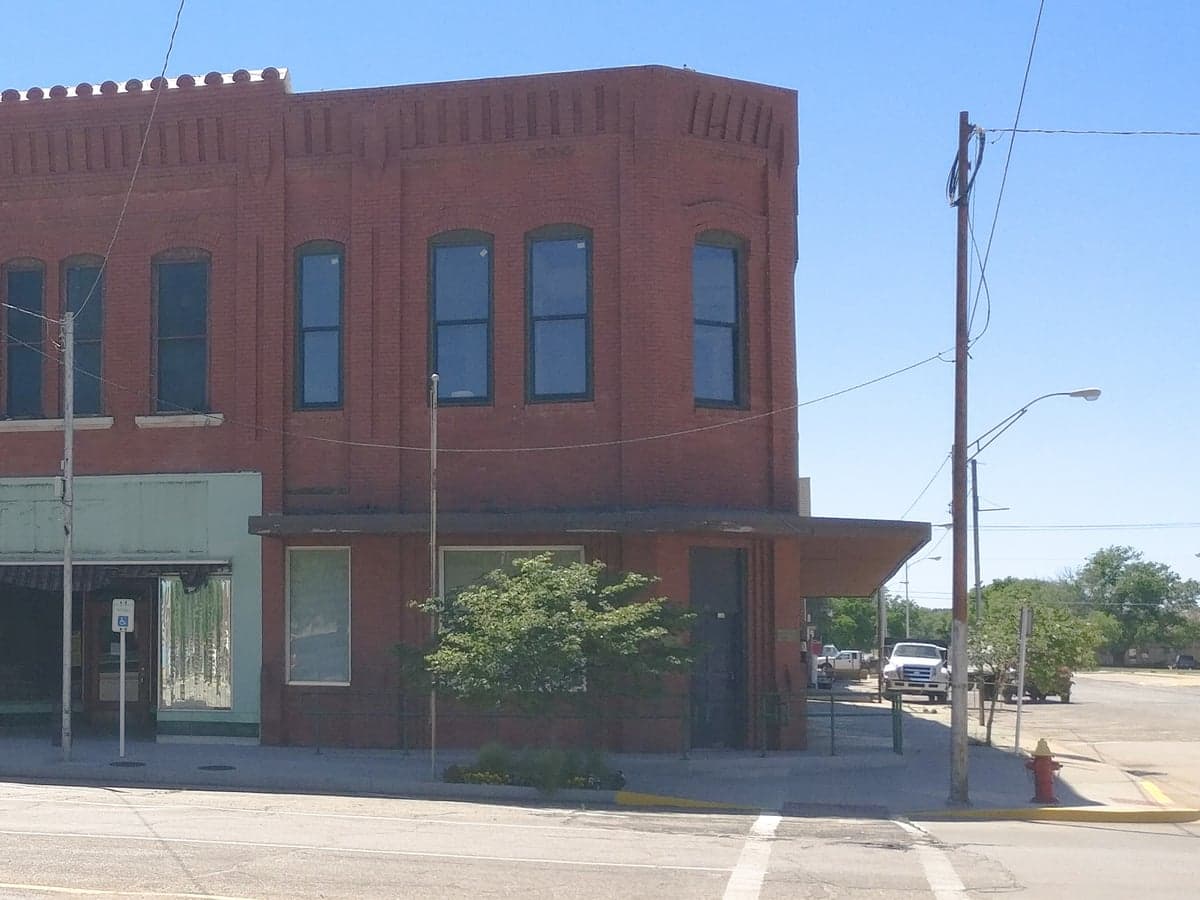
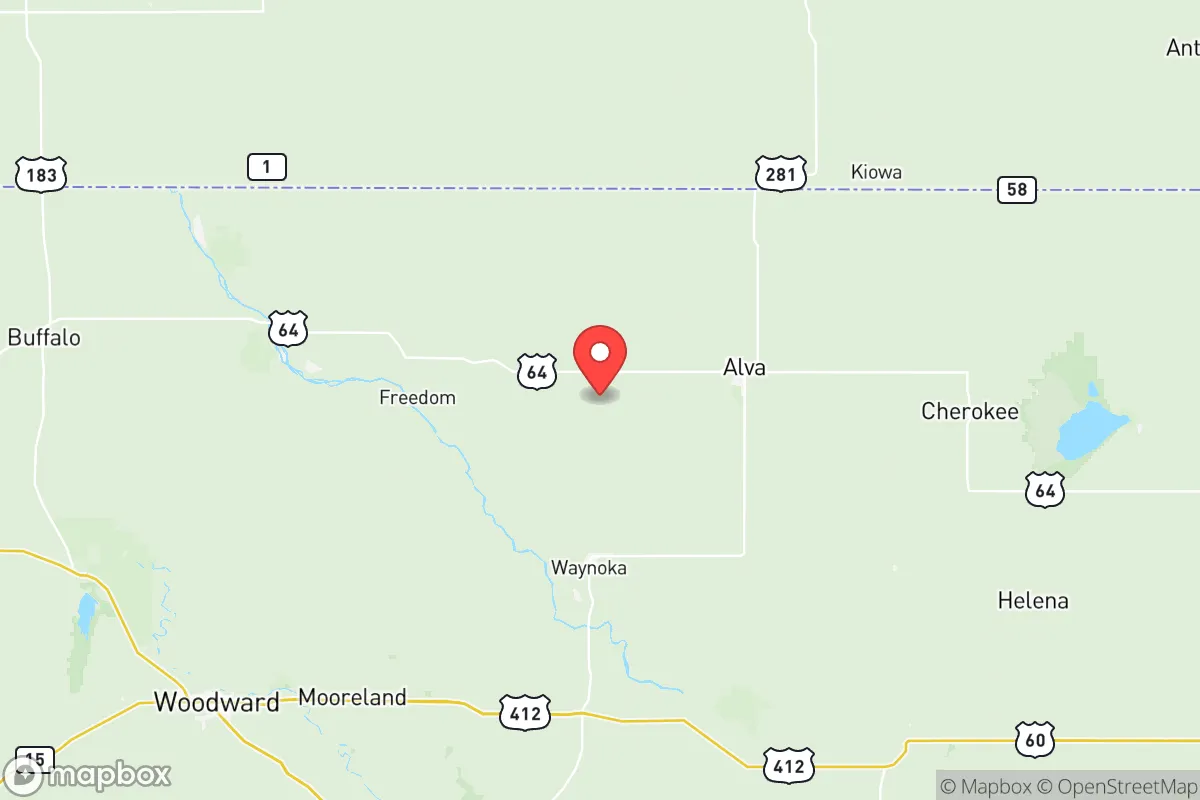
The people of Woods County, Oklahoma today number 8,619, spread across a landscape of small towns and open prairie that feels both deeply rooted and quietly shrinking. The county is overwhelmingly white (82.4%) with a modest Hispanic minority (7.4%) and a small Black population (2.4%), reflecting its history as a destination for homesteaders and agricultural families rather than later immigration waves. With only 1.4% foreign-born residents and a college attainment rate of 32.5%, Woods County retains a distinctly rural, native-born character — a place where family names trace back generations and where the population is slowly aging and declining, even as the county seat of Alva and the smaller communities of Waynoka, Freedom, and Capron hold onto their identities as anchors of the region.
Settlement & growth (pre-1960)
Before American settlement, the land that became Woods County was part of the vast domain of the Osage Nation, who controlled much of present-day northern Oklahoma and southern Kansas. The Osage were a powerful Siouan-speaking people who hunted bison and traded with French and Spanish explorers, but they were forcibly removed from the region in the 1820s and 1830s under federal Indian removal policy. The area then became part of the Cherokee Outlet, a strip of land granted to the Cherokee Nation after their forced relocation from the Southeast. For decades, the Outlet remained largely unpopulated by non-Natives, used primarily as a grazing corridor for Cherokee cattle herds.
The defining event in Woods County's human history came on September 16, 1893, with the Cherokee Strip Land Run. At noon, an estimated 100,000 settlers surged across the border to claim 160-acre homesteads in what was then the largest land run in American history. The town of Alva was founded almost immediately as a tent city, becoming the county seat by 1894. The land run drew a mix of native-born white settlers from the Midwest and Upper South — farmers from Kansas, Missouri, Illinois, and Iowa — along with a smaller number of European immigrants, primarily Germans and Czechs, who had already been farming in neighboring states. These homesteaders were drawn by the promise of free land under the Homestead Act, and they established wheat and cattle operations that remain the economic backbone of the county.
Other towns sprang up in the run's aftermath. Waynoka, founded in 1894 along the Chicago, Rock Island and Pacific Railroad, became a shipping point for grain and livestock. Freedom, established in 1901 in the western part of the county, served ranchers on the edge of the Great Plains. Capron and Avard were smaller agricultural hamlets that grew around grain elevators and general stores. The county's population peaked at 22,709 in 1910, fueled by the homestead boom and the expansion of railroads that connected Woods County to national markets. The Dust Bowl of the 1930s hit the region hard, as severe drought and wind erosion devastated wheat farms and drove many families out of the county — a pattern of out-migration that has never fully reversed. By 1950, the population had fallen to 14,526, and the county's character as a stable, white, native-born farming community was firmly set.
Modern era (post-1965)
The 1965 Hart-Cellar Act, which opened U.S. immigration to new sources from Asia, Latin America, and Africa, had almost no direct impact on Woods County. The county's foreign-born population today stands at just 1.4%, far below the national average of 13.7% and even below the Oklahoma state average of 5.5%. The small Hispanic population (7.4%) is the most notable demographic change since the 1960s, consisting primarily of Mexican-American families who moved into the area for agricultural work — particularly in the wheat fields and cattle operations around Alva and Waynoka — and who have since established a modest but stable presence. There is no significant Asian, Indian, or Arab population in the county, and the Black population (2.4%) remains small, concentrated mostly in Alva.
The dominant demographic trend of the modern era has been rural depopulation. Since 1960, Woods County has lost roughly 40% of its residents, falling from 14,000 to the current 8,619. Young people have left for college and jobs in Oklahoma City, Tulsa, and Wichita, while the remaining population has aged. The county's median age is now above the state average, and the school districts in smaller towns like Freedom and Capron have seen enrollment declines. Suburbanization has not reached Woods County — there are no suburbs here, only the slow consolidation of population into Alva, which remains the only town with a hospital, a four-year university (Northwestern Oklahoma State University), and a full range of services. Waynoka, once a railroad hub, has seen its population drop below 1,000, while Freedom and Capron are now unincorporated communities with fewer than 300 residents each.
The future
Woods County's population is projected to continue its slow decline over the next 10-20 years, barring an unexpected economic boom. The county is not becoming more diverse in any meaningful sense — the Hispanic share may rise slightly as agricultural families have children, but the foreign-born percentage is unlikely to increase significantly given the lack of immigration-friendly industries or urban amenities. The white population will continue to age and shrink, and the county's cultural identity as a conservative, rural, native-born community will remain intact. The most likely scenario is further consolidation into Alva, which may stabilize or even grow modestly as the surrounding hamlets empty out. Northwestern Oklahoma State University provides a small but steady inflow of young people, though most leave after graduation.
For someone moving in now, Woods County offers a quiet, affordable, and deeply traditional way of life — but it is a place that is slowly getting smaller, not larger. The people who stay are those who value the land, the community, and the history that began with the Cherokee Strip Land Run. New residents will find a county that is welcoming but not growing, stable but not dynamic, and where the future looks much like the present: rural, white, and rooted in the rhythms of agriculture and small-town life.

* Values derived from national, state, county, city and local statistics and may differ in a specific area. Last updated: 2026-10-27T19:20:28.000Z
Narrative content on this page is AI-generated and may contain mistakes. Verify any details that matter before acting on them.
ReloMaps may earn a commission from affiliate links at no extra cost to you.

