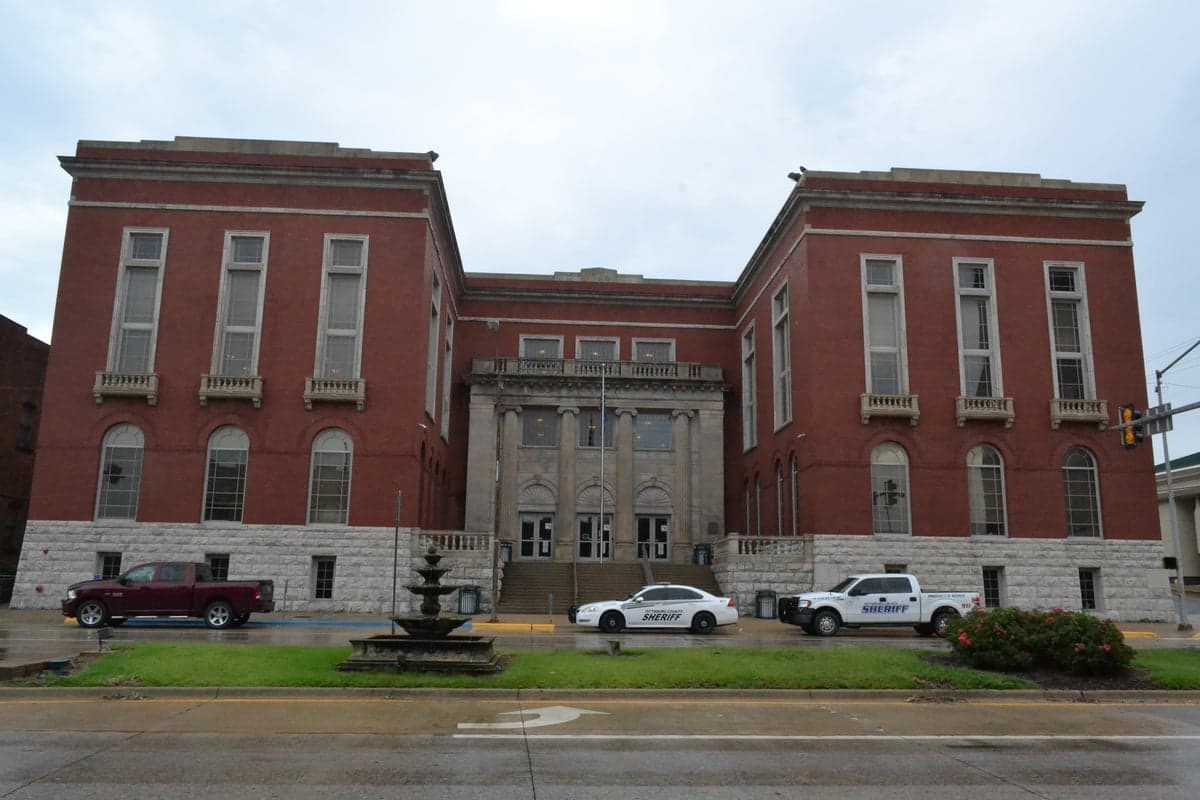
Photo: Wikipedia
Political ClimatePolitical Climate in Pittsburg County
Showing district-level results — no local-only data available.
Local Political AnalysisPolitical Analysis of Pittsburg County
Pittsburg County is a deep-red stronghold in southeastern Oklahoma, with a Cook Partisan Voting Index of R+28—a full ten points more conservative than Oklahoma’s statewide R+18 rating. That gap has widened over the past decade as the county’s rural precincts have shifted rightward faster than the state average, while the county seat, McAlester, has become a rare blue dot in an otherwise crimson landscape. If you’re looking at the political trajectory here, it’s not trending purple; it’s solidifying its conservative base, driven by energy-sector employment, gun rights culture, and a deep skepticism of federal oversight.
How it compares
Oklahoma as a whole is reliably Republican, but Pittsburg County is in a different league. The R+28 PVI means that in a typical statewide election, a Republican candidate can expect to win by roughly 28 points here, versus 18 points statewide. That difference is most visible in the rural precincts east of McAlester—places like Krebs, Hartshorne, and Quinton—where GOP margins often exceed 40 points. In contrast, McAlester’s downtown and near-downtown precincts (around the Oklahoma State Penitentiary and the historic business district) have leaned Democratic in recent cycles, though those margins are shrinking. The swing precincts are in the suburban fringe of McAlester—areas like North McAlester and the Kiowa community—where ticket-splitting is more common, especially in local races. Compared to the state, Pittsburg County’s politics are less influenced by the suburban swing that has softened GOP margins in places like Oklahoma County; here, the rural vote is dominant and getting redder.
What this means for residents
For conservative residents, the political climate means their values are reflected in nearly every level of local government—from the county commission to the school board. Gun laws are permissive, taxes are low, and there’s little appetite for zoning or land-use restrictions. For liberal residents, the reality is more isolating. While McAlester provides a small progressive enclave—particularly among younger professionals and some union households tied to the prison and healthcare sectors—there’s no real political infrastructure for Democrats outside of a few precincts. Socially, it means that openly progressive views can be a liability in business or community settings, especially in the smaller towns like Savanna, Alderson, or Crowder. The practical effect is that many liberals here vote in primaries or focus on local nonpartisan races, where the stakes are lower and the ideological pressure is less intense.
Culturally, Pittsburg County stands apart from Oklahoma’s more urbanized areas by its fierce independence from state-level mandates. The county has resisted state-led efforts to consolidate rural schools, and local officials often publicly push back against Oklahoma City’s environmental and energy regulations. The presence of the Oklahoma State Penitentiary in McAlester gives the county a unique political dynamic—corrections officers and their families form a voting bloc that is reliably conservative but also pragmatic, supporting candidates who prioritize prison funding and employee benefits over ideological purity. That pragmatism is the closest thing to a political middle ground here, and it’s why you’ll occasionally see a local Democrat win a county office if they run on a platform of roads, jobs, and prisons rather than national issues. Looking ahead, the county’s politics will likely stay deep red, but the internal divide between McAlester’s blue precincts and the surrounding rural red will keep local races interesting for those who pay attention.

State Political ClimatePolitical Climate in Oklahoma
State Political AnalysisPolitical Environment in the State
Oklahoma is one of the most reliably Republican states in the nation, with a Cook Partisan Voting Index of R+18, meaning it votes about 18 points more Republican than the country as a whole. The state hasn't voted for a Democratic presidential candidate since 1964, and every statewide elected office is held by a Republican. Over the last 20 years, the shift has been dramatic — Oklahoma was already red, but it has hardened into a deep crimson, driven by the collapse of the old Democratic machine in rural areas and the steady rightward march of the Oklahoma City and Tulsa suburbs.
Urban vs. rural divide
The political map of Oklahoma is a study in contrasts. The two major metros — Oklahoma City and Tulsa — are the only places where Democrats can compete. Oklahoma County (Oklahoma City) has trended purple in recent cycles; in 2020, Joe Biden won the county by about 2 points, a flip from 2016 when Hillary Clinton lost it. Tulsa County remains Republican but is less conservative than the rest of the state, with Biden losing it by about 10 points. The real engine of the state's Republican dominance is the vast rural and exurban expanse. Counties like Texas County in the Panhandle, Cimarron County, and Grant County routinely deliver 80-90% Republican margins. The suburbs of both metros — places like Edmond, Broken Arrow, and Jenks — are solidly conservative but have shifted slightly toward the center on cultural issues, while small towns like Woodward, Ponca City, and McAlester remain deeply Republican. The only reliably Democratic strongholds outside the cities are a handful of rural counties with large Native American populations, such as Adair County and Cherokee County, which have voted Democratic in recent presidential elections due to tribal political alignment and economic concerns.
Policy environment
Oklahoma's policy environment is unmistakably conservative. The state has a flat income tax rate of 4.75%, which the legislature has been gradually reducing from a high of 5.5% in 2018. There is no state estate tax, and property taxes are among the lowest in the nation, averaging about 0.9% of assessed value. Sales taxes are relatively high, often exceeding 10% in cities like Oklahoma City and Tulsa when local rates are added. The state is a "right-to-work" state, meaning union membership is voluntary, and it has some of the weakest labor protections in the country. On education, Oklahoma has embraced school choice aggressively, with a universal private school tax credit program enacted in 2023 that allows families to use public funds for private or homeschooling expenses. The state also passed a law requiring the Ten Commandments to be displayed in public school classrooms, though it is currently tied up in litigation. Healthcare policy is limited; Oklahoma did not expand Medicaid under the Affordable Care Act until voters approved a ballot measure in 2020, and the program now covers about 200,000 low-income adults. Election laws have tightened in recent years: voter ID is required, absentee ballot drop boxes were banned in 2022, and the state has purged inactive voters from rolls regularly.
Recent policy direction
The last five years have seen Oklahoma move decisively in a libertarian-leaning conservative direction on several fronts. On gun rights, the state enacted permitless carry in 2019, allowing any adult legally allowed to possess a firearm to carry it openly or concealed without a license. Self-defense laws are broad, with a strong "stand your ground" statute and no duty to retreat. On parental rights and education, the 2023 school choice expansion was paired with a law requiring schools to notify parents of any changes to a student's mental or physical health, effectively limiting classroom discussion of gender identity. The state also passed a near-total abortion ban in 2022 (SB 612) with no exceptions for rape or incest, only to save the mother's life. On speech and privacy, Oklahoma has no broad surveillance law, but the state has passed laws restricting social media platforms from "censoring" political speech, though these are being challenged in court. Property rights are strongly protected; the state has no statewide zoning code, and local governments have limited ability to regulate land use. On voting, the legislature passed a law in 2022 that shortened the absentee ballot application window and required notarization for mail-in ballots, though a federal judge later struck down the notarization requirement. The overall direction is toward fewer restrictions on individual action, particularly for gun owners, parents, and taxpayers, while tightening controls on abortion, voting access, and classroom content.
Civil unrest & political movements
Oklahoma has seen relatively little large-scale civil unrest compared to coastal states, but there have been notable flashpoints. The 2020 George Floyd protests in Oklahoma City and Tulsa were significant, with Tulsa seeing several nights of clashes between protesters and police, as well as property damage. The state's political movements are dominated by grassroots conservative activism. The Oklahoma Second Amendment Association is a powerful force in state politics, regularly pushing for expanded gun rights and opposing any restrictions. On the left, the Oklahoma Policy Institute and local chapters of the ACLU are active, but they have limited influence in the legislature. Immigration politics are less heated than in border states, but Oklahoma has passed laws requiring law enforcement to cooperate with federal immigration authorities and banning "sanctuary city" policies. There is no serious secession or nullification movement in Oklahoma, though some rural counties have passed symbolic resolutions asserting local control over federal land management. Election integrity has been a recurring theme; the 2020 election saw no major fraud in Oklahoma, but the legislature has continued to tighten voting laws in response to activist pressure. A new resident would notice the prevalence of political signage, particularly in rural areas, and the strong presence of conservative churches in public life.
Projection
Over the next 5-10 years, Oklahoma is likely to remain deeply Republican, but the nature of that conservatism may shift. In-migration is modest but growing, with people moving from California, Texas, and Colorado, often drawn by low housing costs and conservative governance. The Oklahoma City metro is growing faster than Tulsa, and its increasing diversity — particularly a growing Hispanic population — could slowly moderate the state's politics at the margins. The suburbs of both cities are likely to become more competitive for Democrats as younger, college-educated voters move in, but rural areas will remain overwhelmingly Republican. The state's tax-cutting trajectory will probably continue, with the flat income tax rate potentially dropping to 3.99% or lower by 2030. School choice will expand further, and abortion restrictions will remain in place unless federal law changes. The biggest wild card is the Native American population, which is growing and becoming more politically active; tribal nations like the Cherokee, Choctaw, and Chickasaw have significant economic power and may push for more autonomy on issues like gaming and healthcare. A new resident moving in now should expect the state to be reliably conservative for the foreseeable future, with a political culture that values low taxes, gun rights, and local control, but with gradual moderation in the urban centers.
For a new resident, the bottom line is straightforward: Oklahoma is a state where conservative policies are the norm and are likely to stay that way. If you value low taxes, strong gun rights, school choice, and a government that generally stays out of your personal business, you'll find a lot to like. If you are on the left, you will be in a clear minority, but you won't face hostility in daily life — Oklahoma's conservatism is more about policy than personal confrontation. The cities offer a more moderate environment, while rural areas are deeply traditional. The state's political trajectory is stable and predictable, which is exactly what many relocators are looking for.
* Values derived from national, state, county, city and local statistics and may differ in a specific area. Last updated: 2026-07-18T10:25:27.000Z
Narrative content on this page is AI-generated and may contain mistakes. Verify any details that matter before acting on them.
ReloMaps may earn a commission from affiliate links at no extra cost to you.

