Photo: Wikipedia
Demographics of Pittsburg County
Affluence Level in Pittsburg County
A below-average socioeconomic profile. Incomes, home values, and educational attainment trail the U.S., with higher poverty and unemployment.
People of Pittsburg County
The people of Pittsburg County, Oklahoma today number 43,629, forming a predominantly white, rural population with a distinctive Native American heritage and a notably low foreign-born presence of just 0.8%. The county's character is shaped by its deep Choctaw Nation roots, a 19th-century coal mining boom that drew immigrants from across Europe, and a subsequent long agricultural and industrial period that has left it older and less diverse than the state average. With only 19.7% of adults holding a college degree and a population that is 67.9% white, 5.6% Hispanic, and 2.3% Black, Pittsburg County represents a stable, slow-changing community where family history and local ties run deep.
Settlement & growth (pre-1960)
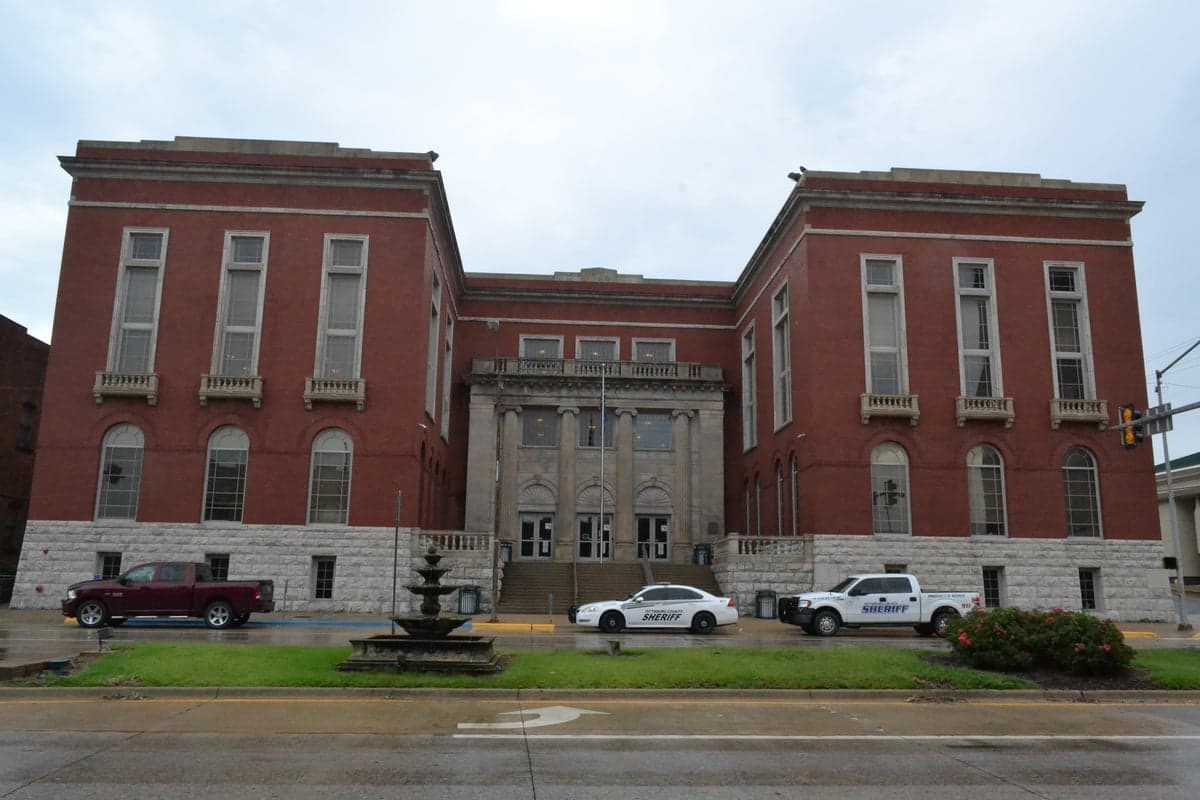
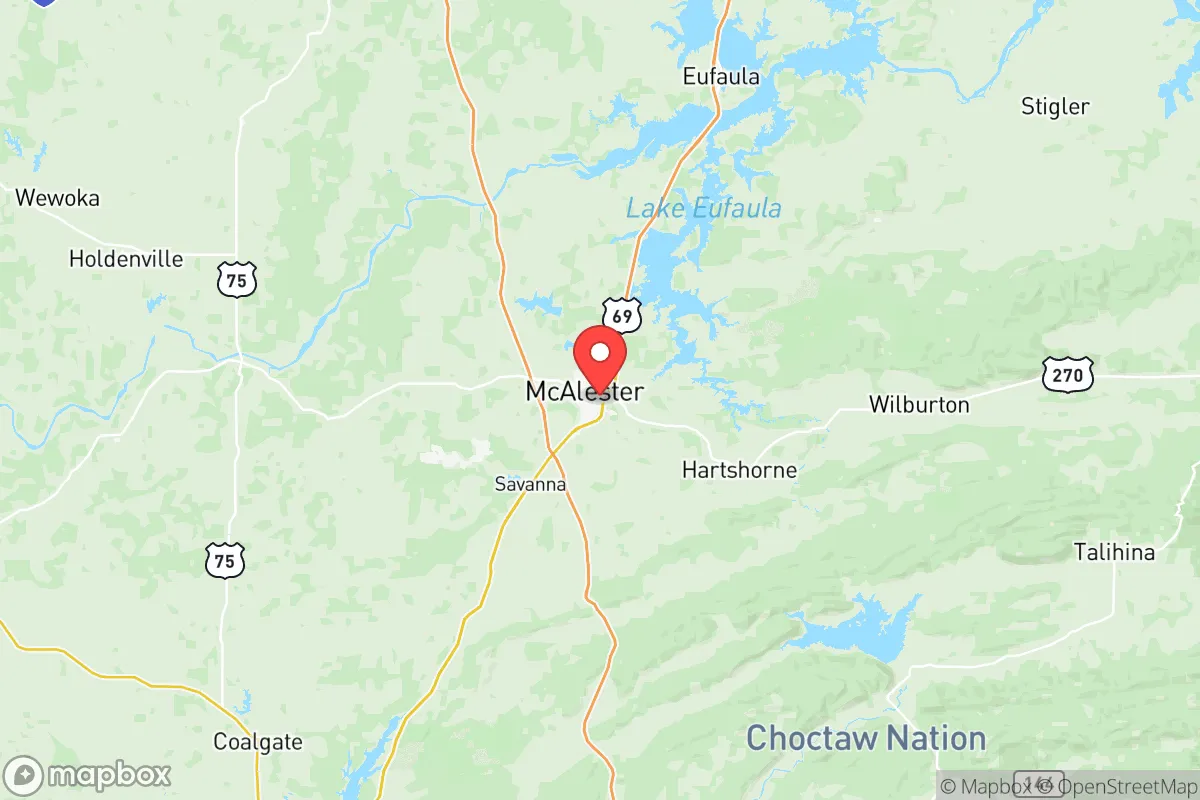
Long before European settlement, the area that is now Pittsburg County was part of the traditional lands of the Caddo and Wichita peoples. Following the Indian Removal Act of 1830, the Choctaw Nation was forcibly relocated from the Southeastern United States to what is now southeastern Oklahoma, establishing the area as part of their sovereign territory. The Choctaw presence remains foundational to the county's identity today, with the Choctaw Nation's headquarters located in nearby Durant and significant tribal influence felt throughout the region, particularly in the county seat of McAlester and the town of Hartshorne.
The county's modern settlement pattern was forged by coal. In the 1870s, the arrival of the Missouri-Kansas-Texas Railroad (the "Katy") opened the region's vast coal deposits to industrial extraction. This triggered a dramatic and diverse immigration wave unlike anything else in Oklahoma. Mining companies actively recruited experienced miners from the British Isles, Germany, and Italy, and later from Eastern Europe. Krebs, a small town just south of McAlester, became the epicenter of this immigrant story, earning a reputation as Oklahoma's most ethnically diverse community in the late 19th and early 20th centuries. Italian immigrants, in particular, arrived in large numbers, establishing a vibrant community in Krebs that is still celebrated today through its famous Italian restaurants and the annual Italian Festival. Other mining camps and towns like Savanna, Kiowa, and Dow also saw significant European immigrant settlement, with distinct enclaves of Polish, Irish, and Slavic miners forming around the coal shafts.
This coal-driven boom defined the county's early growth. By 1900, Pittsburg County was one of Oklahoma Territory's most populous and economically dynamic areas. The founding of McAlester as a railroad and mining hub, along with the establishment of the Oklahoma State Penitentiary there in 1908, solidified the city's role as the county's commercial and governmental center. The coal industry began a long decline after World War I, but the county's population remained stable, sustained by agriculture, ranching, and the prison economy. The Dust Bowl and Great Depression of the 1930s hit the region hard, but unlike many parts of Oklahoma, Pittsburg County did not experience a mass exodus to California; its population held relatively steady through the mid-20th century.
Modern era (post-1965)
The post-1965 era, shaped by the Hart-Cellar Act, had a minimal direct impact on Pittsburg County's demographics. The county's foreign-born population remains exceptionally low at 0.8%, far below both the Oklahoma state average and the national figure. The European immigrant communities that arrived during the coal boom have largely assimilated, and their descendants now form the core of the county's white population. There was no significant new wave of international immigration to the area in the late 20th or early 21st centuries.
Instead, the county's modern demographic story is one of gradual domestic change and suburbanization around McAlester. The Hispanic population, now at 5.6%, has grown modestly since the 1990s, driven by employment in agriculture, construction, and the poultry processing industry in nearby towns like Wilburton and Stigler. This community is dispersed throughout the county rather than concentrated in a single enclave. The Black population, at 2.3%, has remained stable and is primarily located in McAlester and the historic mining towns. The county has also seen a slow but steady out-migration of younger, college-educated residents to larger metropolitan areas like Oklahoma City, Tulsa, and Dallas-Fort Worth, contributing to its aging population profile and below-average educational attainment levels.
Suburbanization has been limited but noticeable around McAlester, with new housing developments spreading into unincorporated areas and small communities like Arpelar and Indianola. However, the county has not experienced the rapid suburban growth seen in the Oklahoma City or Tulsa metro areas. The economy has diversified somewhat, with healthcare, education, and the prison system becoming major employers, but the county remains heavily reliant on natural resources, including coal mining (now much reduced), natural gas extraction, and timber.
The future
Pittsburg County's population is projected to remain stable or experience a slight decline over the next 10-20 years. The county is not becoming more diverse in the way that many American regions are; the white population share is expected to remain dominant, with modest growth in the Hispanic share continuing. The county's low college attainment rate and limited high-wage job opportunities will likely continue to drive younger residents away, reinforcing its older age profile. New communities are not forming in distinct enclaves; rather, any population growth will likely occur as low-density suburban-style development on the outskirts of McAlester and along the US-69 and US-270 corridors.
The county's cultural identity is evolving slowly, with the Choctaw Nation playing an increasingly prominent role in economic development, healthcare, and community life. The tribe's growing influence, including new health clinics and business ventures, is a significant factor in the county's future stability. The historic Italian and European heritage of towns like Krebs remains a celebrated cultural asset, but it is increasingly a matter of heritage tourism and festival culture rather than a living, distinct ethnic community.
For someone moving to Pittsburg County today, this is a place where the past is still very present. The population is stable, rooted, and predominantly white, with a strong Native American presence and a small but established Hispanic community. It is not a destination for rapid growth or new diversity, but rather a community that offers a low-cost, slow-paced, and historically rich environment for those seeking a rural or small-town lifestyle in southeastern Oklahoma. The county's future will likely look much like its present: quiet, stable, and deeply connected to its Choctaw and coal-mining roots.

* Values derived from national, state, county, city and local statistics and may differ in a specific area. Last updated: 2026-07-18T10:25:27.000Z
Narrative content on this page is AI-generated and may contain mistakes. Verify any details that matter before acting on them.
ReloMaps may earn a commission from affiliate links at no extra cost to you.

