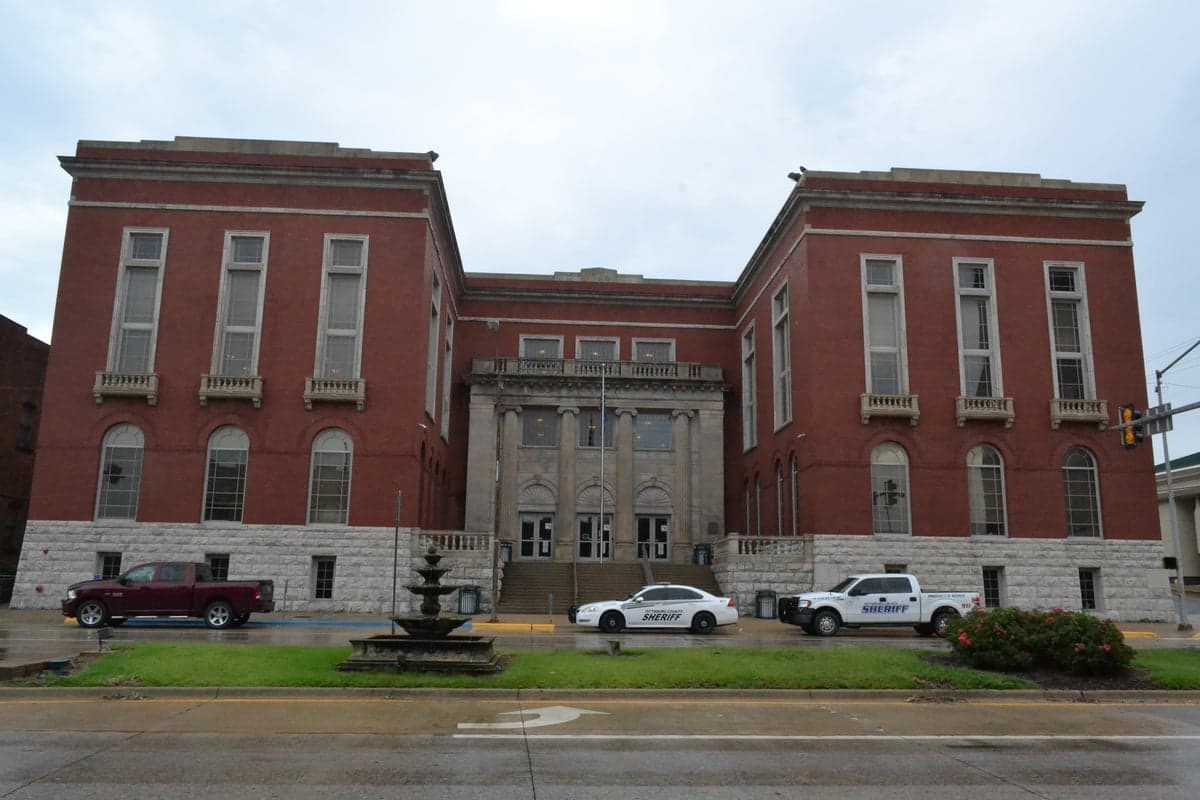
Photo: Wikipedia
Quality of Life in Pittsburg County
A livable area that tracks near national norms for affordability, walkability, and neighborhood health.
What does Quality of Life tell us?
Quality of Life measures an area by evaluating factors like cost of living, nearby amenities, country club access, airport proximity, socioeconomic signals and neighborhood character. For large states, this is a general average — quality of life can vary dramatically between metro areas, suburbs, and rural communities within the same state.
What does this tell us?
Quality of Life measures an area by evaluating factors like cost of living, nearby amenities, country club access, airport proximity, socioeconomic signals and neighborhood character. For large states, this is a general average — quality of life can vary dramatically between metro areas, suburbs, and rural communities within the same state.
Cost of Living
35% below national average
131%
The Real Cost of Living in Pittsburg County for 2026
| Tier | Individual | Family (4) |
|---|---|---|
| Survival | $14k | $26k |
| Comfortable | $28k | $42k |
| Luxury | $99k+ | $153k+ |
| Elite (Top 5%) | $119k+ | $185k+ |
Quality-of-Life Analysis
Pittsburg County, Oklahoma, offers a broad quality-of-life spectrum that ranges from the regional hub of McAlester to unincorporated crossroads and lakefront retreats, attracting everyone from industrial workers and military-affiliated families to retirees seeking low-cost acreage. The county’s character shifts noticeably as you move from the commercial corridors of U.S. 69 and U.S. 270 into the wooded hills and farmlands of its 1,378 square miles. With a cost-of-living index of 65 — well below the national average of 100 — and a median home value of $146,300, the county provides tangible financial breathing room, though the mix of amenities, commute times, and community density varies sharply by location.
Largest town(s) & population centers
McAlester, the county seat and only city with a population exceeding 10,000, anchors the county’s economy and daily life. Home to the Oklahoma State Penitentiary and a major McAlester Army Ammunition Plant, the city provides a stable base of public-sector and industrial employment. Daily life here includes access to a regional hospital, a Walmart Supercenter, and a downtown historic district with local restaurants and shops. The average commute across the county is a short 21.1 minutes, and in McAlester itself, most errands and jobs are within a 10- to 15-minute drive. Housing stock ranges from older Craftsman bungalows near downtown for under $100,000 to newer subdivisions on the south side approaching $250,000. Krebs, immediately south of McAlester, functions as a de facto neighborhood with a distinct Italian-heritage identity and a handful of well-known restaurants, blurring the line between separate town and McAlester suburb.
Smaller towns & rural pockets
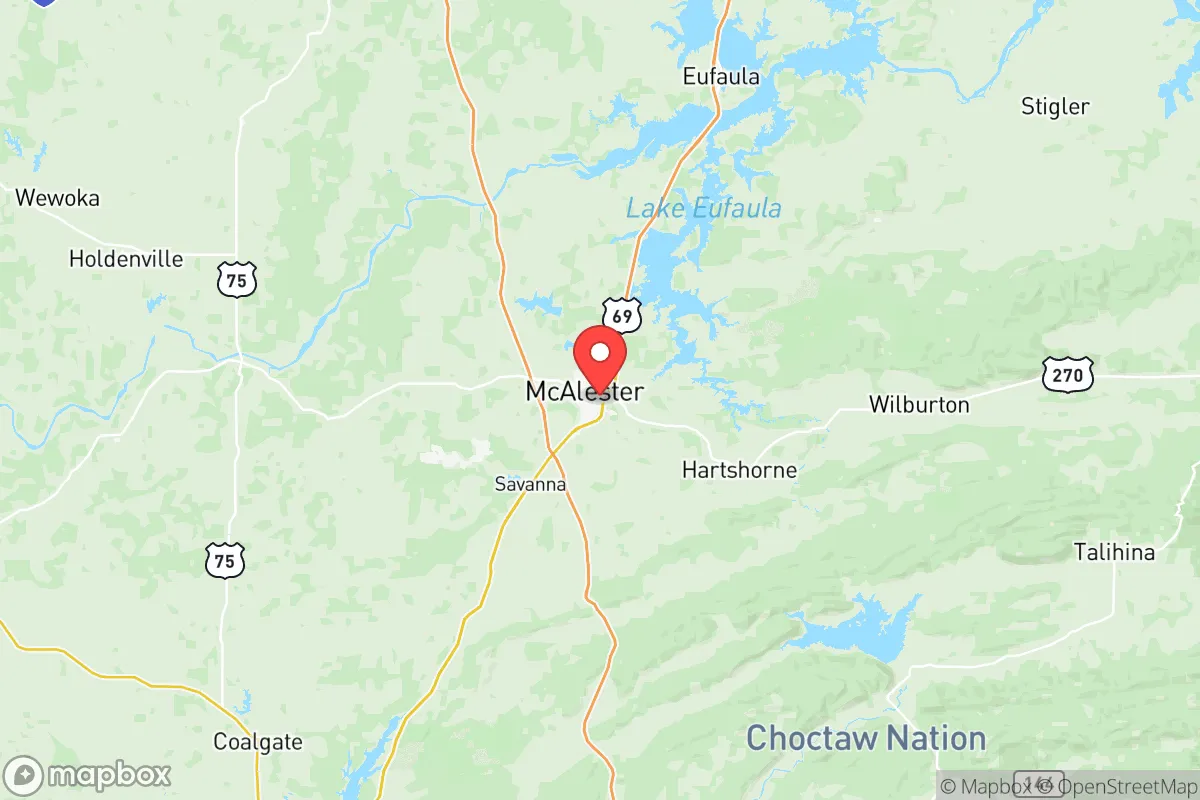
Outside the McAlester-Krebs core, the county’s smaller communities offer quieter, more self-sufficient lifestyles. Hartshorne (population roughly 1,900) sits along U.S. 270 and retains a compact downtown with a grocery store and a pharmacy, appealing to residents who want basic services without the traffic of a larger town. Kiowa (population under 600) is a classic southeastern Oklahoma hamlet with a single main street and a strong sense of local identity, popular among those seeking very low home prices — often under $70,000. Quinton, near the county’s eastern edge, and Canadian, in the rural northwest, are unincorporated or very small communities where residents typically commute 25–35 minutes to McAlester for work and shopping. Lake Eufaula’s southern shoreline, which falls within Pittsburg County, contains scattered subdivisions and seasonal cabins, particularly around Blocker and Scipio, where the lifestyle is oriented toward fishing, boating, and weekend recreation rather than daily commuting.
Cost & lifestyle range
The cost spread across Pittsburg County is narrower than in metropolitan areas but still meaningful. At the low end, a buyer can find a livable 2-bedroom home in Hartshorne or Kiowa for $60,000 to $80,000, with median rent countywide at just $857 — roughly half the national median. These areas offer the lowest utility costs and property taxes, but grocery and dining options are limited to a single local store or a short drive. At the higher end, lakefront properties near Blocker or newer construction in McAlester’s Country Club addition can reach $250,000 to $350,000, still far below the national median home price. Renters in McAlester pay a premium for proximity to jobs and schools, with 2-bedroom apartments typically ranging from $750 to $950. The trade-off is clear: lower-cost rural areas require longer drives for most errands, while McAlester provides walkable neighborhoods and a full set of amenities within a 10-minute radius. Property taxes remain low countywide, typically under $1,200 annually on a median-value home, reinforcing the county’s affordability regardless of which pocket a resident chooses.
Pittsburg County works best for people who value low housing costs and a short commute above urban nightlife or high-end retail. Industrial tradespeople, state employees, and remote workers who need reliable internet — available in McAlester and parts of Hartshorne but spotty in deep rural areas — will find the most practical fit. Retirees on fixed incomes and young families buying a first home are also well served, particularly if they are comfortable with a slower pace and a 20-minute drive to the nearest chain grocery store. The county’s diversity of settings, from the walkable streets of Krebs to the quiet lake lots of Blocker, means that almost anyone seeking an affordable, low-stress Oklahoma lifestyle can find a corner that suits them.

Crime in Pittsburg County
Crime rates similar to the national median for U.S. locations.
Violent CrimeViolent Crime Analysis
Property CrimeProperty Crime Analysis
Crime Analysis
Pittsburg County, Oklahoma, reports a violent crime rate of 410.4 per 100,000 residents and a property crime rate of 1,835 per 100,000, placing it above both the state and national averages for overall crime. The county’s safety picture is heavily shaped by the contrast between its largest city, McAlester, and its smaller, more rural communities. While property crime is the most common concern, the violent crime rate is driven by incidents concentrated in specific areas, making neighborhood-level research essential for anyone considering a move here.
Crime in context
Pittsburg County’s violent crime rate of 410.4 per 100,000 is significantly higher than the national average of roughly 380 per 100,000 and well above Oklahoma’s state average of approximately 440 per 100,000. Property crime, at 1,835 per 100,000, also exceeds the national benchmark of about 1,950 per 100,000 but is slightly below the Oklahoma state average of roughly 2,200 per 100,000. These figures place Pittsburg County in a moderate-to-high risk category for the region. The county is served by District 18, which includes Pittsburg and Haskell counties, and the local judicial philosophy—particularly in McAlester—has been a point of concern for residents who feel that progressive-leaning policies from the district attorney’s office may contribute to shorter sentences and higher recidivism. This is a pattern seen in other Oklahoma counties with larger urban centers, where a focus on rehabilitation over incarceration can lead to more offenders returning to the streets sooner.
What residents experience
Residents in Pittsburg County most frequently report theft, vehicle break-ins, and vandalism as daily nuisances, with property crime being the primary driver of the county’s elevated numbers. In McAlester, the county seat and largest city, crime is more concentrated in the downtown core and along the Carl Albert Parkway corridor, where retail theft and drug-related offenses are common. Smaller towns like Krebs, Hartshorne, and Kiowa generally experience lower crime rates, though they are not immune to occasional burglaries or domestic disturbances. The presence of the Oklahoma State Penitentiary in McAlester also introduces a unique dynamic: while the prison itself is secure, the surrounding area sees a higher-than-average number of parolee-related incidents and transient populations. For families, the most practical concern is securing homes and vehicles, as property crime is opportunistic and often tied to substance abuse issues prevalent in the region.
Neighborhood-level variation
Safety varies considerably within Pittsburg County. McAlester’s southern and western neighborhoods, particularly near the prison and industrial zones, report the highest crime rates. In contrast, the northern outskirts of McAlester and the town of Savanna are considered safer, with lower incident reports and stronger community watch programs. Quinton and Indianola, both small rural communities, have very low crime rates but offer limited amenities. For those seeking a balance, Krebs is often cited as a safer alternative to McAlester proper, with a tight-knit community and fewer property crimes. Prospective residents should also note that the county’s judicial district has seen turnover in recent years, and the current district attorney’s approach—perceived by some as more lenient—has been a topic of local debate. Checking recent court records and speaking with local law enforcement in specific towns is recommended before committing to a move.
* Values derived from national, state, county, city and local statistics and may differ in a specific area. Last updated: 2026-07-18T10:25:27.000Z
Narrative content on this page is AI-generated and may contain mistakes. Verify any details that matter before acting on them.
ReloMaps may earn a commission from affiliate links at no extra cost to you.

