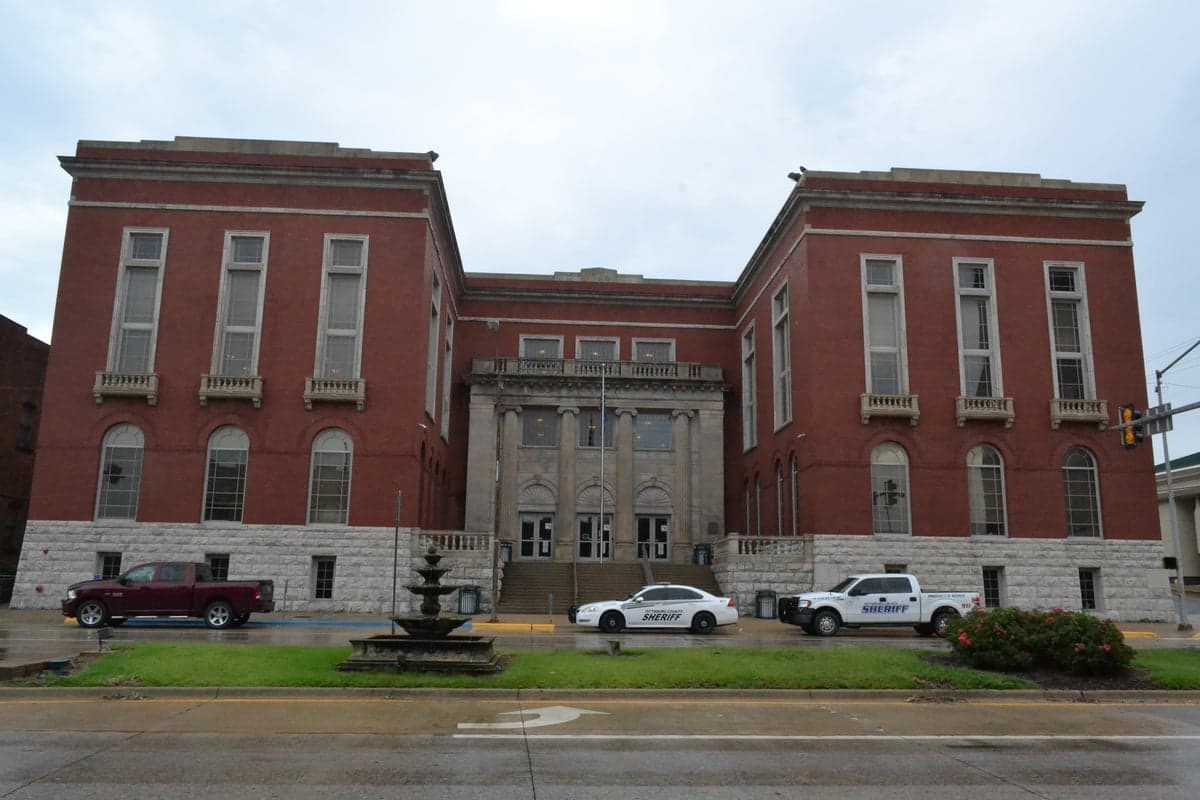
Photo: Wikipedia
Personal Sovereignty in Pittsburg County
Strong independent fundamentals that actively favor personal liberty and low regulation.
What does Personal Sovereignty tell us?
Personal Sovereignty measures your capacity for self-reliance and independence with minimal government friction. Higher scores mean fewer barriers between you and the way you want to live... but it assumes you have the space you need and good neighbors.
What does this tell us?
Personal Sovereignty measures your capacity for self-reliance and independence with minimal government friction. Higher scores mean fewer barriers between you and the way you want to live... but it assumes you have the space you need and good neighbors.
State Policy
Energy independence: Net exporter (180% of energy produced in-state)
Personal Liberty
Homesteading

Personal Liberty Analysis
Pittsburg County, Oklahoma, offers a notably high degree of personal sovereignty, grounded in Oklahoma’s broadly permissive state laws and a local culture that prizes self-reliance. The county’s regulatory environment is light-touch, its tax burden is low, and its gun laws are among the most accommodating in the nation, making it a strong fit for individuals and families who prioritize autonomy over government oversight. While the county seat of McAlester provides basic municipal services, the surrounding unincorporated areas—including communities like Kiowa, Hartshorne, and Quinton—offer even greater latitude for independent living, with minimal zoning and a live-and-let-live ethos.
Tax burden and regulatory posture in Pittsburg County
Oklahoma’s state-level tax structure is designed to minimize the financial drag on residents, and Pittsburg County reflects that posture. There is no state property tax; instead, property taxes are levied at the county and local level, with the effective rate in Pittsburg County averaging around 0.85% of assessed value—well below the national average of roughly 1.1%. For a $150,000 home, that translates to about $1,275 annually. The state income tax is a flat 4.75%, and sales tax in McAlester (the county’s largest city) is 9.5%, though smaller towns like Crowder and Savanna often have lower local add-ons. Regulatory oversight is minimal: there are no county-wide building codes in unincorporated areas, and business licensing requirements are straightforward. The Oklahoma Department of Environmental Quality handles major permits, but for most small-scale activities—like running a home-based business, keeping livestock, or constructing a shed—the county imposes no additional red tape. This light regulatory touch is especially pronounced in rural precincts, where the county’s planning and zoning department is effectively absent.
Self-defense and gun law specifics in Pittsburg County
Oklahoma is a constitutional carry state, meaning that as of 2019, any adult legally allowed to possess a firearm may carry it openly or concealed without a permit. Pittsburg County’s sheriff’s office, led by Sheriff Chris Morris, has publicly affirmed support for Second Amendment rights, and local law enforcement generally does not engage in proactive gun enforcement beyond state and federal restrictions. The county has no local ordinances restricting firearm possession, and the city of McAlester—the only incorporated area with a population over 10,000—also permits open carry in most public spaces, including parks and commercial districts, though private businesses may post signage to prohibit it. Stand-your-ground laws apply statewide, with no duty to retreat in any place where a person is lawfully present. For those seeking formal training, the Pittsburg County Sheriff’s Office offers concealed carry classes, and there are multiple gun ranges in the area, including the McAlester Gun Club and the privately-owned Kiowa Shooting Range. The practical effect is that residents can exercise self-defense rights with minimal bureaucratic friction, a factor that strongly appeals to the conservative-leaning audience this analysis targets.
Self-reliance and homesteading viability: lot sizes, zoning, and off-grid feasibility
Pittsburg County is one of the most homestead-friendly areas in eastern Oklahoma, with large tracts of affordable land and virtually no zoning restrictions outside city limits. In unincorporated areas—which cover the vast majority of the county’s 1,378 square miles—there are no minimum lot size requirements for residential use, no restrictions on keeping livestock (including chickens, goats, or cattle), and no county-level building permits for structures under 200 square feet. Communities like Quinton and Kiowa are particularly attractive for off-grid living: land prices in these areas range from $1,500 to $3,000 per acre, and many parcels have existing wells or are suitable for drilling. Off-grid solar and wind systems are legal and common, and the county does not require connection to the electrical grid. Septic systems must comply with Oklahoma Department of Environmental Quality standards, but the permitting process is straightforward and typically costs under $500. In McAlester and Hartshorne, city zoning does impose some restrictions—for example, McAlester requires a minimum lot size of 6,000 square feet in residential zones and prohibits certain livestock within city limits—but even these are relatively lenient compared to urban areas in neighboring states. For those seeking maximum self-reliance, the rural townships of Indianola and Blanco (the latter a small unincorporated community, not to be confused with the Texas town) offer the most freedom, with no zoning, no building codes, and a strong tradition of neighborly non-interference.
Personal liberties: parental rights, medical autonomy, speech, and property
Oklahoma law provides robust protections for parental rights, including a 2022 statute that affirms parents’ “fundamental right” to direct the upbringing, education, and healthcare of their children. Pittsburg County’s school districts—including McAlester Public Schools, Hartshorne Public Schools, and Kiowa Public Schools—generally defer to parental decisions on curriculum objections and medical consent, though specific policies vary by district. Medical autonomy is similarly broad: Oklahoma does not mandate COVID-19 vaccines for adults or children, and there are no state-level vaccine passport requirements. The state’s 2021 “Right to Try” law allows terminally ill patients to access experimental treatments, and the county has no local ordinances restricting alternative or holistic medicine. Free speech protections are strong, with no local hate speech ordinances or content-based restrictions on public expression. Property rights are reinforced by Oklahoma’s “private property rights” act, which limits eminent domain to traditional public uses like roads and utilities. In Pittsburg County, the most notable property-rights issue involves mineral rights: the county sits atop the Arkoma Basin, a natural gas region, and surface owners often negotiate with energy companies for drilling access. While this can create tension, the legal framework generally favors the surface owner’s right to reasonable use, and many rural landowners lease mineral rights for additional income.
Compared to other parts of the country, Pittsburg County offers an unusually high degree of personal sovereignty, particularly for those willing to live outside McAlester’s city limits. The combination of low taxes, minimal regulation, strong gun rights, and permissive homesteading laws places it in the top tier of Oklahoma counties for autonomy-minded individuals. For context, neighboring counties like Latimer and Haskell are similarly permissive, but Pittsburg County’s slightly larger population and better infrastructure (including a regional hospital and a Walmart Supercenter in McAlester) make it a more practical choice for families who want self-reliance without complete isolation. The county’s overall sovereignty environment is best described as “high-trust, low-friction”—a place where the default answer from local government is “yes, unless there’s a clear safety or legal reason for no.”

* Values derived from national, state, county, city and local statistics and may differ in a specific area. Last updated: 2026-07-18T10:25:27.000Z
Narrative content on this page is AI-generated and may contain mistakes. Verify any details that matter before acting on them.
ReloMaps may earn a commission from affiliate links at no extra cost to you.

