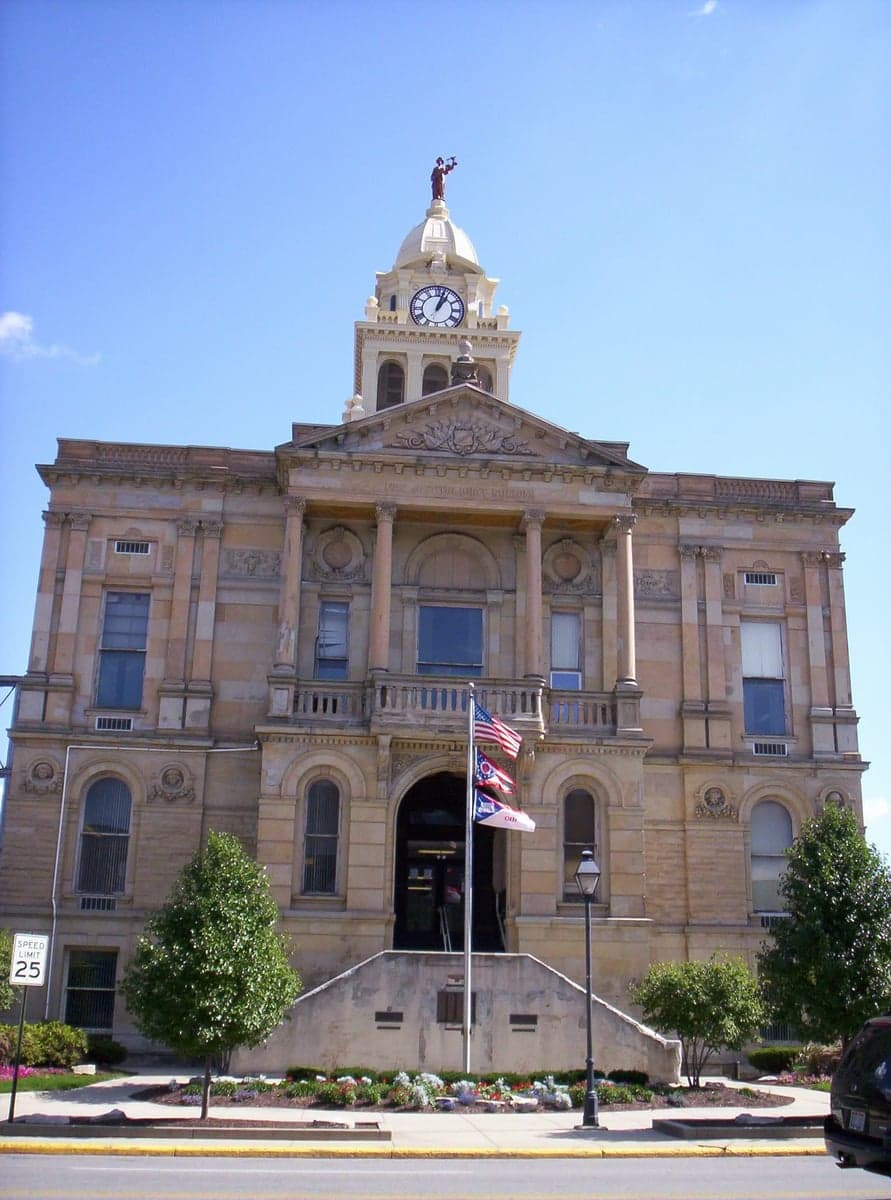
Photo: Wikipedia
Political ClimatePolitical Climate in Marion County
Showing district-level results — no local-only data available.
Local Political AnalysisPolitical Analysis of Marion County
Marion County, Ohio, is a reliably conservative stronghold, carrying a Cook PVI of R+18, which makes it significantly more Republican than the state of Ohio as a whole (R+5). This isn't a recent shift; the county has been a solid red anchor for decades, though the margins have thickened in the last two presidential cycles as the rural-urban divide has sharpened. You can feel it in the air—the local diners, the farm bureaus, the VFW halls—it’s a place where traditional values and skepticism of big government are still the default setting, not a political stance.
How it compares
The gap between Marion County and the rest of Ohio is stark. While the state has drifted slightly leftward in recent years, especially in its major metro areas like Columbus and Cleveland, Marion County has held firm and even hardened its conservative edge. The difference isn't just in the PVI numbers; it's in the lived experience. In Marion, the conversation at the county fair is about property taxes and local school levies, not the latest progressive policy out of Columbus. The county seat, Marion City, is the only real exception—it’s a blue dot in a red sea, with precincts near the downtown and Ohio State University-Marion campus occasionally voting Democratic. But that’s about it. Head out to Prospect, Waldo, or LaRue, and you’re in deep-red territory where a Republican primary is often the only election that matters. The swing precincts are almost nonexistent; the rural townships like Grand and Claridon vote so reliably Republican that a Democratic candidate winning even 35% of the vote there is considered a strong showing.
What this means for residents
For folks who value personal freedom and limited government, this is a comfortable place to live. There’s a general distrust of state-level mandates, whether they involve public health, school curriculum, or land use. You won’t find the same level of progressive activism here that you see in, say, Franklin County. The local government is generally hands-off, and there’s a strong expectation that your personal choices—how you raise your kids, what you do on your own property—are your own business. That said, the conservative nature of the county also means that any shift toward progressive ideology is met with serious pushback. The recent debates over library book content and school board policies have been heated, with the community largely rallying behind parental rights and local control. It’s a place where the phrase “keep government out of it” still carries real weight, and that’s a big reason why people stay.
The cultural and policy distinctions here are subtle but important. Marion County isn’t a hotbed of political activism; it’s more about quiet, consistent conservatism. You won’t see many yard signs for statewide progressive candidates. The local Republican Party is well-organized, and the Democratic presence is mostly confined to Marion City’s older, union-heavy precincts. Looking ahead, the trend is clear: as Ohio’s urban centers continue to pull the state left, Marion County will likely become an even more pronounced outlier. For a conservative resident, that’s a comforting thought—a place where the political climate still reflects the values of personal responsibility and limited government, even as the rest of the state seems to be moving in a different direction.

State Political ClimatePolitical Climate in Ohio
State Political AnalysisPolitical Environment in the State
Ohio has shifted from a classic purple battleground to a solidly Republican-leaning state, carrying a Cook PVI of R+5, but that number masks a deeply polarized landscape. Over the past 20 years, the state has moved rightward by about 8 points, driven by the collapse of union-Democrat strongholds in the Appalachian southeast and the exurban sprawl around Cincinnati and Columbus. However, the three major metro areas—Cleveland, Columbus, and Cincinnati—still produce enough Democratic votes to keep statewide races competitive, while the vast rural and small-town interior has become overwhelmingly red. For a conservative considering relocation, Ohio offers a mixed bag: a reliably Republican state government that has passed significant pro-liberty legislation, but with major cities that remain progressive enclaves and a demographic future that could shift the balance.
Urban vs. rural divide
The political map of Ohio is a textbook case of the urban-rural chasm. The "Three C's"—Cleveland (Cuyahoga County), Columbus (Franklin County), and Cincinnati (Hamilton County)—are the Democratic anchors, delivering massive margins that keep the state from being deep red. Cuyahoga County alone gave Joe Biden a 66% vote share in 2020, while Franklin County hit 62%. These metros are growing, especially Columbus, which is absorbing transplants from the coasts and driving a slow but steady leftward drift in the central Ohio corridor. Meanwhile, the rural and exurban counties have swung hard right. Butler County (north of Cincinnati) voted +30 for Trump, and Delaware County (north of Columbus), once a swing suburb, is now reliably red. The Appalachian counties in the southeast—like Meigs and Monroe—are among the most Republican in the nation, with Trump winning by 70+ points. The northwest quadrant, including Lucas County (Toledo), is more competitive but trending redder as union households defect from the Democratic Party. The real story is the exurban ring around Columbus and Cincinnati: places like Powell, Mason, and Liberty Township are growing fast and voting increasingly Republican, offsetting the urban cores.
Policy environment
Ohio's state-level policy environment is broadly conservative, with a few notable exceptions. The state has a flat income tax rate of 3.5% (down from 4.8% in 2020) and no estate tax, making it relatively tax-friendly for earners and retirees. Sales tax is 5.75% but local add-ons push it to 7-8% in most cities. Property taxes are moderate, though school levies vary wildly by district. On education, Ohio has a robust school choice program: the EdChoice scholarship allows students in underperforming public schools to attend private or parochial schools, and the state has expanded charter school access. However, the state board of education has been a battleground over curriculum and parental rights. On healthcare, Ohio expanded Medicaid under the Affordable Care Act in 2014, a decision that remains controversial among conservatives. The state has not passed a "heartbeat" abortion ban since the 2022 Dobbs decision, but a 2023 constitutional amendment enshrined abortion rights, which was a major loss for the pro-life movement. Election laws have been tightened: voter ID requirements were strengthened in 2023, and early voting windows were standardized. The state also passed a "stand your ground" self-defense law in 2021, and concealed carry without a permit was enacted in 2022. Overall, the policy environment is a mix of solidly conservative fiscal and Second Amendment policies, with some cultural battles still being fought.
Trajectory & freedom
On the freedom front, Ohio has been a net positive over the last five years, but with some worrying signs. The biggest win for personal liberty was the passage of Constitutional Carry (HB 227) in 2022, allowing law-abiding citizens to carry a concealed firearm without a permit. This was a major victory for Second Amendment advocates. The state also passed a Parental Bill of Rights (HB 8) in 2023, requiring schools to notify parents about curriculum changes and medical services, and giving parents the right to opt their children out of certain instruction. On the economic side, Ohio became a "right-to-work" state in 2021, though the law was repealed by a 2022 referendum—a reminder that labor unions still wield power in the industrial north. The most concerning trend for conservatives is the 2023 abortion amendment (Issue 1), which enshrined abortion rights in the state constitution. This was a direct blow to pro-life efforts and shows that direct democracy can override the legislature. On medical freedom, Ohio did not mandate COVID-19 vaccines for state employees, but some local governments (like Cuyahoga County) imposed their own mandates. Property rights are generally strong, with no statewide rent control and limited eminent domain abuse. The trajectory is mixed: the legislature is pushing conservative reforms, but the ballot initiative process and growing urban populations are pulling the state left on social issues.
Civil unrest & political movements
Ohio has seen its share of political flashpoints. The 2020 George Floyd protests in Columbus and Cleveland were large but largely peaceful, though there were instances of looting and property damage. The 2023 Issue 1 abortion amendment campaign saw intense activism from both sides, with pro-life groups like Ohio Right to Life and progressive groups like Planned Parenthood Advocates of Ohio pouring millions into ads. Immigration politics are less heated than in border states, but there have been localized tensions in Dayton and Springfield over refugee resettlement and migrant labor. Election integrity has been a major topic since 2020, with Republican Secretary of State Frank LaRose tightening voter roll maintenance and pushing for stricter ID laws. There have been no major election fraud scandals, but the debate continues. The Ohio Statehouse has been the site of periodic protests over vaccine mandates, school curriculum, and transgender policies. A notable movement is the Buckeye Firearms Association, which has been highly effective at mobilizing gun rights supporters. On the left, the Ohio Organizing Collaborative has been active in pushing for criminal justice reform and voting rights. For a new resident, the political climate is visible in yard signs, local news coverage, and the occasional protest, but it's not a constant source of tension outside of the major cities.
Projection
Looking ahead 5-10 years, Ohio is likely to remain a lean-Republican state, but the margin could narrow. The key demographic driver is the growth of Columbus, which is attracting young, college-educated professionals from blue states. Franklin County's population grew by 12% between 2010 and 2020, and that trend is accelerating. Meanwhile, the rural counties in the southeast are losing population. This could shift the statewide balance by 1-2 points toward Democrats over the next decade. However, the exurban growth in Delaware, Union, and Warren counties is likely to offset some of that. The state's Republican supermajority in the legislature is unlikely to be broken, but the governor's race in 2026 could be competitive. On policy, expect continued battles over school choice, tax cuts, and Second Amendment rights. The biggest wildcard is whether the legislature will try to restrict the ballot initiative process after the abortion amendment passed. If they do, it could trigger a backlash. For a conservative moving in now, the state will likely be a safe bet for the next decade, but the cultural and political center of gravity is slowly shifting toward the Columbus metro.
For a new resident, the bottom line is this: Ohio offers a relatively low-tax, gun-friendly, and family-oriented environment with a state government that generally respects personal liberty. The major cities are progressive, but you can easily live in a conservative suburb or exurb and never feel out of place. The biggest practical takeaway is to choose your county carefully—Delaware County or Warren County will feel very different from Cuyahoga County or Franklin County. If you value school choice, low taxes, and Second Amendment rights, Ohio is a solid option. Just be aware that the urban areas are growing and will continue to push the state left on social issues, so the political climate is not static. It's a state where you can still have a strong voice in local politics, but you'll need to stay engaged to protect the freedoms you value.
* Values derived from national, state, county, city and local statistics and may differ in a specific area. Last updated: 2026-05-14T18:15:14.000Z
Narrative content on this page is AI-generated and may contain mistakes. Verify any details that matter before acting on them.
ReloMaps may earn a commission from affiliate links at no extra cost to you.

