
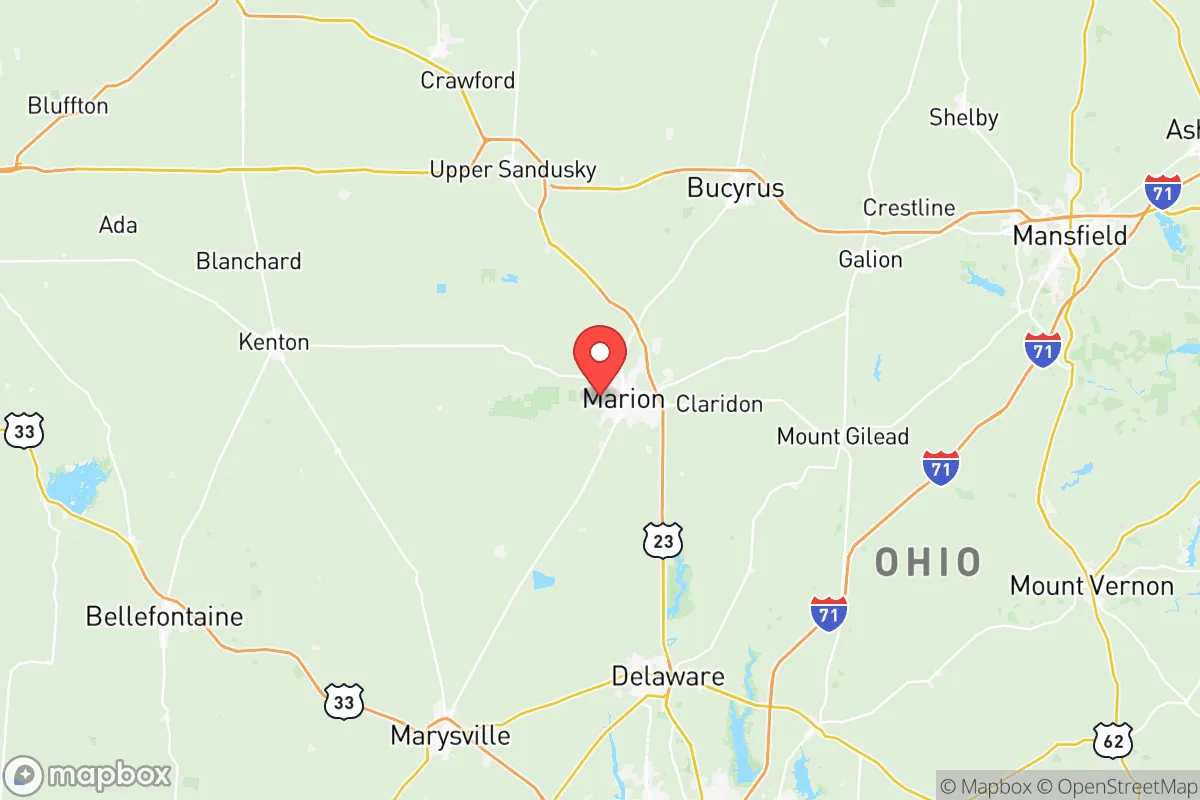
Photo: Wikipedia
Quality of Life in Marion County
A livable area that tracks near national norms for affordability, walkability, and neighborhood health.
What does Quality of Life tell us?
Quality of Life measures an area by evaluating factors like cost of living, nearby amenities, country club access, airport proximity, socioeconomic signals and neighborhood character. For large states, this is a general average — quality of life can vary dramatically between metro areas, suburbs, and rural communities within the same state.
What does this tell us?
Quality of Life measures an area by evaluating factors like cost of living, nearby amenities, country club access, airport proximity, socioeconomic signals and neighborhood character. For large states, this is a general average — quality of life can vary dramatically between metro areas, suburbs, and rural communities within the same state.
Cost of Living
35% below national average
137%
The Real Cost of Living in Marion County for 2026
| Tier | Individual | Family (4) |
|---|---|---|
| Survival | $14k | $26k |
| Comfortable | $28k | $42k |
| Luxury | $104k+ | $160k+ |
| Elite (Top 5%) | $124k+ | $193k+ |
Quality-of-Life Analysis
Marion County, Ohio, offers a distinct quality-of-life spectrum that ranges from the modest urban conveniences of its county seat to the quiet, land-based rhythms of its surrounding villages and farmlands. With a cost of living index of 65 (well below the national average of 100), the county attracts a mix of manufacturing workers, agricultural families, and retirees seeking affordable housing and a slower pace. The median home value sits at $146,200 and median rent at $850, making homeownership accessible for first-time buyers, while the average commute of just under 24 minutes keeps daily life localized and efficient.
Largest town(s) & population centers
Marion is the county's sole city and undisputed hub, home to roughly 35,000 residents. Daily life here is anchored by major employers like Whirlpool, which operates a large manufacturing plant, and the Marion Correctional Institution. The city offers a functional downtown with county government offices, a historic courthouse, and a handful of local restaurants and shops. Residents rely on Marion General Hospital for healthcare and Marion Harding High School for secondary education. While the city lacks the nightlife or cultural density of a Columbus suburb (which is about 50 minutes south), it provides essential amenities—grocery stores, a Walmart Supercenter, a public library, and the Marion Palace Theatre for live performances. The housing stock is older, with many Craftsman and Victorian homes available for well under $150,000, appealing to buyers willing to invest in renovation.
Smaller towns & rural pockets
Outside Marion, the county is dotted with small villages and unincorporated communities that offer a distinctly quieter, more agrarian lifestyle. Prospect (pop. ~1,100) is a classic small town with a compact main street, a few churches, and a strong sense of community centered around the local school district. Caledonia (pop. ~600) sits along the Olentangy River and is popular among hunters and anglers for its access to the river and nearby state wildlife areas. LaRue (pop. ~700) and New Bloomington (pop. ~400) are even more remote, with limited commercial services—residents typically drive 15–20 minutes to Marion for groceries and medical care. The rural pockets between these towns consist of working farms, scattered homesteads, and tracts of woodland, where properties often include acreage and are priced significantly below state averages. These areas appeal to those seeking self-sufficiency, privacy, or a direct connection to farming.
Cost & lifestyle range
The cost-of-life spread across Marion County is narrow in absolute dollars but meaningful in lifestyle terms. At the low end, a small home or fixer-upper in LaRue or New Bloomington can be purchased for under $100,000, with property taxes among the lowest in the county. Renters in these areas might find a two-bedroom house for $700–$800. At the higher end, newer subdivisions on the outskirts of Marion—particularly near the Marion Country Club or along State Route 95—feature homes in the $200,000–$300,000 range, with larger lots and modern finishes. These areas offer the shortest commutes to the city's jobs and schools. The median home value of $146,200 places the entire county well below the Ohio state median of roughly $200,000, meaning even the pricier pockets remain affordable by national standards. Amenities also scale: Marion residents have access to a YMCA, a community pool, and chain retail, while those in Prospect or Caledonia rely on local diners, gas stations, and volunteer fire departments for daily needs.
Marion County is best suited for people who prioritize affordability, space, and a slower tempo over urban density or career diversity. Manufacturing workers, remote employees who can tolerate a 45-minute drive to Columbus for occasional meetings, and retirees on fixed incomes all find a viable home here. The county's trade-off is clear: low costs and short commutes in exchange for fewer entertainment options and a reliance on personal vehicles. Those who value quiet, land, and community—and who don't need a coffee shop on every corner—will find Marion County a practical and welcoming place to settle.

Crime in Marion County
Generally safer than 56% of comparable U.S. locations.
Violent CrimeViolent Crime Analysis
Property CrimeProperty Crime Analysis
Crime Analysis
Marion County, Ohio, reports a violent crime rate of 257.1 incidents per 100,000 residents and a property crime rate of 1,326.2 per 100,000, placing it slightly above national averages but below many comparable Midwestern counties. The city of Marion accounts for the majority of reported incidents, while outlying communities like Caledonia, Prospect, and Waldo experience significantly lower crime volumes. The county’s overall safety picture is mixed: property crime is a persistent concern, but violent crime remains concentrated in specific areas and is not a widespread threat across all neighborhoods.
Crime in context
Marion County’s violent crime rate of 257.1 per 100,000 is roughly 25% higher than the national average of about 200 per 100,000, but it is lower than Ohio’s major urban counties such as Franklin (Columbus) and Cuyahoga (Cleveland), which often exceed 400 per 100,000. Property crime in Marion County, at 1,326.2 per 100,000, closely tracks the national average of approximately 1,300 per 100,000 and is notably lower than the state’s largest metro areas. The Marion County Prosecutor’s Office, led by a conservative-leaning prosecutor, has maintained a focus on aggressive prosecution of repeat offenders, which helps keep violent crime from spiking further. However, the county’s proximity to Columbus — a large metro area with a progressive district attorney — raises concerns about spillover crime, as offenders from the city sometimes target Marion County’s less densely populated areas for property theft.
What residents experience
Residents of Marion County most frequently encounter property crimes such as theft, burglary, and vehicle break-ins, particularly in the city of Marion’s downtown and near the Marion Plaza shopping corridor. The Marion Police Department reports that unlocked vehicles and unsecured outbuildings are common targets, with many incidents occurring overnight. Violent crime, while less common, is heavily concentrated in a few blocks around the Marion City Schools campus and the Marion Towers public housing complex. In contrast, the villages of Green Camp and LaRue report fewer than 10 violent crimes annually combined, making them among the safest spots in the county. The Marion County Sheriff’s Office provides primary law enforcement for these rural townships, and response times are generally under 10 minutes for priority calls. Residents in the southern part of the county, near the Delaware County line, benefit from the proximity to the more affluent and lower-crime communities of Delaware and Powell, which have their own well-funded police departments.
Neighborhood-level variation
Safety varies sharply by location within Marion County. The city of Marion’s east side, particularly around the Marion Correctional Institution and the industrial zone, sees higher rates of drug-related property crime and occasional assaults. The west side, including the Harding Highway corridor, has moderate crime but benefits from a stronger police presence and neighborhood watch programs. The northern townships — Grand, Salt Rock, and Claridon — are predominantly rural and report crime rates 60-70% below the county average. The Marion Municipal Court handles most misdemeanors, while felony cases are processed in the Marion County Common Pleas Court, where judges have a reputation for imposing sentences that prioritize public safety over rehabilitation-first approaches. For families considering relocation, the safest bets are the villages of Prospect and Caledonia, where violent crime is virtually nonexistent and property crime is limited to occasional thefts from farm outbuildings. The Marion County Sheriff’s Office publishes quarterly crime maps that show these disparities, and prospective residents are advised to review them before choosing a specific neighborhood.
* Values derived from national, state, county, city and local statistics and may differ in a specific area. Last updated: 2026-05-14T18:15:14.000Z
Narrative content on this page is AI-generated and may contain mistakes. Verify any details that matter before acting on them.
ReloMaps may earn a commission from affiliate links at no extra cost to you.

