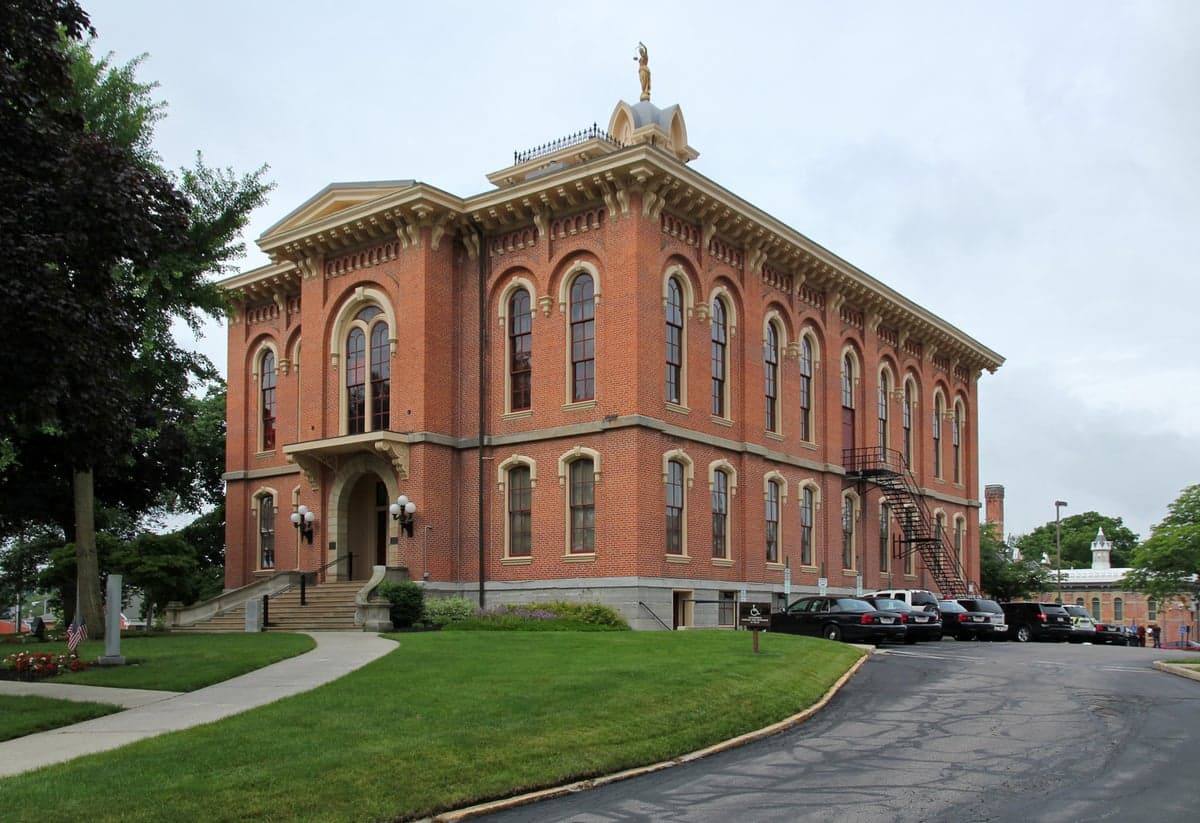
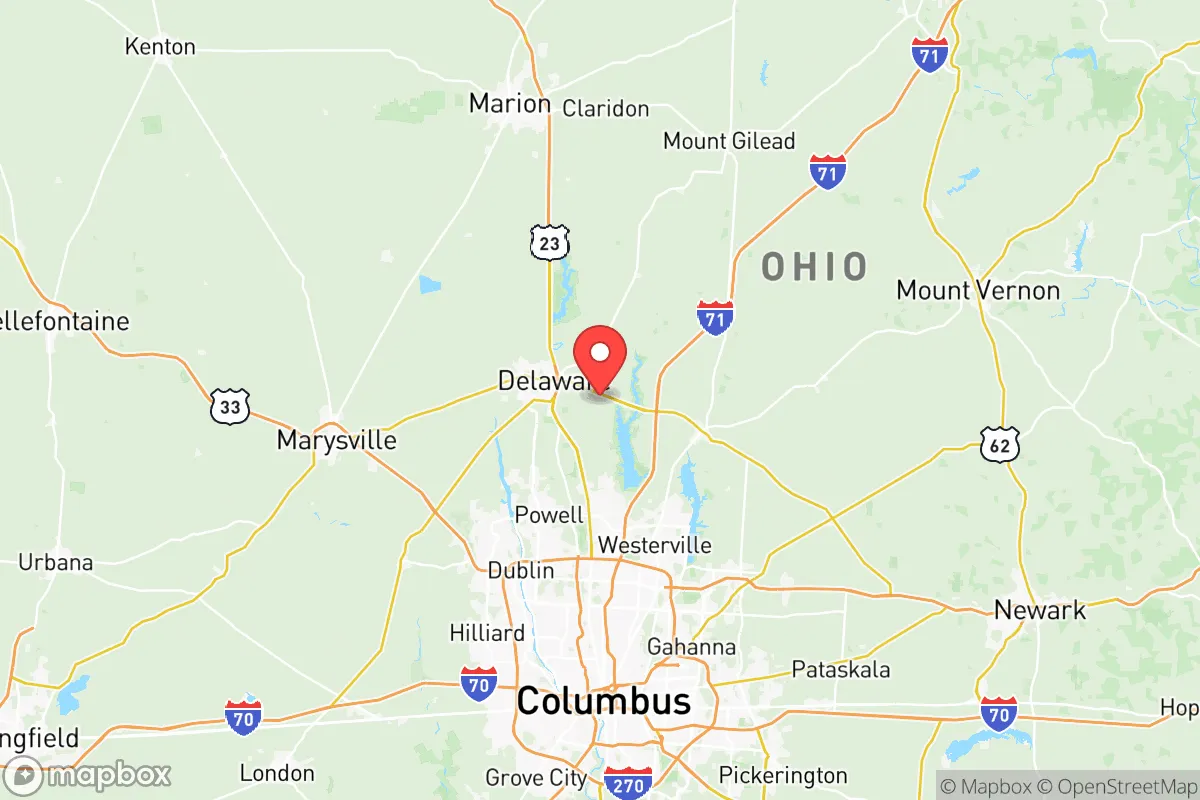
Photo: Wikipedia
Political ClimatePolitical Climate in Delaware County
Showing district-level results — no local-only data available.
Local Political AnalysisPolitical Analysis of Delaware County
Delaware County, Ohio, sits solidly in the Republican column with a Cook Partisan Voting Index (PVI) of R+18, making it one of the most reliably conservative counties in the state. That's a full 13 points more Republican than Ohio as a whole, which sits at R+5. But if you've been around here long enough, you know the story isn't quite that simple. The county has been trending red for decades, but the explosive growth from Columbus's northern suburbs is starting to stir the pot, especially in the southern townships. You can feel the shift if you pay attention to local school board races or city council elections in places like Powell and Liberty Township, where a steady influx of younger, more moderate families is slowly nudging the needle.
How it compares
Compared to the rest of Ohio, Delaware County is a Republican stronghold. The statewide R+5 PVI reflects a competitive, purple state where both parties have a real shot in statewide races. Here in Delaware County, that's not really the case for most countywide offices. Republicans routinely win by double digits. But the real texture comes from the towns. Sunbury and Ashley in the northern part of the county are deeply conservative, with Trump-style populism running strong. Delaware city itself is more of a mixed bag—the historic downtown and Ohio Wesleyan University precincts lean blue, while the outer wards are reliably red. Powell and Orange Township are the swingiest areas; they're still Republican-leaning, but by much narrower margins, and local issues like school funding and development density often split the vote. Galena is a classic exurban red pocket, while Shawnee Hills and the rural townships in the north and west vote like the rest of deep-red rural Ohio. So while the county as a whole is R+18, a resident in Powell lives in a very different political reality than one in Sunbury.
What this means for residents
For conservative residents, Delaware County feels like home. Republican candidates are a given for most local offices, and conservative values are reflected in everything from school curriculum debates to zoning decisions. The county GOP is well-organized, and attending a local party meeting in Delaware city is a good way to plug into the power structure. For liberal residents, it's more complicated. You're not going to find many elected allies at the county level, but the southern suburbs—especially Powell and Liberty Township—have active Democratic clubs and precinct captains. State Representative races in the 61st and 67th districts have become genuinely competitive, with Democrats pulling 45-48% in some cycles. Socially, most people keep politics to themselves in mixed company, but the culture wars that dominate national news do show up at school board meetings and in local Facebook groups. If you're progressive, you'll find your people in the southern suburbs or in Delaware city's college-adjacent neighborhoods. You just won't find them in county government.
One thing that really sets Delaware County apart from the rest of Ohio is the tension between its rural heritage and its suburban future. The county commissioners have fought hard to keep property taxes low and development sprawling, which pleases conservatives who value limited government and property rights. But it frustrates liberals and even some moderates who want more investment in public transit, affordable housing, and walkable communities. The county's explosive growth—it's been one of the fastest-growing in Ohio for over a decade—means these debates are only getting louder. You'll see it in the fight over the proposed 315 extension, in the battles over school levies, and in the quiet but steady shift of the southern precincts from deep red to light red. The political climate here is still overwhelmingly conservative, but it's not static. It's a county in transition, and the next decade will tell us whether it stays R+18 or starts to drift toward the statewide average.

State Political ClimatePolitical Climate in Ohio
State Political AnalysisPolitical Environment in the State
Ohio is a classic battleground that has shifted from a true purple state to a solidly Republican-leaning one, with a Cook PVI of R+5. Over the past 20 years, the state has moved from being the ultimate presidential bellwether (voting for the winner every cycle from 1964 to 2020) to a place where Republicans now hold all five statewide executive offices, a supermajority in the Statehouse, and both U.S. Senate seats. The shift is driven by the collapse of Democratic support in rural and exurban areas, combined with a slow but steady rightward drift in the working-class suburbs of places like Canton and Youngstown, while the major metros—Cleveland, Columbus, and Cincinnati—remain Democratic strongholds but are increasingly isolated.
Urban vs. rural divide
The political map of Ohio is a story of three blue islands in a red sea. The Democratic vote is concentrated in Cuyahoga County (Cleveland), Franklin County (Columbus), and Hamilton County (Cincinnati), which together account for roughly 40% of the state’s population. These metros are growing, especially Columbus, which is adding tech and insurance jobs and attracting younger, more diverse residents. But outside the I-71 corridor, the landscape is deep red. Rural counties like Mercer, Holmes, and Putnam routinely vote 75-80% Republican. The real story is the exurbs: places like Delaware County (north of Columbus) and Warren County (north of Cincinnati) have gone from competitive to reliably Republican as suburban voters who once split tickets now vote straight-ticket GOP. Meanwhile, the old Democratic strongholds in the Mahoning Valley (Youngstown) and the Rust Belt along Lake Erie have flipped hard: Trumbull County, which voted for Obama twice, went for Trump by 8 points in 2024. The divide is less about city vs. country and more about the hollowing out of the once-Democratic industrial base.
Policy environment
Ohio’s policy environment is conservative but pragmatic, with a strong tilt toward low taxes and business-friendly regulation. The state has a flat income tax rate of 3.5% (down from 4.8% in 2020), and the sales tax is 5.75% with local add-ons. Property taxes are moderate but vary wildly by district. There is no state-level rent control, and zoning is largely a local affair. Education policy is a flashpoint: Ohio has one of the largest school voucher programs in the country (the EdChoice program), which lets families use public funds for private or religious schools. The state also has a “stand your ground” self-defense law and is a “shall issue” state for concealed carry, with no permit required since 2022. Healthcare is mixed: the state expanded Medicaid under the Affordable Care Act, but the legislature has passed restrictions on abortion (a six-week ban that was in effect briefly in 2022, now blocked by the courts after a 2023 ballot initiative enshrined abortion rights in the state constitution). Election laws have tightened: voter ID is now required (with a limited list of acceptable IDs), and early voting hours were standardized but not expanded. The state also purges inactive voters regularly, a practice upheld by the Supreme Court.
Recent policy direction
The last five years have seen Ohio move decisively right on most fronts, with a few notable exceptions driven by ballot initiatives. On gun rights, the state passed constitutional carry in 2022, allowing anyone 21 or older to carry a concealed handgun without a permit. On education and parental rights, the legislature passed a “Parents’ Bill of Rights” in 2023 that requires schools to notify parents about curriculum changes and restricts instruction on sexual orientation and gender identity in K-3. On abortion and bodily autonomy, voters passed Issue 1 in 2023, amending the state constitution to protect abortion access up to fetal viability—a direct rebuke to the GOP-controlled legislature. On taxation, the flat income tax was cut from 4.8% to 3.5%, and the state is on a path to phase out the income tax entirely. On voting and ballot access, the legislature passed a law in 2023 that shortened the absentee ballot application window and tightened ID requirements, but a 2024 ballot initiative to create an independent redistricting commission failed. On property rights, Ohio is a “right-to-work” state in practice (though not by law), and the legislature has preempted local bans on fracking and natural gas drilling. The overall direction is toward lower taxes, fewer regulations, and more local control on social issues—except where the legislature overrides local ordinances on guns and energy.
Civil unrest & political movements
Ohio has seen its share of political flashpoints. The 2020 protests in Columbus and Cincinnati over George Floyd’s death were large but largely peaceful, though there were nights of looting and property damage in downtown Columbus. The state has a strong and visible pro-life movement, with annual rallies at the Statehouse, but the 2023 abortion rights amendment mobilized a massive grassroots campaign that outspent opponents 3-to-1. On the right, the “Ohio Freedom Alliance” and local Tea Party groups remain active, particularly around school board elections and library funding. Immigration politics are less heated than in border states, but there have been controversies over the resettlement of refugees in Dayton and Akron, with some local officials pushing back. There is no sanctuary city policy in Ohio; in fact, the state passed a law in 2024 requiring local law enforcement to cooperate with ICE. Election integrity remains a live issue: the 2020 and 2022 elections were certified without major incident, but the Secretary of State (a Republican) has pushed for more aggressive voter roll purges. A new resident would notice the occasional protest at the Statehouse in Columbus, but Ohio is not a place where political violence or daily unrest is common.
Projection
Over the next 5-10 years, Ohio is likely to become more Republican at the state level, but with a growing Democratic counterweight in the cities. The key demographic trend is the continued growth of Columbus and its suburbs, which are attracting young professionals and immigrants. Franklin County could become the state’s largest county by population by 2030, and its Democratic lean will make Ohio more competitive in presidential races than its current R+5 PVI suggests. However, the rural and exurban areas are not just staying red—they are getting redder, as older, white, non-college voters become a larger share of the electorate outside the metros. The state’s in-migration is mostly from other Midwestern states, not from the coasts, so it’s not importing liberal voters. The legislature will likely continue to cut taxes and restrict abortion access (within the limits of the 2023 amendment), and the fight over school vouchers will intensify. A new resident moving in now should expect a state where the GOP controls the levers of power for the foreseeable future, but where the cities are vibrant, diverse, and politically active—creating a constant tension between Columbus and the rest of the state.
For a new resident, the bottom line is this: Ohio offers a low-tax, business-friendly environment with a conservative tilt on most policy issues, but with strong pockets of liberal urban life in Cleveland, Columbus, and Cincinnati. If you’re a conservative, you’ll find your values reflected in state law and local governance outside the major cities. If you’re a liberal, you’ll find a welcoming community in the metros, but you’ll need to accept that your state government will often be at odds with your views. The state is politically engaged but not chaotic—a place where the culture war is real but fought mostly at the ballot box and in the legislature, not in the streets. The key practical takeaway: your experience will depend heavily on which county you choose, as the divide between blue cities and red towns is the defining feature of Ohio politics.
* Values derived from national, state, county, city and local statistics and may differ in a specific area. Last updated: 2026-07-24T13:03:04.000Z
Narrative content on this page is AI-generated and may contain mistakes. Verify any details that matter before acting on them.
ReloMaps may earn a commission from affiliate links at no extra cost to you.

