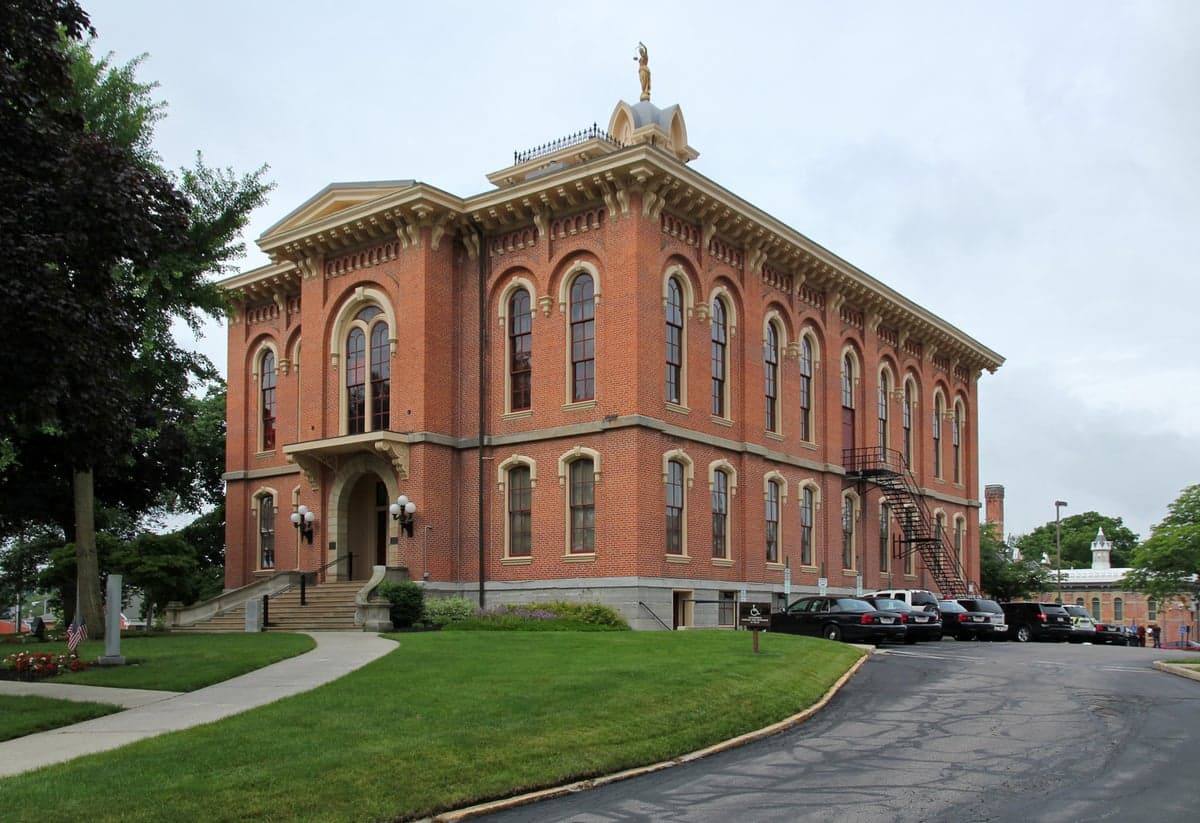
Photo: Wikipedia
Demographics of Delaware County
Affluence Level in Delaware County
An upper-middle-class area. Household wealth, education levels, and homeownership run ahead of national benchmarks.
People of Delaware County
Delaware County, Ohio, today is a rapidly growing, predominantly white-collar suburban powerhouse with a population of 221,160 that is notably more educated and affluent than the state average. The county’s character is defined by a blend of historic small-town roots in its northern communities and explosive, master-planned suburban growth in the south, driven by its position as the northern frontier of the Columbus metropolitan area. With 58% of adults holding a college degree and a foreign-born population of just 4.2%, the county remains less diverse than the nation as a whole, but is seeing a significant and concentrated influx of Indian-subcontinent professionals, particularly in the southern townships near major tech employers. The dominant cultural identity is one of family-oriented, fiscally conservative suburbanism, where new residents are drawn by top-rated schools and relative safety, even as the county grapples with the growing pains of rapid development.
Settlement & growth (pre-1960)
Before American settlement, the land that is now Delaware County was primarily hunting and trading territory of the Wyandot and Lenape (Delaware) nations, for whom the county and its seat are named. The region was sparsely populated by these groups, who were gradually pushed out by European-American expansion following the Treaty of Greenville in 1795 and the War of 1812. The first permanent white settlers, primarily of English and Scots-Irish stock, arrived from Pennsylvania, Virginia, and Kentucky in the first decade of the 1800s, drawn by the promise of cheap, fertile land in the Ohio Country. They established the first settlements along the Olentangy and Scioto Rivers, founding the town of Delaware in 1808 and the village of Sunbury in 1816.
The 19th century saw a steady trickle of German immigrants, who formed a significant portion of the farming population in the county’s rural townships, particularly around the villages of Ostrander and Kilbourne. These communities were characterized by tight-knit Lutheran and Catholic congregations and a strong agricultural work ethic. The arrival of the railroads in the 1850s, including the Cleveland, Columbus & Cincinnati line, transformed the county by connecting its farmers to larger markets and spurring the growth of small industrial towns like Ashley and Galena. For much of this period, Delaware County remained a quiet, overwhelmingly white, Protestant agricultural area, with the city of Delaware serving as the commercial, governmental, and educational hub, anchored by Ohio Wesleyan University (founded 1842). The population grew slowly but steadily, reaching roughly 30,000 by 1900, and remained almost entirely native-born white.
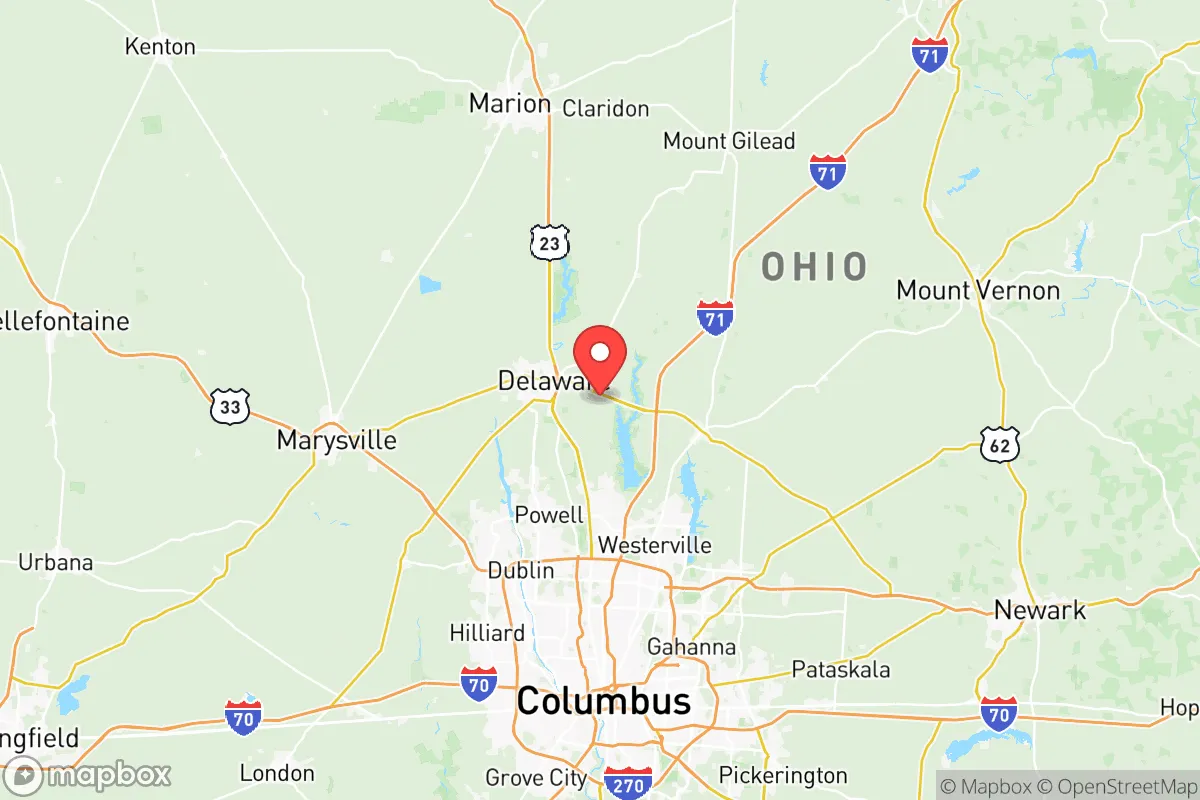
The first half of the 20th century brought little demographic change. The county did not experience the large-scale immigration from Southern or Eastern Europe that transformed industrial cities like Cleveland or Youngstown. Its economy remained tied to agriculture and the small-scale manufacturing that supported it. The Great Depression and World War II saw out-migration of young people to industrial centers, and the county’s population actually declined slightly between 1940 and 1950. The post-war boom began to change this, as the rise of automobile ownership and the construction of U.S. Route 23 and Interstate 71 made the southern part of the county accessible to commuters working in Columbus. By 1960, the population had crept back up to around 36,000, but the county was still fundamentally a rural, agricultural community on the cusp of transformation.
Modern era (post-1965)
The modern demographic story of Delaware County is not one of international immigration driven by the 1965 Hart-Cellar Act, but rather of explosive domestic migration and suburbanization. The county’s population began its meteoric rise in the 1980s and 1990s as Columbus’s economy diversified and expanded, pulling middle-class and upper-middle-class families northward. The construction of the Polaris Centers of Commerce in southern Orange and Delaware Townships in the 1990s was the single most transformative event. This massive mixed-use development, anchored by major corporate headquarters and retail, turned the southern tip of the county into a premier employment and commercial hub. The villages of Powell and the city of Westerville (which straddles the Franklin County line) became the primary destinations for this wave of domestic migrants, who were overwhelmingly white, college-educated, and seeking large new homes in top-rated school districts like Olentangy Local Schools.
This domestic influx has been so dominant that it has shaped the county’s racial and ethnic composition. The white population remains very high at 80.4%, a figure that reflects the county’s status as a destination for white flight from Columbus and as a draw for white professionals from across the Midwest. The Black population is just 4.1%, and the Hispanic population is 3.3%, both well below national averages. The most notable non-white demographic shift has been the arrival of a highly educated Indian-subcontinent population, which now stands at 4.9% of the county. This community is heavily concentrated in the southern part of the county, particularly in the newer subdivisions of Dublin (which extends into the county’s southwest corner) and the Polaris area, drawn by high-paying jobs in technology, finance, and healthcare at companies like JPMorgan Chase, Nationwide Insurance, and Hewlett Packard Enterprise. The East and Southeast Asian population (3.0%) follows a similar pattern, clustering in the same southern suburbs for the same professional reasons. The foreign-born population remains low overall at 4.2%, but it is highly concentrated and affluent, a stark contrast to the immigrant enclaves of older industrial cities.
The future
Delaware County’s population is projected to continue growing robustly for at least the next two decades, with the Ohio Development Services Agency forecasting it to surpass 300,000 by 2050. This growth will be driven almost entirely by domestic migration from other parts of Ohio and the Midwest, as well as from higher-cost coastal states. The county is becoming more diverse, but slowly and in a very specific pattern. The Indian-subcontinent and East/Southeast Asian populations are likely to grow as the tech and finance sectors in the Polaris and Dublin corridors expand, but these groups will remain concentrated in the southern suburbs. The northern half of the county, including the city of Delaware and the villages of Sunbury, Ashley, and Galena, will likely remain overwhelmingly white and more culturally tied to traditional Midwestern small-town life.
The biggest cultural and political tension in the coming years will be between the county’s historic rural conservatism and the new suburban conservatism of the southern developments. While both lean Republican, the newer residents are often more focused on issues of school funding, development regulation, and infrastructure, rather than the agricultural and property-rights concerns of the older population. The county is unlikely to become a Democratic stronghold, but its Republicanism may moderate as it becomes more educated and professional. For a new resident moving in, the county offers a clear choice: the fast-paced, amenity-rich, and increasingly diverse southern suburbs, or the quieter, more traditional, and less diverse northern towns. The common thread is a high quality of life, excellent schools, and a community ethos that strongly prioritizes family and property values.
Delaware County is becoming a two-tiered suburb: a dynamic, globally-connected professional hub in the south, and a slower-growing, preservation-minded exurban and rural area in the north. For a family or individual moving in now, the decision is less about whether the county is a good fit and more about which of these two distinct communities within it best matches their lifestyle and values. The county’s overall trajectory is one of continued affluence, educational attainment, and conservative-leaning growth, making it a stable and desirable destination for those seeking a high-standard suburban life in the Columbus orbit.

* Values derived from national, state, county, city and local statistics and may differ in a specific area. Last updated: 2026-07-24T13:03:04.000Z
Narrative content on this page is AI-generated and may contain mistakes. Verify any details that matter before acting on them.
ReloMaps may earn a commission from affiliate links at no extra cost to you.

