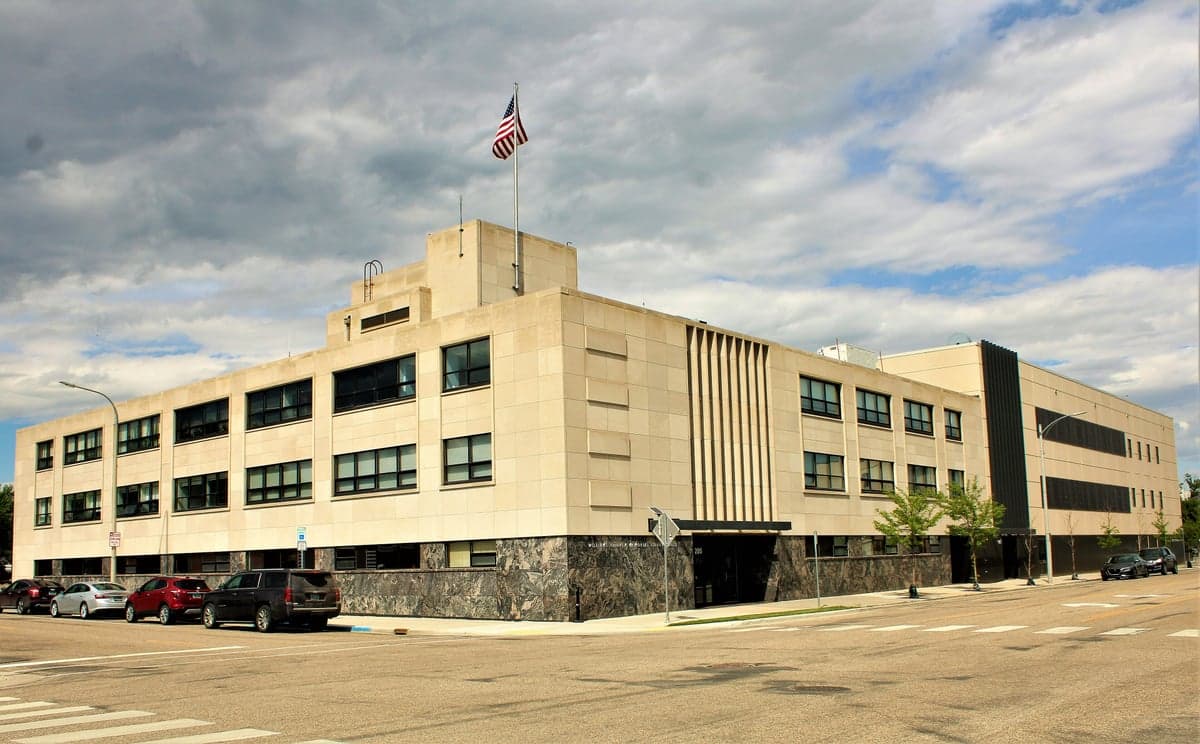
Photo: Wikipedia
Political ClimatePolitical Climate in Williams County
Showing state-level results — no local-only data available.
Local Political AnalysisPolitical Analysis of Williams County
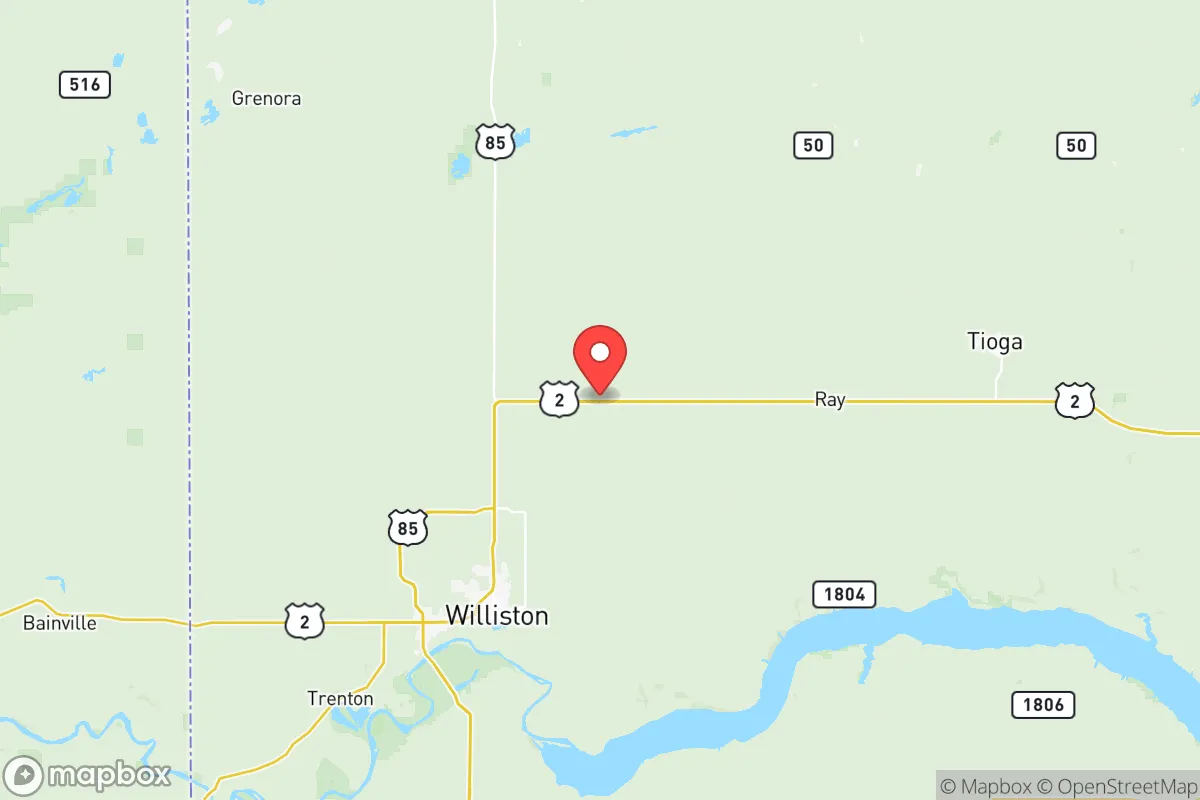
Williams County, anchored by Williston, has long been one of North Dakota's most reliably Republican strongholds, but the Bakken oil boom has intensified that lean while also creating a more transient, politically diverse undercurrent. In presidential elections, the county routinely votes for GOP candidates by margins exceeding 70%, a pattern that held in 2024 and 2020. However, the real story is the growing divide between the oil-patch boomtowns and the older agricultural communities, a split that shapes local politics more than any statewide trend.
How it compares
Compared to North Dakota as a whole, Williams County is significantly more Republican. The state itself is deeply red—Donald Trump won it by over 20 points in 2024—but Williams County's margins are often 10 to 15 points higher. The Cook PVI for North Dakota is not officially calculated, but the state's consistent GOP dominance is well-documented. Within Williams County, the political variation is stark. Williston, the county seat and oil hub, is the most conservative, with precincts near the industrial areas and newer subdivisions voting 80%+ Republican. In contrast, Ray and Tioga, smaller towns with a mix of oil workers and longtime ranchers, are slightly less lopsided but still reliably red. The only precincts that ever show a hint of blue are in the older, more established neighborhoods of Williston, where a handful of unionized oil workers and public employees sometimes vote Democratic in local races. There are no true swing precincts—the county is overwhelmingly conservative—but the margin of victory can vary by 10 points between a precinct in rural farming country and one in a new apartment complex in Williston.
What this means for residents
For conservative residents, the political climate is comfortable and familiar. Local elected officials, from the county commission to the state legislature, are almost all Republicans, and policies around energy development, property taxes, and gun rights align closely with their views. For liberal or moderate residents, the reality is more nuanced. While they are a clear minority, they are not silenced—the oil boom has brought in people from across the country, creating a small but visible progressive community in Williston. Local politics often revolve around practical issues like infrastructure, housing, and school funding, which can transcend party lines. A liberal resident might find themselves agreeing with a conservative neighbor on the need for better roads or more affordable childcare, even if they disagree on national issues. The county's strong Republican lean means that Democratic candidates rarely invest resources here, but local elections are often decided by personal connections and track records, not just party affiliation.
Culturally, Williams County is defined by its oil economy and its rural roots. The boom has made it one of the most transient places in North Dakota, with a constant churn of workers from Texas, Oklahoma, and beyond. This has diluted some of the traditional Scandinavian and German-Russian cultural norms, replacing them with a more generic "oil patch" culture that values hard work, self-reliance, and a libertarian streak. Policy-wise, the county is known for its low property taxes and minimal zoning regulations, a direct reflection of the pro-development, anti-regulation sentiment that dominates local politics. For a conservative, this is a feature; for a liberal, it can feel like a lack of planning or environmental oversight. The county's trajectory is tied to oil prices—when they're high, the population surges and politics become more transactional; when they're low, the community tightens and the old agricultural conservatism reasserts itself. Either way, Williams County remains a place where the political conversation is grounded in the practical realities of living in a boom-and-bust economy, not in abstract ideological battles.

State Political ClimatePolitical Climate in North Dakota
State Political AnalysisPolitical Environment in the State
North Dakota is one of the most reliably Republican states in the nation, with a partisan lean that has only deepened over the past two decades. In the 2024 presidential election, Donald Trump carried the state by a margin of roughly 36 points, a shift from the 27-point win in 2016 and the 32-point win in 2020. The state’s political DNA is rooted in a mix of agrarian populism, energy-sector conservatism, and a strong independent streak. While Democrats once held both U.S. Senate seats and the governorship as recently as the late 1980s, the state has moved steadily rightward since the early 2000s, driven by the oil boom in the Bakken region and a rural electorate that feels increasingly distant from national Democratic priorities.
Urban vs. rural divide
The political map of North Dakota is defined by a stark urban-rural split, though even the “urban” areas are small by national standards. Fargo, the largest city, is the state’s most competitive area — Cass County voted for Trump by only 12 points in 2024, compared to the statewide 36-point margin. The city’s growth, driven by a thriving tech and healthcare sector, has brought in younger, more moderate voters, but Fargo remains a conservative-leaning metro overall. Bismarck and Mandan in Burleigh County are reliably Republican, with Trump winning by over 40 points. Minot and Williston, both heavily tied to the oil and gas industry, are deep red — Williams County (Williston) gave Trump a 60-point margin. The rural counties, particularly in the southwest and along the Missouri River, are among the most Republican in the nation. The only reliably Democratic areas are the Native American reservations, such as Fort Totten (Spirit Lake) and Belcourt (Turtle Mountain), which vote overwhelmingly Democratic but have small populations. The political divide isn’t just about party — it’s about lifestyle: urban residents in Fargo and Grand Forks tend to prioritize education and healthcare funding, while rural and oil-patch voters focus on property rights, energy development, and gun access.
Policy environment
North Dakota’s policy environment is shaped by a low-tax, limited-government philosophy, but with a pragmatic streak. There is no state income tax — the state relies heavily on oil extraction taxes, sales tax (5%), and property taxes. The regulatory posture is business-friendly, particularly for energy and agriculture. Education policy is locally controlled, with school choice limited to charter schools and a small but growing homeschool community; there is no voucher program. Healthcare policy is conservative: the state did not expand Medicaid under the Affordable Care Act until 2013, and then only after a legislative compromise. Election laws are relatively straightforward — no-excuse absentee voting is allowed, voter ID is required (with a strict photo ID law passed in 2013), and same-day registration is not permitted. The state has a strong tradition of direct democracy through ballot initiatives, which have been used to legalize medical marijuana (2016) and recreational marijuana (2024, though the legislature later imposed restrictions). Gun laws are among the most permissive in the nation: no permit is required for concealed carry, and the state has a “stand your ground” law. Property rights are strongly protected, with a right-to-farm amendment in the state constitution.
Recent policy direction
Over the past five years, North Dakota has moved decisively to the right on a broad range of issues. In 2023, the legislature passed a near-total abortion ban (HB 1466) with exceptions only for rape, incest, and life of the mother, which took effect after the Dobbs decision. On education, the state passed a “Parents’ Bill of Rights” (SB 2221) in 2023, requiring schools to notify parents of curriculum changes and allowing them to opt their children out of certain materials. Gun rights were expanded in 2021 with the passage of a “constitutional carry” law (HB 1380), eliminating the need for a permit to carry a concealed firearm. On voting, the state tightened ballot access in 2021 with SB 2103, which required a witness signature for absentee ballots and limited ballot drop boxes. On privacy and surveillance, the state passed a law in 2023 restricting the use of facial recognition technology by law enforcement without a warrant. On medical and bodily autonomy, the state has been a battleground over transgender rights — in 2023, the legislature passed HB 1473, which banned transgender girls from participating in female sports, and HB 1254, which restricted gender-affirming care for minors. Property rights saw a major win for landowners in 2021 with the passage of a law limiting the use of eminent domain for carbon pipeline projects, a direct response to the Summit Carbon Solutions pipeline controversy. The overall direction is toward greater individual liberty on guns and property, but tighter state control on social issues and voting.
Civil unrest & political movements
North Dakota has seen its share of political flashpoints, though they tend to be more about resource extraction than culture wars. The most significant was the Dakota Access Pipeline protests at the Standing Rock Reservation (near Cannon Ball) in 2016-2017, which drew thousands of activists from across the country and resulted in mass arrests and a heavy law enforcement presence. That event left a lasting scar on the state’s political landscape, deepening distrust between tribal communities and state government. More recently, the Summit Carbon Solutions pipeline project has sparked organized opposition from landowners and environmental groups, with protests and legal challenges in counties like Emmons and Logan. On the right, the state has seen a rise in “constitutional sheriff” movements and anti-federal land management rhetoric, particularly in the western counties. There is no significant secession or nullification movement, but there is a strong strain of “state sovereignty” rhetoric, especially around energy regulation. Election integrity controversies have been minimal — the state’s small population and paper ballot system have kept fraud allegations at bay. Immigration politics are largely absent, as the state has a very small foreign-born population (about 4%), though there have been debates about refugee resettlement in Fargo and Grand Forks. A new resident would notice that political activism is less visible than in larger states — most people keep their politics private, and the culture is one of “live and let live” as long as you don’t push for major change.
Projection
Over the next 5-10 years, North Dakota’s political trajectory is likely to remain deeply Republican, but with some important shifts. The state’s population is aging and slowly declining in rural areas, while Fargo and the oil patch are growing. This demographic shift could make the state slightly more competitive in the long run, but not enough to flip it — Fargo’s growth is moderate, and the oil patch remains a Republican stronghold. The biggest wildcard is the energy transition: if federal policies shift toward renewable energy, the state’s oil-dependent economy could face headwinds, potentially driving a more populist, anti-establishment conservatism. The state’s in-migration is small but notable — people moving from blue states for jobs in energy, tech, and healthcare tend to be conservative or libertarian, reinforcing the existing lean. The biggest policy fights will likely be over property rights (pipelines, wind farms, and carbon capture), education funding (as rural schools shrink), and the ongoing tension between local control and state mandates on social issues. Someone moving in now should expect a state that remains reliably red, but with a pragmatic, independent streak — don’t expect the culture-war intensity of Texas or Florida, but do expect a government that is skeptical of federal overreach and protective of traditional industries.
For a new resident, the practical takeaway is straightforward: if you’re conservative, you’ll find a state that largely aligns with your values on taxes, guns, and regulation, with a government that is responsive to your concerns. If you’re liberal, you’ll find a state where your vote carries less weight, but where the culture is generally tolerant of personal differences as long as you don’t push for major policy changes. The state’s small population means that individual voices can still have an outsized impact — showing up at a county commission meeting or writing a letter to the editor can actually move the needle. The bottom line: North Dakota is a place where politics is less about party labels and more about practical outcomes, and where the biggest fights are about land, energy, and the balance between local control and state authority. It’s not a place for political activists, but it is a place where you can live your life with a high degree of personal freedom and a low tax burden.
* Values derived from national, state, county, city and local statistics and may differ in a specific area. Last updated: 2026-10-21T23:32:38.000Z
Narrative content on this page is AI-generated and may contain mistakes. Verify any details that matter before acting on them.
ReloMaps may earn a commission from affiliate links at no extra cost to you.

