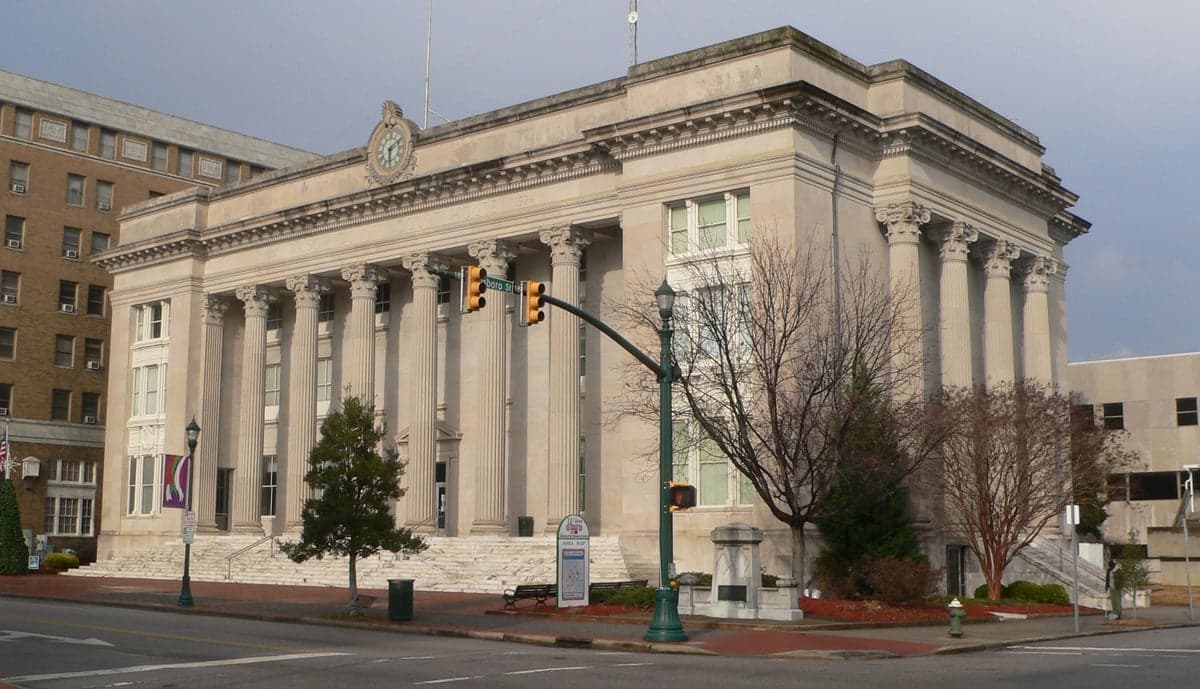
Photo: Wikipedia
Quality of Life in Wilson County
A livable area that tracks near national norms for affordability, walkability, and neighborhood health.
What does Quality of Life tell us?
Quality of Life measures an area by evaluating factors like cost of living, nearby amenities, country club access, airport proximity, socioeconomic signals and neighborhood character. For large states, this is a general average — quality of life can vary dramatically between metro areas, suburbs, and rural communities within the same state.
What does this tell us?
Quality of Life measures an area by evaluating factors like cost of living, nearby amenities, country club access, airport proximity, socioeconomic signals and neighborhood character. For large states, this is a general average — quality of life can vary dramatically between metro areas, suburbs, and rural communities within the same state.
Cost of Living
28% below national average
105%
The Real Cost of Living in Wilson County for 2026
| Tier | Individual | Family (4) |
|---|---|---|
| Survival | $15k | $27k |
| Comfortable | $33k | $49k |
| Luxury | $93k+ | $144k+ |
| Elite (Top 5%) | $118k+ | $183k+ |
Quality-of-Life Analysis
Wilson County, North Carolina, offers a broad quality-of-life spectrum that ranges from the walkable, amenity-rich environment of its county seat to deeply rural farmland and quiet crossroads communities. The county’s overall cost of living index of 72 (well below the U.S. average of 100) and a median home value of $171,800 make it one of the more affordable areas in the Research Triangle region, attracting a mix of young families seeking space, retirees looking to stretch savings, and commuters who work in Raleigh or Greenville. The character of daily life shifts noticeably depending on whether one lives in the town of Wilson itself, in a smaller community like Elm City or Lucama, or on a farmstead in the unincorporated stretches of the county.
Largest town(s) & population centers
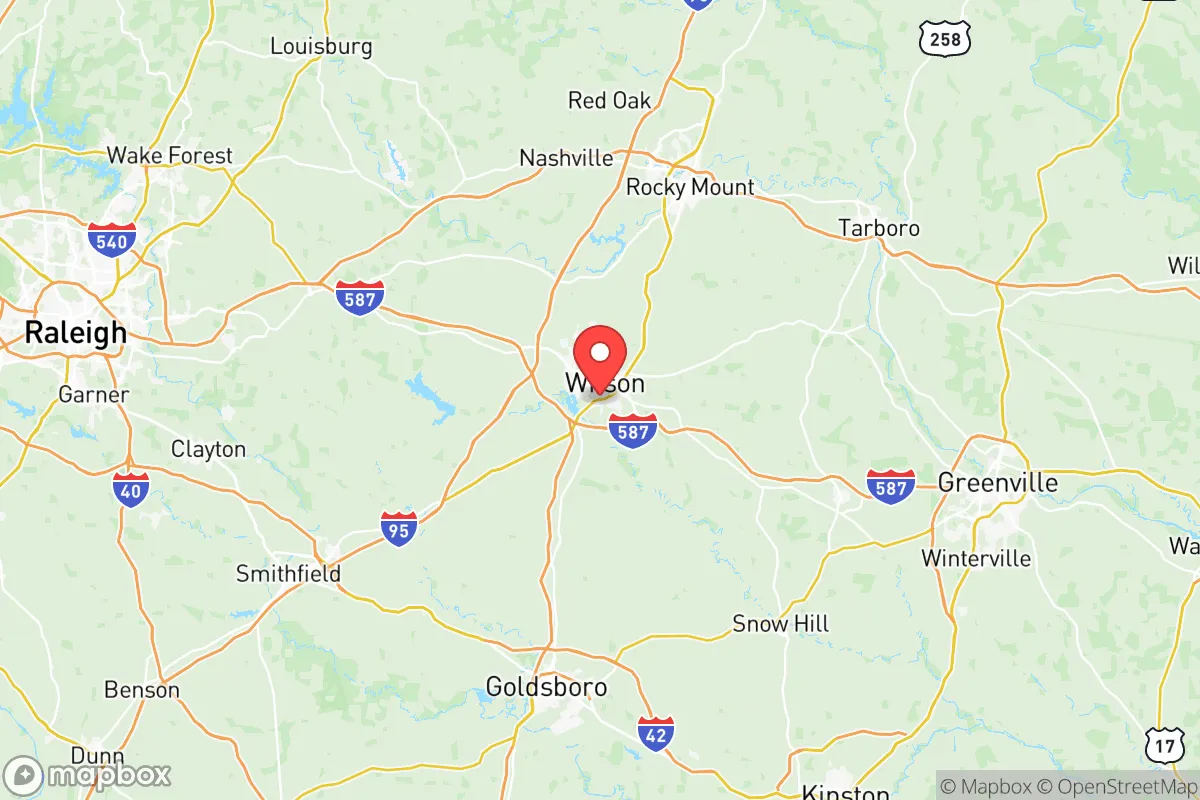
The city of Wilson is the county's undisputed population and economic hub, home to roughly 50,000 residents and the vast majority of the county's jobs, retail, and healthcare infrastructure. Daily life here centers on a revitalized downtown anchored by the Whirligig Park, a growing collection of independent restaurants and breweries, and the Wilson Tobs minor-league baseball team. The city offers the region's best public school options, including Wilson Early College Academy, and the largest concentration of medical services at Wilson Medical Center. Housing in Wilson spans from historic bungalows near the downtown core to newer subdivisions on the city's south and east sides, with the median rent of $915 reflecting a notably lower barrier to entry than nearby Raleigh. The average commute of roughly 22 minutes is manageable, though residents working in the Triangle (about 45 minutes west on I-95 and US 264) face a longer drive that many accept in exchange for lower housing costs.
Smaller towns & rural pockets
Outside the city limits, Wilson County contains several smaller incorporated towns that offer a quieter, more self-contained lifestyle. Elm City (population roughly 1,300) sits along US 301 in the county's northern tier, with a small historic core and easy access to I-95; it draws residents who want a small-town feel but still need to commute to Wilson or Rocky Mount. Lucama (population about 1,100) anchors the county's southern end near the Johnston County line, offering a handful of local businesses and a strong sense of community centered on its annual events. Black Creek (population roughly 700) and Saratoga (population about 400) are even smaller, each with a post office, a few churches, and little else in the way of commercial amenities — these are places where residents drive 15-20 minutes to Wilson for groceries and most services. The unincorporated areas between these towns, particularly along the county's western and southern edges, are dominated by tobacco and soybean farms, with homes often set on one to five acres and connected by two-lane roads. These rural pockets offer maximum privacy and space but minimal walkability or public services.
Cost & lifestyle range
The cost and lifestyle spread across Wilson County is substantial, with the most dramatic differences visible between the city of Wilson and the far rural stretches. At the higher-cost, higher-amenity end, the city of Wilson's newer subdivisions — such as those near the YMCA on Forest Hills Road or the Lake Wilson area — see home values above the county median, often in the $220,000 to $300,000 range, with residents paying for proximity to schools, shopping, and healthcare. At the lower-cost, lower-amenity end, rural properties in the southern part of the county near the Johnston County line or in the far northern reaches around Sims can still be found for under $150,000, especially if they need renovation, but buyers trade that affordability for longer drives to any commercial district and limited access to high-speed internet in some pockets. Renters see a similar spread: a two-bedroom apartment in Wilson's newer complexes near Tarboro Street runs close to the $915 median, while a rental house in Lucama or Black Creek may rent for $700-$800 but offer more square footage and land. Property taxes in Wilson County are moderate, and the absence of city taxes in unincorporated areas further lowers the carrying cost for rural homeowners.
Wilson County works best for people who want genuine affordability within striking distance of the Research Triangle's job market but do not require urban density or a robust public transit system. Families who prioritize a lower cost of living and a slower pace over nightlife and walkability will find the city of Wilson offers a solid middle ground, while those seeking maximum space and privacy — and who are comfortable driving 15-20 minutes for most errands — will be well served by the county's smaller towns and rural pockets. The county's diversity of housing stock and price points means that a first-time homebuyer, a retiree on a fixed income, and a commuter working in Raleigh can all find a viable option within its borders, provided they are clear about which trade-offs they are willing to make.

Crime in Wilson County
Crime rates similar to the national median for U.S. locations.
Violent CrimeViolent Crime Analysis
Property CrimeProperty Crime Analysis
Crime Analysis
Wilson County, North Carolina, reports a violent crime rate of 310.5 incidents per 100,000 residents and a property crime rate of 1,694.6 per 100,000, placing it in a moderate-risk tier compared to other Eastern North Carolina communities. The county seat of Wilson anchors the region, while smaller towns like Elm City, Black Creek, and Lucama experience significantly lower incident volumes, though their smaller populations can produce volatile per-capita rates. The overall safety picture is shaped by a mix of urbanized corridors along I-95 and US 264 and more rural, low-crime residential areas.
Crime in context
Wilson County’s violent crime rate of 310.5 per 100,000 sits roughly 15% below the North Carolina state average of approximately 365 per 100,000 and is notably lower than the national rate of about 380 per 100,000. Property crime, at 1,694.6 per 100,000, is slightly above the state average of 1,620 but remains below the national figure of 1,954. These aggregate numbers, however, mask sharp internal disparities. The city of Wilson itself, which contains the county’s densest commercial and rental housing stock, accounts for the majority of reported thefts and aggravated assaults. By contrast, Stantonsburg and Saratoga consistently report single-digit violent crime totals annually, making them statistically among the safest places in the county. The presence of Interstate 95 through the western edge of the county contributes to property crime, particularly vehicle break-ins and cargo theft at truck stops near the Kenly area.
What residents experience
Residents in the city of Wilson are most likely to encounter property crime — larceny from vehicles, burglary, and shoplifting — as the dominant public safety concern. The Wilson Police Department has responded by deploying directed patrols in high-theft zones near the Wilson Mall and the Tarboro Street corridor. Violent crime, while less frequent, is concentrated in specific neighborhoods east of the railroad tracks and in parts of the downtown district, where socio-economic stressors and gang activity are contributing factors. The judicial environment in Wilson County is a point of concern for residents who prioritize public safety. The local district court, part of the 8th Prosecutorial District, has seen a shift toward progressive sentencing policies in recent years, including expanded use of deferred prosecution and pretrial release for non-violent offenders. While these measures aim to reduce jail overcrowding, critics argue they result in repeat property offenders cycling back onto the streets with minimal consequences, undermining deterrence. This pattern is most visible in the city of Wilson, where a small number of chronic offenders account for a disproportionate share of larceny and breaking-and-entering cases.
Neighborhood-level variation
Neighborhood-level safety varies considerably across Wilson County. The Rock Ridge and Sims areas in the northern part of the county are almost entirely residential and report near-zero violent crime, with property crime limited to occasional shed burglaries. The Kenly area, straddling the Johnston County line, experiences elevated property crime tied to interstate traffic but very low violent crime. In the city of Wilson, the West Nash Street corridor and the Country Club Estates neighborhood are generally considered safer, with lower incident densities than the central and east-side districts. For prospective residents, the safest strategy is to target the outlying towns — Elm City, Black Creek, Lucama, Stantonsburg, and Saratoga — where community policing and neighborhood watch programs are active and the progressive judicial trends of the county seat have less day-to-day impact on public safety.
* Values derived from national, state, county, city and local statistics and may differ in a specific area. Last updated: 2026-06-27T10:53:51.000Z
Narrative content on this page is AI-generated and may contain mistakes. Verify any details that matter before acting on them.
ReloMaps may earn a commission from affiliate links at no extra cost to you.

