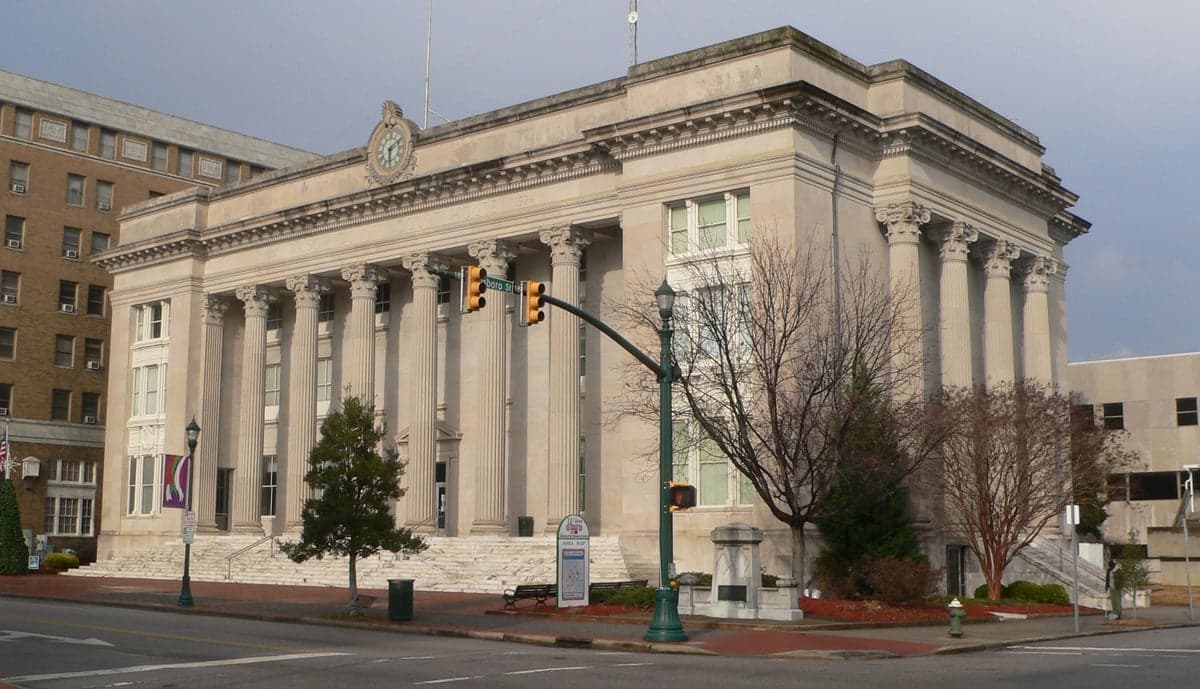
Photo: Wikipedia
Personal Sovereignty in Wilson County
Viable for self-reliance. Generally workable, though some barriers may limit total independence.
What does Personal Sovereignty tell us?
Personal Sovereignty measures your capacity for self-reliance and independence with minimal government friction. Higher scores mean fewer barriers between you and the way you want to live... but it assumes you have the space you need and good neighbors.
What does this tell us?
Personal Sovereignty measures your capacity for self-reliance and independence with minimal government friction. Higher scores mean fewer barriers between you and the way you want to live... but it assumes you have the space you need and good neighbors.
State Policy
Energy independence: Importer (15% of energy produced in-state)
Personal Liberty
Homesteading

Personal Liberty Analysis
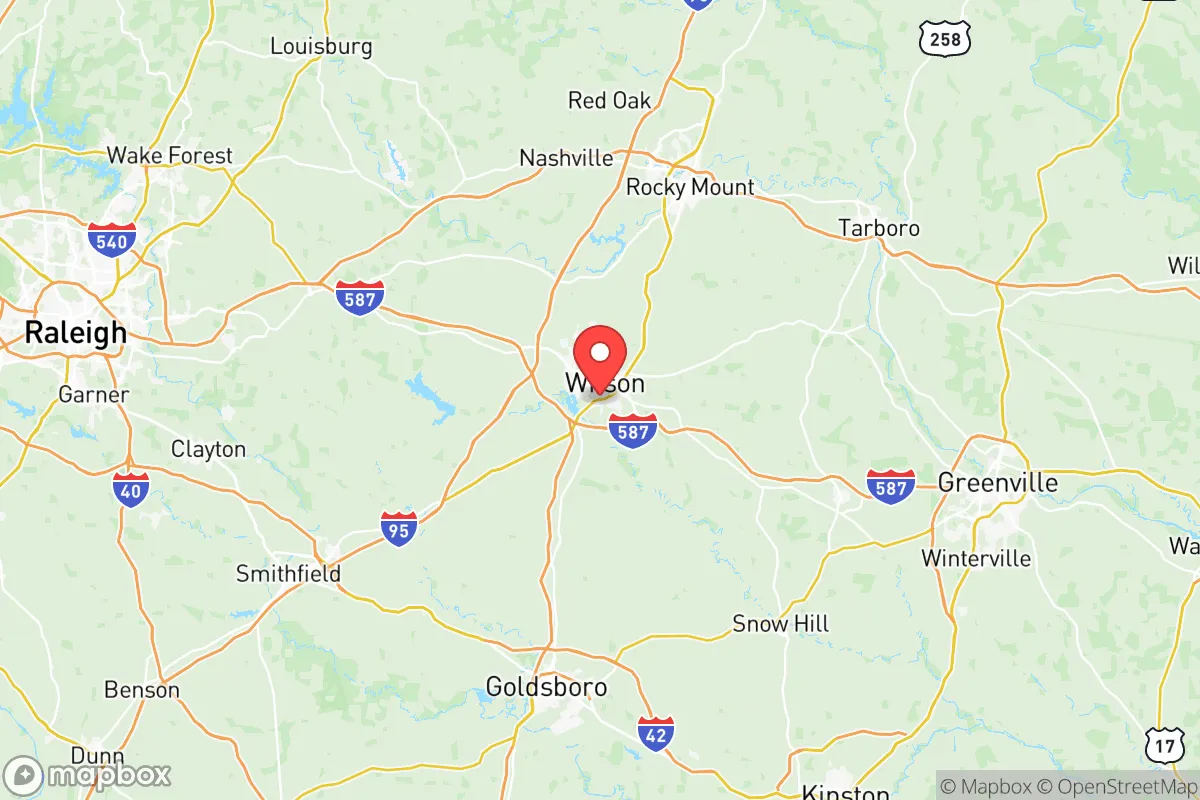
Wilson County, North Carolina, offers a notably high degree of personal sovereignty relative to many urban and suburban areas in the state, driven by a light-touch county government, a strong gun culture, and a regulatory environment that still permits significant self-reliance. The county seat, Wilson, anchors the area with a population of roughly 49,000, while the surrounding unincorporated communities like Black Creek, Elm City, Lucama, Sims, and Stantonsburg each present distinct opportunities for autonomy-minded individuals and families. The overall posture is one of "live and let live," with the county generally deferring to state law on most matters of personal liberty, which is a key draw for those relocating from more restrictive jurisdictions.
Tax burden and regulatory posture in Wilson County compared to the Triangle
Wilson County's tax burden is moderate by North Carolina standards but significantly lighter than what you will find in the nearby Research Triangle cities of Raleigh, Durham, and Cary. The county's property tax rate is approximately $0.745 per $100 of assessed value (2025-2026), which is competitive for the region. When combined with the state's flat income tax rate of 4.5% and a sales tax rate of 7% (6.75% state plus 0.25% county), the overall tax load is manageable. The regulatory posture is decidedly pro-business and pro-property owner. There is no county-level zoning in the unincorporated areas of Wilson County, which means that in communities like Black Creek and Lucama, property owners face far fewer restrictions on land use than they would inside the Wilson city limits. The county planning department is small and responsive, and building permits for owner-occupied structures are generally issued without excessive delay. For those coming from heavily regulated states like California or New York, the difference is dramatic: you can typically put a manufactured home on your own land, run a small business from your property, or keep livestock without navigating a thicket of bureaucratic approvals.
Self-defense and gun law specifics in Wilson County
North Carolina is a "shall-issue" state for concealed carry permits, and Wilson County's sheriff's office processes permits efficiently, with typical turnaround times of 45 to 90 days for new applicants. The county is home to several active gun ranges and gun shops, including the Wilson County Wildlife Club and multiple FFL dealers in Elm City and Stantonsburg. Open carry of handguns is legal without a permit for anyone who can legally possess a firearm, and the county has no local ordinances restricting the sale, possession, or transport of firearms beyond state law. Stand Your Ground laws apply statewide, meaning there is no duty to retreat before using deadly force in self-defense if you are lawfully present. The cultural attitude toward firearms in Wilson County is overwhelmingly positive; gun ownership is the norm rather than the exception, particularly in the rural areas around Sims and Black Creek. For the self-defense-minded individual, this is one of the more permissive environments in the southeastern United States.
Self-reliance and homesteading viability: lot sizes, zoning, and off-grid feasibility
Homesteading and off-grid living are genuinely viable in Wilson County, especially outside the Wilson city limits. In unincorporated areas, there are no minimum lot size requirements for agricultural use, and properties of 1 to 5 acres are common and affordable, with prices ranging from $5,000 to $15,000 per acre depending on proximity to Wilson. The county allows rainwater collection, composting toilets, and solar panel installation without special permits, though grid-tied solar requires interconnection approval from the local electric cooperative. Wells and septic systems are permitted through the county health department, and the process is straightforward for standard installations. In Lucama and Stantonsburg, you will find active small farms, backyard poultry operations, and even small-scale aquaculture. The county's agricultural extension office is supportive of new homesteaders, offering soil testing and workshops. The main limitation is that the county does enforce the state's building code for habitable structures, so you cannot simply live in a shed or RV on your land indefinitely without a permitted dwelling. However, many landowners circumvent this by building a small permitted "guest house" or "workshop" first, then adding a primary residence later. For those serious about self-reliance, Sims and the rural areas west of Wilson offer the best balance of affordability, privacy, and regulatory freedom.
Personal liberties: parental rights, medical autonomy, speech, and property
Wilson County reflects North Carolina's broader commitment to parental rights in education. The state's Parents' Bill of Rights (enacted in 2023) gives parents explicit authority over their children's medical decisions, educational records, and curriculum objections. The Wilson County Schools district generally defers to parental authority, and there is a growing network of homeschool co-ops and private Christian schools in Elm City and Black Creek for families seeking alternatives to the public system. Medical autonomy is more limited: North Carolina has not expanded Medicaid (as of 2026), and the state's certificate-of-need laws restrict the number of healthcare facilities, which can limit choice. However, direct primary care practices and cash-pay clinics are available in Wilson. Free speech and property rights are strongly protected. The county has no sign ordinances in unincorporated areas, so you can display political or religious signage freely. Property rights are robust: the county rarely exercises eminent domain, and there are no rent control ordinances. The overall legal environment is one where the default answer from local government is "yes" unless there is a clear public safety reason to say "no."
For the autonomy-minded individual or family, Wilson County ranks among the more sovereign areas in eastern North Carolina. The combination of low taxes, minimal zoning, strong gun rights, and a culture of self-reliance creates an environment where personal freedom is the baseline rather than the exception. While it does not offer the extreme libertarian posture of some rural western counties like Yancey or Mitchell, it provides a practical, middle-ground sovereignty that is accessible to people moving from the Triangle or from out of state. The key is to choose your specific location carefully: Black Creek and Sims offer the most regulatory freedom, while Elm City and Lucama provide a balance of rural autonomy and proximity to Wilson's amenities. For those who prioritize personal sovereignty above all else, Wilson County is a strong contender in the North Carolina relocation landscape.

* Values derived from national, state, county, city and local statistics and may differ in a specific area. Last updated: 2026-06-27T10:53:51.000Z
Narrative content on this page is AI-generated and may contain mistakes. Verify any details that matter before acting on them.
ReloMaps may earn a commission from affiliate links at no extra cost to you.

