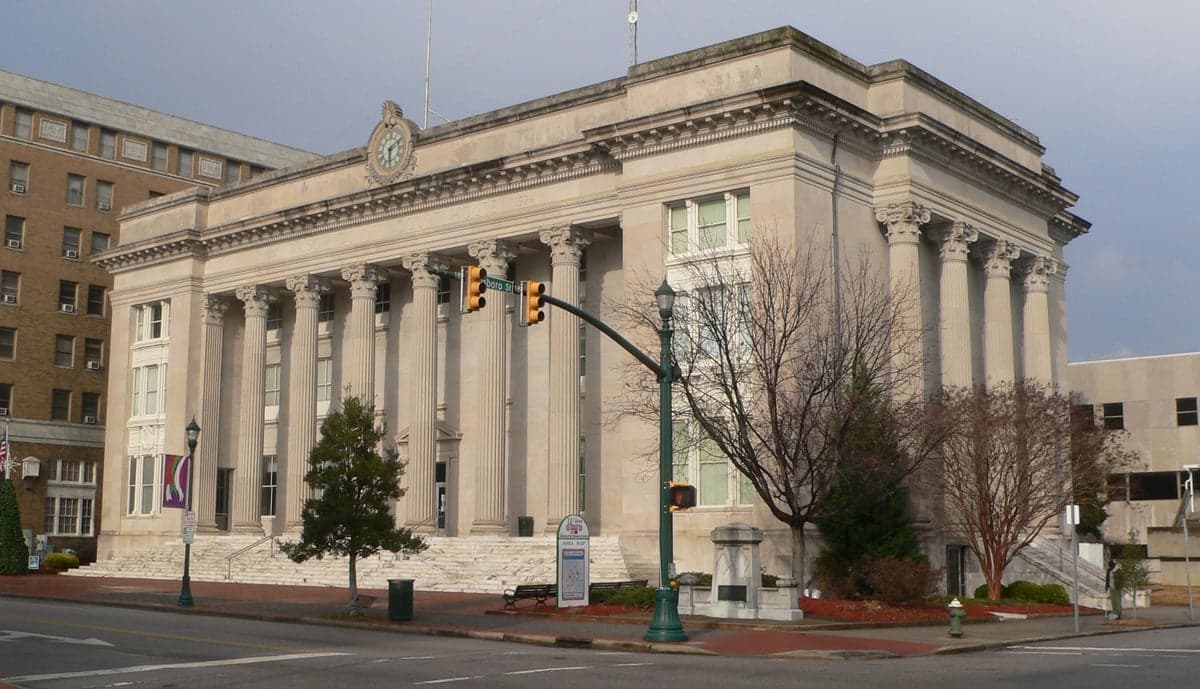
Photo: Wikipedia
Demographics of Wilson County
Affluence Level in Wilson County
A below-average socioeconomic profile. Incomes, home values, and educational attainment trail the U.S., with higher poverty and unemployment.
People of Wilson County
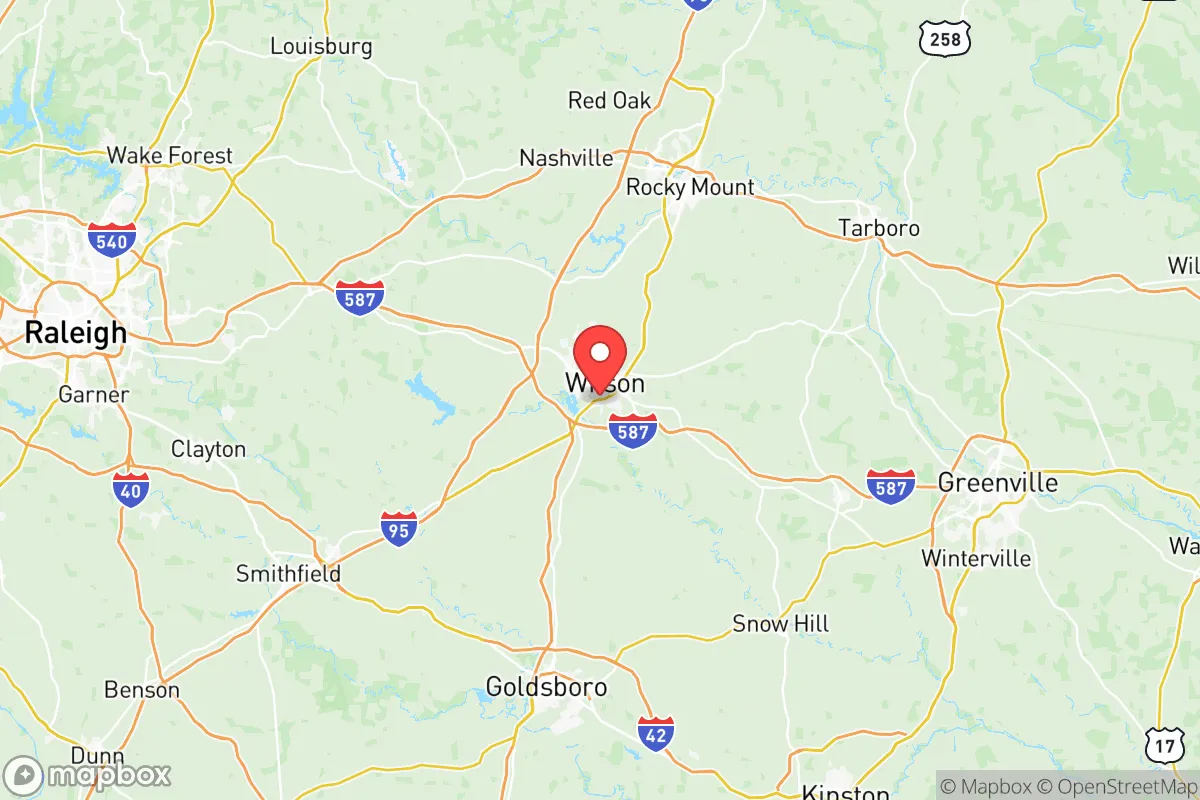
Wilson County, North Carolina, is a community of roughly 78,600 residents defined by its deep African American and white working-class roots, a growing Hispanic population, and a small but emerging Asian and Indian presence. With a population density of about 190 people per square mile, the county feels more rural-suburban than urban, anchored by the city of Wilson and surrounded by smaller towns like Elm City, Lucama, and Black Creek. The county’s identity is shaped by its agricultural past, its historic role as a hub for tobacco and textiles, and a modern economy pivoting toward healthcare, manufacturing, and logistics.
Settlement & growth (pre-1960)
Before European settlement, the area now known as Wilson County was inhabited by the Tuscarora people, an Iroquoian-speaking nation whose villages dotted the coastal plain. The Tuscarora were largely displaced or killed during the Tuscarora War (1711–1715), after which English and Scots-Irish settlers began moving into the region from the Virginia Tidewater and the Albemarle Sound area. These early settlers were primarily small farmers, drawn by the fertile, flat land of the Coastal Plain and the promise of tobacco cultivation.
Wilson County was formed in 1855 from parts of Edgecombe, Johnston, Nash, and Wayne counties, with the town of Wilson—originally a railroad stop called "Toisnot"—designated as the county seat. The arrival of the Wilmington and Weldon Railroad in the 1840s transformed the area into a transportation and trading hub. By the 1860s, Wilson was a bustling market town where cotton and tobacco were shipped out, and enslaved African Americans made up a significant portion of the labor force. After the Civil War, many freedmen stayed in the county, working as sharecroppers and tenant farmers, and by 1900, Black residents constituted roughly 40% of the population.
The late 19th and early 20th centuries saw the rise of the tobacco industry, with Wilson becoming a major bright-leaf tobacco market. The town of Wilson itself grew rapidly, attracting both white and Black workers from the surrounding countryside. The establishment of the Atlantic Coast Line Railroad shops in nearby Rocky Mount (just north of the county line) also drew workers to the region. Small towns like Elm City and Lucama developed as farming communities, while Black Creek and Saratoga remained quiet agricultural hamlets. The Great Migration (1910–1970) saw tens of thousands of Black residents leave Wilson County for Northern industrial cities, but the county's Black population remained substantial, sustained by those who stayed in farming and domestic work.
World War II and the post-war era brought modest industrial growth. The opening of a large textile mill in Wilson in the 1950s provided jobs for both white and Black workers, though segregation remained rigid. By 1960, the county's population was roughly 55% white and 44% Black, with a tiny Hispanic and Asian presence. The economy was still heavily agricultural, but the decline of small tobacco farms was already underway, pushing younger residents toward the cities.
Modern era (post-1965)
The 1965 Hart-Cellar Act had a limited immediate impact on Wilson County, as the region was not a primary destination for the new waves of Asian, Latin American, or African immigrants. However, the broader trend of Hispanic migration into the rural South began to reach Wilson County in the 1990s and 2000s, driven by demand for labor in agriculture, construction, and meatpacking. Today, the Hispanic population stands at 11.9%, making it the fastest-growing demographic group in the county. These residents are concentrated in Wilson and in rural areas near Elm City and Lucama, where they work in poultry processing, farming, and landscaping.
The African American population, at 39.1%, remains the largest single minority group, though its share has declined slightly as the Hispanic population has grown. Black residents are concentrated in Wilson, particularly in the historic east side of the city, and in smaller towns like Black Creek and Saratoga. The white population, now 44.8%, has seen a net decline in absolute numbers since 2000, as younger white residents have moved to the Research Triangle area or to coastal cities for better job opportunities.
The Asian population is small but growing, with East and Southeast Asian communities (primarily Vietnamese and Filipino) making up 0.7% of the population. These residents are mostly concentrated in Wilson, often working in healthcare or manufacturing. The Indian subcontinent population is even smaller, at 0.3%, and is largely composed of professionals in medicine and technology, many of whom commute to jobs in Raleigh or Greenville. The foreign-born share of the population is 3.6%, well below the national average, reflecting the county's limited role as an immigrant gateway.
Domestic migration has been modest. Wilson County has not experienced the explosive growth seen in Wake County or Johnston County to the west. Instead, it has seen a slow trickle of retirees and remote workers from the Northeast and Midwest, drawn by lower housing costs and a slower pace of life. Suburbanization has been limited, with most new housing developments clustered around Wilson and along the I-95 corridor, which runs through the eastern edge of the county.
The future
Wilson County is becoming slightly more diverse, but the pace of change is slow. The Hispanic population is projected to continue growing, potentially reaching 15–18% by 2040, driven by both immigration and higher birth rates. The African American share is likely to remain stable or decline slightly, while the white population will continue to shrink as a share of the total. The Asian and Indian populations will grow from a very small base, likely reaching 2–3% combined, as the county's healthcare and manufacturing sectors attract skilled workers.
New residents are concentrating in Wilson and along the I-95 corridor, with some spillover into Elm City and Lucama. The county's cultural identity is evolving from a biracial Black-white dynamic to a triracial one, with Hispanic residents forming a visible and growing presence in schools, churches, and local businesses. However, the county remains politically and socially conservative, and the pace of integration is slower than in the nearby Research Triangle.
For someone moving in now, Wilson County offers a low-cost, family-oriented environment with a strong sense of local identity, but limited diversity and slower economic growth than the state's urban centers. The county is becoming more Hispanic and slightly more Asian, but it remains a predominantly Black and white community with deep roots in agriculture and small-town life.

* Values derived from national, state, county, city and local statistics and may differ in a specific area. Last updated: 2026-06-27T10:53:51.000Z
Narrative content on this page is AI-generated and may contain mistakes. Verify any details that matter before acting on them.
ReloMaps may earn a commission from affiliate links at no extra cost to you.

