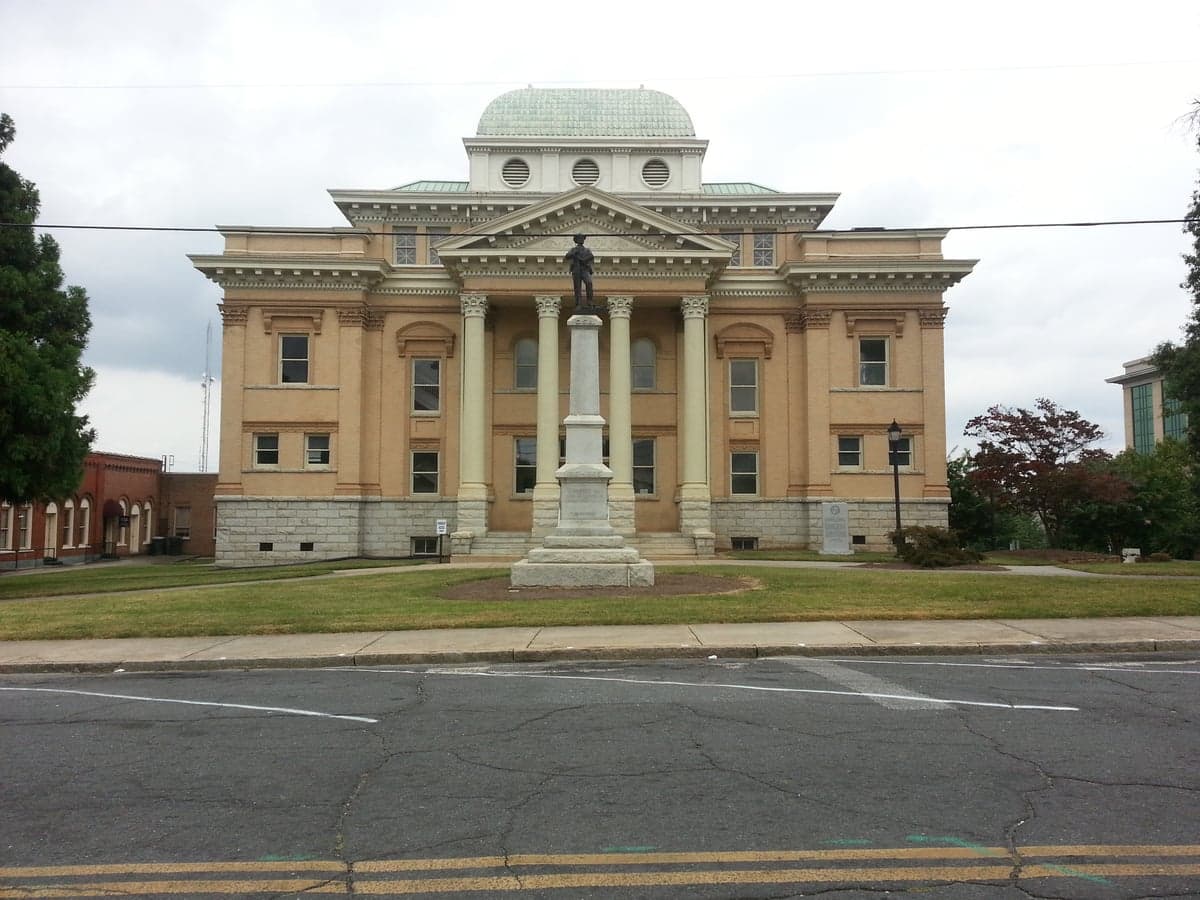
Photo: Wikipedia
Personal Sovereignty in Randolph County
Viable for self-reliance. Generally workable, though some barriers may limit total independence.
What does Personal Sovereignty tell us?
Personal Sovereignty measures your capacity for self-reliance and independence with minimal government friction. Higher scores mean fewer barriers between you and the way you want to live... but it assumes you have the space you need and good neighbors.
What does this tell us?
Personal Sovereignty measures your capacity for self-reliance and independence with minimal government friction. Higher scores mean fewer barriers between you and the way you want to live... but it assumes you have the space you need and good neighbors.
State Policy
Energy independence: Importer (15% of energy produced in-state)
Personal Liberty
Homesteading

Personal Liberty Analysis
Randolph County, North Carolina, offers a notably high degree of personal sovereignty compared to the urban centers of the Piedmont Triad, with a regulatory environment that generally favors individual autonomy over government oversight. The county's political culture, rooted in rural tradition and a strong sense of self-reliance, translates into lower tax burdens, permissive gun laws, and a practical tolerance for homesteading and off-grid living. For individuals and families prioritizing personal freedom, the area presents a compelling balance of access to regional employment hubs like Greensboro and High Point while maintaining a distinctly independent local character. This analysis examines the specific factors that define personal sovereignty in Randolph County, from tax policy and self-defense rights to the feasibility of self-sufficient living.
Tax burden and regulatory posture in Randolph County
Randolph County maintains a light-touch regulatory posture that is a key draw for freedom-minded residents. The property tax rate is among the more competitive in the state, with the county levying approximately 0.73 cents per $100 of assessed value as of 2025, significantly lower than neighboring Guilford County's rate. There is no county-level income tax, and North Carolina's flat state income tax rate of 4.5% is moderate. The regulatory environment for small businesses and home-based enterprises is generally permissive, with fewer zoning hurdles than in incorporated towns like Asheboro or Archdale. However, residents in unincorporated areas such as Franklinville, Ramseur, and Liberty enjoy the most freedom from municipal codes, including fewer restrictions on vehicle storage, outdoor structures, and home occupations. The county's approach to building permits and land use is practical, though septic system regulations remain state-mandated and can be a consideration for rural property purchases.
Self-defense rights and gun law specifics in Randolph County
North Carolina is a shall-issue state for concealed carry permits, and Randolph County's sheriff's office processes permits efficiently, with no local ordinances that infringe on state preemption of firearms laws. The county is home to several gun ranges and sporting goods stores catering to hunters and sport shooters, reflecting a deeply ingrained gun culture. Open carry is legal without a permit for anyone who can legally possess a firearm, and concealed carry requires a permit obtained after a background check and training course. Stand-your-ground laws apply statewide, meaning there is no duty to retreat before using deadly force in self-defense. Towns like Seagrove, known for its pottery heritage, and Randleman have a strong tradition of firearm ownership, and local law enforcement is generally supportive of Second Amendment rights. There are no county-specific magazine capacity restrictions or assault weapon bans, making Randolph County a favorable environment for those who prioritize self-defense autonomy.
Self-reliance and homesteading viability in Randolph County
Randolph County is highly viable for homesteading and self-reliant living, particularly in its rural western and northern sections. Minimum lot sizes in unzoned areas can be as small as one acre for a single-family home with a septic system, though many homesteaders prefer parcels of 5 to 20 acres for gardening, livestock, and timber management. The county's agricultural zoning is lenient, allowing for chickens, goats, and even larger livestock on relatively modest acreage. Off-grid feasibility is moderate: while the county requires connection to a permitted septic system, there are no county-wide bans on rainwater collection, solar panel installation, or composting toilets, though local health department rules apply. Areas around Staley and Coleridge are particularly attractive for off-grid living due to lower population density and fewer code enforcement patrols. The county does not have a building code for agricultural structures, which reduces costs for barns and workshops. However, residents should be aware that the state's building code applies to primary dwellings, and electrical work must be permitted, but overall, the regulatory burden is light compared to urban counties.
Personal liberties in Randolph County
Personal liberties in Randolph County are robust, with a strong emphasis on parental rights, medical autonomy, and property freedom. The county's school board has been proactive in maintaining local control over curriculum and library materials, reflecting a community that values parental involvement in education. Medical autonomy is supported by a network of independent healthcare providers, though the county's hospital system is part of a larger network. Vaccine mandates and mask requirements were largely resisted at the local level during the pandemic, and the county commission has passed resolutions affirming individual medical choice. Free speech and assembly are protected, with the county hosting numerous community events and public meetings where residents voice opinions directly to elected officials. Property rights are respected, with minimal eminent domain usage and a strong tradition of "live and let live" among neighbors. Towns like Trinity and Sophia exemplify this ethos, where residents enjoy a high degree of personal freedom without intrusive local governance.
Overall, Randolph County ranks among the more sovereignty-friendly areas in North Carolina, offering a tangible alternative to the regulatory density of the Triad's urban core. The combination of low taxes, permissive gun laws, viable homesteading conditions, and respect for personal liberties creates an environment where self-reliant individuals and families can thrive with minimal government interference. While not as libertarian as some western North Carolina mountain counties, Randolph County provides a practical, middle-ground level of personal autonomy that appeals to those seeking freedom without complete isolation from regional amenities and employment opportunities.

* Values derived from national, state, county, city and local statistics and may differ in a specific area. Last updated: 2026-07-05T08:05:22.000Z
Narrative content on this page is AI-generated and may contain mistakes. Verify any details that matter before acting on them.
ReloMaps may earn a commission from affiliate links at no extra cost to you.

