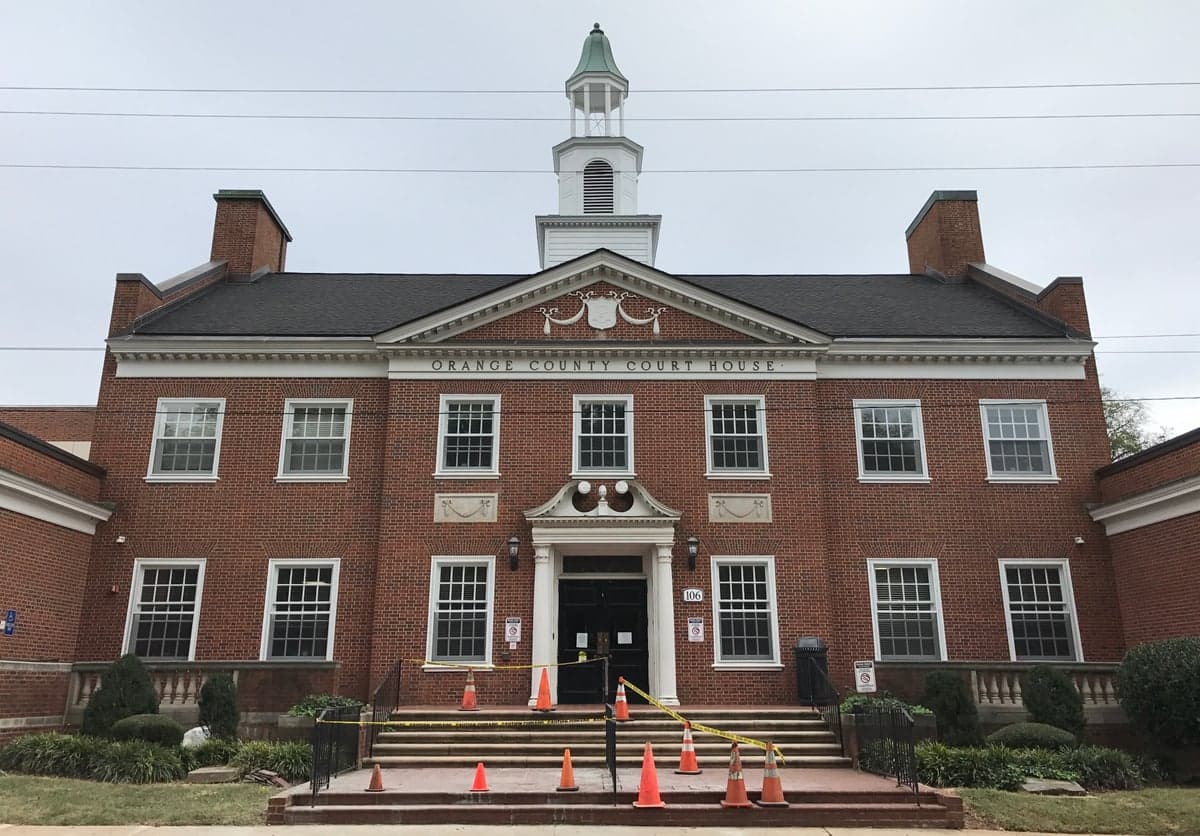
Photo: Wikipedia
Strategic Assessment of Orange County
Meaningful friction. Expect exposure to either population pressure, blast zones, or natural disaster risk. Consider buying a retreat property.
What does the Strategic Assessment tell us?
Our Strategic Assessment grades tactical survivability of an area. Major population centers, military targets, fallout zones, natural disasters, and border exposure all drive risk — lower exposure means a more defensible position in a crisis.
This is heavily inspired by Joel Skousen's Strategic Relocation book. Highly recommended you checkout the book ($)What does this tell us?
Our Strategic Assessment grades tactical survivability of an area. Major population centers, military targets, fallout zones, natural disasters, and border exposure all drive risk — lower exposure means a more defensible position in a crisis.
This is heavily inspired by Joel Skousen's Strategic Relocation book. Highly recommended you checkout the book ($)Strategic Pillars

Key Distances
Strategic Assessment Analysis
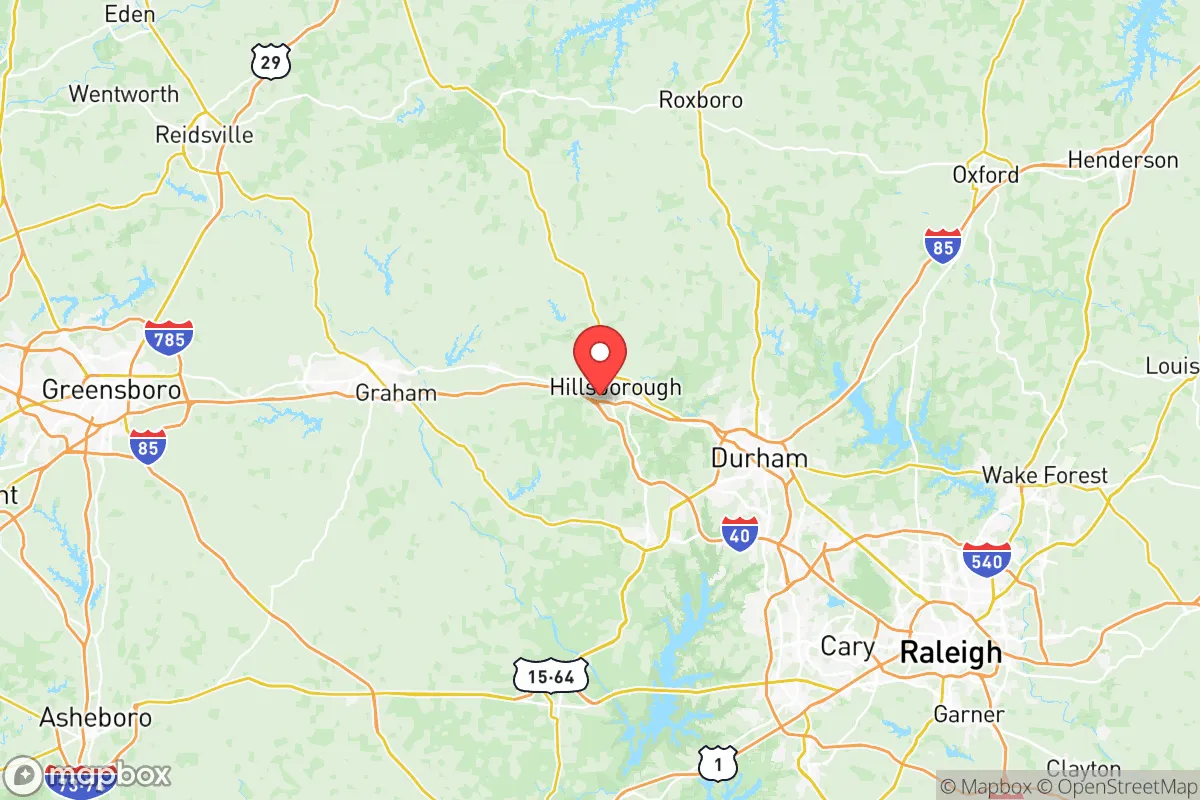
Orange County, North Carolina, offers a compelling mix of geographic resilience and strategic depth for the relocation-minded individual or family, particularly those with an eye toward long-term stability and self-sufficiency. Anchored by the towns of Chapel Hill, Carrboro, and Hillsborough, the county sits in the Piedmont region, roughly 30 miles northwest of Raleigh and 10 miles from Durham, placing it within the Research Triangle but far enough from the immediate blast zones of major metropolitan centers to offer a meaningful buffer. Its position away from the coast eliminates hurricane storm surge risk, while its inland, rolling terrain provides natural advantages for water retention and defensible property selection that coastal or flatland counties simply cannot match.
Geographic position and natural advantages for long-term stability
Orange County’s location in the North Carolina Piedmont is its single greatest strategic asset. The region is characterized by gently rolling hills, hardwood forests, and clay-based soils that support both agriculture and groundwater recharge. Unlike the coastal plain, which is vulnerable to hurricanes and sea-level rise, or the mountainous west, which faces landslide and flash-flood risks, the Piedmont offers a moderate climate with four distinct seasons and no dominant natural disaster pattern. The county is bisected by the Eno River and includes the New Hope Creek watershed, both of which feed into Jordan Lake, a major reservoir that provides a reliable surface water source for the region. The terrain itself offers natural defensibility: hills and tree cover provide visual screening and reduce the spread of fire or wind damage, while the clay soils, though challenging for septic systems, offer stability for building foundations and reduce the risk of liquefaction during seismic events. For a relocator prioritizing resilience, the county’s lack of exposure to hurricanes, tornado alleys, and wildfire corridors is a significant plus.
Risks, exposures, and proximity to fallout-relevant landmarks
No strategic assessment is complete without a sober look at risks, and Orange County has several that warrant attention. The most immediate concern is its proximity to the Research Triangle Park (RTP), a massive concentration of biotech, pharmaceutical, and semiconductor facilities located just across the Durham County line. While RTP drives the local economy, it also represents a potential target for cyber or physical disruption, and the presence of labs handling biological agents and hazardous chemicals introduces a low-probability but high-consequence risk. Additionally, the county lies roughly 60 miles southwest of Fort Liberty (formerly Fort Bragg), one of the largest military installations in the world. While this proximity offers economic benefits and a strong veteran community, it also places the area within the potential fallout zone of a base-targeting scenario. Interstate 40 and Interstate 85 both cut through or near the county, creating choke points for evacuation or supply routes during a crisis. On the natural hazard side, the region is subject to occasional ice storms and the remnants of inland-tracking hurricanes, which can cause prolonged power outages. The 2022 Christmas ice storm, for example, left thousands in Orange County without power for up to a week, exposing the fragility of overhead utility lines in a heavily wooded area. Flooding is localized but real along the Eno River and its tributaries, particularly in low-lying areas near Hillsborough. For the resilience-minded relocator, these risks are manageable with proper site selection and preparation, but they are not negligible.
Practical resilience for a relocator: food, water, energy, and defensibility
For someone serious about self-sufficiency, Orange County offers a mixed but generally favorable picture. Water availability is strong: the county sits atop the Triassic Basin aquifer, and many rural properties have access to private wells with good yields. Jordan Lake, managed by the U.S. Army Corps of Engineers, provides a backup surface water source, though access is regulated. Food production potential is moderate: the growing season runs from April to October, and the clay soils can be amended for vegetable gardening, but large-scale row cropping is limited compared to the Piedmont’s more agricultural counties to the west. However, the county has a robust local food infrastructure, including the Carrboro Farmers’ Market, multiple CSAs, and a strong network of small farms and homesteaders, which means knowledge and resources are accessible for someone looking to build food independence. Energy resilience is a weak point: Duke Energy is the sole provider, and the grid is heavily dependent on overhead lines running through forested areas. Solar is viable—the region averages about 215 sunny days per year—but net metering policies have become less favorable in recent years. Battery backup and generator preparedness are strongly advised. Defensibility varies by location: rural areas in northern and western Orange County, near the Caswell and Alamance county lines, offer larger parcels, longer sightlines, and fewer through roads, making them more defensible than suburban subdivisions near Chapel Hill. The county’s politics lean heavily progressive, which may be a cultural consideration for a conservative-leaning relocator, but the practical effect is a well-funded emergency management system and a county government that takes climate adaptation seriously. The Orange County Emergency Services department runs a robust Community Emergency Response Team (CERT) program, and the county has a detailed hazard mitigation plan publicly available. For the relocator, the key takeaway is that Orange County rewards preparation: those who choose a well-sited property with a well, solar panels, and a garden can achieve a high degree of resilience, while those who buy in a floodplain or a dense subdivision will find themselves exposed to the same grid and supply-chain vulnerabilities as any suburbanite.
The overall strategic picture for Orange County is one of strong geographic fundamentals tempered by proximity to high-value targets and infrastructure vulnerabilities. It is not a remote redoubt—it is a peri-urban county with a dense population center in Chapel Hill and a significant university presence at UNC. But for the relocator who values access to healthcare, education, and a like-minded community of preparedness-minded individuals, it offers a rare combination: a location that is close enough to urban resources to be practical, yet far enough from the highest-risk zones to provide a meaningful buffer. The county’s natural water resources, moderate climate, and defensible terrain make it a viable choice for someone building a resilient lifestyle, provided they are willing to invest in off-grid energy and water systems and choose their property with care. For the conservative-leaning family or individual looking for a strategic base in the Southeast, Orange County deserves a serious look—not as a bug-out location, but as a place to build a durable, self-reliant life within striking distance of the amenities that make modern life functional.

* Values derived from national, state, county, city and local statistics and may differ in a specific area. Last updated: 2026-06-22T20:04:09.000Z
Narrative content on this page is AI-generated and may contain mistakes. Verify any details that matter before acting on them.
ReloMaps may earn a commission from affiliate links at no extra cost to you.

