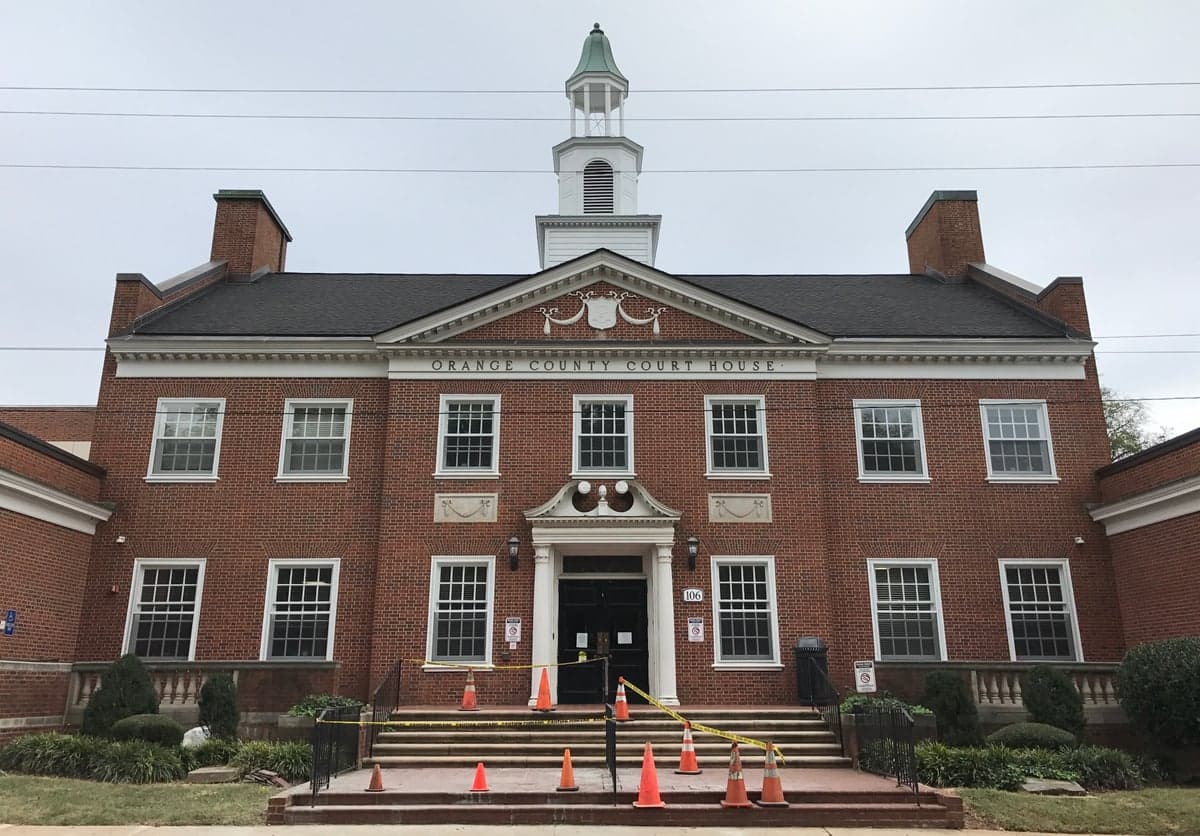
Photo: Wikipedia
Quality of Life in Orange County
A livable area that tracks near national norms for affordability, walkability, and neighborhood health.
What does Quality of Life tell us?
Quality of Life measures an area by evaluating factors like cost of living, nearby amenities, country club access, airport proximity, socioeconomic signals and neighborhood character. For large states, this is a general average — quality of life can vary dramatically between metro areas, suburbs, and rural communities within the same state.
What does this tell us?
Quality of Life measures an area by evaluating factors like cost of living, nearby amenities, country club access, airport proximity, socioeconomic signals and neighborhood character. For large states, this is a general average — quality of life can vary dramatically between metro areas, suburbs, and rural communities within the same state.
Cost of Living
32% above national average
72%
The Real Cost of Living in Orange County for 2026
| Tier | Individual | Family (4) |
|---|---|---|
| Survival | $22k | $42k |
| Comfortable | $83k | $122k |
| Luxury | $160k+ | $248k+ |
| Elite (Top 5%) | $234k+ | $363k+ |
Quality-of-Life Analysis
Orange County, North Carolina, offers a quality-of-life spectrum that ranges from the walkable, amenity-rich college town of Chapel Hill to the quiet crossroads communities and working farmland of its northern and western reaches. The county’s character is defined by this contrast: the Chapel Hill-Carrboro area draws academics, students, and professionals seeking a dense, progressive, and culturally active environment, while the smaller towns and unincorporated areas of Hillsborough, Efland, and Cedar Grove attract families, commuters, and retirees looking for more space, lower housing costs, and a slower pace of life. With a cost-of-living index of 132 (32% above the national average) and a median home value of $428,500, the county is not cheap, but the price tag varies significantly depending on which part of the county you choose.
Largest town(s) & population centers
Chapel Hill is the county’s largest municipality and economic anchor, home to the University of North Carolina at Chapel Hill and its 30,000+ students. Daily life here revolves around Franklin Street’s restaurants and bookstores, the UNC campus and its medical complex, and a dense network of bike paths and bus routes. Carrboro, immediately adjacent, functions as a more laid-back, artsy counterpart with a celebrated farmers’ market and a strong local music scene. Both towns are among the most politically progressive in the South and offer a walkable, transit-connected lifestyle rare in central North Carolina. The median rent of $1,387 reflects the demand for housing near the university, though many residents accept the 23.8-minute average commute to live within the urban core. Hillsborough, the county seat, is smaller and more historic, with a walkable downtown along the Eno River, a growing arts scene, and a mix of longtime residents and newcomers drawn by its lower home prices relative to Chapel Hill.
Smaller towns & rural pockets
Outside the Chapel Hill-Carrboro-Hillsborough corridor, Orange County becomes markedly rural. Efland, an unincorporated community near the Alamance County line, is a cluster of homes, small farms, and light industry with few commercial services of its own — residents drive to Hillsborough or Mebane for groceries and errands. Cedar Grove, farther north, is even more sparsely populated, with rolling farmland, country churches, and a handful of historic homes. White Cross and Buckhorn are other unincorporated crossroads where land is still affordable and subdivisions are rare. These areas offer a distinctly different lifestyle: larger lots, quieter roads, and a stronger connection to the region’s agricultural past. They also tend to have lower property taxes and fewer zoning restrictions than the towns, though they lack public water and sewer in many places.
Cost & lifestyle range
The cost spread across Orange County is substantial. At the high end, Chapel Hill’s close-in neighborhoods — such as Northside, Meadowmont, and Southern Village — command median home values well above the countywide $428,500, often exceeding $600,000 for a single-family home. Renters in these areas pay a premium for walkability to campus and downtown. At the lower end, Efland and Cedar Grove offer home prices in the $250,000–$350,000 range for existing homes on acreage, though inventory is limited and properties often need updates. Hillsborough sits in the middle: its historic district and newer subdivisions like Waterstone offer homes in the $350,000–$500,000 range, with a downtown that is walkable but less dense than Chapel Hill’s. The county’s overall cost-of-living index of 132 is driven largely by housing in the Chapel Hill-Carrboro core; rural residents can live for significantly less, though they trade away urban amenities and must drive for most errands.
Orange County best suits people who value a mix of progressive culture, access to a major research university, and preserved rural landscapes. Professionals and families who want walkable urban life will find it in Chapel Hill and Carrboro. Those seeking historic small-town character with lower costs will gravitate to Hillsborough. And buyers who prioritize land, privacy, and a slower pace — and are willing to commute 25–35 minutes to work — will find value in Efland, Cedar Grove, and the county’s other rural pockets. The county’s strength is that it offers all three options within a single, well-governed jurisdiction with strong schools and protected green space.

Crime in Orange County
Crime rates similar to the national median for U.S. locations.
Violent CrimeViolent Crime Analysis
Property CrimeProperty Crime Analysis
Crime Analysis
Orange County, North Carolina, presents a mixed safety picture where violent crime rates are slightly below the national average but property crime rates significantly exceed both state and national benchmarks. The county, anchored by Chapel Hill and Carrboro, recorded a violent crime rate of 310.5 per 100,000 residents and a property crime rate of 1,694.6 per 100,000 in the most recent reporting period. These figures reflect the challenges of a rapidly growing area that combines a major university presence with expanding suburban and rural communities, creating distinct safety dynamics across different parts of the county.
Crime in context
Orange County's violent crime rate of 310.5 per 100,000 sits below the national average of approximately 380 per 100,000, but the property crime rate of 1,694.6 per 100,000 is notably higher than the national average of roughly 1,950 per 100,000 and well above the North Carolina state average of about 1,800 per 100,000. Property crime in Orange County is the more pressing concern, with larceny-theft accounting for the majority of incidents, particularly in areas with high foot traffic and student populations. The county's location within the Research Triangle region, bordered by Durham County to the east and Chatham County to the south, means crime patterns are influenced by regional dynamics, including spillover from higher-crime areas in Durham. The 2024 election cycle saw progressive candidates retain control of the District Attorney's office for the 15B Prosecutorial District, which covers Orange and Chatham counties. This prosecutorial approach, which emphasizes diversion programs and reduced incarceration for property and drug offenses, has drawn criticism from residents who argue it contributes to repeat property crime and a perception that offenders face minimal consequences, particularly in Chapel Hill and Carrboro where bike thefts, package thefts, and vehicle break-ins are recurring complaints.
What residents experience
Daily life in Orange County involves navigating a safety landscape that varies sharply by location and time of day. Chapel Hill, home to the University of North Carolina, experiences concentrated property crime around the campus and Franklin Street corridor, with bicycle thefts and smash-and-grab vehicle break-ins being the most common incidents students and residents report. Carrboro, the adjacent progressive hub, sees similar property crime patterns but with lower violent crime rates, though late-night incidents near the downtown restaurant and music venues have increased since 2022. Hillsborough, the county seat, offers a markedly different experience with significantly lower crime rates across all categories, making it the safest of the county's three main towns for families seeking a quieter environment. The unincorporated areas between these towns, including rural communities like Efland and Caldwell, report very low crime rates but face longer emergency response times due to the county's volunteer fire and EMS structure. Residents in Chapel Hill and Carrboro frequently cite concerns about the county's criminal justice philosophy, where progressive district attorneys have implemented policies that prioritize treatment over incarceration for drug offenses and use citation in lieu of arrest for low-level property crimes. Critics argue this approach has created a revolving door for repeat offenders, particularly in the downtown Chapel Hill area where business owners report the same individuals being arrested and released multiple times for theft and trespassing.
Neighborhood-level variation within Orange County is substantial and worth careful consideration for anyone relocating. The most significant safety divide exists between the Chapel Hill-Carrboro urban core and the rest of the county, with the university area experiencing property crime rates roughly double those of Hillsborough and the rural western portions of the county. Within Chapel Hill itself, neighborhoods north of Estes Drive and east of Martin Luther King Jr. Boulevard generally report fewer incidents than areas immediately adjacent to the UNC campus and Franklin Street. Carrboro's safest residential areas are west of NC 54, while the Lloyd-Broad Street corridor sees more frequent property crime. For those seeking the lowest crime rates in Orange County, Hillsborough's historic district and the rural communities near the Alamance County line offer the best options, though residents should expect limited amenities and longer commutes to employment centers in Chapel Hill and Durham.
* Values derived from national, state, county, city and local statistics and may differ in a specific area. Last updated: 2026-06-22T20:04:09.000Z
Narrative content on this page is AI-generated and may contain mistakes. Verify any details that matter before acting on them.
ReloMaps may earn a commission from affiliate links at no extra cost to you.

