Photo: Wikipedia
Quality of Life in Madison County
A livable area that tracks near national norms for affordability, walkability, and neighborhood health.
What does Quality of Life tell us?
Quality of Life measures an area by evaluating factors like cost of living, nearby amenities, country club access, airport proximity, socioeconomic signals and neighborhood character. For large states, this is a general average — quality of life can vary dramatically between metro areas, suburbs, and rural communities within the same state.
What does this tell us?
Quality of Life measures an area by evaluating factors like cost of living, nearby amenities, country club access, airport proximity, socioeconomic signals and neighborhood character. For large states, this is a general average — quality of life can vary dramatically between metro areas, suburbs, and rural communities within the same state.
Cost of Living
23% below national average
78%
The Real Cost of Living in Madison County for 2026
| Tier | Individual | Family (4) |
|---|---|---|
| Survival | $12k | $23k |
| Comfortable | $51k | $75k |
| Luxury | $106k+ | $164k+ |
| Elite (Top 5%) | $131k+ | $204k+ |
Quality-of-Life Analysis
Madison County, North Carolina, offers one of the most pronounced urban-to-rural spectrums in Western North Carolina, anchored by the county seat of Marshall and stretching into the remote, forested valleys of the Appalachian Mountains. The county’s overall cost of living index sits at 77 (23% below the U.S. average), but that single number masks a wide variety of lifestyles, from walkable small-town living along the French Broad River to off-grid homesteads in the Pisgah National Forest. The type of person drawn here typically falls into two camps: those seeking the creative, river-town energy of Marshall, and those looking for deep privacy and land in the county’s far-flung communities like Hot Springs or Trust.
Largest town(s) & population centers
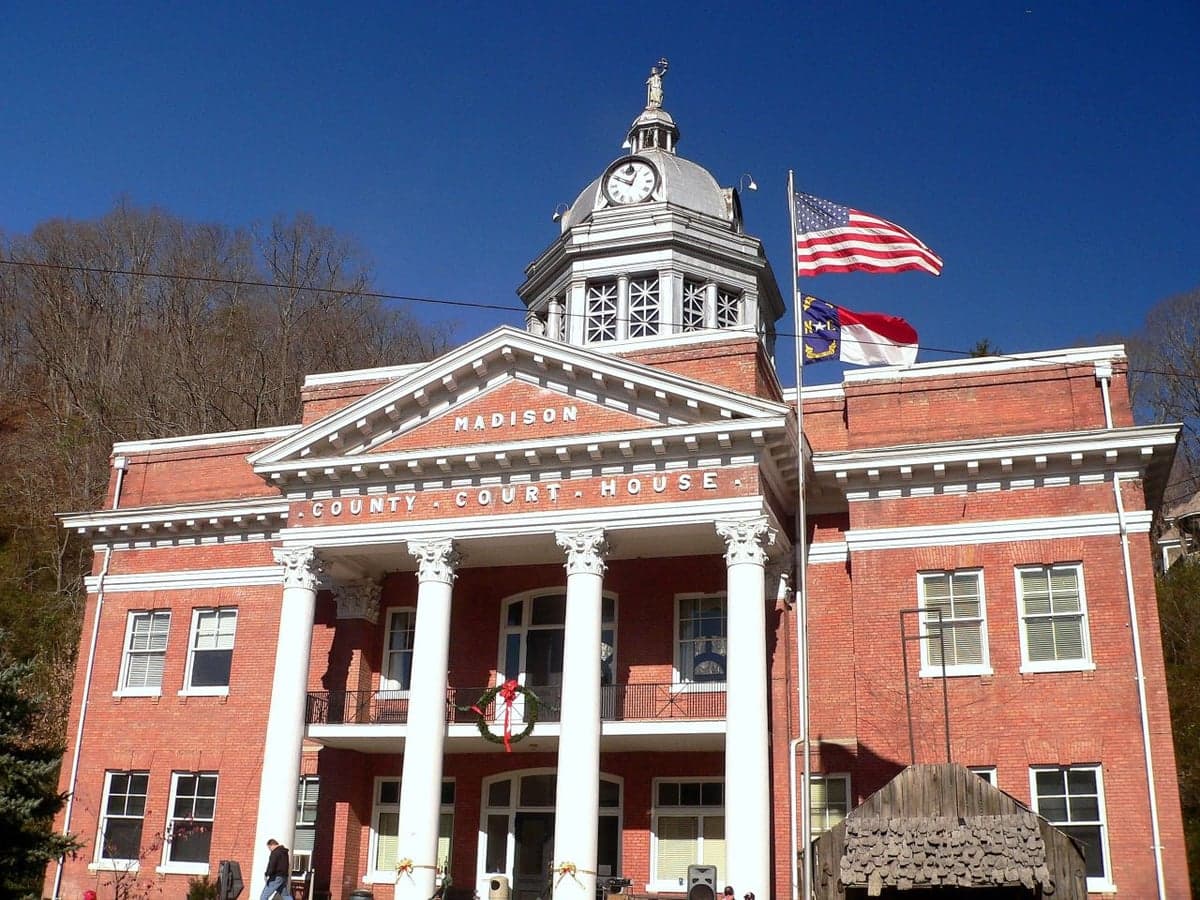
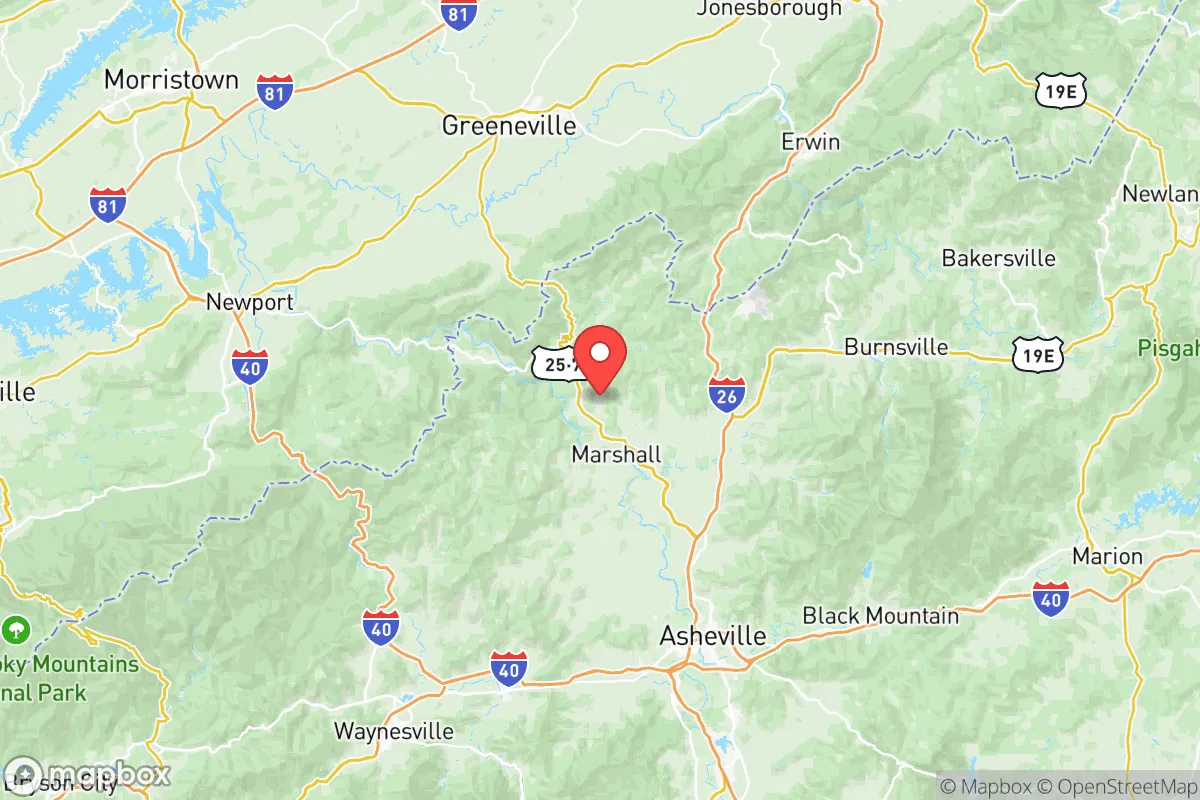
Marshall is the county’s largest municipality and undisputed cultural hub, with a population hovering near 850 residents. Daily life here revolves around a compact, walkable Main Street lined with historic brick buildings, art galleries, and the renowned Zuma Coffee. The county government campus and the historic 1907 courthouse anchor the town, making it the primary destination for permits, taxes, and civic business. Marshall’s floodplain location along the French Broad River means it has a distinct, slightly bohemian character, attracting artists, remote workers, and retirees who want immediate access to the river for paddling and fishing. The town’s proximity to Asheville — roughly 20 miles south via U.S. 25-70 — makes it a practical base for commuters, though the average one-way commute of 32.3 minutes reflects the winding mountain roads and the draw of jobs in Buncombe County.
Just north of Marshall, the unincorporated community of Walnut serves as a secondary service node, offering a grocery store, hardware store, and a few restaurants along the river. It functions less as a destination and more as a practical daily stop for residents of the northern half of the county who don’t want to drive all the way to Marshall or into Tennessee.
Smaller towns & rural pockets
The county’s second incorporated town, Hot Springs, sits 20 miles northwest of Marshall and offers a completely different lifestyle. With a population of just over 500, Hot Springs is a tourism-dependent resort town famous for its natural mineral baths, the Appalachian Trail crossing, and the French Broad River’s whitewater rafting put-ins. Daily life here is seasonal and service-oriented, with inns, outfitters, and restaurants catering to thru-hikers and weekend visitors. It is the most isolated of the county’s population centers, with the nearest major grocery store a 30-minute drive into Tennessee.
Beyond the two towns, Madison County is defined by its scattered, unincorporated communities. Trust, Laurel, and Spring Creek are tiny crossroads settlements in the county’s far western and northern reaches, where paved roads give way to gravel Forest Service lanes and cell service is unreliable. Mars Hill, located 10 miles south of Marshall, is the county’s educational anchor, home to Mars Hill University and a growing bedroom-community feel for Asheville commuters. It has a small downtown with a coffee shop, a brewery, and a post office, but lacks the tourist draw of Hot Springs or the governmental gravity of Marshall.
Cost & lifestyle range
The financial spread across Madison County is as wide as its geography. The median home value is $263,500, but that figure is heavily skewed by new construction and renovated riverfront properties near Marshall and Mars Hill. In Marshall proper, a renovated historic home on a small lot can easily list for $350,000–$450,000, while a fixer-upper in the remote community of Trust or along the upper reaches of Spring Creek can still be found for under $200,000. The median rent of $764 is remarkably low by regional standards — roughly half of what comparable rentals cost in Asheville — but rental inventory is scarce, and most available units are older homes or duplexes in Marshall and Mars Hill rather than modern apartment complexes.
At the low-cost end of the spectrum, buyers looking at land in Shelton Laurel or the Big Laurel watershed can find acreage for $3,000–$6,000 per acre, though they will pay for that savings in commute time, septic system costs, and the expense of maintaining long gravel driveways. At the high end, the Blannahassett Island area and the riverfront stretches near Marshall command premium prices for the combination of walkability and water access. Utility costs also vary: incorporated towns have municipal water, while rural properties rely on wells, and many remote areas lack natural gas, forcing reliance on propane, wood heat, or heat pumps.
The residents who thrive in Madison County are those who treat the urban-rural divide as a feature, not a bug. Remote workers and retirees with flexible schedules can enjoy the low cost of living and natural beauty of the rural pockets, while those who need daily services, community events, and a shorter commute to Asheville will find Marshall and Mars Hill far more practical. The county rewards self-sufficiency — whether that means hauling groceries over mountain passes or simply accepting that the nearest hospital is 30 minutes away — but for those who value land, privacy, and a slower pace, the trade-offs are often worth it.

Crime in Madison County
Crime rates similar to the national median for U.S. locations.
Violent CrimeViolent Crime Analysis
Property CrimeProperty Crime Analysis
Crime Analysis
Madison County, North Carolina, presents a mixed safety picture for prospective residents. The county’s violent crime rate of 325.1 incidents per 100,000 residents sits below the national average, but its property crime rate of 1,765.6 per 100,000 is a more pressing concern, particularly in the unincorporated areas stretching between Marshall and Hot Springs. While the county is not a high-crime hotspot, the data suggests that property offenses—not violence—are the primary safety issue newcomers should weigh when choosing a specific community.
Crime in context
To understand Madison County’s numbers, it helps to compare them against broader benchmarks. The national violent crime rate is roughly 380 per 100,000, meaning Madison County’s 325.1 figure is about 14% below the U.S. average. However, the comparison to North Carolina’s statewide rate is less favorable: the state averages approximately 440 violent crimes per 100,000, so Madison County is actually safer than the state norm on this metric. The property crime picture is different. At 1,765.6 per 100,000, Madison County’s property crime rate is roughly 25% higher than the national average of about 1,400 per 100,000, and it tracks closely with North Carolina’s statewide property crime rate of approximately 1,800 per 100,000. In practical terms, this means a resident’s risk of experiencing a burglary, larceny, or motor vehicle theft is elevated compared to the rest of the country, though not dramatically out of line with the rest of rural western North Carolina.
What residents experience
The lived experience of crime in Madison County varies significantly by location. The county seat of Marshall, with its historic downtown along the French Broad River, sees a concentration of reported property crimes—largely thefts from vehicles and break-ins targeting older homes and rental properties. The town of Hot Springs, a popular Appalachian Trail stopover, experiences a seasonal uptick in petty theft and vandalism tied to transient foot traffic, though violent incidents remain rare. By contrast, the more affluent communities of Mars Hill and Walnut Creek report lower crime rates, with Mars Hill benefiting from the presence of Mars Hill University’s campus security and a more tightly knit permanent population. The unincorporated areas along U.S. 25/70 between Marshall and the Buncombe County line see scattered property crimes, often targeting vacant second homes and storage units. Violent crime, when it does occur, is typically domestic in nature and concentrated in a few specific pockets of Marshall and the rural Laurel Valley area, rather than being a random street-level threat.
One factor that shapes the county’s safety outlook is the judicial environment. Madison County falls within the 24th Prosecutorial District, which also covers Buncombe County and the city of Asheville. Asheville’s elected district attorney has pursued a notably progressive agenda, including diversion programs and reduced bail for nonviolent offenders. While these policies are designed to reduce incarceration, they have a practical consequence: repeat property offenders are frequently released quickly back into the community, which helps explain why Madison County’s property crime rate remains stubbornly high despite its small population. Residents in Marshall and Hot Springs have voiced frustration at seeing the same individuals cycle through the court system for serial thefts. For families considering a move to the county, this means locking vehicles, securing outbuildings, and installing motion-sensor lighting are not optional precautions—they are necessary habits, particularly in the more isolated river valleys where response times for the Madison County Sheriff’s Office can exceed 20 minutes.
Neighborhood-level data is limited, but the pattern is clear: the safest areas are the higher-elevation communities like Mars Hill and the gated developments near Big Laurel, while the most vulnerable properties are those along the county’s main transportation corridors and in the rental-heavy sections of Marshall. Buyers looking for peace of mind should prioritize properties with active neighbors and visible sightlines, as the county’s rural character—while beautiful—can also mean that a break-in goes unnoticed for days.
* Values derived from national, state, county, city and local statistics and may differ in a specific area. Last updated: 2026-10-28T00:08:22.000Z
Narrative content on this page is AI-generated and may contain mistakes. Verify any details that matter before acting on them.
ReloMaps may earn a commission from affiliate links at no extra cost to you.

