Photo: Wikipedia
Demographics of Chatham County
Affluence Level in Chatham County
An upper-middle-class area. Household wealth, education levels, and homeownership run ahead of national benchmarks.
People of Chatham County
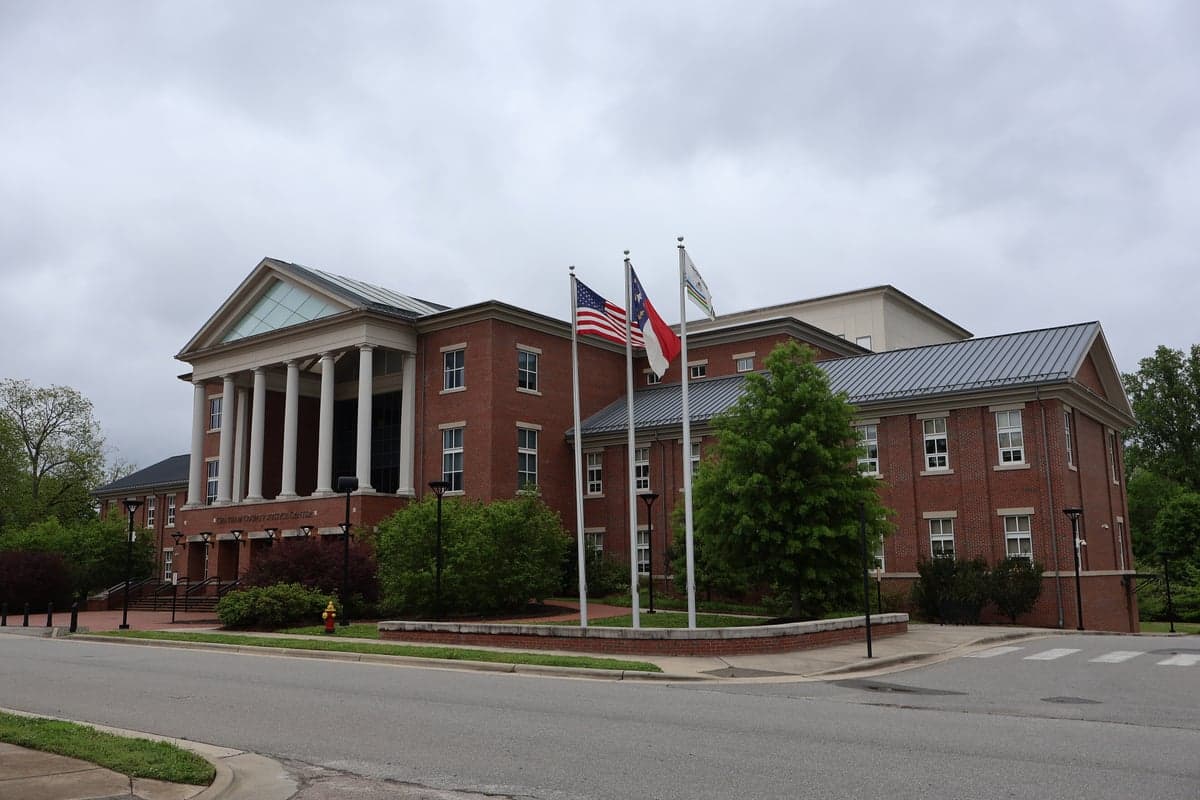
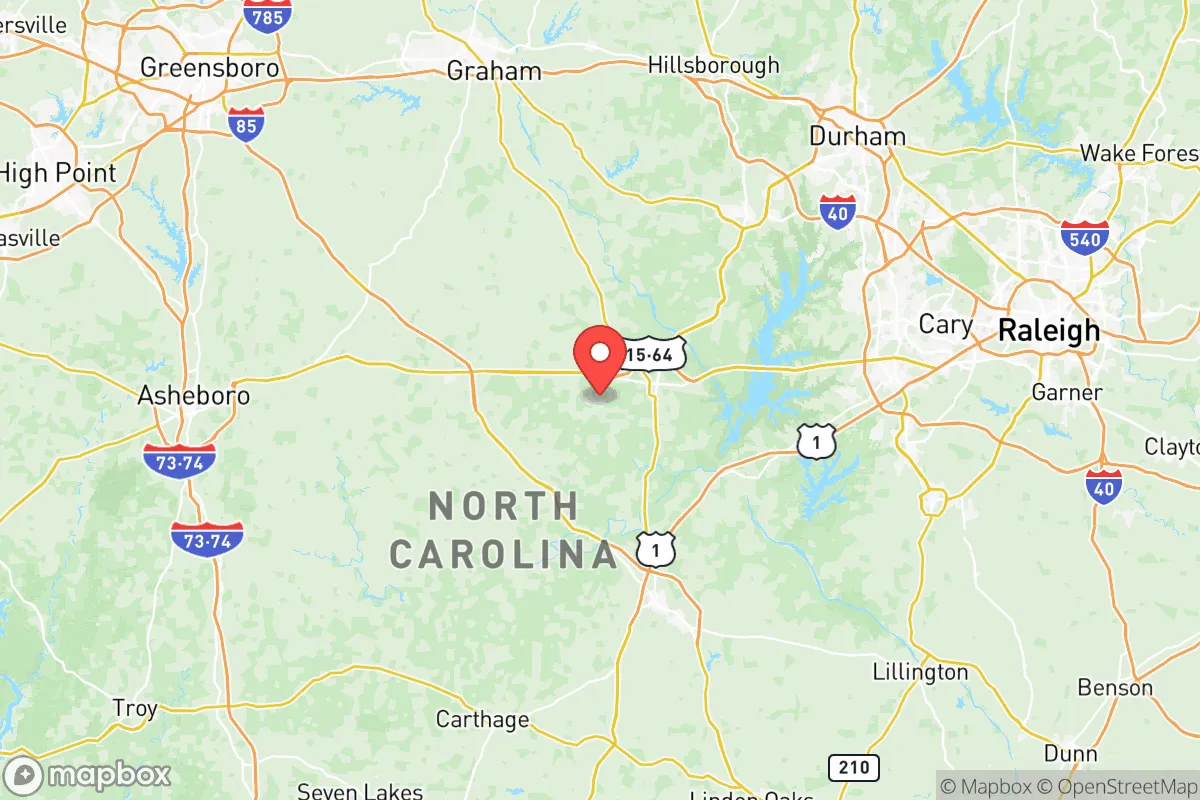
Chatham County, North Carolina, is home to 78,319 residents who occupy a distinctive middle ground between the state's rural Piedmont past and its Research Triangle future. The county is 69.8% White, 13.4% Hispanic, 10.3% Black, and 1.3% East/Southeast Asian, with a separate Indian-subcontinent population of 0.7% and a foreign-born share of 7.0%. Nearly half of adults hold a college degree, a figure that reflects the county's growing role as an affordable bedroom community for Raleigh-Durham professionals while still retaining a strong agricultural and small-town character. The population is spread across historic towns like Pittsboro, Siler City, and Goldston, with newer subdivisions pushing into the eastern edge near Jordan Lake and the Wake County line.
Settlement & growth (pre-1960)
Before European settlement, the area now called Chatham County was home to the Sissipahaw people, a Siouan-speaking group whose villages lined the Haw River and Deep River. They were largely displaced or decimated by disease and conflict by the early 1700s, and the land became a contested zone between the Tuscarora and Catawba nations before European colonists moved in. The first permanent European settlers were primarily English and Scots-Irish farmers who arrived from Virginia and the coastal Carolinas in the 1740s and 1750s, drawn by cheap land grants along the Haw and Deep rivers. They established small farming communities that would become the towns of Pittsboro (founded 1787 as the county seat), Siler City, and Goldston, growing tobacco, corn, and wheat on the rolling Piedmont terrain.
By the early 1800s, enslaved Black laborers made up roughly one-third of the county's population, working on medium-sized tobacco plantations concentrated along the river bottoms. After the Civil War and Emancipation, freedmen established independent farming communities and small hamlets such as Bynum and Moncure, where they worked as sharecroppers, mill hands, and tenant farmers. The arrival of the railroad in the 1880s transformed the county's economy, connecting Pittsboro and Siler City to regional markets and spurring the growth of timber and cotton milling. The Bynum cotton mill, built in 1887, drew rural families—both Black and White—into wage labor and created the county's first industrial working class.
The early 1900s saw a modest influx of German and Irish immigrants who worked as skilled tradesmen on the railroad and in the mills, but Chatham County remained overwhelmingly native-born and rural through the 1950s. The county's population peaked at around 40,000 in 1910, then declined through the Great Depression and World War II as young people left for factory jobs in Greensboro, Durham, and Raleigh. By 1960, the population had fallen to roughly 29,000, and the county was one of the poorest in the state, with a struggling agricultural economy and little industry beyond textile mills and poultry processing.
Modern era (post-1965)
The post-1965 transformation of Chatham County began slowly, then accelerated dramatically after 1990. The 1965 Hart-Cellar Act had little immediate effect on a county with almost no immigrant population, but the expansion of the Research Triangle Park (RTP) in the 1970s and 1980s created a new dynamic. As housing prices in Durham, Chapel Hill, and Cary rose through the 1990s and 2000s, families and professionals began looking eastward into Chatham County for affordable land and lower taxes. The construction of U.S. Highway 64 and later the extension of the Triangle Expressway made Pittsboro and the Jordan Lake area a viable commute to RTP, triggering a wave of domestic migration from the Northeast, Midwest, and California.
The most dramatic demographic shift has been the growth of the Hispanic population, which rose from under 2% in 1990 to 13.4% today. This wave began in the 1990s, driven by labor demand in the county's poultry processing plants—particularly the Mountaire Farms facility in Siler City—and in construction and landscaping as the housing boom took off. Mexican immigrants formed the first and largest group, followed by smaller numbers from Central America, and they established a visible presence in Siler City, where Hispanic-owned businesses now line Second Street and downtown storefronts. The Siler City Hispanic community is one of the most established in the rural Piedmont, with a generation of U.S.-born children now entering adulthood and reshaping local politics and schools.
The Black population, which had been declining for decades as young people left for urban jobs, stabilized at around 10.3% as some families returned from Durham and Raleigh in search of cheaper housing. The East/Southeast Asian population (1.3%) and Indian-subcontinent population (0.7%) are small but growing, concentrated among professionals working in RTP who chose Chatham County for its larger lots and slower pace compared to Cary and Morrisville. These newer residents cluster in subdivisions near Pittsboro and along the U.S. 64 corridor toward Apex, while the older rural communities of Bear Creek and Bennett remain predominantly White and native-born.
The future
Chatham County is on track to become more diverse and more suburban over the next two decades, but the pace and character of change will vary sharply by location. The eastern third of the county, from Pittsboro to the Wake County line, is absorbing the bulk of new residential development, with master-planned communities and townhome projects replacing former tobacco fields. This area will likely see continued growth in White and Asian professionals from RTP, along with a smaller number of Indian-subcontinent families, pushing the college-educated share above 50% and the median income well above the county average.
Western Chatham County, including Siler City and the rural communities toward the Randolph County line, will remain more working-class and more Hispanic. The poultry industry shows no signs of leaving, and the existing Hispanic population will continue to grow through both immigration and natural increase. The county's Black population is likely to hold steady or grow modestly, as some families are priced out of Durham and Orange counties and look to Chatham for affordable homeownership. The overall foreign-born share, currently 7.0%, will rise toward 10-12% by 2040, driven primarily by continued Hispanic immigration and a smaller inflow of Asian professionals.
The cultural identity of Chatham County is becoming a blend of three distinct worlds: the old rural Piedmont of family farms and mill towns, the new suburban commuter corridor of RTP professionals, and the working-class Hispanic community centered on Siler City. These groups coexist with limited friction but also limited integration, living in separate geographies and sending their children to the same schools. The county's politics, historically conservative, have shifted toward a purple status as the eastern suburbs bring in Democratic-leaning voters, while the western and central areas remain more Republican.
For someone moving in now, Chatham County offers a choice rather than a single experience. The eastern edge near Jordan Lake and Pittsboro provides a semi-rural lifestyle within commuting distance of high-paying RTP jobs, with good schools and rising home values. Siler City and the western towns offer lower housing costs and a more traditional small-town feel, with a growing Hispanic cultural presence that is reshaping local restaurants, churches, and festivals. The county is becoming less insular and more connected to the Triangle economy, but it is not becoming a suburb in the Cary mold—it is retaining enough land, distance, and independent identity to remain a distinct place. The population will continue to grow, diversify, and suburbanize, but the pace will allow newcomers to arrive before the character fully shifts.

* Values derived from national, state, county, city and local statistics and may differ in a specific area. Last updated: 2026-11-15T05:38:17.000Z
Narrative content on this page is AI-generated and may contain mistakes. Verify any details that matter before acting on them.
ReloMaps may earn a commission from affiliate links at no extra cost to you.

