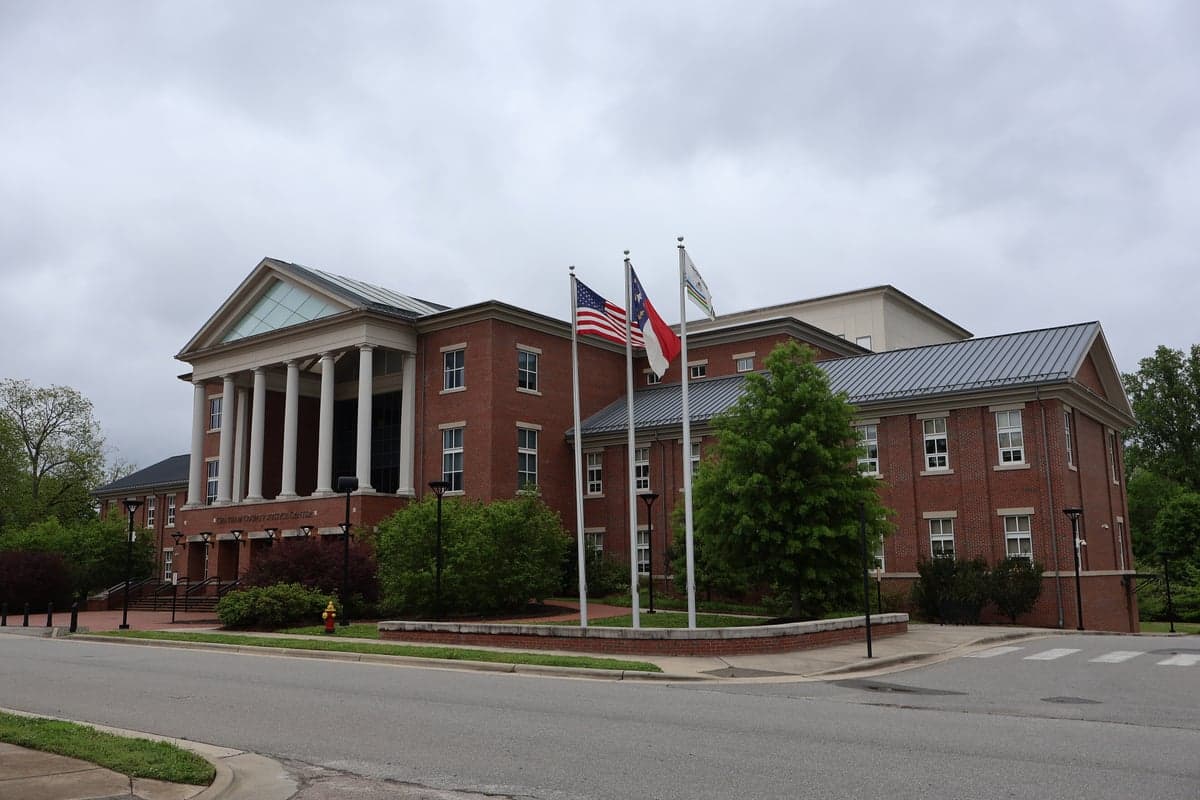
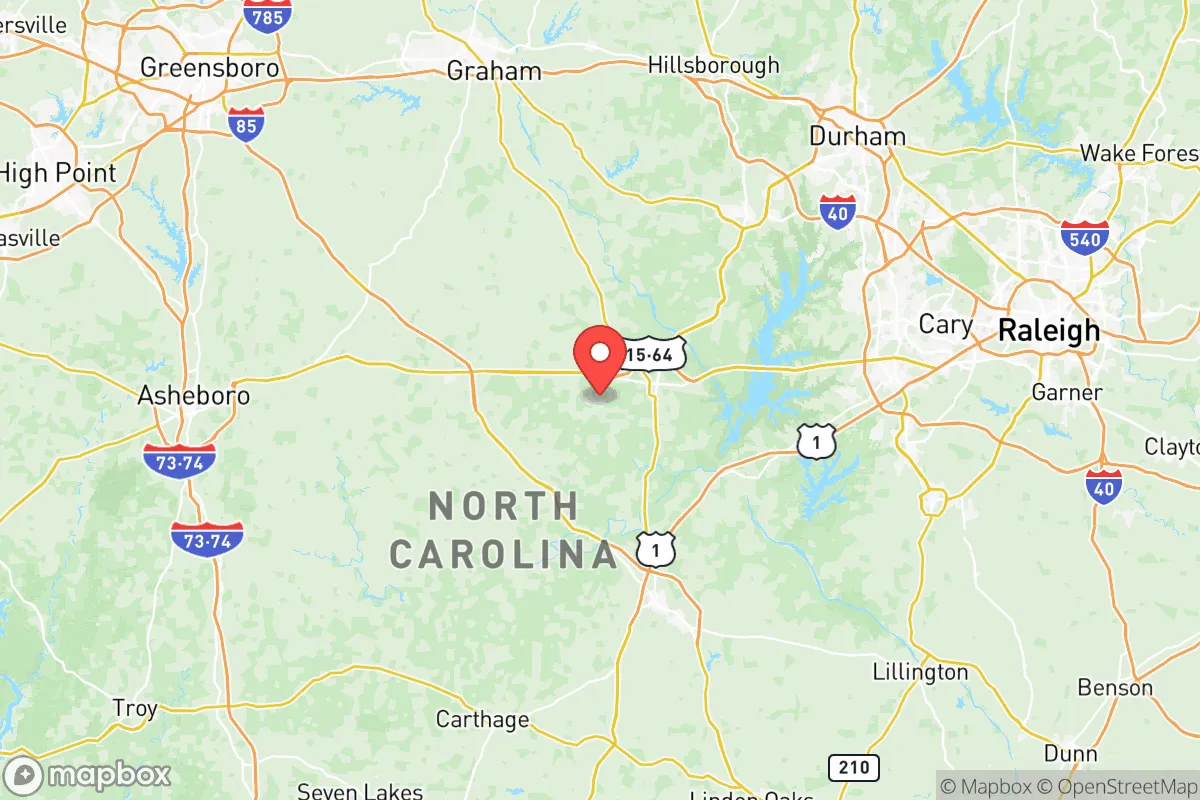
Photo: Wikipedia
Quality of Life in Chatham County
A livable area that tracks near national norms for affordability, walkability, and neighborhood health.
What does Quality of Life tell us?
Quality of Life measures an area by evaluating factors like cost of living, nearby amenities, country club access, airport proximity, socioeconomic signals and neighborhood character. For large states, this is a general average — quality of life can vary dramatically between metro areas, suburbs, and rural communities within the same state.
What does this tell us?
Quality of Life measures an area by evaluating factors like cost of living, nearby amenities, country club access, airport proximity, socioeconomic signals and neighborhood character. For large states, this is a general average — quality of life can vary dramatically between metro areas, suburbs, and rural communities within the same state.
Cost of Living
11% above national average
78%
The Real Cost of Living in Chatham County for 2026
| Tier | Individual | Family (4) |
|---|---|---|
| Survival | $17k | $32k |
| Comfortable | $77k | $114k |
| Luxury | $160k+ | $248k+ |
| Elite (Top 5%) | $226k+ | $350k+ |
Quality-of-Life Analysis
Chatham County, North Carolina, offers a broad quality-of-life spectrum that ranges from the bustling, amenity-rich town of Pittsboro to deeply rural crossroads like Moncure and Goldston, attracting everyone from remote tech workers and Triangle commuters to farmers and artists. The county's character is defined by this contrast: rapidly developing nodes of suburban-style growth sit alongside protected farmland and forest, with the Haw and Deep Rivers carving a green spine through the center. Residents choose Chatham for its lower cost relative to adjacent Wake and Orange counties, its strong local-food and conservation culture, and its position as a quieter alternative to the Chapel Hill–Durham orbit.
Largest town(s) & population centers
Pittsboro, the county seat, is the primary population center and the epicenter of new development. Its historic brick downtown has filled with independent restaurants, breweries, and shops, while the Chatham Park mega-development is adding thousands of homes, a YMCA, and a planned downtown satellite. Daily life here is a mix of small-town walkability and suburban convenience, with a strong civic bent—the town hosts a renowned farmers' market and frequent community events. Siler City, the second-largest town, has a more industrial and agricultural heritage, anchored by a large poultry-processing workforce and a growing Latino community; its downtown is less polished but more affordable, with a revitalization effort underway around the historic courthouse square. Cary, a major Wake County suburb, extends into northeastern Chatham near Jordan Lake, offering big-box retail, top-rated schools, and dense subdivisions that feel more like Raleigh than rural Chatham.
Smaller towns & rural pockets
Beyond the population centers, Chatham's smaller communities each have a distinct identity. Goldston, in the southwestern corner, is a quiet railroad town with a handful of antique shops and a strong sense of isolation—it's a full 30-minute drive to the nearest grocery store. Moncure, along the Deep River, is a former mill village now home to a mix of old-timers and newcomers seeking cheap land; it has no downtown to speak of, only a post office and a volunteer fire department. Bennett and Bonlee are unincorporated crossroads with active volunteer fire departments and little else in the way of services. Fearrington Village, just south of Chapel Hill, is a planned retirement and residential community with a famous bookstore, a gourmet market, and a resort-like feel—it's the county's most expensive enclave. The rural pockets between these towns are dominated by horse farms, row-crop agriculture, and large-lot subdivisions that preserve a semi-rural character.
Cost & lifestyle range
The cost-of-living index of 111 (100 = U.S. average) masks wide internal variation. At the high end, Fearrington Village and the Chatham Park area near Pittsboro command median home values well above the countywide $397,800, often exceeding $600,000 for new construction. These areas offer the shortest commutes to the Triangle (under 30 minutes) and access to premium amenities like the Fearrington restaurants and the Chatham Park YMCA. At the low end, Goldston and Moncure offer home values frequently below $250,000, with rents well under the county median of $1,066—but the trade-off is a commute of 35–45 minutes to Raleigh or Chapel Hill and a lack of nearby grocery stores, healthcare, and dining. The countywide average commute of 27 minutes is pulled down by residents who work in Siler City or Pittsboro itself; those commuting to RTP or downtown Raleigh often face 35–50 minutes each way. Property taxes are moderate, and the county has no municipal taxes in unincorporated areas, which keeps carrying costs lower for rural homeowners.
Chatham County best suits people who want a genuine rural or small-town setting within striking distance of the Triangle's jobs and culture. Remote workers, retirees seeking land without total isolation, and families willing to trade a longer commute for a lower mortgage will find the most value here. Those who need walkable urban amenities, top-tier public schools, or a short drive to RTP should look to the Pittsboro or Fearrington side of the spectrum; those who prioritize acreage and quiet above all else will thrive in the Goldston and Moncure pockets.

Crime in Chatham County
Crime rates similar to the national median for U.S. locations.
Violent CrimeViolent Crime Analysis
Property CrimeProperty Crime Analysis
Crime Analysis
Chatham County, North Carolina, presents a mixed safety profile that is heavily influenced by its rapid growth and its position between the progressive urban centers of the Triangle and more conservative rural areas. With a violent crime rate of 325.1 per 100,000 residents and a property crime rate of 1,765.6 per 100,000, the county sits above the national average for violent offenses but below the state average for property crimes. The county’s safety picture is not uniform, with significant variation between the unincorporated rural areas, the historic town of Pittsboro, and the booming bedroom communities like Siler City and the western edge of Cary.
Crime in context
Chatham County’s violent crime rate of 325.1 per 100,000 is notably higher than the national average of roughly 380 per 100,000, but it is significantly lower than the North Carolina state average of approximately 430 per 100,000. Property crime, at 1,765.6 per 100,000, is below both the state average (around 2,100) and the national average (approximately 1,950). These figures, however, mask a troubling trend: as the county absorbs spillover population from the liberal-leaning Triangle area—particularly from Durham and Chapel Hill—crime patterns are shifting. The progressive judicial philosophy prevalent in the broader region, which often prioritizes offender rehabilitation over strict sentencing, is a growing concern for residents who fear that lenient policies will lead to more repeat offenders on the streets. This is especially relevant in Pittsboro, the county seat, where the local courts operate under the same district attorney’s office that covers the more urbanized and politically progressive parts of the region.
What residents experience
Daily life in Chatham County varies dramatically by location. In Siler City, a historically working-class town, residents report higher incidences of property crime, including vehicle break-ins and theft from outbuildings, which aligns with the county’s elevated property crime rate. The town’s proximity to U.S. Highway 64 makes it a corridor for transient crime. In contrast, the unincorporated areas around Fearrington Village and Briar Chapel—affluent, planned communities—experience very low crime rates, though residents there express growing unease about the spillover of property crime from nearby Pittsboro and the western fringes of Cary. The town of Goldston, a small rural community, remains relatively safe but lacks the law enforcement resources of larger towns, meaning response times can be slow. The most significant concern for residents across the county is the lack of a strong, conservative law-and-order approach from the district attorney’s office, which many believe emboldens property criminals and contributes to a revolving-door justice system that fails to protect victims.
Neighborhood-level variation
The safest areas in Chatham County are the gated communities and large-lot subdivisions in the northern and eastern parts of the county, particularly near the Jordan Lake area and the Chatham-Orange county line. These areas benefit from private security and low population density. Conversely, the highest crime concentrations are found in the more densely populated corridors of Pittsboro (especially near the downtown area and along U.S. 15-501) and in Siler City. The western part of the county, including Bear Creek and Bennett, remains very rural with minimal crime, but residents there are increasingly concerned about the lack of sheriff’s patrols and the potential for the progressive criminal justice policies from the Triangle to expand further into their communities. For anyone considering a move to Chatham County, the choice of town and neighborhood is critical: the difference in safety between a rural homestead in Bear Creek and a rental property near downtown Pittsboro can be stark.
* Values derived from national, state, county, city and local statistics and may differ in a specific area. Last updated: 2026-11-15T05:38:17.000Z
Narrative content on this page is AI-generated and may contain mistakes. Verify any details that matter before acting on them.
ReloMaps may earn a commission from affiliate links at no extra cost to you.

