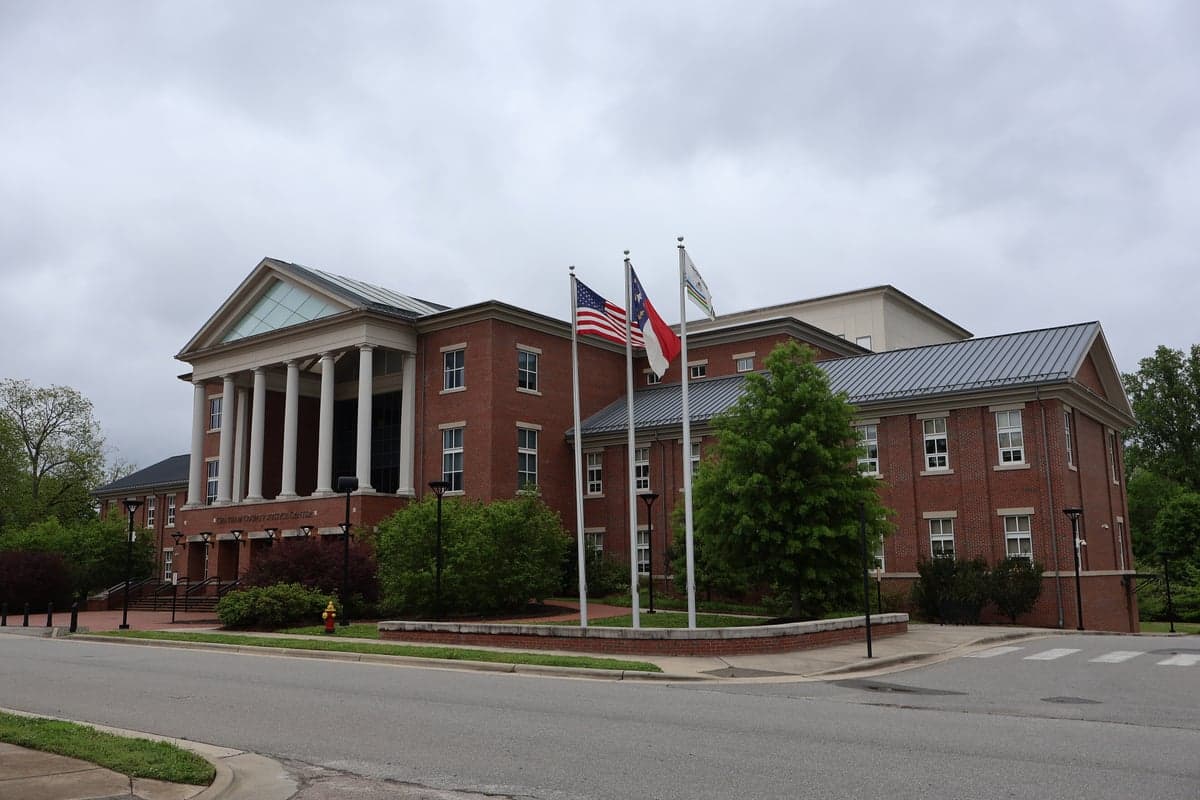
Photo: Wikipedia
Personal Sovereignty in Chatham County
Viable for self-reliance. Generally workable, though some barriers may limit total independence.
What does Personal Sovereignty tell us?
Personal Sovereignty measures your capacity for self-reliance and independence with minimal government friction. Higher scores mean fewer barriers between you and the way you want to live... but it assumes you have the space you need and good neighbors.
What does this tell us?
Personal Sovereignty measures your capacity for self-reliance and independence with minimal government friction. Higher scores mean fewer barriers between you and the way you want to live... but it assumes you have the space you need and good neighbors.
State Policy
Energy independence: Importer (24% of energy produced in-state)
Personal Liberty
Homesteading

Personal Liberty Analysis
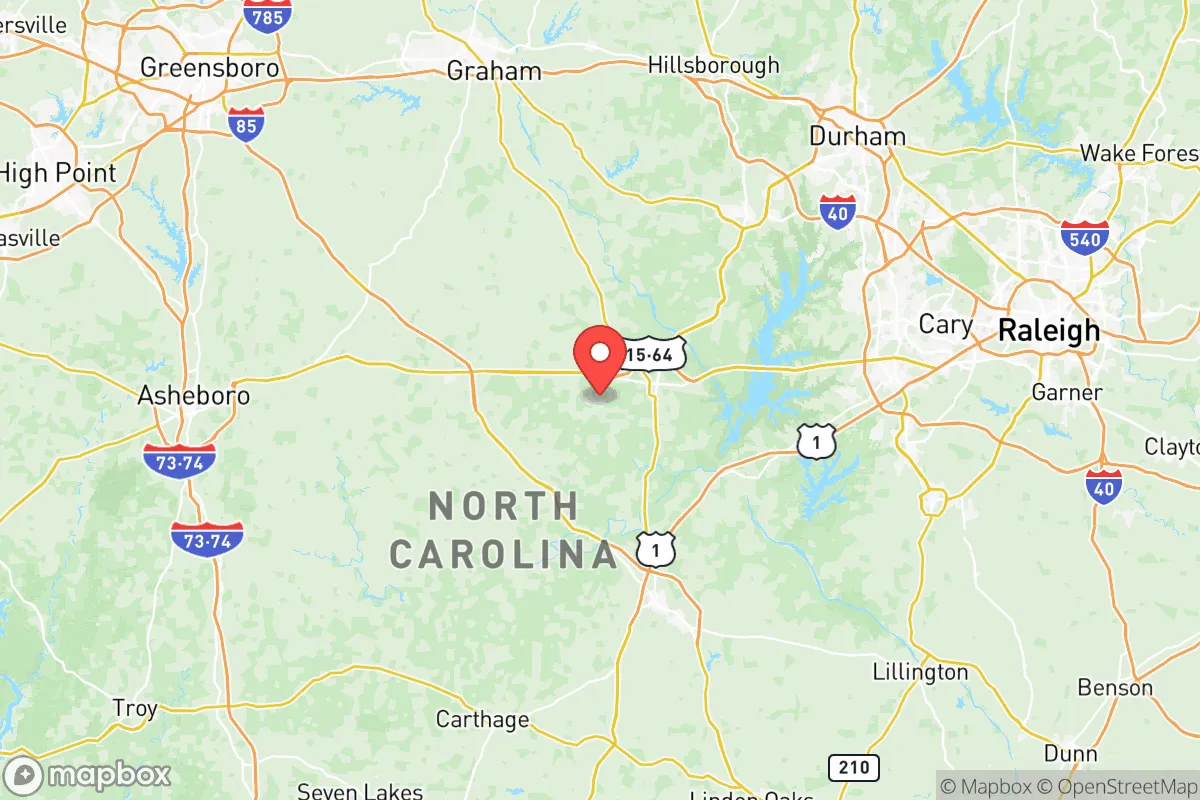
Chatham County, North Carolina, offers a notably high degree of personal sovereignty relative to many urban and suburban areas in the state, particularly for those who value self-reliance, limited government interference, and the ability to live life on one's own terms. While the county is experiencing rapid growth from the Research Triangle region, its regulatory posture remains comparatively light, and its culture—especially in the smaller towns and rural stretches—still prizes individual autonomy. For a relocation-minded individual or family with a conservative or libertarian bent, Chatham County presents a compelling balance: proximity to economic opportunity in the Triangle without the heavy-handed governance found in places like Chapel Hill or Durham proper.
Tax burden and regulatory posture in Chatham County
North Carolina's state-level tax environment is among the most favorable in the Southeast for those seeking to keep more of their earnings. The state levies a flat 4.5% personal income tax (as of 2026) and a corporate income tax rate of 2.5%, both of which are scheduled to decline further under current law. There is no state-level tax on Social Security benefits, and the standard deduction for individuals is generous. Chatham County itself adds a local property tax rate of approximately $0.675 per $100 of assessed value, which is moderate for the region. The county does not impose any local sales tax beyond the state's 4.75% base, though the combined rate in most municipalities reaches 7% due to county and transit levies. Regulatory posture in Chatham is generally business-friendly, with no county-level minimum wage ordinance, no rent control, and a relatively streamlined permitting process for residential construction. However, the county's unified development ordinance does impose some restrictions on land use, particularly in the more densely zoned areas near Pittsboro and Siler City. For those looking to operate a home-based business or small farm, the regulatory burden is light compared to Wake or Orange counties, but it is not entirely absent—zoning variances and conditional use permits are required for certain non-residential activities in residential zones.
Self-defense and gun law specifics in Chatham County
North Carolina is a shall-issue state for concealed carry permits, meaning that as long as an applicant meets statutory requirements (age 21, no disqualifying criminal history, completion of a firearms safety course), the sheriff's office must issue the permit. Chatham County's Sheriff's Office processes these permits efficiently, with typical turnaround times of 45–90 days. The state also permits open carry of handguns and long guns without a permit for anyone legally allowed to possess a firearm. There is no state-level red flag law, no universal background check requirement for private sales, and no waiting period for firearm purchases. Stand-your-ground laws are in effect, with no duty to retreat in any place where the individual is lawfully present. Chatham County's culture is broadly gun-friendly, with multiple shooting ranges and gun shops in and around Pittsboro, Siler City, and the rural areas near Goldston and Bear Creek. The county's rural character means that many residents routinely carry firearms for self-defense and for dealing with wildlife. For those moving from more restrictive states, the legal environment here is a significant draw.
Self-reliance and homesteading viability in Chatham County
Chatham County is one of the more attractive areas in the Triangle region for homesteading and off-grid living, though feasibility varies significantly by location. In the unincorporated areas—particularly around Goldston, Bear Creek, and Moncure—land is available in parcels ranging from 1 to 20+ acres, often at prices well below those in Pittsboro or the northern part of the county. Zoning in these rural areas is generally agricultural (RA-20 or RA-40), which permits livestock, poultry, beekeeping, and crop cultivation without special permits. The county does not require building permits for agricultural structures under 600 square feet, and there is no county-wide ban on rainwater collection. However, off-grid living is not entirely unrestricted: the county requires a septic system permit for any dwelling with plumbing, and the health department enforces minimum lot sizes (typically 1 acre for a conventional septic system). Solar panels are allowed without special permitting, but net metering with Duke Energy is available only for grid-tied systems. For those seeking true off-grid independence, the rural southern and western parts of the county offer the most permissive environment, while areas closer to Pittsboro and the Haw River corridor have more restrictive subdivision and stormwater regulations. The county's soil quality is generally good for gardening, and the growing season is long (approximately 200 frost-free days).
Personal liberties in Chatham County: parental rights, medical autonomy, and property
North Carolina has a strong tradition of parental rights in education. The state's Parents' Bill of Rights (enacted in 2023) guarantees parents access to instructional materials, the right to opt their children out of certain activities, and the right to be notified of any changes in a child's mental or physical health. Chatham County Schools, while generally responsive to parental concerns, has seen some friction over curriculum content and library materials, particularly in the more progressive-leaning areas near Pittsboro. For families seeking alternatives, the county has a robust homeschooling community and several private and charter schools, including Chatham Charter School in Siler City. Medical autonomy is somewhat limited by state law: North Carolina has not expanded Medicaid under the ACA, and the state's certificate-of-need laws restrict the number of healthcare facilities and services available. However, the state does not mandate COVID-19 or other adult vaccinations, and there is no state-level vaccine passport requirement. Property rights are well-protected under North Carolina law, which is a Dillon's Rule state—meaning local governments have only those powers expressly granted by the state. This limits the ability of county or municipal governments to impose overly restrictive land-use regulations. Chatham County has not enacted any form of rent control, and there is no county-wide ban on short-term rentals, though some municipalities (notably Pittsboro) have considered such restrictions. For those who value the ability to use their property as they see fit, the county's legal framework is generally supportive.
Overall, Chatham County offers a level of personal sovereignty that is significantly higher than in the urban cores of the Triangle (Raleigh, Durham, Chapel Hill) but somewhat lower than in the most rural counties of western or eastern North Carolina. The county's regulatory environment is moderate—light enough to permit a high degree of self-reliance and personal freedom, but with enough structure to maintain property values and public health standards. For a relocation-minded individual or family who wants access to the economic and cultural opportunities of the Triangle without sacrificing personal autonomy, Chatham County represents one of the better options in the state. The key is choosing the right location within the county: the rural southern and western areas offer the greatest freedom for homesteading and off-grid living, while the northern and eastern parts (closer to Pittsboro and the Haw River) are more suburban and regulated. For those who prioritize personal sovereignty above all else, the unincorporated areas around Goldston, Bear Creek, and Moncure are the most attractive.

* Values derived from national, state, county, city and local statistics and may differ in a specific area. Last updated: 2026-11-15T05:38:17.000Z
Narrative content on this page is AI-generated and may contain mistakes. Verify any details that matter before acting on them.
ReloMaps may earn a commission from affiliate links at no extra cost to you.

