Photo: Wikipedia
Political ClimatePolitical Climate in Westchester County
Showing district-level results — no local-only data available.
Local Political AnalysisPolitical Analysis of Westchester County
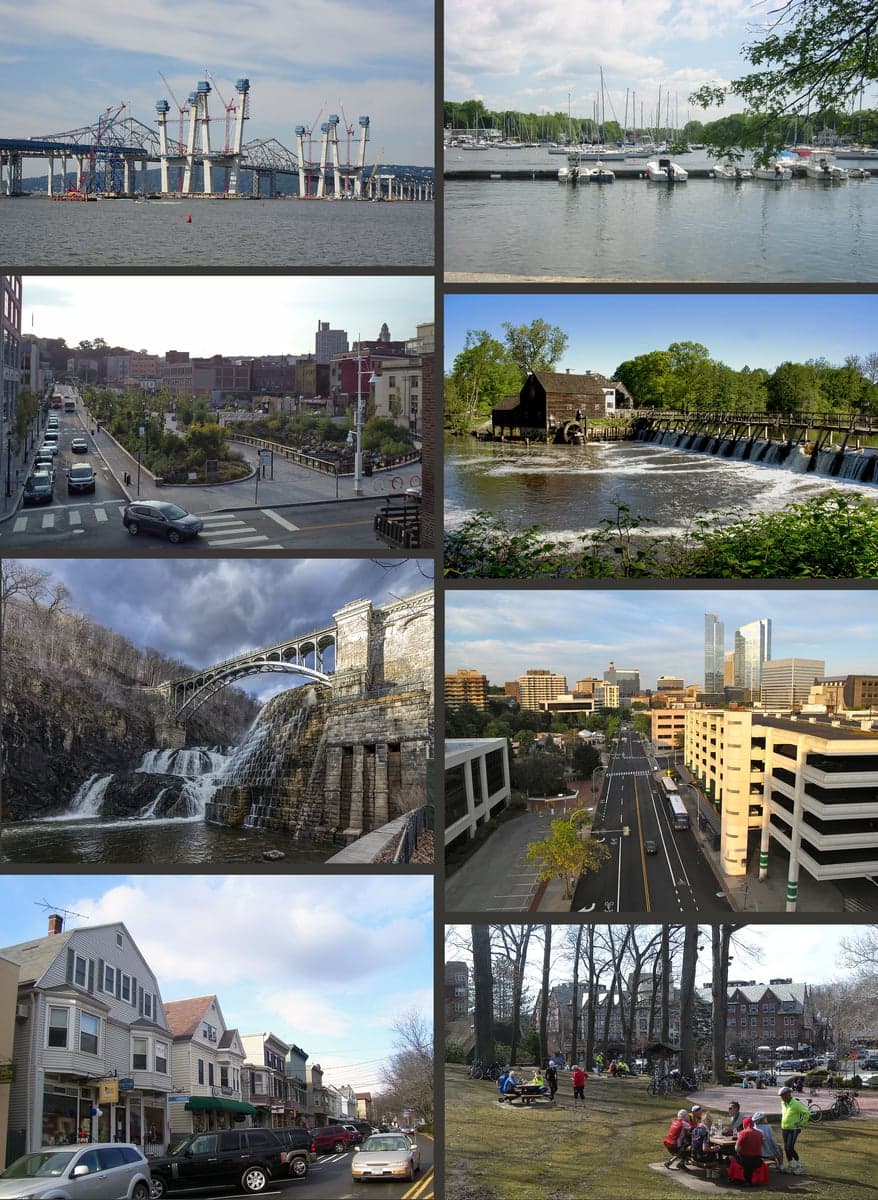
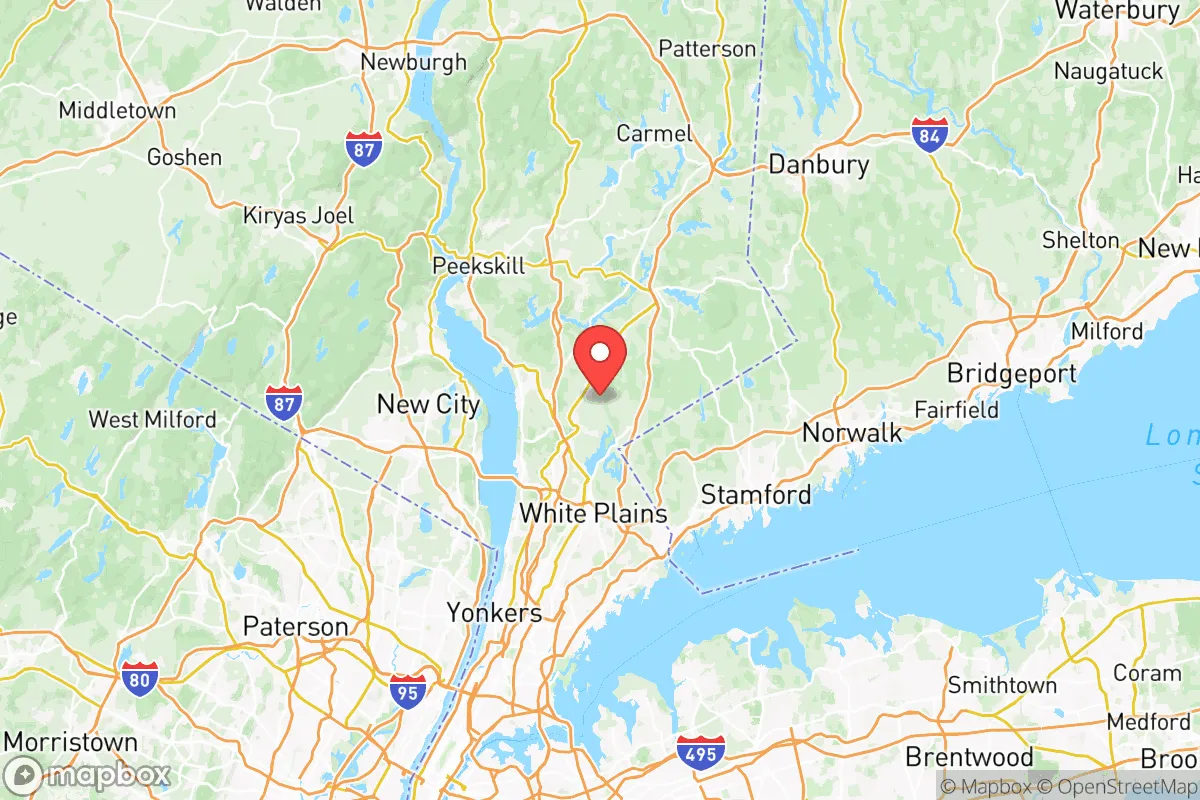
Westchester County carries a Cook Partisan Voting Index of D+1, making it one of the most politically competitive suburban counties in the New York metro area. In practice, though, the county has been trending reliably Democratic over the past decade—Biden won it by 27 points in 2020, and that margin held steady in 2024. The shift is driven by the southern, more populous suburbs like Scarsdale, Larchmont, and Rye, which have become solidly blue as professional-class voters moved farther from the city. Meanwhile, northern towns such as Yorktown, Cortlandt, and Somers remain Republican-leaning, often voting 15–20 points to the right of the county average. Swing precincts cluster in places like New Rochelle and White Plains, where moderate voters decide close state legislative races.
How it compares
Compared to New York City’s core—Manhattan, specifically—Westchester is a battleground. Manhattan’s Cook PVI is not released but sits somewhere around D+35, a Democratic stronghold where Republicans rarely exceed 15% of the vote. Westchester, by contrast, still elects Republicans to county and town offices. The Westchester County Board of Legislators flipped to Democratic control in 2017 and has stayed that way, but the split is tighter than in any borough. On local issues like property tax caps and development, the county’s Republican-leaning northern towns often align with upstate interests, while southern communities vote more like city residents. The gap shows up in housing debates: Westchester’s affordable-housing settlement, born from a 2009 federal lawsuit, remains a flashpoint in northern towns, whereas in Manhattan such policies pass without serious opposition.
What this means for residents
For liberal residents, Westchester offers progressive governance on education, environmental policy, and transit without the intensity of New York City politics. You can live in Mount Vernon or Yonkers, vote for a Democratic mayor, and still see city-style machine politics. For conservatives, the trajectory can feel isolating—state-level policies like the bail reform law of 2019 and the Climate Leadership and Community Protection Act come from Albany, not local votes. But northern towns give Republicans real power: Yorktown’s town board is entirely Republican as of 2025, and zoning decisions there reflect a slower-growth, lower-tax ethos. Practically, this means the property tax rate in Somers (around 1.8% of assessed value) is significantly lower than in Scarsdale (north of 2.2%), and conservative homeowners can find like-minded neighbors in the northern half of the county while still commuting to Manhattan for work.
Culturally, Westchester is a study in contrasts that Manhattan lacks. Spend a Saturday in Katonah and you’ll encounter farmers’ markets and organic co-ops alongside pickup trucks with Trump stickers—a mix that would confuse a lifelong Upper West Sider. The county’s school districts, particularly in Chappaqua, Bronxville, and Rye, are national models and draw families from both parties, which keeps local school board elections tense and competitive. The result is that policy fights here feel less ideological than in the city and more personal—arguments over school taxes, septic systems, and

State Political ClimatePolitical Climate in New York
State Political AnalysisPolitical Environment in the State
New York is one of the most reliably Democratic states in the country, with a +23-point lean for Joe Biden in 2020 and Democrats holding supermajorities in both legislative chambers. That statewide blue veneer, however, is almost entirely driven by New York City’s five boroughs, which cast roughly 40% of the state’s total votes and run 60-to-70 points Democratic. Outside the metropolitan orbit, the picture shifts dramatically: Upstate counties like Wyoming, Orleans, and Allegany vote Republican by 30 points or more, while the so-called “suburban ring” — Long Island’s Nassau and Suffolk counties, Westchester, and Erie County (Buffalo) — has oscillated between competitive and moderately blue over the past two decades. The net effect is a state where a conservative transplant can find real political refuge in specific towns and counties, but where state-level policy will almost certainly continue to move left for the foreseeable future.
Urban vs. rural divide
The divide is stark and geographic. New York City and its immediate suburbs (Westchester, Nassau, Suffolk) are the Democratic engine, with Manhattan and Brooklyn routinely delivering 80–85% of the vote for Democratic presidential candidates. Buffalo and Rochester, while smaller, are solidly blue, as is the state capital of Albany. Move outward, and you hit the “red belt”: the Southern Tier along the Pennsylvania border, the Finger Lakes region, the North Country near Lake Ontario, and much of the western part of the state outside Erie County. Places like Staten Island stand out as the only NYC borough that voted for Donald Trump in 2020 (by a narrow margin), while Erie County is a bellwether — it went for Biden but is closely watched because it encapsulates the mix of urban Buffalo and conservative suburbs and exurbs. Many relocation-oriented conservatives target towns like Putnam County (east of the Hudson) or Warren County (Glens Falls area) for their mix of conservative local governance and proximity to low-tax Vermont. The key takeaway: where you settle in New York determines your political reality more than any other factor.
Policy environment
State-level policy is uniformly progressive, with high income taxes (a top marginal rate of 10.9% for incomes over $25 million, plus a middle-class rate around 5.5–6.5%), a strong regulatory posture on everything from rent control (Rent Stabilization Law) to energy (the Climate Leadership and Community Protection Act mandates a 40% reduction in greenhouse gas emissions by 2030). Education policy is centralized: the state sets curriculum standards and recently mandated “culturally responsive-sustaining” frameworks, while school funding heavily favors the city. Healthcare is heavily regulated; the state runs its own health exchange and expanded Medicaid aggressively under the ACA. Election laws have been loosened: no-excuse mail-in absentee voting (temporarily expanded during COVID and now codified), early voting by law, and same-day voter registration were all enacted in the last five years. For a conservative relocator, the practical reality is the tax burden is among the highest in the nation, though property taxes vary wildly — upstate rural counties can be half the rate of Westchester or Long Island.
Recent policy direction
The state has moved sharply left across multiple fronts since 2019. On gun and self-defense law, the SAFE Act of 2013 was already strict; the 2022 Bruen response (the Concealed Carry Improvement Act) further restricted where permit holders can carry, banning firearms in all “sensitive” places like Times Square and virtually all government buildings. A federal lawsuit is pending, but the law is in effect. On parental and education rights, New York rejected the “parental bill of rights” movement seen in red states; instead, the Board of Regents adopted a policy directing schools to use “affirming” language regarding gender identity without requiring parental notification (local districts have discretion, but the trend is clear). Medical and bodily autonomy is strongly protected: abortion is codified up to viability in state law (Reproductive Health Act of 2019), and the state has become a sanctuary for out-of-state abortion seekers. The 2021 “Bail Elimination” — actually bail reform — eliminated cash bail for many non-violent offenses, then was slightly amended in 2022 after backlash. Voting and ballot access expanded significantly: early voting (9 days) was implemented, and “automatic voter registration” at DMV became law. A conservative moving in will find property rights weaker than in many states, especially with rent control expansion and the Green Amendment (2021) that gives citizens standing to sue over environmental harms, often blocking development.
Civil unrest & political movements
New York has been the stage for massive protest movements on both sides. The 2020 George Floyd protests in NYC, Buffalo, and Rochester were among the largest in the nation, sometimes turning violent (looting in Midtown, confrontations in Buffalo between police and protesters). Counter-protests by pro-police and pro-Trump groups have been smaller but persistent, especially in Staten Island and upstate cities. Immigration politics are a flashpoint: New York is a “sanctuary state” (Executive Order 2017, codified by statute in 2019), meaning local law enforcement does not cooperate with ICE detainers. In places like Utica (a historic refugee resettlement hub) and Buffalo, this has created tension between city progressive governments and suburban/rural conservatives. Election integrity debates were intense after the 2020 election, with Democratic-run counties using heavy mail-in voting; some rural counties like Wyoming County passed resolutions calling for a forensic audit — largely symbolic. Secession rhetoric has popped up twice: in 2021, a few upstate counties (e.g., Orleans) voted on symbolic resolutions to leave New York, but nothing serious came of it. A relocator will notice that political polarization is visible even in small towns: yard signs, bumper stickers, and local newspaper letters are heavily partisan.
Projection
Over the next 5–10 years, the demographic trends point to continued Democratic dominance at the state level. New York City’s population has been shrinking (down about 600,000 since 2020), but those leaving tend to be middle-income families, many of whom voted Republican; the remaining population is more progressive. Upstate is aging and slowly losing population, so its voting clout will diminish further. The state legislature is likely to push through more progressive tax increases (a proposed “wealth tax” failed in 2023 but could return), stricter energy regulations (banning gas stoves in new buildings by 2026), and expanded public healthcare options (the “New York Health Act” single-payer bill is reintroduced annually). On the other hand, there may be a moderate backlash: the 2022 midterms showed Republicans flipping several House seats in the Hudson Valley and Long Island (e.g., NY-17, NY-19) on crime and inflation issues. That could slow the pace of leftward policy but not reverse it. A conservative moving in now should expect state policies to continue challenging their political values, but should also know that many rural and suburban communities will remain islands of conservative governance — especially in the Southern Tier and North Country.
Bottom line for a new resident: If you’re a conservative or libertarian-leaning individual or family, New York offers a mixed bag. You’ll find towns where your neighbors share your political views — Staten Island, parts of Erie County (like Clarence), or Putnam County are examples. But the state government will tax you heavily, restrict your gun rights more than any state except maybe California, and implement policies you likely oppose on education, migration, and ballot access. The best strategy is to choose your micro-location carefully and understand that state-level politics will feel adversarial. If you can accept that tradeoff — say for a job in finance, tech, or healthcare that pays well — many people do it and build rewarding lives. If you want a state that aligns with conservative values, you’re better off looking at Texas, Florida, or Tennessee. But if you need to be in the Northeast for family or career, New York still has pockets where a conservative can live comfortably, especially if you keep your politics local.
* Values derived from national, state, county, city and local statistics and may differ in a specific area. Last updated: 2026-06-20T16:20:27.000Z
Narrative content on this page is AI-generated and may contain mistakes. Verify any details that matter before acting on them.
ReloMaps may earn a commission from affiliate links at no extra cost to you.

