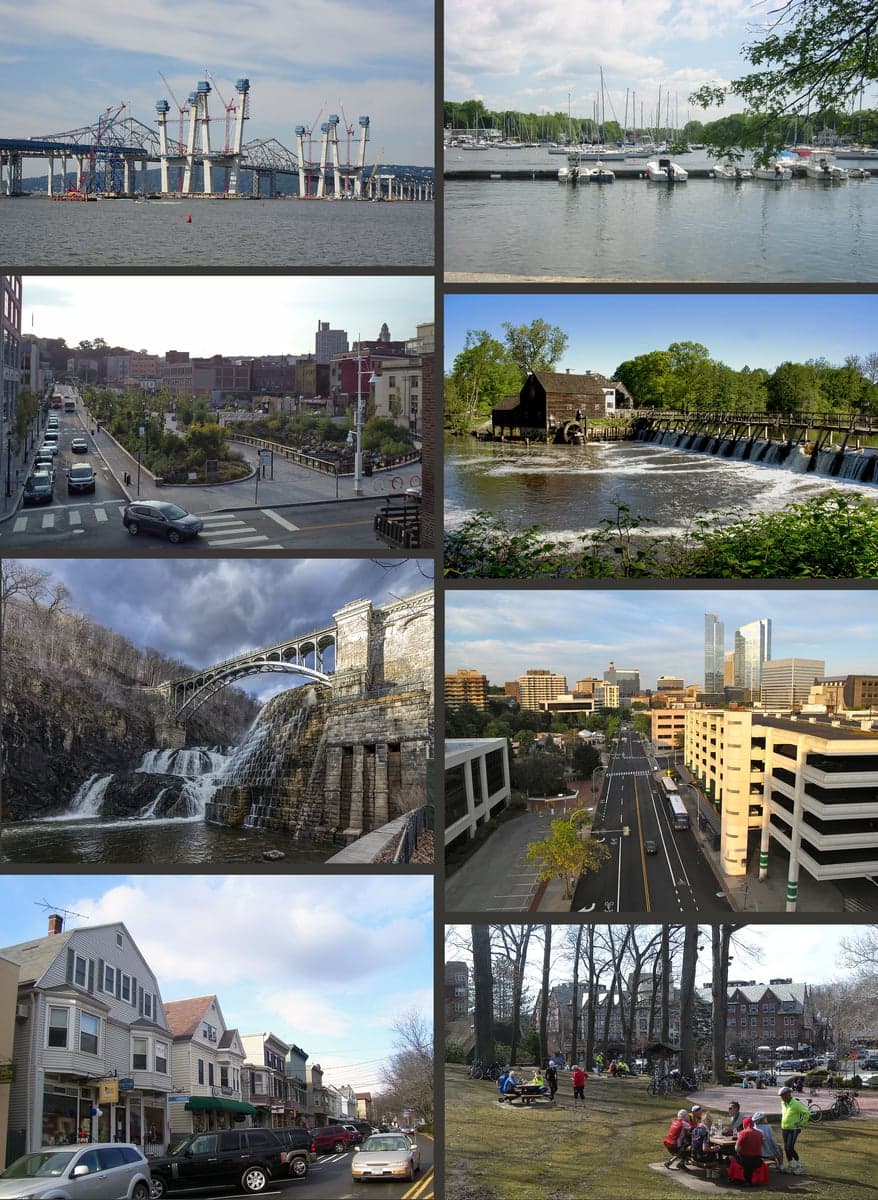
Photo: Wikipedia
Personal Sovereignty in Westchester County
Moderate friction. Expect trade-offs in some aspect of personal liberty and independence.
What does Personal Sovereignty tell us?
Personal Sovereignty measures your capacity for self-reliance and independence with minimal government friction. Higher scores mean fewer barriers between you and the way you want to live... but it assumes you have the space you need and good neighbors.
What does this tell us?
Personal Sovereignty measures your capacity for self-reliance and independence with minimal government friction. Higher scores mean fewer barriers between you and the way you want to live... but it assumes you have the space you need and good neighbors.
State Policy
Energy independence: Importer (12% of energy produced in-state)
Personal Liberty
Homesteading

Personal Liberty Analysis
Westchester County, New York, offers a distinctly constrained environment for personal sovereignty relative to much of the country, shaped by dense state-level regulation and some of the highest tax burdens in the United States. While the county itself contains a mix of dense urban centers like Yonkers and White Plains alongside more rural communities such as North Salem and Pound Ridge, the legal and fiscal framework is uniformly heavy-handed. For a conservative-leaning individual or family prioritizing self-reliance and limited government, Westchester presents substantial headwinds, though specific towns can mitigate some of the pressure through lower local taxation and greater physical distance from the regulatory apparatus of New York City.
Tax burden and regulatory posture across Westchester towns
New York State’s personal income tax is progressive, topping out at 10.9% for high earners, and Westchester County adds its own local income tax of approximately 1%. The property tax burden is among the highest nationally — median effective rates exceed 1.9% of home value, with mill rates varying widely by municipality. For example, the town of Bedford and village of Scarsdale both carry property tax levies that can exceed $30,000 annually on a $1.5 million home, while more distant towns like Cortlandt or Somers may see slightly lower effective rates due to lower assessed values. Sales tax in Westchester is 8.375% (state + county + local), applied broadly. Regulatory posture closely follows New York State mandates: strict environmental review under SEQRA, labor laws that raise costs for small businesses, and a statewide ban on plastic shopping bags are typical of the heavy touch. Local town boards in less dense areas like Lewisboro and Yorktown sometimes push back on new development through slower approvals, which can frustrate property owners even as it preserves rural character. Overall, the tax and regulatory climate in Westchester ranks as one of the most interventionist in the Northeast, comparable to neighboring Fairfield County, Connecticut, but with higher income taxes.
Self-defense and gun law: what the Second Amendment looks like here
New York’s gun laws are among the strictest in the nation, and Westchester County enforces them with consistency. The NY SAFE Act (2013) mandates universal background checks, bans so-called "assault weapons" by feature-based criteria, limits magazine capacity to ten rounds, and requires registration of certain rifles. Since the Supreme Court’s Bruen decision (2022), New York switched from "may-issue" to "shall-issue" for concealed carry permits, but the process remains onerous: applicants must complete a 16-hour safety course, provide character references, and undergo a deep background check that includes social media review. Westchester County’s licensing office in White Plains is known for thorough (and slow) processing — waits of six months are common. Some towns, such as Yorktown and Somers, have active sportsmen’s clubs and a stronger hunting tradition, but legally all residents face the same state constraints. Ownership of handguns requires a separate premises permit for home, and transporting firearms outside the home is tightly regulated (locked case, separate from ammunition, direct route to range or gunsmith). For a reader accustomed to constitutional carry states like Arizona or Texas, Westchester will feel like a foreign country for self-defense rights. There is no stand-your-ground law; New York imposes a duty to retreat before using deadly force outside the home.
Self-reliance and homesteading viability: lot sizes, zoning, and off-grid reality
Homesteading in Westchester is feasible in a handful of rural towns — particularly North Salem, Pound Ridge, and parts of Lewisboro — where zoning requires minimum lot sizes of two to five acres, and some parcels exceed ten or twenty acres. However, "homesteading" as a self-sufficient lifestyle runs into significant regulatory barriers. The New York State Building Code requires permits for any structure over 200 square feet, mandates septic system approval from the county health department, and enforces well-water testing standards. Off-grid energy (solar plus battery) is permitted but must meet utility interconnection rules and cannot violate local fire codes; completely severing from the grid is not allowed in most towns because the state requires a connection for safe emergency access. Raising backyard chickens is generally allowed in rural zones, but slaughtering livestock for personal consumption may require a licensed mobile slaughter unit due to state meat inspection laws. Rainwater collection is legal but restricted to outdoor use only (not potable without treatment). In more suburban towns like Bedford or Chappaqua, homeowner association covenants often add further constraints. The bottom line: a determined family can achieve a partial self-reliant lifestyle on a large rural lot in northern Westchester, but full off-grid living is effectively impossible due to state codes and county health regulations.
Personal liberties: parental rights, medical autonomy, speech, and property
Parental rights in Westchester operate within New York’s strong state education framework. The state mandates a comprehensive K-12 curriculum that includes sex education and social-emotional learning; parents who homeschool must submit annual Individualized Home Instruction Plans (IHIP) and quarterly reports to the local school district, which has discretion to approve or deny them. Vaccine mandates are strict — school attendance requires all state-mandated immunizations, with a narrow medical exemption and no religious or philosophical exemption in effect since 2019. Medical autonomy is further constrained by the state’s public health law, which gives the governor sweeping emergency powers (including vaccine and mask mandates) that were exercised extensively during the COVID-19 pandemic. Speech and assembly rights are generally protected under the First Amendment, but New York has a "hate crime" enhancement statute that can elevate charges for speech perceived as threatening; large protests require permits in many towns. Property rights are hedged by strong eminent domain powers — the state has used them for infrastructure projects (e.g., the Tappan Zee Bridge replacement) and could do so for climate-related initiatives. Rent control exists in parts of Westchester (e.g., Yonkers, New Rochelle) for older buildings, limiting what landlords can charge and eviction flexibility. For the personal-liberty-minded individual, these constraints are real and not easily escaped through local choice.
Compared to areas like Texas, Florida, or even rural New England states such as New Hampshire, Westchester County ranks low on overall personal sovereignty. Its high taxes, restrictive gun laws, and dense regulatory web make it a poor fit for someone seeking maximum individual discretion over property use, self-defense, and family affairs. However, within the county, towns like North Salem, Pound Ridge, and parts of Yorktown offer more breathing room — larger lots, fewer immediate neighbors, and a culture more tolerant of self-sufficient practices — than denser urban centers like White Plains or Yonkers. A strategic relocation decision would weigh these internal differences against the unyielding state overhead. For readers willing to trade some freedom for proximity to New York City employment and cultural amenities, Westchester can work, but the sovereignty cost is significant.

* Values derived from national, state, county, city and local statistics and may differ in a specific area. Last updated: 2026-06-20T16:20:27.000Z
Narrative content on this page is AI-generated and may contain mistakes. Verify any details that matter before acting on them.
ReloMaps may earn a commission from affiliate links at no extra cost to you.

