Photo: Wikipedia
Political ClimatePolitical Climate in Ulster County
Showing district-level results — no local-only data available.
Local Political AnalysisPolitical Analysis of Ulster County
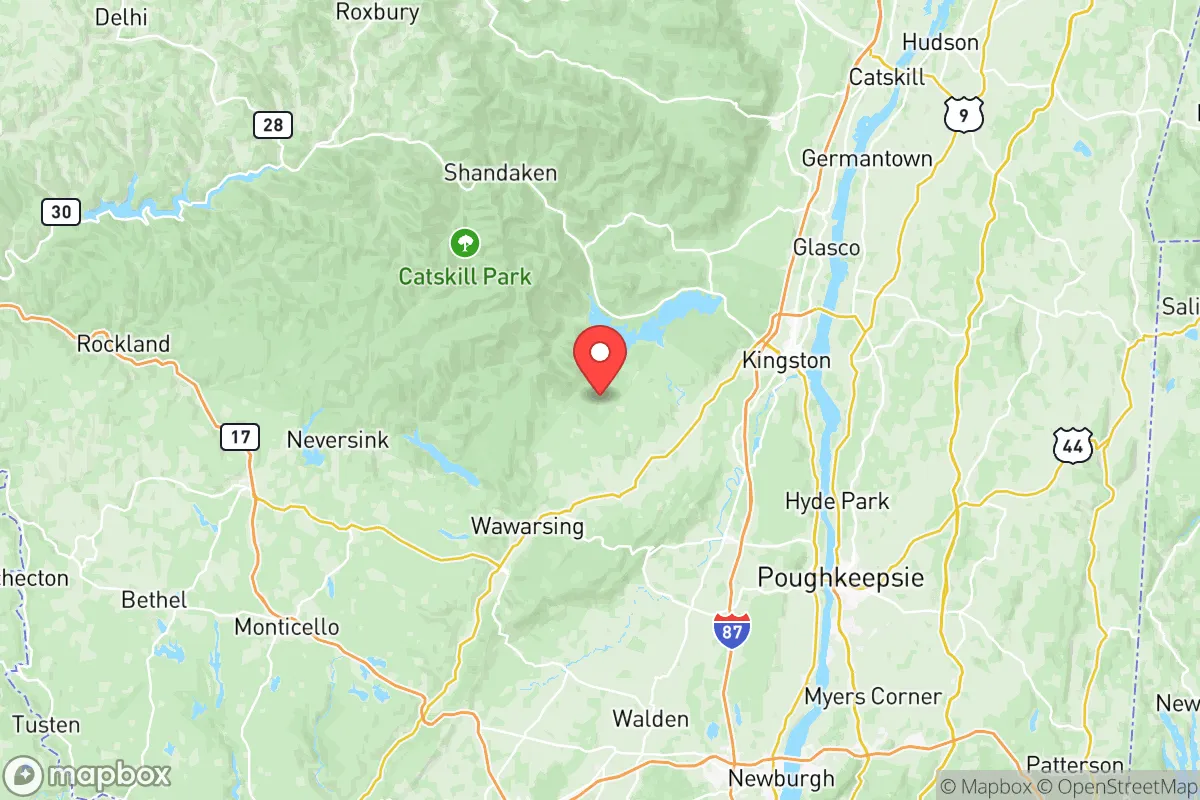
Ulster County has shifted from a reliably blue-collar Democratic stronghold to a more nuanced D+1 lean, as measured by the Cook Partisan Voting Index, reflecting a slow but steady rightward drift in its rural and exurban towns even as the county's core liberal enclaves have grown more progressive. The county backed Joe Biden by about 10 points in 2020, but Donald Trump improved his margins significantly in the 2024 election, narrowing that gap to roughly 6 points. This trajectory puts Ulster County to the right of New York City's five boroughs, which delivered Biden a 60-point-plus margin, but still left of most of upstate New York outside the Hudson Valley corridor.
How it compares to New York, NY
New York City is a Democratic super-majority where Republicans rarely crack 25% of the vote in presidential elections, while Ulster County is a genuine battleground at the local level. The city's political gravity pulls hard left on issues like rent control, public transit funding, and sanctuary city policies, whereas Ulster County debates are more likely to center on land use, school funding, and property taxes. Kingston, the county seat, votes about 70% Democratic and shares much of the cultural and political outlook of Brooklyn or Manhattan, but drive 20 minutes west to the town of Rochester or the village of Ellenville and you'll find precincts that split nearly 50-50 or even lean Republican. The town of Wawarsing, for example, voted for Trump in both 2016 and 2020, while nearby New Paltz — home to SUNY New Paltz — is one of the most progressive municipalities in the entire state. Swing precincts cluster in the towns of Ulster, Saugerties, and Marlborough, where moderate voters often decide county legislature races by margins of a few hundred votes.
What this means for residents
For liberal residents, Ulster County offers a comfortable environment where Democratic candidates almost always win countywide office, but not without serious competition in the more conservative towns. Progressive policies like the county's community choice aggregation for renewable energy and its ban on plastic bags passed without major controversy, but proposals for rent stabilization or increased density near transit hubs have faced stiff opposition from rural homeowners. Conservative residents are not politically isolated — they hold seats on town boards, school boards, and the county legislature, and their votes matter in close races. The county's Republican Party has become more organized in recent cycles, flipping a county legislative seat in the town of Shawangunk in 2023 and coming within 2 points of winning the county executive race in 2021. Property tax rates are a perennial flashpoint, with conservative towns frequently voting down school budgets and liberal towns more willing to approve tax levies for social services and environmental programs.
Culturally, Ulster County feels like a hybrid of New York City's outer boroughs and traditional upstate small-town life, which creates a distinctive political dynamic. Woodstock and New Paltz host annual Pride parades and climate rallies that draw thousands, while the county's agricultural fairs and volunteer fire department fundraisers in Accord and Stone Ridge reflect a more conservative, community-first ethos. The county's Democratic establishment has moved left on social issues over the past decade — the county legislature passed a resolution supporting reproductive rights in 2022 and declared the county a "safe haven" for transgender individuals in 2023 — but remains fiscally moderate, often clashing with progressive activists over the county budget. This balancing act means that both conservative and liberal residents can find their values reflected in some aspect of local governance, but neither side gets everything it wants.

State Political ClimatePolitical Climate in New York
State Political AnalysisPolitical Environment in the State
New York State is one of the most reliably Democratic states in the country, with a partisan lean of roughly D+10 to D+15 in statewide elections over the past decade. The Democratic coalition is anchored by New York City and its immediate suburbs, while the rest of the state—particularly Upstate and rural regions—has shifted sharply toward Republicans. Over the last 20 years, the state has moved from a competitive purple state in the 1990s and early 2000s to a solid blue stronghold, driven by population growth in the NYC metro area and the simultaneous depopulation and political realignment of Upstate counties like Erie, Monroe, and Onondaga.
Urban vs. rural divide
The political map of New York is a textbook case of urban-rural polarization. New York City alone accounts for roughly 40% of the state's vote, and it delivers margins of 70-80% for Democrats. The five boroughs—Manhattan, Brooklyn, Queens, the Bronx, and Staten Island—are not monolithic: Staten Island is the only borough that regularly votes Republican in local races, though it still leans blue in presidential elections. The inner-ring suburbs of Long Island (Nassau and Suffolk counties) and the Hudson Valley (Westchester, Rockland, and Putnam counties) have trended Democratic over the past decade, with Nassau County flipping from a Republican stronghold to a reliable Democratic county in presidential races after 2016.
Upstate, the picture is reversed. Buffalo (Erie County) and Rochester (Monroe County) are Democratic-leaning cities surrounded by deeply red rural and exurban areas. Syracuse (Onondaga County) and Albany (Albany County) are similar, though Albany's status as the state capital gives it a more moderate Democratic flavor. The rural North Country, Finger Lakes, and Southern Tier regions—places like Plattsburgh, Elmira, and Jamestown—vote heavily Republican. The divide is stark: in 2024, New York City voted for Joe Biden by roughly 70 points, while rural counties like Wyoming, Orleans, and Allegany voted for Donald Trump by 40-50 points.
Policy environment
New York's policy environment is shaped by one-party Democratic control of the governorship and both legislative chambers, which has been the case since 2019. The state has one of the highest combined state and local tax burdens in the country, with a progressive income tax that tops out at 10.9% for the highest earners and a property tax system that varies widely by locality—Westchester County's rates are among the highest in the nation, while parts of the Southern Tier are more moderate. The regulatory posture is generally pro-labor and pro-tenant, with strict rent stabilization laws in New York City and a statewide ban on natural gas hookups in new construction starting in 2026.
Education policy is dominated by the state's powerful teachers' unions, and New York spends more per pupil than any other state except New York, Vermont, and Alaska. Healthcare is heavily regulated, with the state running its own health insurance exchange and expanding Medicaid under the Affordable Care Act. Election laws are among the most liberal in the country: New York has no-excuse absentee voting, early voting, automatic voter registration, and same-day registration. The state also has a "sanctuary" law (the New York Trust Act) that limits cooperation between local law enforcement and federal immigration authorities.
Recent policy direction
Over the past five years, New York has moved decisively left on a range of issues. In 2019, the state passed the Reproductive Health Act, codifying abortion rights into state law and removing several restrictions. The same year, it passed the SAFE Act's successor, the Red Flag Law, which allows courts to temporarily remove firearms from individuals deemed a threat. In 2022, the state passed the Concealed Carry Improvement Act (CCIA) in response to the Supreme Court's Bruen decision, which significantly tightened restrictions on carrying firearms in public, including banning guns in "sensitive locations" like Times Square and public transit. The law has been challenged in court and partially blocked, but the state continues to defend it.
On education, the state has moved to expand parental rights in some areas while limiting them in others. In 2023, the legislature passed a law requiring schools to notify parents if their child requests a name or pronoun change, but it was vetoed by Governor Kathy Hochul. The state has also expanded access to gender-affirming care for minors, with a 2023 law protecting providers from out-of-state lawsuits. On property rights, the state has tightened rent regulation in New York City and expanded the scope of the Housing Stability and Tenant Protection Act of 2019, which eliminated vacancy decontrol and limited rent increases. On voting, the state has continued to expand access, including the 2023 passage of the John R. Lewis Voting Rights Act, which requires preclearance for changes to voting procedures in certain jurisdictions.
Civil unrest & political movements
New York has a long history of political activism, and recent years have seen both left- and right-wing movements gain visibility. The Black Lives Matter protests in 2020 were among the largest in the country, particularly in New York City and Buffalo, and led to significant police reform legislation, including the repeal of 50-a, a law that had shielded police disciplinary records from public view. On the right, the "Second Amendment sanctuary" movement has gained traction in rural counties like Wyoming, Orleans, and Allegany, where local sheriffs have declared they will not enforce certain gun laws. The state's sanctuary policies have also been a flashpoint, with some upstate counties passing resolutions opposing the Trust Act, though these are largely symbolic.
Immigration politics remain contentious, particularly in New York City, which has seen a surge of asylum seekers since 2022. The city's right-to-shelter law, which guarantees a bed for anyone who requests it, has been strained, leading to political battles between Mayor Eric Adams and Governor Hochul over funding and policy. Election integrity controversies have been relatively muted compared to other states, though the 2020 election saw some localized disputes over absentee ballot counting in New York City. The state's independent redistricting commission has also been a source of conflict, with Democrats drawing maps that were struck down by the courts in 2022.
Projection
Over the next 5-10 years, New York's political trajectory is likely to remain solidly Democratic, but the margin may narrow slightly as population growth in the NYC metro area slows and out-migration to lower-tax states like Florida and Texas continues. The state's demographic trends—an aging population, declining birth rates, and net domestic out-migration—will put pressure on the state's tax base and could lead to a more moderate fiscal policy, though major tax cuts are unlikely given the state's progressive political alignment. The urban-rural divide will likely deepen, with upstate counties becoming even more Republican and the NYC metro area becoming even more Democratic. For a new resident, this means living in a state where the political culture is heavily shaped by New York City, even if you live in a red county upstate. The practical implications are significant: high taxes, strong tenant protections, liberal gun laws, and a robust social safety net are likely to persist, while rural areas will continue to feel politically and culturally distant from the state capital.
For a conservative-leaning relocator, the bottom line is that New York offers a mixed bag. If you live in a rural or exurban county, you'll find a community that shares your political values, but you'll still be subject to state-level policies that may conflict with those values—particularly on taxes, guns, and education. For a liberal-leaning relocator, the state offers a policy environment that aligns closely with your priorities, especially in the NYC metro area and the larger upstate cities. Either way, the key takeaway is that New York is a state where your local experience will vary dramatically depending on whether you're in Manhattan or Malone, and that divide is only going to widen.
* Values derived from national, state, county, city and local statistics and may differ in a specific area. Last updated: 2026-06-18T14:14:35.000Z
Narrative content on this page is AI-generated and may contain mistakes. Verify any details that matter before acting on them.
ReloMaps may earn a commission from affiliate links at no extra cost to you.

