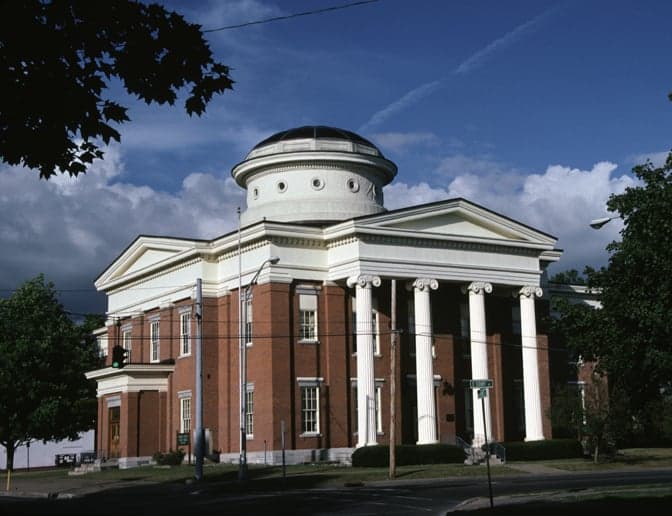
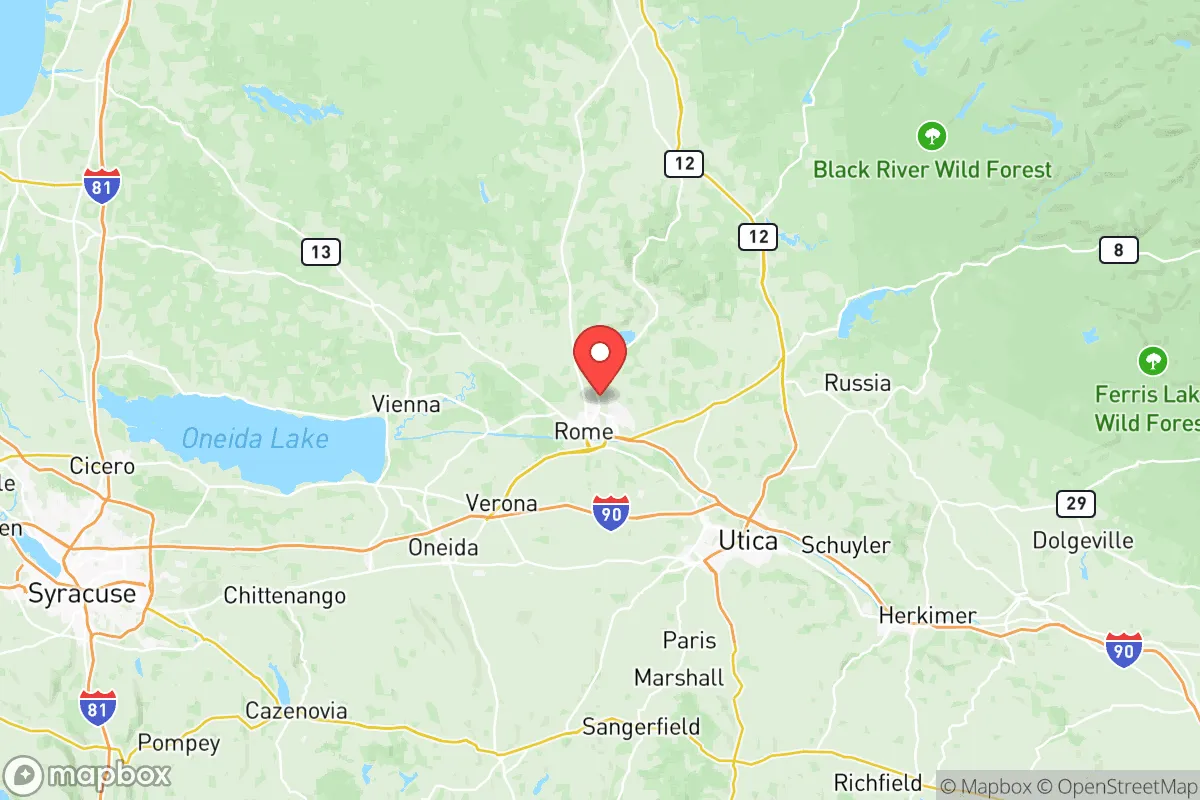
Photo: Wikipedia
Personal Sovereignty in Oneida County
Moderate friction. Expect trade-offs in some aspect of personal liberty and independence.
What does Personal Sovereignty tell us?
Personal Sovereignty measures your capacity for self-reliance and independence with minimal government friction. Higher scores mean fewer barriers between you and the way you want to live... but it assumes you have the space you need and good neighbors.
What does this tell us?
Personal Sovereignty measures your capacity for self-reliance and independence with minimal government friction. Higher scores mean fewer barriers between you and the way you want to live... but it assumes you have the space you need and good neighbors.
State Policy
Energy independence: Importer (12% of energy produced in-state)
Personal Liberty
Homesteading

Personal Liberty Analysis
Oneida County, New York, offers a mixed but generally favorable environment for personal sovereignty, where Upstate New York's rural independence meets the constraints of state-level policy. The county's autonomy landscape is defined by relatively low local taxes and a hands-off regulatory posture in its towns and villages, but residents must navigate New York State's more restrictive frameworks on gun laws and medical choice. For individuals and families prioritizing self-reliance, the key is understanding where local discretion ends and state mandates begin—a balance that varies significantly between the city of Utica and outlying communities like Boonville, Rome, and Camden.
Tax burden and regulatory posture in Oneida County
Oneida County's tax burden is notably lighter than much of downstate New York, but it is not a low-tax haven by national standards. The county's property tax rate averages around 2.3% of assessed home value, which is moderate for Upstate NY but high compared to states like Texas or Florida. However, local governments here exercise considerable restraint: towns such as Western and Lee have minimal zoning ordinances, and the county's sales tax rate of 8.75% is standard for the region. Regulatory posture is pragmatic—permitting for home businesses or small-scale agriculture is straightforward in rural townships, though the City of Utica imposes stricter building codes and business licensing. The county's industrial development agency actively courts small manufacturers and trades, signaling a pro-business tilt that contrasts with New York City's regulatory density. For a relocation-minded reader, the key takeaway is that Oneida County's local governance is generally light-touch, but state-level environmental and labor regulations (like the Scaffold Law and strict wetland protections) can complicate property development, especially near the Adirondack Park border in towns like Forestport.
Self-defense and gun law specifics in Upstate New York
New York State's gun laws are among the most restrictive in the nation, and Oneida County residents must comply with the SAFE Act, the 2022 Concealed Carry Improvement Act (CCIA), and a 2023 ban on semiautomatic rifle sales to under-21s. However, local enforcement and cultural attitudes create a meaningful gap between law and practice. Oneida County is a "Second Amendment Sanctuary" county, with the sheriff's office publicly stating it will not enforce certain state gun restrictions deemed unconstitutional. In practice, this means that in towns like Boonville, Camden, and Remsen, open carry of long guns is common and socially accepted, and concealed carry permits—while requiring a 16-hour training course and character references under the CCIA—are issued routinely by the county sheriff. The city of Rome has a more permissive gun culture than Utica, where urban density leads to stricter enforcement of "sensitive location" restrictions (e.g., no carry in parks or public transit). For self-defense-minded individuals, the practical reality is that Oneida County offers a gun-friendly local environment within a restrictive state framework; magazine capacity is capped at 10 rounds, and background checks are universal, but the county's legal climate is far more accommodating than in Albany or New York City.
Self-reliance and homesteading viability: lot sizes, zoning, and off-grid feasibility
Oneida County is one of the more viable regions in New York for homesteading and off-grid living, thanks to abundant rural land and permissive local zoning. Minimum lot sizes in unincorporated townships like Steuben and Ava are typically 2 to 5 acres for residential use, and agricultural zoning allows for larger parcels with minimal restrictions on livestock or crop production. Off-grid feasibility is high: many properties in the county's northern and eastern towns—such as Forestport, Otter Lake, and Remsen—lack municipal water or sewer, and private wells and septic systems are standard. Solar panel installation is legal without county-level permitting in most rural areas, though net metering requires state utility approval. Rainwater collection is unrestricted, and composting toilets are permitted under the state's sanitary code. The county's soil quality varies—the Mohawk Valley floor is fertile for market gardening, while the Tug Hill Plateau region (north of Boonville) has thin, rocky soil better suited for timber or pasture. Zoning is notably relaxed: towns like Western and Lee have no zoning codes at all, allowing for workshops, greenhouses, or tiny homes without variance hearings. The main constraint is state-level building codes, which require permits for structures over 200 square feet, but enforcement is sporadic in remote areas. For families seeking self-reliance, Oneida County's combination of affordable land (median rural lot price around $3,000–$5,000 per acre) and minimal local regulation makes it a strong candidate among Upstate NY counties.
Personal liberties: parental rights, medical autonomy, speech, and property
Oneida County offers a robust environment for personal liberties in several domains, though state law imposes limits. Parental rights are strong in practice: the county's school districts—including those in Rome, Camden, and Holland Patent—generally defer to parents on curriculum objections and medical decisions, with school boards dominated by conservative majorities. Medical autonomy is more constrained: New York's vaccine mandates for healthcare workers and school attendance remain in effect, and the state's 2019 abortion law protects access through 24 weeks. However, Oneida County has no local abortion providers, and the county legislature passed a resolution opposing state mandates in 2021. Freedom of speech is fully protected, with no local ordinances restricting political expression; the county's public meetings are known for robust citizen comment periods. Property rights are a mixed bag: the state's eminent domain authority is broad, but Oneida County has not pursued aggressive takings. The county's tax foreclosure process is slow (typically 3–5 years), giving property owners ample time to cure delinquencies. For the sovereignty-minded reader, the most notable liberty is the county's strong tradition of local control—town boards in places like Boonville and Western routinely reject state guidance on land use, and the sheriff's office has publicly declined to enforce certain state health orders. This local resistance creates a buffer against state overreach that is rare in downstate New York.
Overall, Oneida County ranks as a moderately high-sovereignty area within New York State, offering a pragmatic balance of low local taxes, permissive rural zoning, and a gun-friendly culture that resists state restrictions. Compared to the Hudson Valley or Long Island, the regulatory burden is significantly lighter; compared to free states like New Hampshire or Idaho, the state-level constraints on firearms and medical choice are real but manageable. For a conservative-leaning individual or family, the county's sweet spot lies in its rural townships—Boonville, Camden, Western, and Lee—where local governance is minimal and self-reliance is the norm. The city of Utica and its immediate suburbs require more compliance with state and municipal codes, but the county as a whole offers a viable path for those seeking personal autonomy within a high-tax, high-regulation state. The key is choosing the right town and accepting that New York's state-level policies will require some adaptation, while local culture provides a meaningful counterweight.

* Values derived from national, state, county, city and local statistics and may differ in a specific area. Last updated: 2026-07-24T00:30:19.000Z
Narrative content on this page is AI-generated and may contain mistakes. Verify any details that matter before acting on them.
ReloMaps may earn a commission from affiliate links at no extra cost to you.

