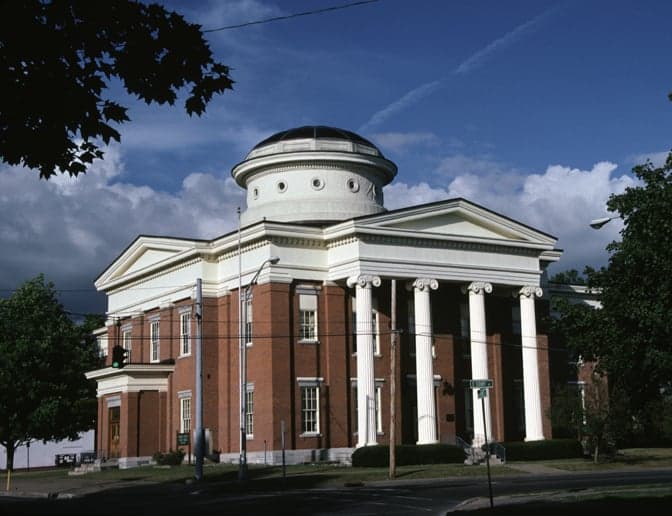
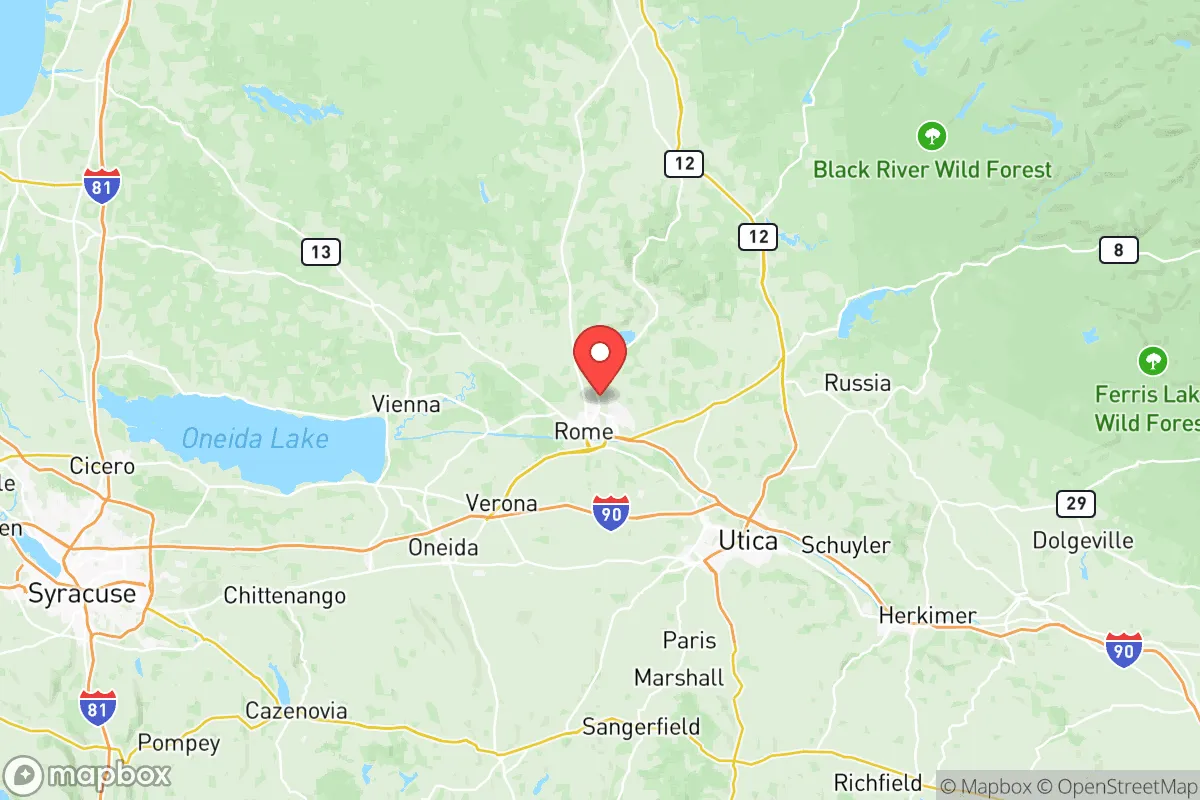
Photo: Wikipedia
Quality of Life in Oneida County
A livable area that tracks near national norms for affordability, walkability, and neighborhood health.
What does Quality of Life tell us?
Quality of Life measures an area by evaluating factors like cost of living, nearby amenities, country club access, airport proximity, socioeconomic signals and neighborhood character. For large states, this is a general average — quality of life can vary dramatically between metro areas, suburbs, and rural communities within the same state.
What does this tell us?
Quality of Life measures an area by evaluating factors like cost of living, nearby amenities, country club access, airport proximity, socioeconomic signals and neighborhood character. For large states, this is a general average — quality of life can vary dramatically between metro areas, suburbs, and rural communities within the same state.
Cost of Living
28% below national average
141%
The Real Cost of Living in Oneida County for 2026
| Tier | Individual | Family (4) |
|---|---|---|
| Survival | $15k | $28k |
| Comfortable | $33k | $49k |
| Luxury | $117k+ | $181k+ |
| Elite (Top 5%) | $137k+ | $213k+ |
Quality-of-Life Analysis
Oneida County, New York, offers a broad quality-of-life spectrum that ranges from the urban amenities of its largest city, Utica, to the quiet, affordable rural living found in towns like Boonville and Forestport. With a cost of living index of 72—well below the national average of 100—the county attracts a diverse mix of residents, including young professionals seeking city jobs, families looking for suburban school districts, and retirees or remote workers drawn to the Adirondack foothills for space and recreation. The county’s character shifts noticeably as you move from the Mohawk Valley floor up into the wooded hills and lake country of the north.
Largest town(s) & population centers
The county’s primary population hub is Utica, a mid-sized city of roughly 60,000 residents that serves as the region’s economic and cultural center. Daily life in Utica revolves around a walkable downtown anchored by the Utica University campus, the Munson-Williams-Proctor Arts Institute, and a growing food scene famous for its tomato pie and chicken riggies. The city also hosts the Utica Comets (AHL hockey) and the Boilermaker Road Race, a major 15K event. Just east of Utica, the village of New Hartford functions as the county’s primary retail and commercial corridor, with the Sangertown Square mall and numerous big-box stores. Rome, the county’s second-largest city (population ~32,000), offers a more industrial and military-influenced character, anchored by Griffiss Business and Technology Park (a former Air Force base) and the Griffiss Institute. Commuting patterns reflect this urban core: the average commute across the county is just 20.4 minutes, among the shortest in New York State, making it easy to live in one town and work in another.
Smaller towns & rural pockets
Outside the Utica-Rome corridor, Oneida County opens into a patchwork of smaller villages and unincorporated hamlets. Clinton, home to Hamilton College, is a classic college town with a preserved 18th-century village green, independent bookstores, and a walkable Main Street. Whitesboro and Yorkville are compact Mohawk River villages with older housing stock and a strong sense of local history. To the north, Boonville (population ~2,000) sits at the edge of the Adirondack Park and is a gateway for snowmobiling, fishing, and hiking in the Black River Valley. Forestport, even smaller and more remote, offers lakefront cabins and year-round outdoor recreation on the Fulton Chain of Lakes. In the county’s southwestern corner, the hamlet of Oriskany Falls and the village of Waterville represent the agricultural side of the county, with dairy farms and quiet, low-traffic roads. These smaller communities typically lack the retail density of Utica or New Hartford but compensate with lower housing costs and direct access to nature.
Cost & lifestyle range
The cost of living varies noticeably across the county, though it remains affordable by national standards. At the higher end, New Hartford and Clinton command median home values above the county average of $171,100, often in the $200,000–$300,000 range for single-family homes, with correspondingly higher rents (the county median rent is $917). These areas offer top-rated school districts (New Hartford Central Schools and Clinton Central Schools are consistently ranked among the best in the Mohawk Valley) and proximity to shopping, dining, and professional services. At the lower end, rural towns like Boonville, Forestport, and Camden offer median home values well under $150,000, with many older homes or fixer-uppers available for under $100,000. Rent in these areas can drop below $700 for a two-bedroom apartment. The trade-off is clear: lower costs come with longer drives to grocery stores, fewer job opportunities, and limited public transit. Utica itself sits in the middle, with a mix of affordable older homes (many in the $80,000–$120,000 range) and a growing number of renovated apartments in former industrial buildings downtown.
Who thrives in Oneida County? Remote workers and retirees who value low housing costs and short commutes will find the Utica-Rome corridor especially appealing, while outdoor enthusiasts and those seeking true quiet will prefer the northern towns of Boonville and Forestport. Families prioritizing school quality often gravitate to New Hartford or Clinton, even if it means paying a premium. The county’s affordability—combined with its mix of urban, suburban, and rural settings—makes it a practical choice for anyone willing to trade the high energy of a major metro for a lower-stress, lower-cost lifestyle in upstate New York.

Crime in Oneida County
WARNING: The crime statistics are unreliable for this jurisdiction. Local authorities have either not reported or under reported their data to the FBI. This could be due to bad intentions, incompetence or technical issues. Regardless, we suggest skepticism.
Higher crime rates than 65% of comparable U.S. locations.
Violent CrimeViolent Crime Analysis
Property CrimeProperty Crime Analysis
Crime Analysis
Oneida County, New York, presents a mixed safety profile where crime rates exceed national averages but vary significantly across its urban, suburban, and rural communities. The county’s overall violent crime rate stands at 362.7 incidents per 100,000 residents, while property crime occurs at a rate of 1,540.3 per 100,000, according to the most recent data. These figures place the county above both New York State and national benchmarks, though the experience of safety differs sharply between the city of Utica and outlying towns like New Hartford or Rome.
Crime in context
Oneida County’s violent crime rate is roughly 25% higher than the national average and significantly above the New York State average, which is suppressed by low-crime downstate suburbs. The property crime rate also exceeds the national median, driven largely by theft and burglary in more densely populated areas. The county’s crime index places it in the 29th percentile nationally, meaning 71% of U.S. counties are safer. However, these aggregate numbers obscure a stark urban-rural divide: the city of Utica, the county seat and largest municipality, accounts for a disproportionate share of reported incidents, while towns like New Hartford, Whitestown, and Kirkland report rates well below the county average. The progressive-leaning Oneida County District Attorney’s office, which has emphasized diversion programs and restorative justice in recent years, has drawn criticism from public safety advocates who argue that such approaches reduce accountability and contribute to recidivism, particularly for property crimes and drug offenses.
What residents experience
Daily life in Oneida County depends heavily on location. In Utica, residents frequently cite property crime, including vehicle break-ins and package theft, as a persistent nuisance, while violent incidents—mostly aggravated assaults and robberies—tend to cluster in the city’s lower-income neighborhoods near the downtown corridor and along the Genesee Street commercial strip. The city’s police department has struggled with staffing shortages, leading to slower response times in some precincts. By contrast, the suburb of New Hartford consistently reports violent crime rates below 100 per 100,000, and its well-funded police force maintains a visible presence around the Sangertown Square mall and commercial districts. Rome, the county’s second-largest city, sees moderate property crime but fewer violent incidents than Utica, though its proximity to the Griffiss Business and Technology Park has not yet translated into lower crime. Residents in Clinton and Whitesboro describe their communities as safe for families, with neighborhood watch programs and low burglary rates. The county’s rural towns—such as Boonville, Forestport, and Remsen—report minimal crime, though residents note that state police coverage is sparse and response times can exceed 30 minutes for emergencies.
Neighborhood-level variation is pronounced. Within Utica, the East Utica and Cornhill neighborhoods see the highest concentration of violent crime, while the Proctor Park area and the New Hartford border are notably safer. In Rome, the North Rome and Floyd Avenue corridors have higher property crime rates, while the Lake Delta and Stittville areas remain quiet. The progressive policies of the Oneida County District Attorney’s office, including a presumption against incarceration for non-violent offenders and a focus on treatment over punishment for drug crimes, have been cited by local law enforcement as factors that reduce deterrence and embolden repeat offenders. For prospective residents, the safest bets are the suburban and rural towns, where conservative-leaning local governments maintain tougher sentencing norms and community policing strategies that keep crime rates low.
* Values derived from national, state, county, city and local statistics and may differ in a specific area. Last updated: 2026-07-24T00:30:19.000Z
Narrative content on this page is AI-generated and may contain mistakes. Verify any details that matter before acting on them.
ReloMaps may earn a commission from affiliate links at no extra cost to you.

