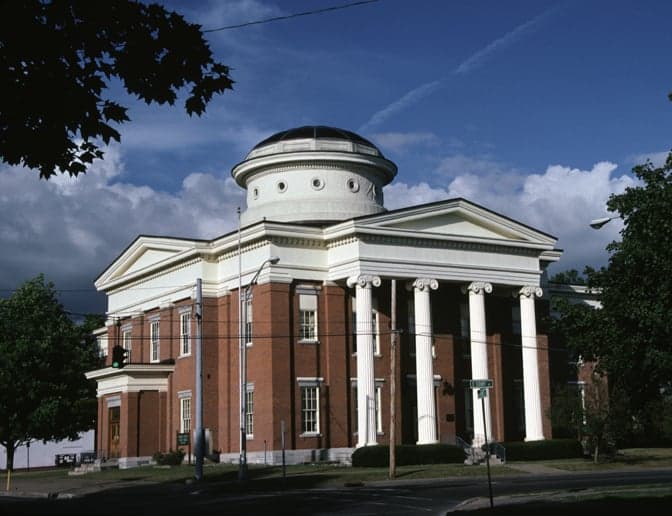
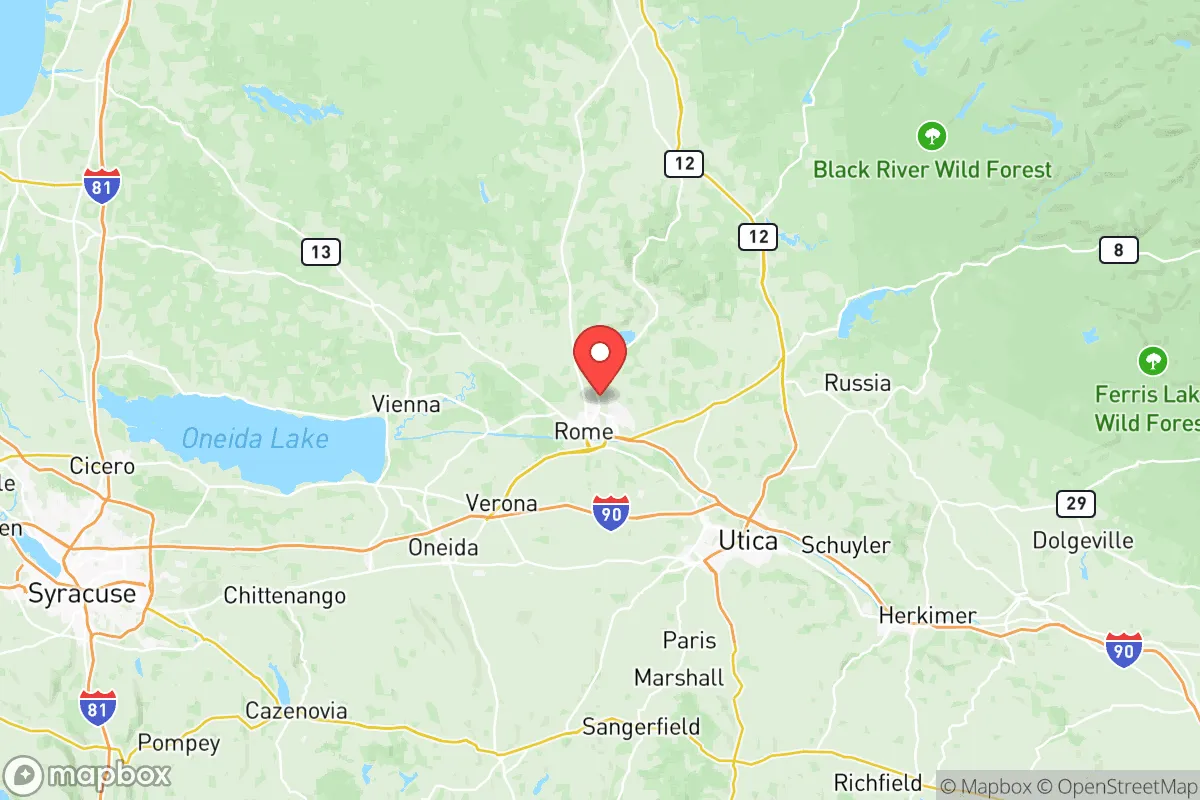
Photo: Wikipedia
Find The Best Places To Live in Oneida County
PRO TIP! You can paste a Zillow or Redfin link to get info on that property.
Best Places to Live in Oneida County

Cities & Towns in Oneida County
Cities in Oneida County
What It's Like Living in Oneida County, NY
Living in Oneida County means trading the breakneck pace of downstate New York for something more grounded—a place where the seasons dictate the rhythm, and your neighbors still wave from their porches. This is a region of contrasts: the post-industrial resilience of Utica and Rome, the small-town charm of Clinton and New Hartford, and the deep quiet of the Adirondack foothills around Boonville and Forestport. It’s a place that feels like the real New York to those who live here, far removed from the city that shares the state’s name.
The Daily Grind and the People Who Live It
Life here moves at a deliberate, unhurried pace. The average commute clocks in at just over 20 minutes, which means most people aren’t spending their lives in a car. You’ll find Utica’s downtown seeing a slow but steady revival, with new breweries and coffee shops like the Utica Coffee Roasting Company drawing a younger crowd, while the sprawling shopping corridors of New Hartford—especially around the Sangertown Square mall—handle the big-box retail needs. The median age is 40.8, and the median household income sits at $68,819, which goes a lot further here than in most places thanks to a cost of living index of 72 (well below the national average of 100). With a median home value of just $171,100, a family can actually afford a three-bedroom with a yard on a single moderate salary—something that’s becoming a fantasy in much of the country. The kind of person who fits in here is someone who values stability over flash, who doesn’t mind a gray winter sky, and who understands that a good life isn’t measured by square footage but by the strength of the local school district and the quality of the Friday night fish fry.
Sports, Seasons, and What You Actually Do for Fun
Sports are a genuine thread in the county’s fabric, but not in the pro-sports-obsessed way you’d find in a major metro. High school football and basketball are the main events in towns like Whitesboro and New Hartford, drawing crowds that fill the bleachers on crisp autumn nights. The Utica Comets, the AHL affiliate of the New Jersey Devils, pack the Adirondack Bank Center downtown, offering affordable pro hockey that feels like a real community gathering. For college sports, Hamilton College in Clinton fields competitive Division III teams, and the atmosphere is more about school spirit than big-money spectacle. When the snow flies—and it flies hard, with lake-effect bands dumping feet of it—the focus shifts outdoors. The county is a gateway to the western Adirondacks, and locals take full advantage. Snowmobiling is practically a religion in places like Boonville, which hosts the annual New York State Snowmobile Festival. In the warmer months, the Erie Canalway Trail offers miles of flat, scenic biking and walking, and the Mohawk River provides a backdrop for kayaking and fishing. For a night out, you’re looking at places like the historic Stanley Theatre in Utica for concerts and Broadway tours, or the more low-key vibe of the Celtic Harp for live music and a pint.
The Honest Trade-Offs: What Works and What Grates
Let’s be direct about the pros and cons. The biggest upside is the sheer affordability. A cost of living index of 72 means your dollar buys real space and security. The trade-off is a job market that hasn’t fully recovered from the manufacturing exodus of the 1980s and 90s. While healthcare (the Mohawk Valley Health System is a major employer) and education (Utica University and SUNY Polytechnic Institute anchor the region) provide solid white-collar jobs, the private sector can feel thin for ambitious professionals. The violent crime rate of 362.7 per 100,000 is a number worth noting—it’s higher than the national average, though it’s heavily concentrated in specific neighborhoods of Utica and Rome, and most suburban and rural areas feel very safe. The weather is another honest challenge: winters are long, gray, and snowy. You will shovel. You will scrape your windshield. But the flip side is a genuine four-season experience, with vibrant autumn foliage and mild summers that rarely require air conditioning. The schools are a mixed bag—some of the suburban districts, like New Hartford and Clinton, are excellent and a major draw for families, while the urban districts in Utica and Rome face the typical challenges of post-industrial cities. What frustrates longtime residents most is the lack of high-end dining and retail variety—you’ll drive to Syracuse or Albany for a specific store or a truly upscale restaurant. But what they love is the lack of pretension, the genuine friendliness, and the deep sense of place that comes from living in a county with a distinct identity, where a 200-year-old stone church and a modern microbrewery can coexist on the same street.

* Values derived from national, state, county, city and local statistics and may differ in a specific area. Last updated: 2026-07-24T00:30:19.000Z
Narrative content on this page is AI-generated and may contain mistakes. Verify any details that matter before acting on them.
ReloMaps may earn a commission from affiliate links at no extra cost to you.

