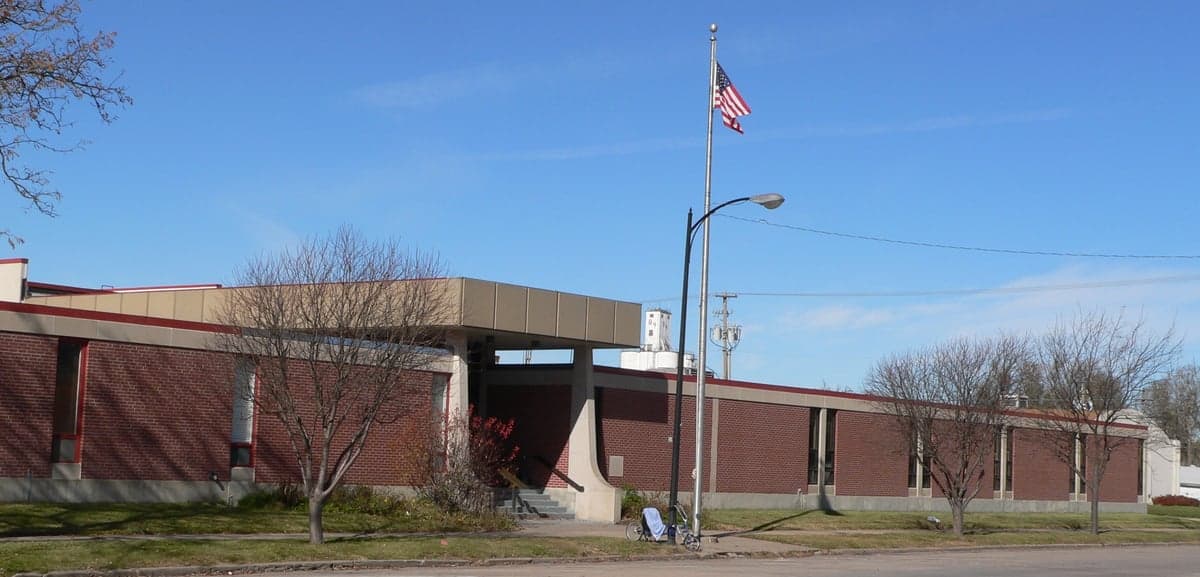
Photo: Wikipedia
Political ClimatePolitical Climate in Buffalo County
Showing district-level results — no local-only data available.
Local Political AnalysisPolitical Analysis of Buffalo County
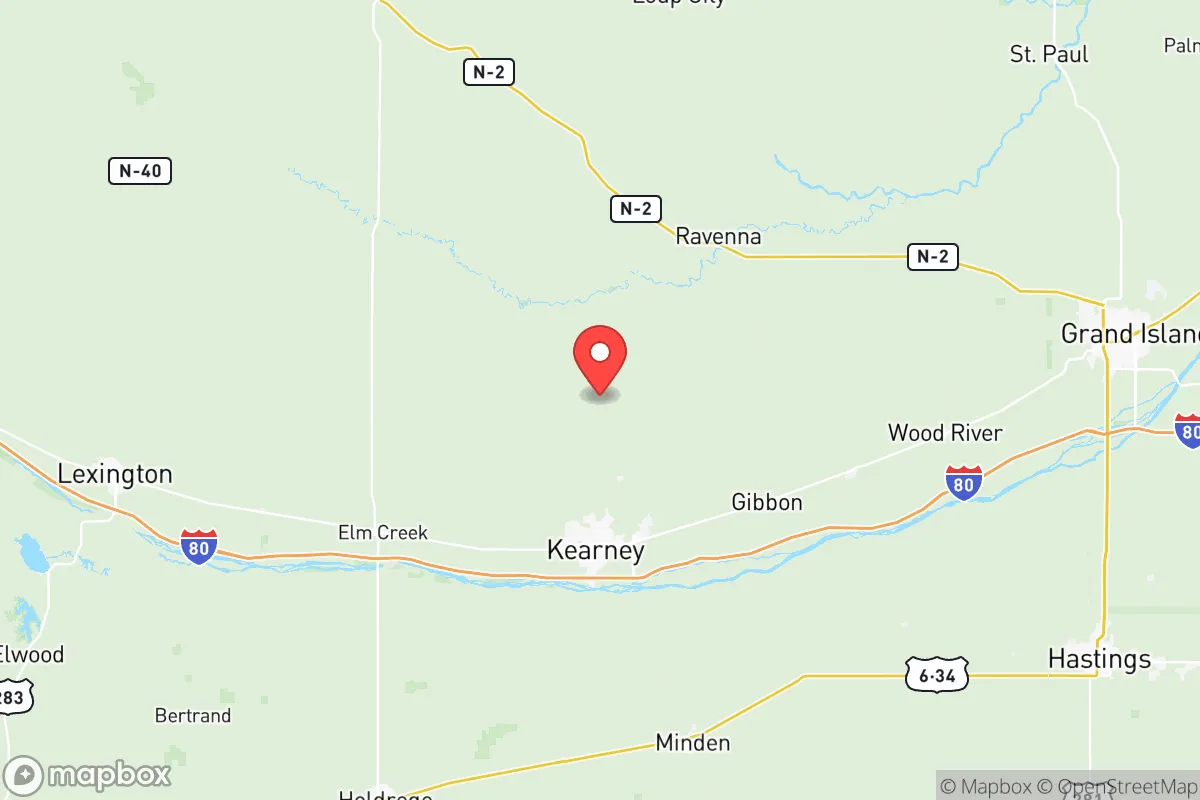
Buffalo County, Nebraska, is one of the most reliably Republican areas in the state, with a Cook Partisan Voting Index (PVI) of R+27—meaning it votes nearly 27 points more Republican than the national average. That’s a full 17 points redder than Nebraska as a whole (R+10), and it’s not a fluke of a single election. The county has voted for the GOP presidential candidate by margins of 70% or more in every cycle since 2000, and the local GOP holds every countywide elected office. But if you dig into the precincts, you’ll see a more nuanced picture: the city of Kearney, which holds about half the county’s population, has a handful of precincts that lean blue or are competitive, especially around the University of Nebraska at Kearney campus. Meanwhile, the smaller towns like Gibbon, Shelton, and Ravenna are deep red, often voting 80%+ Republican. The swing precincts are mostly in Kearney’s newer subdivisions on the south and west sides, where younger families and professionals sometimes split tickets on local races.
How it compares
Compared to Nebraska’s statewide R+10, Buffalo County is a conservative stronghold. The state as a whole has a few blue pockets—Lincoln and Omaha’s urban cores—that pull the average leftward, but Buffalo County has no such counterweight. Its R+27 is closer to the partisan lean of the Nebraska Panhandle (e.g., Scotts Bluff County at R+30) than to the more competitive eastern counties like Sarpy (R+9) or Douglas (R+4). In state legislative races, Buffalo County’s district (LD 37) has been held by Republicans since its creation, and the margin of victory rarely dips below 20 points. The county’s trajectory has been steadily rightward since the 1990s, driven by in-migration from rural areas and the growth of conservative-leaning churches and businesses. There’s no sign of that slowing—the 2024 presidential margin here was actually a tick redder than 2020.
What this means for residents
For conservative residents, this political climate means their values are reflected in nearly every layer of local governance. School boards, county commissions, and city councils in Kearney and the smaller towns are dominated by Republicans, so policies on taxes, land use, and education tend to align with small-government, pro-business principles. The county’s tax levy is among the lowest in the state for its population size, and there’s little appetite for new spending initiatives. For liberal or moderate residents, the reality is more isolating. While Kearney’s university precincts provide a small blue bubble, progressive candidates rarely win even city council seats. Socially liberal policies—like nondiscrimination ordinances or public funding for the arts—face an uphill battle. That said, the community is generally polite and non-confrontational; political disagreements don’t usually spill into public shouting matches. Most residents, regardless of party, prioritize the area’s low crime, good schools, and strong sense of community over partisan fights.
Culturally, Buffalo County stands apart from Nebraska’s more urbanized east in its emphasis on agricultural heritage and faith-based institutions. The county is home to the Nebraska State Fair, which rotates between Kearney and Lincoln, and the annual Buffalo County Fair in Gibbon is a major social event. Policy-wise, the county has been a testing ground for conservative initiatives: it was one of the first in the state to adopt a Second Amendment sanctuary resolution in 2021, and local leaders have pushed back against state-level mask mandates. For newcomers, the political climate is stable and predictable—if you’re conservative, you’ll feel right at home; if you’re not, you’ll find a small but resilient community of like-minded folks, especially around the university. Either way, the pace of life here is slower, and the politics, for better or worse, rarely surprise you.

State Political ClimatePolitical Climate in Nebraska
State Political AnalysisPolitical Environment in the State
Nebraska is a solidly Republican state with a Cook PVI of R+10, but that number hides a more complicated reality than a simple red-state label suggests. The state has been reliably conservative for decades, though the margin has tightened slightly in presidential races since 2000 as the Omaha metro area has drifted leftward. What makes Nebraska unique is its split electoral college system—one of only two states that allocate electoral votes by congressional district—which means the 2nd District around Omaha can and did vote for Joe Biden in 2020, while the rest of the state remains deeply Republican.
Urban vs. rural divide
The political map of Nebraska is a textbook case of urban-rural polarization. Omaha and Lincoln are the two blue dots in a sea of red. Omaha’s Douglas County has trended Democratic for the past three cycles, flipping from a 2-point Romney win in 2012 to a 6-point Biden win in 2020. Lincoln’s Lancaster County is more of a purplish swing area—it went for Trump in 2016 by 4 points but flipped to Biden by 3 points in 2020, driven by the University of Nebraska–Lincoln student vote and a growing professional class. Outside those two metros, the rest of the state is overwhelmingly Republican. Scottsbluff in the Panhandle, Grand Island in the Platte Valley, and Norfolk in the northeast all vote Republican by 30-40 point margins. The 3rd Congressional District, which covers the vast rural expanse west of Lincoln, is one of the most Republican districts in the country—Trump won it by 50 points in 2020. The divide isn’t just geographic; it’s cultural. Rural voters prioritize agriculture policy, gun rights, and local control, while urban voters in Omaha and Lincoln are more focused on education funding, healthcare access, and social services.
Policy environment
Nebraska’s policy environment is broadly conservative but with some notable pragmatic exceptions. The state has no state income tax on Social Security benefits and a flat individual income tax rate that was recently cut from 6.84% to 5.84%, with a scheduled phase-down to 3.99% by 2027. Property taxes are high relative to the region—the average effective rate is about 1.5%—and are a perennial political flashpoint. The state is a right-to-work state and has a Republican-controlled unicameral legislature (the only one in the nation), which operates on a nonpartisan basis but in practice votes along party lines on most major issues. Nebraska has some of the most restrictive abortion laws in the country—a 12-week ban passed in 2023, with exceptions for rape, incest, and medical emergencies. The state also has constitutional carry (permitless concealed carry) since 2023, and no red-flag law. Election laws are moderately restrictive: voter ID is required (implemented in 2024), but same-day registration is not allowed, and mail-in voting is available but not universal. The state has no income tax on military pensions, which is a draw for veterans.
Recent policy direction
The last three legislative sessions have pushed Nebraska further right on several fronts. In 2023, the legislature passed LB 77, which eliminated the permit requirement for concealed carry and preempted local gun ordinances. The same year, LB 574 banned gender-affirming care for minors and restricted abortion to 12 weeks, after a contentious 36-hour filibuster. In 2024, LB 1402 created a school voucher program (the “Opportunity Scholarships Act”) that provides tax credits for donations to private school scholarships, though it faces a potential ballot referendum challenge. On the tax front, LB 754 (2023) accelerated the income tax rate cuts and expanded property tax relief for agricultural land. The state has also moved to restrict ballot initiatives: LB 20 (2024) raised the signature threshold for constitutional amendments from 10% to 15% of registered voters and imposed a single-subject rule, a direct response to a 2020 medical marijuana initiative that nearly passed. On education, the state board of education adopted new social studies standards in 2023 that emphasize “civic literacy” and downplay critical race theory, though local districts retain significant control over curriculum. The overall direction is toward lower taxes, expanded gun rights, restricted abortion access, and tighter control over ballot measures.
Civil unrest & political movements
Nebraska is not a hotbed of civil unrest, but there have been notable flashpoints. The 2020 George Floyd protests in Omaha were large for the city—several thousand people marched, and there were scattered incidents of property damage and looting in the Old Market district. The state saw a significant farmers’ protest in 2019 over trade policy and commodity prices, with tractor convoys circling the capitol in Lincoln. Immigration politics are a live issue in the state’s meatpacking towns—Schuyler, Lexington, and Grand Island have large Latino populations, and there have been periodic ICE raids and local debates over sanctuary policies. In 2023, the city of Omaha considered but ultimately rejected a “sanctuary city” ordinance. The most organized political movement in recent years has been on the right: the Nebraska Republican Party’s “election integrity” task force pushed for the voter ID law and has been active in challenging mail-in ballot procedures. On the left, the Nebraska Abortion Resources network has mobilized volunteers to help patients travel out of state for care. There is no serious secession or nullification rhetoric in Nebraska—the state is too small and too dependent on federal farm subsidies and highway funding for that.
Projection
Over the next 5-10 years, Nebraska will likely become slightly more competitive at the statewide level but remain solidly Republican in its overall lean. The key demographic shift is the growth of Omaha’s Douglas County, which is adding population through both domestic migration and immigration—the Latino population in the state grew 15% between 2010 and 2020. If that trend continues, the 2nd Congressional District could become a permanent swing seat, and the statewide margin in presidential races could tighten from R+10 to R+6 or R+7. However, the rural areas are not losing population as fast as in some Plains states—Nebraska’s population grew 7.4% in the 2010s, driven by Lincoln and Omaha—so the rural-urban split will persist. The state’s tax cuts will likely continue, with the flat income tax rate dropping to 3.99% by 2027 as scheduled. The school voucher program will probably survive legal challenges and expand. Abortion policy is unlikely to shift further right—the 12-week ban was a compromise that satisfied most conservatives—but there may be efforts to restrict ballot initiatives further. The biggest wild card is the 2026 gubernatorial race: Governor Jim Pillen is term-limited, and the next governor could be more or less conservative on issues like Medicaid expansion (which Nebraska already has) and criminal justice reform.
For a new resident, the bottom line is this: Nebraska offers a stable, low-tax, gun-friendly environment with a strong agricultural economy and a relatively low cost of living. If you’re conservative, you’ll find your values reflected in state law and local culture outside of Omaha and Lincoln. If you’re liberal, you’ll have two welcoming cities with good schools and a growing progressive community, but you’ll need to accept that state-level policy will be conservative for the foreseeable future. The state is not a political battleground in the way that Arizona or Georgia are—it’s a place where the political temperature is generally moderate, even if the policies lean right. The biggest practical consideration for anyone moving here is property taxes: they’re high, and they fund local schools, so you get what you pay for in terms of education quality, especially in the Omaha suburbs like Millard and Elkhorn.
* Values derived from national, state, county, city and local statistics and may differ in a specific area. Last updated: 2026-06-29T01:20:52.000Z
Narrative content on this page is AI-generated and may contain mistakes. Verify any details that matter before acting on them.
ReloMaps may earn a commission from affiliate links at no extra cost to you.

