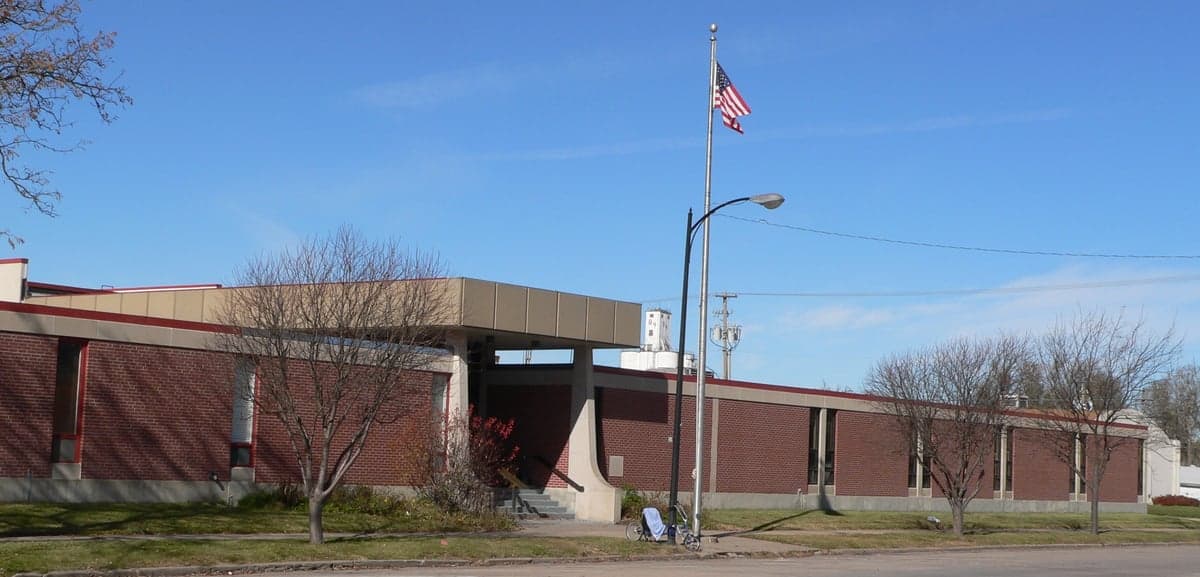
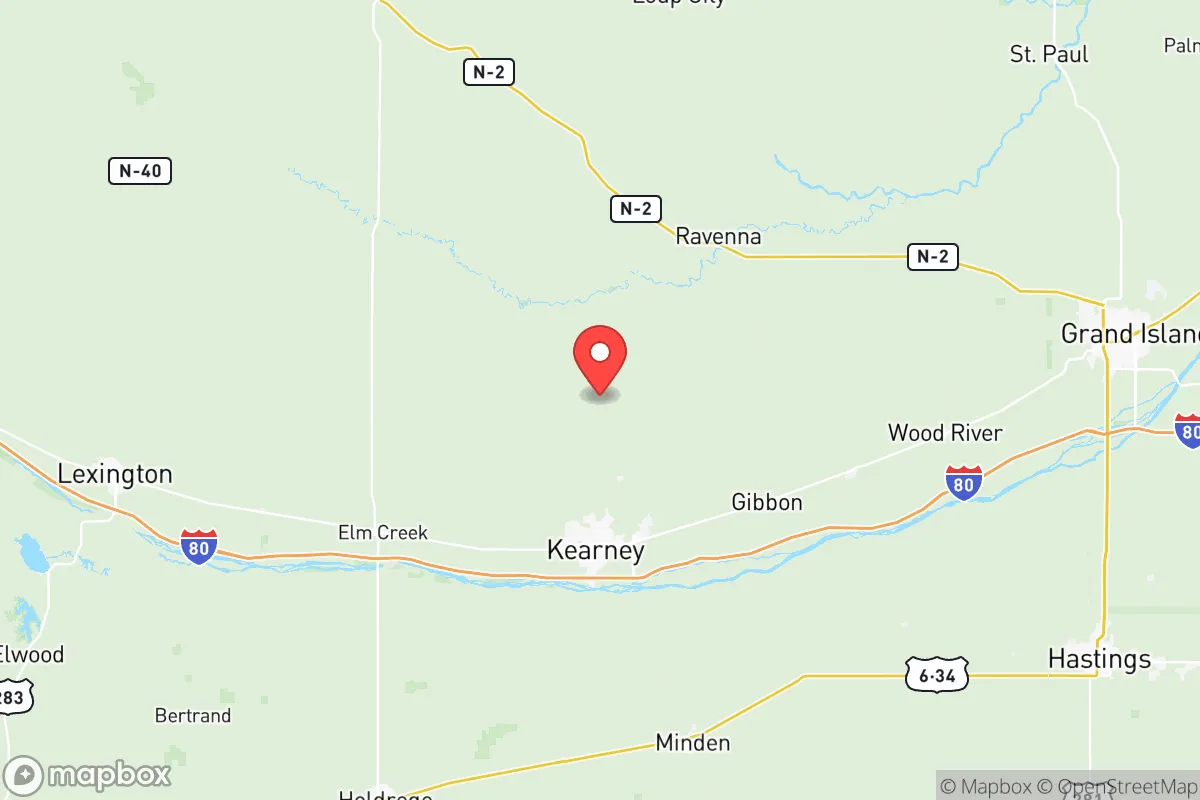
Photo: Wikipedia
Demographics of Buffalo County
Affluence Level in Buffalo County
A middle-class area roughly in line with national averages across income, home values, education, and employment.
People of Buffalo County
The people of Buffalo County, Nebraska, today number just over 50,000, forming a predominantly white (84.6%) and politically conservative community centered on the city of Kearney, which anchors the region as a trade, education, and healthcare hub. With a foreign-born population of only 2.5% and a Hispanic share of 10.4%, the county is less diverse than Nebraska as a whole but more diverse than many neighboring rural counties, reflecting a slow but steady demographic shift driven by meatpacking and agricultural labor. The county’s identity is rooted in its agricultural heritage, strong Evangelical Protestant presence, and the University of Nebraska at Kearney, which brings a modest influx of younger residents and international students. Residents often describe the area as family-oriented, safe, and community-driven, with a cost of living below the national average and a pace of life that appeals to those seeking stability and traditional values.
Settlement & growth (pre-1960)
Before American settlement, the Platte River Valley that includes modern Buffalo County was a corridor for Native American tribes, primarily the Pawnee, who hunted bison and farmed along the river, and later the Sioux and Cheyenne, who moved through the area as European expansion pushed tribes westward. The first non-Native presence came with French fur traders in the early 1800s, but permanent American settlement did not begin until after the 1854 Kansas-Nebraska Act opened the territory to homesteading. The county was formally organized in 1855, and the first wave of settlers were overwhelmingly Yankee migrants from New England and the Upper Midwest—farmers of English, Scottish, and Irish descent who claimed land along the Platte under the Homestead Act of 1862. These early settlers founded the towns of Kearney (originally Kearney City) and Gibbon in the 1860s and 1870s, drawn by the promise of fertile bottomland and the Union Pacific Railroad, which reached the area in 1866 and made Kearney a key stop on the transcontinental line.
The second major wave arrived between 1870 and 1900, when German and Czech immigrants poured into Buffalo County, recruited by railroad companies and land agents who advertised cheap, productive farmland in the Great Plains. German Lutherans and Catholics established farming communities such as Ravenna (founded 1886) and Shelton (founded 1871), while Czech families concentrated around Pleasanton and the rural areas south of Kearney. These groups brought distinct religious and cultural institutions—German-language churches, Czech fraternal societies, and a strong emphasis on family farming—that persisted well into the 20th century. By 1900, the county’s population had reached roughly 20,000, with Kearney emerging as the commercial center, home to the state normal school (now the University of Nebraska at Kearney) and a thriving agricultural processing industry.
The Dust Bowl and Great Depression of the 1930s hit Buffalo County hard, but the population remained stable as many families held onto their land through federal farm programs and irrigation projects along the Platte. The post-World War II era brought a third wave: returning veterans and rural-to-urban migrants who moved into Kearney and the smaller towns as the county’s economy diversified beyond farming. The construction of Interstate 80 through the county in the 1960s cemented Kearney’s role as a regional hub for trucking, manufacturing, and retail, while the opening of the Kearney Army Ammunition Plant (later the Cornhusker Army Ammunition Plant) during the Korean War provided industrial jobs that attracted workers from across the central Plains. By 1960, the population had grown to 26,236, still overwhelmingly white and native-born, with a strong agricultural and small-town character.
Modern era (post-1965)
The 1965 Hart-Cellar Act had a limited direct impact on Buffalo County, as the region did not attract the large-scale immigration seen in coastal cities or major meatpacking hubs like Lexington or Grand Island. However, the county’s Hispanic population began to grow noticeably in the 1990s and 2000s, driven by Mexican and Central American immigrants recruited to work in the region’s meatpacking plants and agricultural processing facilities. The largest employer, EaglePicher Technologies (now part of the defense industry), and the Kearney meatpacking plant (operated by various companies over the decades) drew workers from Texas, California, and directly from Mexico, settling primarily in Kearney’s south side and in the smaller town of Gibbon, where a modest Hispanic enclave formed around Catholic churches and Spanish-language services. Today, the 10.4% Hispanic share is concentrated in these areas, though the community remains dispersed rather than forming a single, dense ethnic neighborhood.
Domestic migration since 1965 has been dominated by Rust Belt retirees and remote workers from states like Illinois, Michigan, and Colorado, attracted by lower housing costs, lower taxes, and a perceived higher quality of life. This trend accelerated after 2010, as Kearney’s population grew by roughly 10% between 2010 and 2020, while smaller towns like Ravenna and Pleasanton saw modest declines. The University of Nebraska at Kearney has also been a demographic driver, enrolling around 6,000 students annually, including a small but visible population of East/Southeast Asian international students (primarily from China, Vietnam, and South Korea) who contribute to the 1.5% Asian share. These students rarely stay after graduation, however, as job opportunities in the region are limited outside of education, healthcare, and agriculture. The county’s Black population remains tiny at 0.8%, largely consisting of military families stationed at the nearby Nebraska National Guard facility or professionals recruited by Kearney’s hospitals and schools.
Suburbanization has been modest compared to larger metros, but Kearney has seen new subdivisions spread east and south along Highway 30 and Highway 44, with Kearney’s west side attracting higher-income families and retirees. The county’s overall racial and ethnic composition has shifted slowly: the white share dropped from 96% in 1990 to 84.6% today, while the Hispanic share rose from 2% to 10.4%, and the Asian share grew from near zero to 1.5%. The Indian-subcontinent population remains negligible at 0.2%, mostly tied to the university’s graduate programs.
The future
Buffalo County is projected to become slightly more diverse over the next 10-20 years, but the pace will remain slow compared to Nebraska’s larger counties like Douglas (Omaha) or Hall (Grand Island). The Hispanic share is expected to rise to 14-16% by 2040, driven by continued recruitment for meatpacking and agricultural labor, as well as natural increase among existing families. The white population will likely decline in absolute numbers as older residents die and younger adults move to larger cities, but the county will remain overwhelmingly white and native-born. The Asian share may grow modestly if the university expands its international enrollment, but most graduates will continue to leave for coastal job markets.
Domestic migration from the Rust Belt and coastal states is expected to continue, particularly among retirees and remote workers seeking lower costs and a conservative political environment. This will concentrate growth in Kearney and its immediate suburbs, while smaller towns like Shelton and Gibbon may see population stagnation or slight decline. The county’s cultural identity will likely remain rooted in its agricultural heritage and Evangelical Christian values, though the growing Hispanic presence will bring more bilingual services, Catholic parishes, and cultural festivals. The University of Nebraska at Kearney will continue to be a moderating influence, attracting a small but visible number of out-of-state and international students who bring diverse perspectives.
For someone moving in now, Buffalo County offers a stable, low-cost, and safe environment with a strong sense of community and traditional values. The demographic changes are gradual enough that they do not disrupt the county’s character, but noticeable enough that newcomers will find a slightly more diverse population than the region’s reputation suggests. The key trade-off is limited economic opportunity outside of education, healthcare, and agriculture, making it best suited for those with secure remote income, retirement savings, or a career in these sectors.

* Values derived from national, state, county, city and local statistics and may differ in a specific area. Last updated: 2026-06-29T01:20:52.000Z
Narrative content on this page is AI-generated and may contain mistakes. Verify any details that matter before acting on them.
ReloMaps may earn a commission from affiliate links at no extra cost to you.

