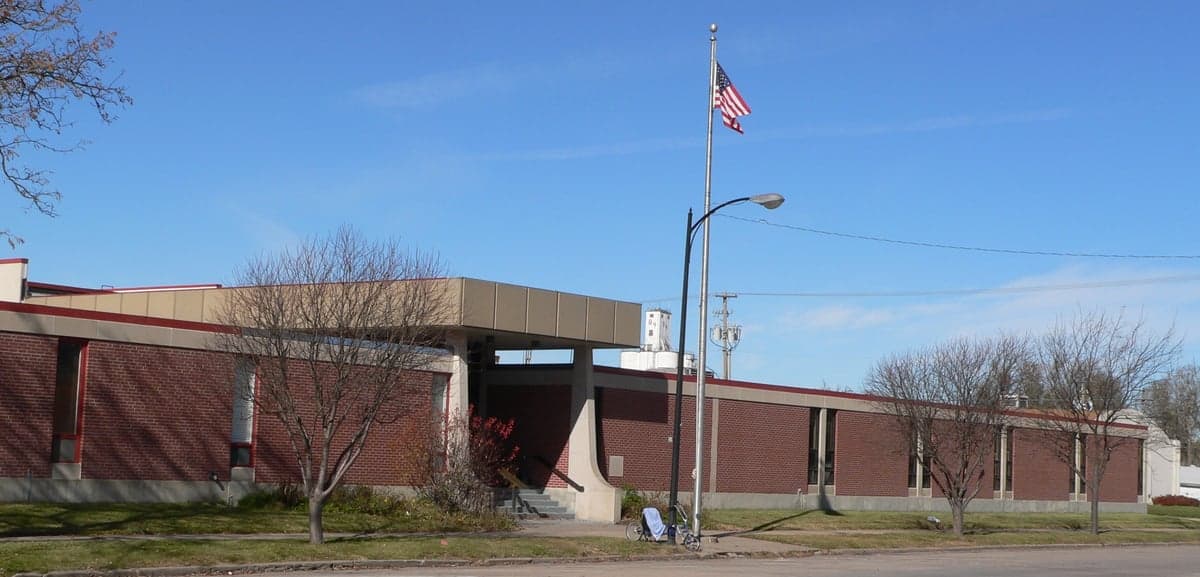
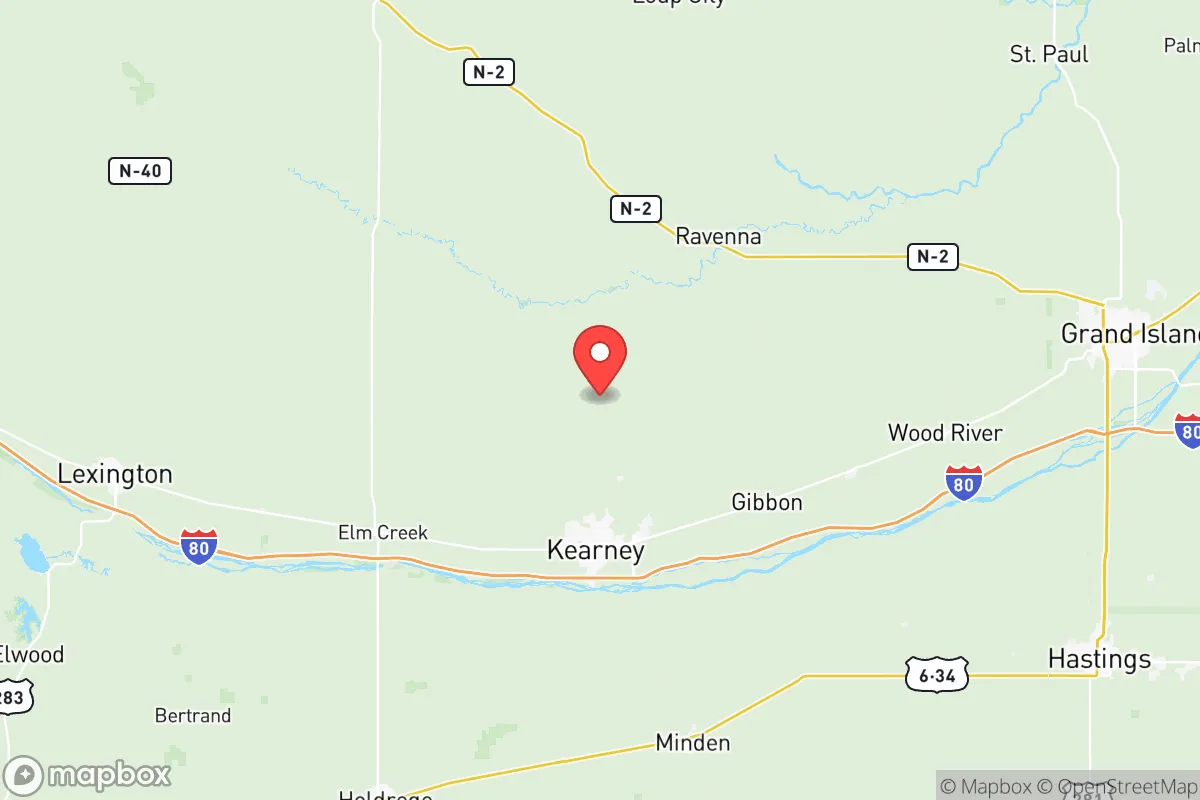
Photo: Wikipedia
Quality of Life in Buffalo County
A livable area that tracks near national norms for affordability, walkability, and neighborhood health.
What does Quality of Life tell us?
Quality of Life measures an area by evaluating factors like cost of living, nearby amenities, country club access, airport proximity, socioeconomic signals and neighborhood character. For large states, this is a general average — quality of life can vary dramatically between metro areas, suburbs, and rural communities within the same state.
What does this tell us?
Quality of Life measures an area by evaluating factors like cost of living, nearby amenities, country club access, airport proximity, socioeconomic signals and neighborhood character. For large states, this is a general average — quality of life can vary dramatically between metro areas, suburbs, and rural communities within the same state.
Cost of Living
19% below national average
110%
The Real Cost of Living in Buffalo County for 2026
| Tier | Individual | Family (4) |
|---|---|---|
| Survival | $15k | $27k |
| Comfortable | $46k | $68k |
| Luxury | $121k+ | $187k+ |
| Elite (Top 5%) | $142k+ | $220k+ |
Quality-of-Life Analysis
Buffalo County, Nebraska offers a distinct quality-of-life spectrum that ranges from the regional hub of Kearney to quiet unincorporated hamlets and working farmsteads, drawing everyone from university faculty and healthcare professionals to agricultural families and remote workers seeking affordable land. The county’s character is defined by this contrast: Kearney provides big-city amenities in a mid-sized package, while the surrounding towns and rural townships deliver slower-paced, community-oriented living. With a cost of living index of 81 (well below the national 100) and a median home value of $236,800, the county remains accessible across its entire geographic spread.
Largest town(s) & population centers
Kearney is the undisputed population and economic center of Buffalo County, home to roughly 34,000 residents and the University of Nebraska at Kearney (UNK). Daily life here revolves around the university calendar, the CHI Health Good Samaritan hospital system, and a growing retail and dining scene along the 2nd Avenue corridor. The city offers multiple grocery chains, a regional mall, the Yanney Heritage Park trail system, and the Kearney Regional Airport. Commute times are short — the county average is just 16.4 minutes — and most residents can reach work, school, or shopping within a 10-minute drive. Kearney’s housing stock is the county’s priciest, with median rents around $911, but still affordable compared to national averages. The city attracts professionals, educators, and families who want walkable neighborhoods, strong public schools (Kearney Public Schools), and access to cultural events like the Nebraska State Shakespeare Festival.
Smaller towns & rural pockets
Outside Kearney, Buffalo County’s smaller communities each have a distinct identity. Gibbon (pop. ~1,800) sits along the Platte River and offers a quiet, family-oriented atmosphere with a well-regarded K-12 school system and a historic downtown centered on the Union Pacific railroad. Ravenna (pop. ~1,400) is a classic Plains farm town with a strong 4-H and FFA presence, a local grocery co-op, and the Ravenna State Recreation Area nearby. Shelton (pop. ~1,100) and Amherst (pop. ~250) are even smaller, with Amherst functioning as a bedroom community for Kearney commuters. Unincorporated areas like Pleasanton and Riverdale consist largely of scattered farmsteads and acreages, where residents trade convenience for privacy and land. These communities typically lack full-service grocery stores and medical clinics, so residents drive 15–30 minutes into Kearney for most errands. Property taxes in these rural pockets are lower than in Kearney proper, but services like trash pickup and snow removal are often self-managed.
Cost & lifestyle range
The cost-of-living spread across Buffalo County is narrow by national standards but meaningful locally. At the high end, Kearney’s newer subdivisions (e.g., the Cottonmill area) see home values above the county median of $236,800, with some properties exceeding $350,000. Renters in Kearney pay the county’s highest rates, averaging $911 per month for a two-bedroom unit. At the low end, rural acreages and older homes in Ravenna or Shelton can be found for under $150,000, and rental units in those towns often run $600–$750 per month. Utility costs are slightly higher in rural areas due to well water and septic system maintenance, while Kearney residents pay municipal rates for city water and sewer. Amenity access follows the same gradient: Kearney offers multiple gyms, a hospital, a movie theater, and the Viaero Event Center, while Gibbon has a single gas station convenience store and a volunteer fire department. The trade-off is space — a $200,000 home in Kearney might sit on a quarter-acre lot, while the same price in rural Buffalo County can buy 5–10 acres with outbuildings.
Buffalo County works best for people who value short commutes, affordable housing, and a clear choice between urban-style convenience and rural autonomy. Families who want strong schools and extracurriculars gravitate to Kearney or Gibbon, while farmers, ranchers, and hobbyists prefer the unincorporated townships. Remote workers and retirees often split the difference, buying acreage near Amherst or Riverdale for the land but staying within 20 minutes of Kearney’s healthcare and internet infrastructure. The county’s low cost of living and 16-minute average commute make it a practical option for anyone who wants Nebraska’s Plains lifestyle without sacrificing access to a regional hub.

Crime in Buffalo County
Generally safer than 65% of comparable U.S. locations.
Violent CrimeViolent Crime Analysis
Property CrimeProperty Crime Analysis
Crime Analysis
Buffalo County, Nebraska, presents a mixed safety profile with property crime rates notably higher than state and national averages, while violent crime remains below the national benchmark. The county's overall crime picture is shaped by the dynamics of its largest city, Kearney, which accounts for the majority of reported incidents, while smaller communities like Gibbon, Ravenna, and Shelton experience significantly lower crime volumes. Understanding these local variations is essential for anyone evaluating relocation or investment in the region.
Crime in context
Buffalo County's violent crime rate of 219.7 per 100,000 residents sits below the national average of roughly 380 per 100,000 but above Nebraska's statewide rate of approximately 230 per 100,000. Property crime, however, is a more pressing concern: the county's rate of 1,391.6 per 100,000 exceeds both the Nebraska average (around 1,200 per 100,000) and the national figure (approximately 1,950 per 100,000). This means property offenses—primarily larceny-theft and burglary—occur at a frequency roughly 16% higher than the state norm. The gap is driven almost entirely by incidents in Kearney, where retail theft and vehicle break-ins are concentrated near the city's commercial corridors, including the area around the Kearney Mall and the University of Nebraska at Kearney campus.
What residents experience
For most residents, the day-to-day reality is one of low violent crime risk but persistent property crime nuisance. Kearney, home to roughly 34,000 people, sees the bulk of reported thefts and burglaries, with the Kearney Police Department handling about 85% of the county's property crime cases. In contrast, the smaller towns of Gibbon (pop. 1,800) and Ravenna (pop. 1,400) report only occasional incidents, often limited to isolated thefts from unlocked vehicles or farm equipment. Shelton (pop. 1,100) and Amherst (pop. 250) are even quieter, with many years passing between violent crimes. Residents in these outlying communities typically feel safe walking at night and leaving doors unlocked during the day, a sharp contrast to the more vigilant atmosphere in Kearney's denser neighborhoods.
The county's judicial environment is a critical factor in the safety equation. Buffalo County falls within Nebraska's 10th Judicial District, where judges and the elected county attorney have maintained a consistently conservative approach to prosecution. Unlike some larger metro areas in Nebraska—such as Douglas County (Omaha) or Lancaster County (Lincoln)—where progressive district attorneys have implemented diversion programs and reduced sentences for property and drug offenses, Buffalo County's leadership prioritizes incarceration and restitution. This means offenders convicted of burglary or theft in Kearney face a higher likelihood of jail time, which acts as a deterrent and keeps repeat offenders off the streets. The contrast is stark: while Omaha's progressive policies have been linked to rising property crime recidivism, Buffalo County's tougher stance contributes to a more predictable and secure environment for victims and the public.
Neighborhood-level variation within Kearney is notable. The area around the University of Nebraska at Kearney and the downtown district sees higher rates of bicycle theft, vehicle break-ins, and occasional alcohol-related disturbances, driven by student populations and nightlife. The west side of Kearney, particularly the subdivisions near the Kearney Regional Medical Center, reports the lowest crime rates in the city, with many blocks seeing zero incidents annually. For those seeking the safest possible environment, the rural townships outside Kearney—such as those near Pleasanton (pop. 350) and Riverdale (pop. 200)—offer crime rates near zero, though residents trade off access to urban amenities. Overall, Buffalo County's safety is best understood as a tale of two realities: a moderately active crime scene in Kearney's commercial core, and a tranquil, low-risk existence in its surrounding communities.
* Values derived from national, state, county, city and local statistics and may differ in a specific area. Last updated: 2026-06-29T01:20:52.000Z
Narrative content on this page is AI-generated and may contain mistakes. Verify any details that matter before acting on them.
ReloMaps may earn a commission from affiliate links at no extra cost to you.

