Political ClimatePolitical Climate in Nacogdoches, TX
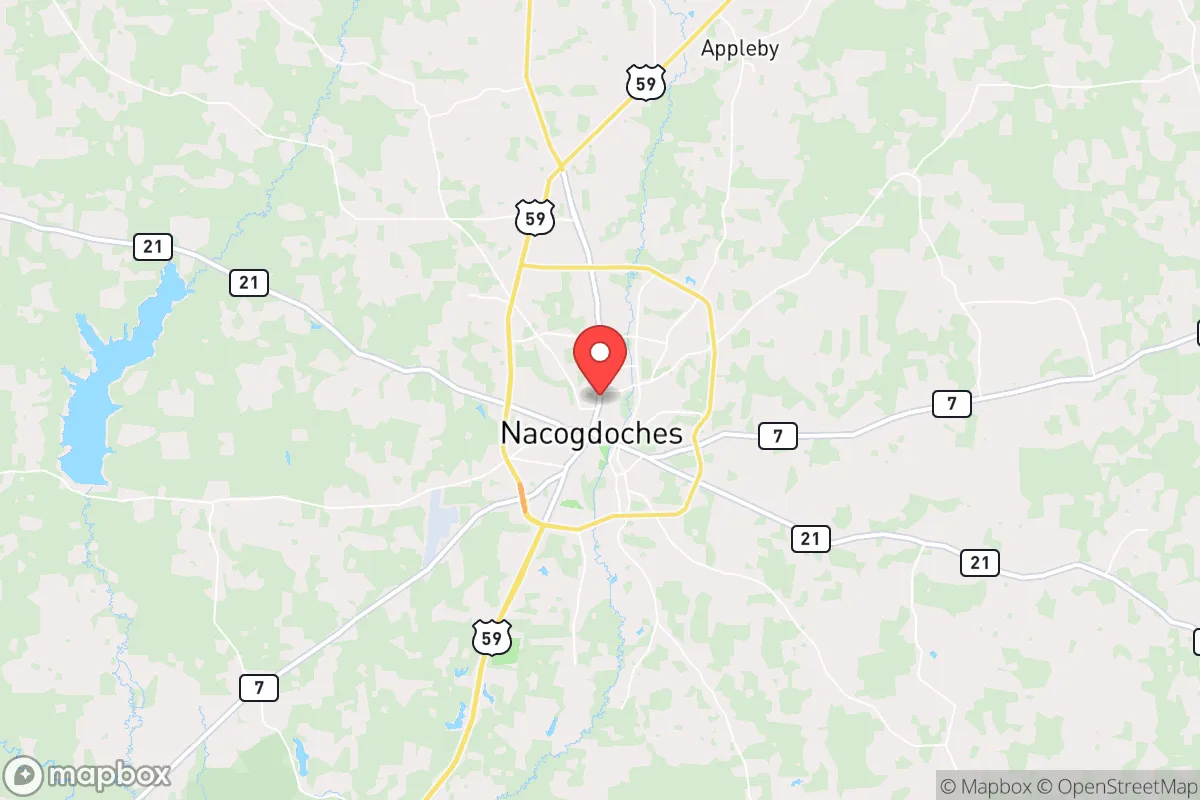
District shown is the primary district for this city’s centroid. Cities may span multiple districts.
Local Political AnalysisPolitical Analysis of Nacogdoches, TX
Nacogdoches leans solidly Republican, with a Cook Partisan Voting Index (PVI) of R+14, making it significantly more conservative than Texas as a whole, which sits at R+4. This isn't a recent shift—the area has been reliably red for decades, though the margin has widened in the last two presidential cycles as rural and small-town Texas has moved further right while the state's urban centers have trended blue. If you're moving here, you're coming into a place where conservative values are the baseline, not the exception.
How it compares
The R+14 rating puts Nacogdoches in a different political universe from the statewide R+4. To put that in perspective, while Texas overall is a competitive red state where Democrats can win in places like Houston, Dallas, and Austin, Nacogdoches County is about as Republican as the Texas Panhandle. Drive 30 miles south to Lufkin (Angelina County, R+22) and you'll find an even deeper shade of red. Head 60 miles west to Palestine (Anderson County, R+18) and it's similar. The closest contrast is 50 miles east to Shreveport, Louisiana (Caddo Parish, D+8), which is a Democratic stronghold—a reminder that Nacogdoches sits on the edge of the reliably red Piney Woods, not far from the more diverse Ark-La-Tex region. Within Nacogdoches itself, the city's university—Stephen F. Austin State University—creates a small liberal pocket among faculty and students, but it doesn't meaningfully shift the county's overall lean. In the 2024 election, Nacogdoches County voted about 72% Republican, compared to roughly 56% statewide.
What this means for residents
For conservative residents, Nacogdoches feels like home base. Local government, school boards, and county commissions are reliably Republican, and you'll find plenty of churches, gun shops, and conservative civic groups. Policy debates here tend to focus on property taxes, rural infrastructure, and Second Amendment rights—not the culture-war flashpoints you see in Austin or Dallas. For liberal residents, the reality is more nuanced. You won't be isolated—the university provides a social and intellectual counterweight—but you'll be in the minority in most public forums. Progressive candidates rarely win local office, and issues like abortion access or LGBTQ+ rights are non-starters in county-level politics. That said, Nacogdoches is a college town, so there's a live-and-let-live vibe in daily life; most people keep politics to themselves in casual settings. The practical trade-off is lower cost of living and slower growth compared to blue-leaning metros, but also fewer progressive amenities like public transit or dense urban housing.
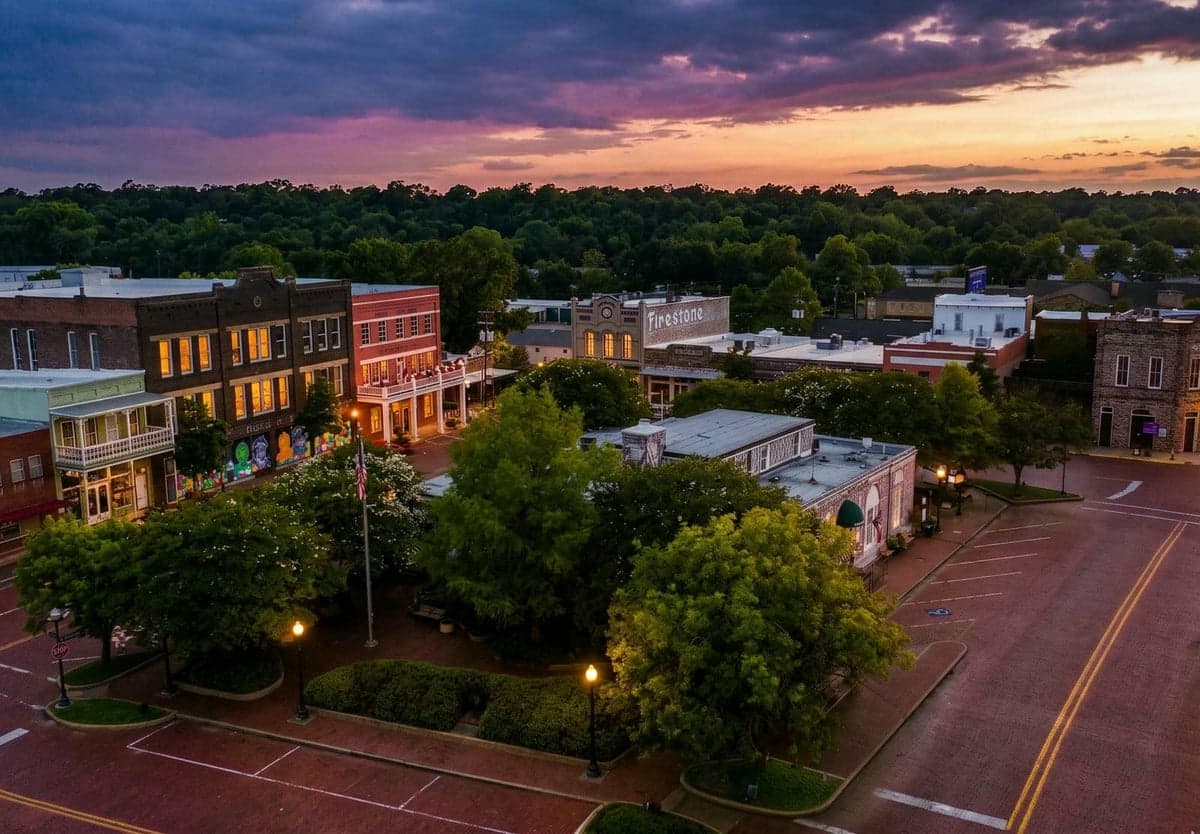
Culturally, Nacogdoches stands apart from both the hyper-urban politics of Houston and the libertarian-leaning conservatism of West Texas. It's an old-money, tradition-heavy town—the oldest in Texas—where local politics often revolve around historic preservation, timber and agriculture interests, and the university's budget. You won't see the same kind of partisan street protests you'd find in Austin; instead, political engagement happens through civic clubs, church potlucks, and county commissioner meetings. The trajectory is toward continued Republican dominance, but with a slow demographic shift as SFA attracts more out-of-state students and retirees from less conservative areas. In the long term, Nacogdoches will likely remain R+12 to R+16, a stable red anchor in a state that's slowly purpling around it.

State Political ClimatePolitical Climate in Texas
State Political AnalysisPolitical Environment in the State
Texas has been a reliably Republican state for the past three decades, with a Cook Partisan Voting Index of R+4, but that label masks a dramatic and ongoing realignment. The state hasn't voted for a Democratic presidential candidate since Jimmy Carter in 1976, yet the margin has shrunk from 16 points in 2012 to just under 6 points in 2020, and the 2024 race saw Donald Trump win by roughly 5.5 points. The dominant coalition remains a mix of rural conservatives, suburban moderates, and evangelical voters, but explosive growth in the urban crescent — from Dallas-Fort Worth down through Austin and San Antonio to Houston — is steadily shifting the state's center of gravity.
Urban vs. rural divide
The political map of Texas is a study in extremes. The big four metros — Houston, Dallas-Fort Worth, San Antonio, and Austin — are increasingly Democratic strongholds. Austin (Travis County) is the bluest major city in the South, delivering 71% for Biden in 2020, while El Paso and the Rio Grande Valley have been reliably Democratic for generations. Meanwhile, rural West Texas, the Panhandle, and East Texas are deeply Republican; Lubbock (Lubbock County) voted 73% for Trump in 2024. The real battleground is the suburbs. Counties like Collin (north of Dallas) and Denton (north of Fort Worth) were once safely red but have trended purple as young families and professionals move in. Fort Bend County, southwest of Houston, flipped from red to blue between 2016 and 2020, driven by a diverse, educated population. The 2024 results showed these suburban shifts slowing but not reversing — Republicans held the line in Tarrant County (Fort Worth) by a razor-thin margin, while Bexar County (San Antonio) stayed blue.
Policy environment
Texas's policy posture is defined by a low-tax, low-regulation framework that has been in place for decades. There is no state income tax — funded instead by a reliance on property taxes and a 6.25% state sales tax (local options can push it to 8.25%). The regulatory climate is business-friendly, with minimal permitting hurdles and a right-to-work law that limits union power. On education, the state funds public schools through a complex "Robin Hood" system that redistributes property tax revenue from wealthier districts to poorer ones, but per-pupil spending remains below the national average. School choice is a live issue: the 2023 legislative session saw a push for education savings accounts (vouchers) fail in the House, but Governor Greg Abbott has made it a priority for 2025. Healthcare policy is notably hands-off: Texas did not expand Medicaid under the ACA, leaving roughly 1.5 million residents in the coverage gap. Election laws were tightened in 2021 with Senate Bill 1, which added ID requirements for mail-in ballots, limited drive-through and 24-hour voting, and gave partisan poll watchers more access.
Recent policy direction
The 2023 and 2024 legislative sessions produced a flurry of laws that signal the state's direction. On gun and self-defense law, Texas became a permitless carry state in 2021 (HB 1927), allowing anyone over 21 who can legally possess a firearm to carry it without a license. On parental and education rights, the 2023 session passed HB 900, which restricts "sexually explicit" books in school libraries, and SB 17, which bans diversity, equity, and inclusion offices at public universities. On speech and privacy, the state passed HB 20 in 2023, which prohibits social media platforms from moderating content based on "viewpoint" — a law currently tied up in court. On medical and bodily autonomy, Texas enacted one of the nation's strictest abortion bans (SB 8 in 2021, with a trigger law taking effect in 2022), banning the procedure from fertilization with no exceptions for rape or incest. On property rights, the 2023 session saw a push to limit local government authority over land use, including a failed bill to ban local tree ordinances. On taxation, the 2023 legislature passed a $18 billion property tax cut, the largest in state history, which compresses school tax rates and raises the homestead exemption. On voting and ballot access, SB 1 (2021) remains the baseline, and a 2023 bill to further restrict voter registration drives failed.
Civil unrest & political movements
Texas has seen its share of political flashpoints. The 2020 protests following George Floyd's murder in Minneapolis were particularly intense in Austin and Houston, with Austin seeing weeks of demonstrations and a controversial city council vote to defund the police by $150 million (later partially restored). On the right, the "constitutional sheriff" movement has gained traction in rural counties, with sheriffs in places like Montgomery County publicly refusing to enforce certain state or federal gun laws. Immigration politics are a constant: Governor Abbott's Operation Lone Star, launched in 2021, has deployed thousands of National Guard troops and state troopers to the border, bused migrants to Democratic-led cities, and installed razor wire along the Rio Grande — a policy that remains in federal court. Secession rhetoric, while fringe, has a small but vocal presence; the Texas Nationalist Movement advocates for independence, but polling consistently shows support below 20%. Election integrity remains a live issue: the 2022 midterms saw no major irregularities, but the 2020 election continues to be a subject of debate in Republican circles, with some county-level officials calling for audits.
Projection
Over the next 5-10 years, Texas is likely to remain a Republican-leaning state, but the margin will continue to narrow. In-migration from California and other blue states — roughly 1,000 people move to Texas per day — is a double-edged sword: many are conservatives fleeing high taxes, but a significant share are moderates and liberals who vote Democratic. The suburbs of Dallas, Houston, and Austin will be the key battlegrounds. If Republicans can hold the line in places like Collin County and Denton County, they can maintain statewide control. If those counties flip blue, Texas becomes a swing state by 2032. The state's policy direction will likely stay the course on taxes and regulation, but the culture war issues — abortion, school choice, DEI bans — will intensify as the legislature becomes more polarized. A new resident moving in now should expect a state that is politically competitive at the margins but structurally conservative, with a government that prioritizes economic growth over social safety nets.
For a new resident, the bottom line is that Texas offers a low-tax, high-autonomy environment for those who align with its conservative tilt, but it also demands a tolerance for hot summers, high property taxes, and a political climate that can feel like a perpetual campaign. If you're a conservative, you'll find a state government that largely shares your values and is actively shaping policy to match. If you're a liberal, you'll find strong communities in the cities and a growing political counterweight, but you'll also face a state government that is often hostile to your priorities. Either way, the state's trajectory is toward a more contested, more dynamic political landscape — and that makes it one of the most interesting places in the country to live right now.
* Values derived from national, state, county, city and local statistics and may differ in a specific area. Last updated: 2026-09-02T15:12:21.000Z
Narrative content on this page is AI-generated and may contain mistakes. Verify any details that matter before acting on them.
ReloMaps may earn a commission from affiliate links at no extra cost to you.

