Strategic Assessment of Nacogdoches, TX
Meaningful friction. Expect exposure to either population pressure, blast zones, or natural disaster risk. Consider buying a retreat property.
What does the Strategic Assessment tell us?
Our Strategic Assessment grades tactical survivability of an area. Major population centers, military targets, fallout zones, natural disasters, and border exposure all drive risk — lower exposure means a more defensible position in a crisis.
This is heavily inspired by Joel Skousen's Strategic Relocation book. Highly recommended you checkout the book ($)What does this tell us?
Our Strategic Assessment grades tactical survivability of an area. Major population centers, military targets, fallout zones, natural disasters, and border exposure all drive risk — lower exposure means a more defensible position in a crisis.
This is heavily inspired by Joel Skousen's Strategic Relocation book. Highly recommended you checkout the book ($)Strategic Pillars

Key Distances
Regional Safe Places
Below is our recommended "safe zones" in Texas and the surrounding area based on our strategic heuristics. For most people, it's unrealistic to live in a “safe zone” full-time due to work, family or other personal reasons. They tend to be more rural. However, many of these areas are perfect for second homes and retreat properties that double as a vacation home or even a short-term rental.

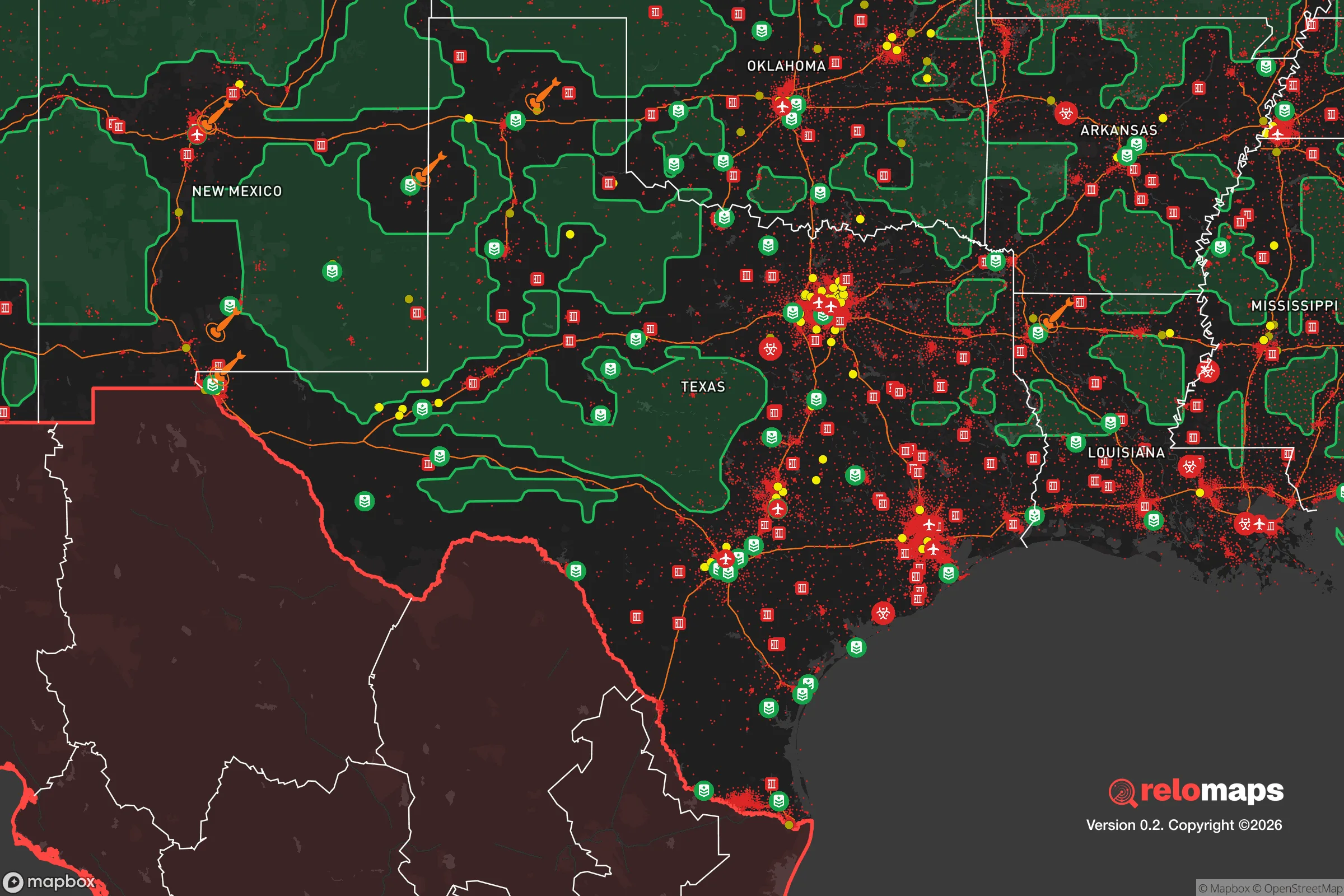


Important Note: For informational purposes only. This does not mean nothing bad ever happens in the green zones. Please use common sense. This is based on public data and modeled with AI. We tried to take a conservative approach but mistakes happen. We update this regularly as new information becomes available.
Solar Generator Recommendations
Backup power matters more here than in safer locations. We've picked three solar generators across budgets and capacity tiers — start with the budget unit if you only need a few essentials, or step up if you want to run a fridge and HVAC for days at a time.

Jackery Portable Power Station Explorer 300
Budget OptionPower on the Go: Weighing only 11 lbs, it's convenient to set up and store with book-sized foldable solar panels

BLUETTI Portable Power Station AC180
Designed for both indoor and outdoor scenarios, AC180 is highly capable as it has a robost capacity and continuous output power.

EF ECOFLOW DELTA Pro Ultra Power Station
Upgraded PickEcoFlow DELTA Pro Ultra is a whole-home energy system designed to grow with your family. Integrated with the Smart Home Panel 2, it scales to meet your evolving energy needs — keeping your home powered, intelligent, and secure through every stage of life.
We earn a commission, at no additional cost to you.
Strategic Assessment Analysis
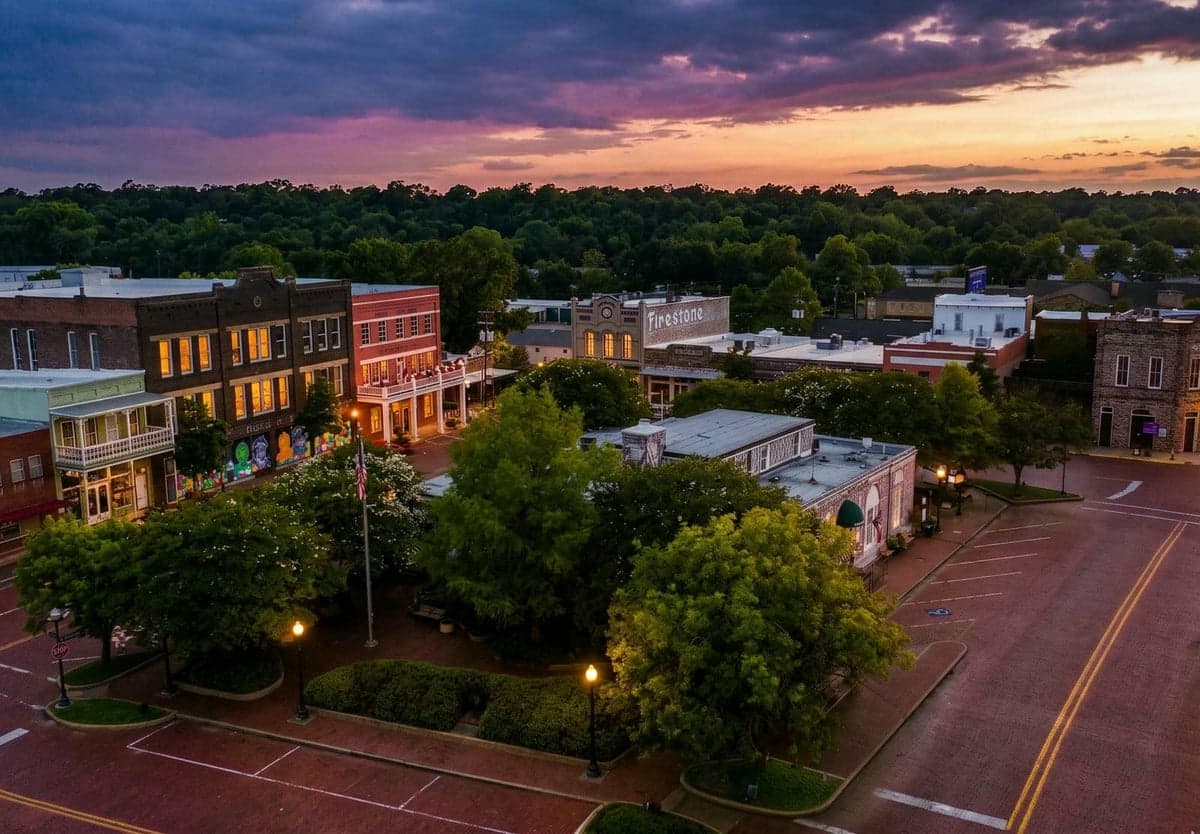
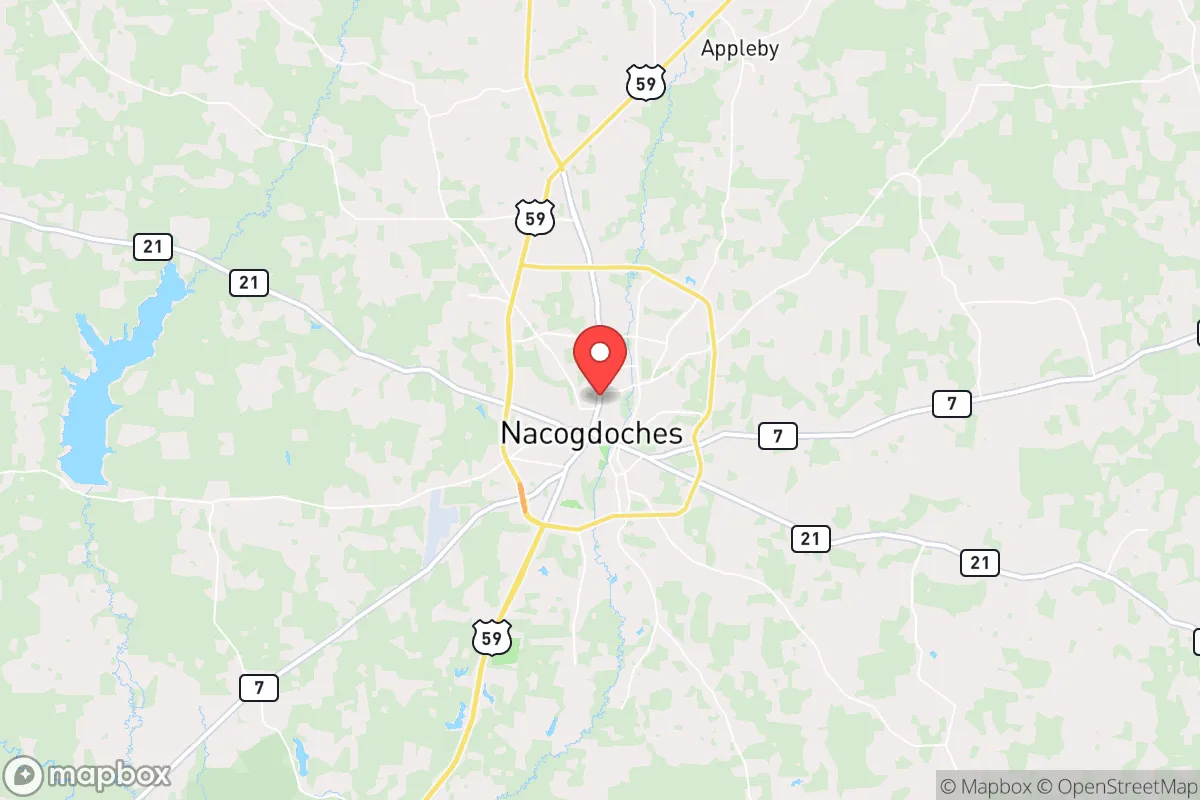
Nacogdoches, Texas, occupies a strategic position in the Piney Woods region that offers a blend of genuine resilience advantages and notable vulnerabilities for a relocator prioritizing disaster readiness and self-sufficiency. Its location roughly 140 miles north of Houston and 160 miles east of Dallas places it outside the immediate blast and fallout zones of major metropolitan targets, yet close enough to access urban resources when needed. The area’s historical role as the oldest town in Texas, combined with its status as home to Stephen F. Austin State University, provides a stable economic and social foundation that supports long-term preparedness efforts.
Geographic position and natural advantages for self-sufficiency
Nacogdoches sits in the heart of the Angelina National Forest and Sabine National Forest corridor, giving it one of the most robust natural resource bases in East Texas. The region receives an average of 48 inches of rainfall annually, which supports abundant surface water in the form of creeks, rivers, and the nearby Lake Nacogdoches reservoir. This water availability is a critical advantage for off-grid living and agricultural self-sufficiency, as it reduces dependence on municipal systems that could fail during a crisis. The area’s rolling hills and dense pine and hardwood forests provide natural cover and defensibility, making it harder for unauthorized access compared to the flat, open terrain of West Texas. The soil is generally acidic but fertile enough for small-scale farming, with a growing season of about 230 days that allows for year-round food production. The local climate is humid subtropical, which means mild winters and hot summers, but the tree canopy moderates temperatures and reduces heat stress on crops and livestock. For a relocator seeking a location that can sustain a homestead or small farm, Nacogdoches offers a realistic foundation without the extreme weather challenges of the Panhandle or the arid conditions of the Hill Country.
Risks, exposures, and proximity to fallout-relevant landmarks
The most significant risk for Nacogdoches in a major disaster scenario is its proximity to critical infrastructure that could become targets. The city lies about 60 miles from the Sabine River and the Louisiana border, which places it within the fallout zone of potential strikes on the Port Arthur and Beaumont petrochemical complexes, as well as the Lake Charles industrial corridor. These are high-value targets in any conflict scenario, and prevailing winds from the south and southeast could carry radioactive or chemical fallout directly over Nacogdoches within hours. Additionally, the city is roughly 100 miles from the Strategic Petroleum Reserve sites at Bryan Mound and Big Hill, which are hardened but still potential targets. On the natural disaster front, Nacogdoches is in a moderate risk zone for tornadoes, with an average of 3-5 tornado warnings per year, and is susceptible to flooding from the Attoyac Bayou and smaller tributaries during heavy rain events. The area is not in a hurricane strike zone directly, but remnants of Gulf storms can bring sustained winds and heavy rainfall. Wildfire risk is low due to the high moisture content of the forests, but drought years can elevate that risk. For a relocator, the primary man-made risk is the fallout corridor from the Gulf Coast industrial targets, which requires a serious assessment of sheltering capabilities and evacuation routes to the north or west.
Practical resilience for a relocator: food, water, energy, and defensibility
For food security, Nacogdoches benefits from a strong local agricultural network. The Nacogdoches Farmers Market operates year-round, and the surrounding county has over 200 farms producing vegetables, poultry, beef, and dairy. The presence of the university’s agriculture program provides access to knowledge and resources for small-scale farming. Water is abundant but requires treatment; the city’s water supply comes from Lake Nacogdoches and the Carrizo-Wilcox Aquifer, but private wells are common in the rural areas outside city limits. A relocator should plan for a well with a hand pump or a rainwater catchment system, as municipal water treatment could fail during a prolonged power outage. Energy resilience is mixed. The local grid is served by Oncor and Deep East Texas Electric Cooperative, both of which have experienced outages during ice storms and high winds. Solar potential is moderate, with about 210 sunny days per year, but the tree canopy can reduce panel efficiency. A backup generator with a propane or diesel supply is a practical investment. Defensibility is one of Nacogdoches’s strongest attributes. The dense forests and limited road network create natural chokepoints, and the city’s layout—with a historic downtown core surrounded by rural subdivisions—allows for perimeter security. The local law enforcement presence is adequate, with the Nacogdoches Police Department and the county sheriff’s office maintaining a visible patrol, but the area’s low population density (about 33,000 in the city, 65,000 in the county) means that response times in rural areas can be 20-30 minutes. For a relocator, the key is to choose a property with good sightlines, a reliable water source, and access to secondary roads that avoid the main highways (US 59 and TX 7) in case of evacuation.
Overall, Nacogdoches presents a balanced strategic picture for the serious relocator. It offers genuine advantages in water availability, forest cover, and agricultural potential that support long-term self-sufficiency, while its distance from major metropolitan targets reduces the likelihood of direct attack. The primary vulnerability is the fallout risk from Gulf Coast industrial infrastructure, which requires a proactive sheltering plan and a pre-identified evacuation route to the north or west. For a family or individual willing to invest in a well, solar backup, and a defensible property, Nacogdoches provides a realistic and sustainable base of operations that avoids the extremes of both urban vulnerability and remote isolation. The area’s community is generally conservative and self-reliant, with a strong hunting and outdoor culture that aligns with preparedness values. It is not a hardened bunker location, but it is a place where a prepared relocator can build a resilient life with manageable risks and abundant natural resources.

* Values derived from national, state, county, city and local statistics and may differ in a specific area. Last updated: 2026-09-02T15:12:21.000Z
Narrative content on this page is AI-generated and may contain mistakes. Verify any details that matter before acting on them.
ReloMaps may earn a commission from affiliate links at no extra cost to you.

