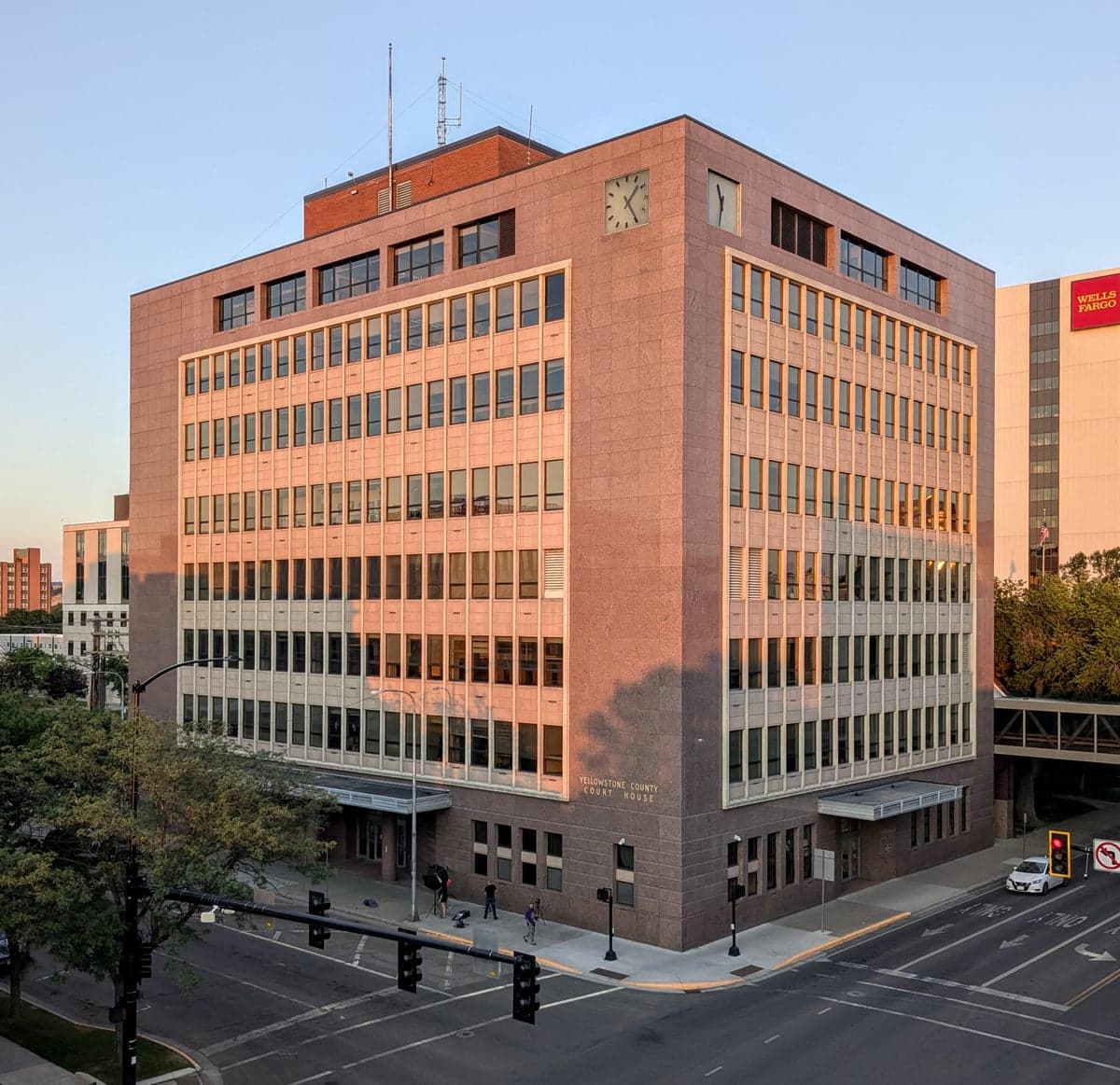
Photo: Wikipedia
Political ClimatePolitical Climate in Yellowstone County
Showing district-level results — no local-only data available.
Local Political AnalysisPolitical Analysis of Yellowstone County
Yellowstone County, anchored by Billings, is the most reliably Republican large county in Montana, carrying a Cook PVI of R+15 that makes it measurably more conservative than the state as a whole (R+10). That five-point gap isn't just a statistic — it reflects a political reality where Democrats rarely win countywide races, and the local GOP primary is often the real contest. The county has been trending redder over the past decade, driven by an influx of out-of-state transplants from conservative-leaning states and a steady exodus of younger, more moderate residents to Missoula or Bozeman. If you look at precinct-level results from 2024, you'll see the pattern clearly: Billings' West End and the rural towns like Laurel and Shepherd vote overwhelmingly Republican, while the core neighborhoods around downtown Billings and the Montana State University Billings campus produce the only blue pockets, and even those are shrinking.
How it compares
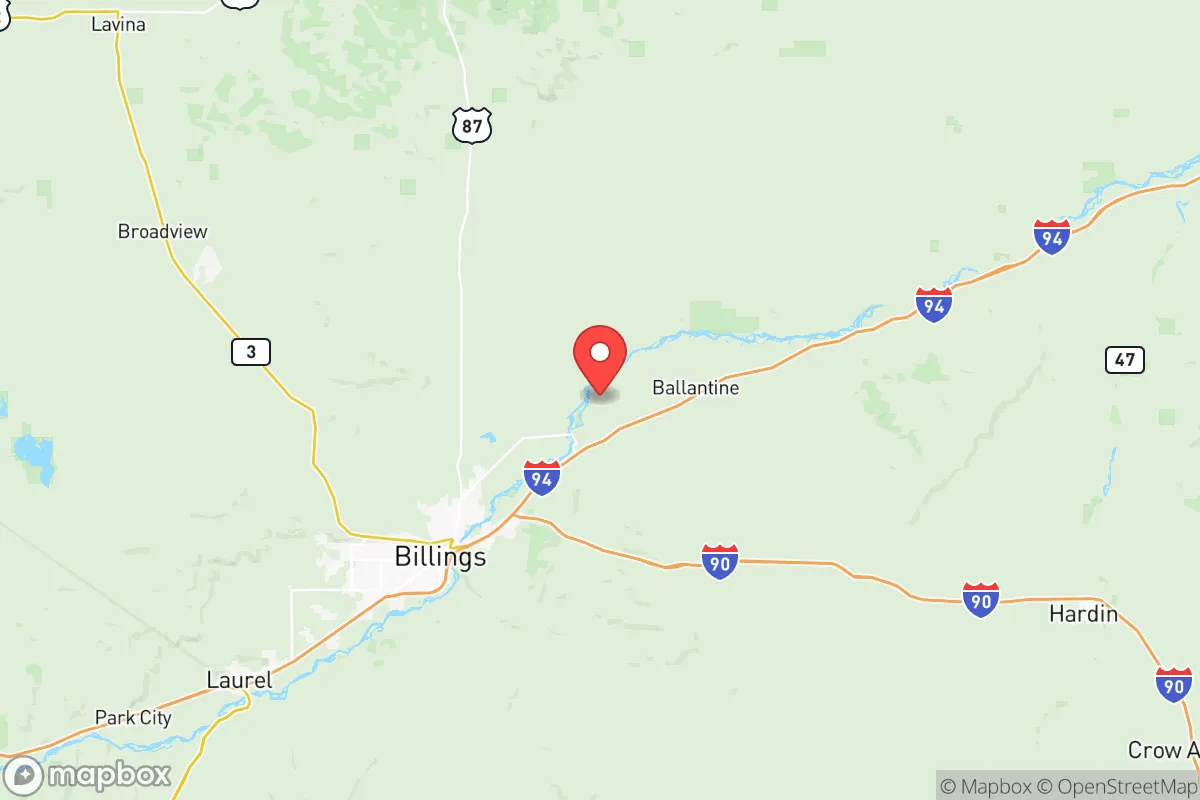
Compared to Montana's statewide R+10, Yellowstone County's R+15 means it's roughly as conservative as the eastern plains counties (like Dawson or Richland) but with a much larger population. The difference is most visible in legislative races: Yellowstone County sends a solidly Republican delegation to Helena, while the state as a whole still elects a few moderate Democrats from places like Missoula and Butte. Within the county itself, the political geography is stark. Billings' West End and the suburbs of Lockwood and Huntley lean heavily red, often delivering 70%+ Republican margins. Downtown Billings and the South Side are the only areas where Democrats crack 45%, and even those precincts have shifted right since 2020. The rural towns — Broadview, Worden, Ballantine — are deep red, while the small city of Laurel is reliably conservative but slightly less so than the open countryside. Swing precincts are almost nonexistent; the county hasn't voted for a Democratic presidential candidate since 1964.
What this means for residents
For conservative residents, Yellowstone County feels like a safe harbor. Local government, school boards, and county commissions are dominated by Republicans, and policy debates tend to focus on property taxes, energy development, and agricultural issues rather than social wedge fights. Conservative newcomers from California or Colorado often find the local GOP more pragmatic than the national party — more concerned with water rights and zoning than with culture war battles. For liberal residents, the reality is more isolating. Progressive candidates rarely win above the city council level, and even then only in a few downtown Billings wards. Socially liberal residents often find themselves navigating a community where openly discussing politics can be awkward, and where the local Democratic Party is small and underfunded. That said, the county's size means there are still active progressive groups, particularly around the university and the hospital, and the city of Billings itself is more moderate than the surrounding rural areas.
Culturally, Yellowstone County's conservatism is more libertarian than evangelical — think "leave me alone and keep taxes low" rather than "government should enforce morality." That distinction matters: the county has a robust craft beer scene, a growing arts district in downtown Billings, and a surprisingly active LGBTQ community for a R+15 area. The policy reality is that property taxes are a perennial flashpoint, with residents on both sides of the aisle frustrated by rising assessments, while social issues like abortion and gun rights generate less local heat than they do in the state legislature. For anyone moving here, the takeaway is simple: if you're conservative, you'll feel at home; if you're liberal, you'll find your tribe, but it'll be smaller than you're used to, and you'll need to be comfortable being in the minority.

State Political ClimatePolitical Climate in Montana
State Political AnalysisPolitical Environment in the State
Montana is a solidly Republican state with a Cook PVI of R+10, but calling it a simple red state misses the real story. The dominant coalition is a mix of old-school libertarian-leaning ranchers, newer conservative transplants from California and the Pacific Northwest, and a surprisingly resilient Democratic presence in a few key counties. Over the last 10-20 years, the state has shifted rightward, but not in a straight line — it’s more of a slow, grinding realignment driven by in-migration and the hollowing out of the old labor-union Democratic base in mining and timber towns.
Urban vs. rural divide
The political map is stark. The state’s two population centers — Missoula and Bozeman — are blue islands in a sea of red. Missoula County, home to the University of Montana, consistently votes Democratic by double digits; in 2024, it went about 58% for Biden. Bozeman’s Gallatin County, once a swing area, has been trending blue as tech workers and outdoor recreationists flood in, though it still only leans Democratic by a few points. Meanwhile, the rest of the state is deeply Republican. Billings, the largest city, is reliably red but not rabid — it’s more Chamber of Commerce conservative than culture-warrior. The real GOP strongholds are the rural eastern plains and the Hi-Line: counties like McCone and Daniels routinely vote 85%+ Republican. The Flathead Valley around Kalispell has become a hotbed of hardline conservative activism, with a strong libertarian streak and a growing population of out-of-state retirees who moved there specifically for lower taxes and fewer regulations. The Bitterroot Valley south of Missoula is similar — ruby red and increasingly vocal about property rights and federal land management.
Policy environment
Montana’s policy environment is defined by a low-tax, low-regulation posture with a few notable wrinkles. There is no state sales tax, which is a huge draw for relocators. Property taxes are moderate, and income tax is a flat 5.9% (as of 2025). The state has a Republican trifecta — governor, house, senate — and has been aggressively cutting regulations, especially around housing and energy development. Education policy is a flashpoint: the state has a robust school choice movement, with a new Education Savings Account program passed in 2023 that lets parents use public funds for private or homeschool expenses. Healthcare is mixed — Montana expanded Medicaid under the ACA, a decision that remains popular even among many conservatives, but the state also has some of the most restrictive abortion laws in the country post-Dobbs. Election laws are moderately restrictive: voter ID is required, same-day registration is allowed, and mail-in voting is widespread (the state has been all-mail for most elections since 2020). There’s no ballot harvesting ban, but there’s also no widespread fraud controversy here — the system is generally trusted.
Recent policy direction
The last few years have seen a burst of legislation that signals where the state is headed. On gun and self-defense law, Montana is among the most permissive: constitutional carry passed in 2021, and there are no waiting periods or magazine capacity limits. The state also passed a “Second Amendment Preservation Act” in 2023 that purports to nullify federal gun laws — a largely symbolic move that nonetheless signals the political temperature. On parental and education rights, the 2023 ESA program was paired with a ban on “critical race theory” and “sexual content” in K-12 classrooms, though enforcement has been spotty. Speech and privacy are generally robust — Montana has a strong state constitutional right to privacy, which the state supreme court has interpreted broadly, including a 1999 ruling that protects abortion access (though that’s been under assault). On medical and bodily autonomy, the state banned abortion at 20 weeks in 2023, and a 2024 law effectively bans it after a heartbeat is detected, though litigation is ongoing. Property rights are a major theme: the state passed a “right to farm” constitutional amendment in 2020, and a 2023 law limits local governments’ ability to regulate short-term rentals. Taxation has been trending downward — the flat income tax was cut from 6.75% to 5.9% in 2023, and there’s talk of eliminating it entirely. Voting and ballot access saw a 2023 law requiring proof of citizenship to register, which is being challenged in court.
Civil unrest & political movements
Montana is not a hotbed of street-level civil unrest, but there are organized movements on both sides. The Yellowstone County (Billings) area has seen periodic protests over abortion clinic access, and Missoula has had small but persistent climate activism, including a 2023 sit-in at the county courthouse over a proposed oil train terminal. The most visible political movement is the “County Supremacy” or “constitutional county” movement, particularly in Flathead County and Ravalli County (the Bitterroot), where local officials have passed resolutions declaring they will not enforce certain state or federal laws they deem unconstitutional. This is mostly rhetorical, but it reflects a deep libertarian streak. Immigration politics are less heated than in border states, but there’s a growing tension in agricultural areas like the Gallatin Valley over H-2A visa workers and undocumented labor in the dairy and meatpacking industries. There are no sanctuary cities in Montana. Election integrity controversies are muted — the 2020 and 2022 elections were certified without major incident, though a 2024 audit of Flathead County’s results was requested by local activists and found no irregularities. The most visible flashpoint for a new resident would likely be the public lands debate: you’ll see “Keep Public Lands in Public Hands” bumper stickers next to “Transfer to the States” ones, and it’s a genuinely divisive issue in a state where 30% of land is federally owned.
Projection
Over the next 5-10 years, Montana is likely to get more Republican, but also more internally divided. The in-migration from blue states — mostly to Bozeman, Missoula, and the Flathead — is bringing people who are culturally conservative but fiscally moderate, which could push the GOP toward a more pragmatic, pro-business stance. However, the rural eastern counties are losing population and becoming even more conservative, which will amplify the urban-rural split. The Democratic Party is increasingly confined to Missoula and Bozeman, with little hope of winning statewide office unless a moderate Republican fractures the party. The wildcard is water and climate: as drought intensifies, fights over the Missouri and Yellowstone Rivers could realign political coalitions, with agricultural and environmental interests sometimes aligning against development. A relocator moving in now should expect a state that is solidly red but not monolithic, where local politics vary dramatically by county, and where the culture war is real but not all-consuming — most people are more worried about the cost of housing and the price of hay than about national politics.
Bottom line for a new resident: If you’re conservative, you’ll find a welcoming policy environment and a like-minded community in most places outside Missoula and Bozeman. If you’re liberal, you’ll have a harder time in rural areas but can find your people in the college towns. The practical takeaway is that Montana is a high-liberty, low-tax state with a strong tradition of local control and a growing tension between newcomers and old-timers. Your experience will depend heavily on which county you choose — and that choice matters more here than in almost any other state.
* Values derived from national, state, county, city and local statistics and may differ in a specific area. Last updated: 2026-06-16T02:20:33.000Z
Narrative content on this page is AI-generated and may contain mistakes. Verify any details that matter before acting on them.
ReloMaps may earn a commission from affiliate links at no extra cost to you.

