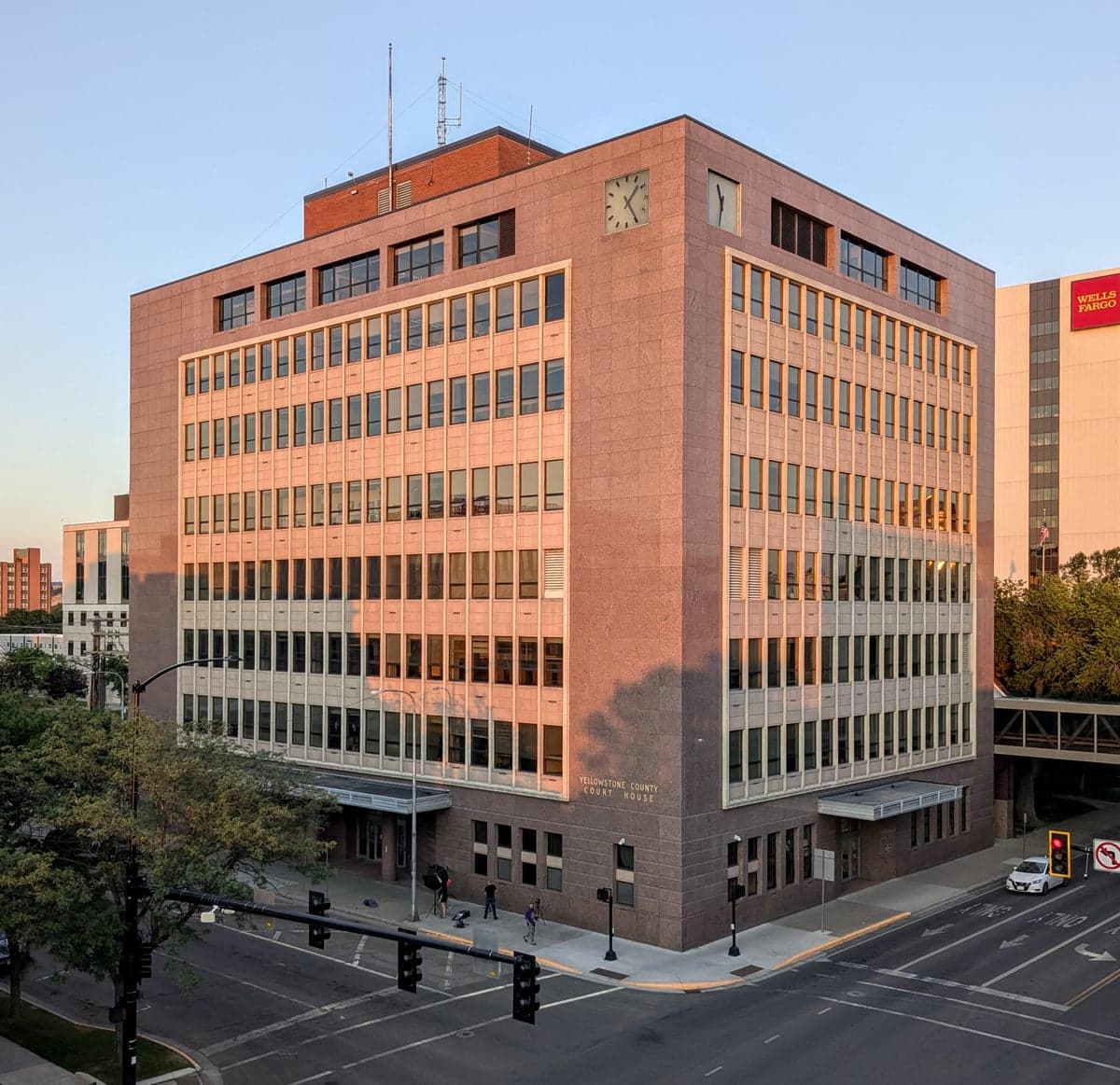
Photo: Wikipedia
Personal Sovereignty in Yellowstone County
Viable for self-reliance. Generally workable, though some barriers may limit total independence.
What does Personal Sovereignty tell us?
Personal Sovereignty measures your capacity for self-reliance and independence with minimal government friction. Higher scores mean fewer barriers between you and the way you want to live... but it assumes you have the space you need and good neighbors.
What does this tell us?
Personal Sovereignty measures your capacity for self-reliance and independence with minimal government friction. Higher scores mean fewer barriers between you and the way you want to live... but it assumes you have the space you need and good neighbors.
State Policy
Energy independence: Net exporter (120% of energy produced in-state)
Personal Liberty
Homesteading

Personal Liberty Analysis
Yellowstone County, Montana, offers a personal sovereignty environment that ranks among the strongest in the nation, driven by Montana’s state-level constitutional protections, low tax burden, and a deeply ingrained culture of self-reliance. For individuals and families prioritizing autonomy, the county provides a legal and regulatory framework that generally defers to personal choice, particularly in areas of self-defense, property use, and parental rights. While Billings, the county seat and largest city, introduces some municipal-level restrictions not found in the surrounding rural areas, the overall posture across the county is one of light-touch governance, making it a compelling option for those seeking to maximize personal freedom within a stable, growing region.
Tax burden and regulatory posture across Yellowstone County
Montana’s tax structure is among the most favorable in the United States for those seeking to keep more of their earnings and property. The state has no sales tax, which directly benefits residents of Yellowstone County by eliminating a regressive consumption tax that can add 7-10% to everyday purchases in other states. Property taxes in the county are moderate, with effective rates typically ranging from 0.7% to 1.1% of assessed value, depending on location and improvements. The state income tax is a flat 5.9% as of 2026, applied to all taxable income above a standard deduction. This flat rate, combined with the absence of sales tax, creates a predictable and relatively low overall tax burden. Regulatory posture varies by jurisdiction. Billings enforces a municipal code that includes zoning ordinances, building permits, and business licensing, which can be more restrictive than the county’s unincorporated areas. In contrast, communities like Laurel, Worden, and Huntley operate with far fewer local regulations, particularly for small-scale home-based businesses and agricultural activities. The county itself maintains a generally permissive stance on land use, with no countywide building codes for rural residential structures, though septic systems and well permits are regulated by the state. For a relocation-minded reader, the key distinction is that living within Billings city limits means accepting more municipal oversight, while choosing a rural parcel in areas like Shepherd or Pompeys Pillar offers a near-absence of local regulatory interference.
Self-defense and gun law specifics in Yellowstone County
Montana is a constitutional carry state, meaning no permit is required to carry a concealed firearm for any law-abiding adult 18 or older. Yellowstone County fully reflects this state-level policy, with no additional county-level restrictions on firearm possession, open carry, or concealed carry. The county sheriff’s office issues concealed carry permits for reciprocity purposes, but they are not required for in-state carry. Stand-your-ground laws are in effect, with no duty to retreat in any place where a person has a legal right to be. Castle doctrine protections extend to occupied vehicles and places of business. Billings does not have any local ordinances that restrict firearm possession beyond state law, though discharging a firearm within city limits is prohibited except at designated ranges. In rural areas of the county, such as Broadview or Ballantine, target shooting on private property is generally permitted, provided it is done safely and not within 150 yards of an occupied dwelling without permission. The county’s gun culture is robust, with multiple gun shops, indoor and outdoor ranges, and a strong tradition of hunting and sport shooting. For a family prioritizing self-defense rights, Yellowstone County offers one of the most permissive legal environments in the country, with no waiting periods, no magazine capacity limits, and no firearm registration requirements.
Self-reliance and homesteading viability: lot sizes, zoning, and off-grid feasibility
Yellowstone County presents significant opportunities for self-reliant living, though feasibility varies sharply between urban and rural parcels. Within Billings, standard residential lots are typically 6,000 to 10,000 square feet, with zoning that restricts livestock, large gardens, and accessory structures. However, the county’s unincorporated areas offer a different reality. Minimum lot sizes in agricultural zoning districts are generally 20 acres, though smaller parcels (1-5 acres) are common in areas like Shepherd and Worden, where zoning is less restrictive. Off-grid living is legally feasible in most rural parts of the county, provided state health department requirements for septic systems are met. Montana law explicitly protects the right to collect rainwater, and solar panel installation is not subject to homeowner association restrictions in unincorporated areas. Well drilling is regulated by the Montana Department of Natural Resources and Conservation, but permits are routinely issued for domestic use. Laurel and Huntley have more permissive zoning for small-scale agriculture, including chickens, goats, and bees, even on lots under 5 acres. For those seeking true homesteading, parcels in the county’s eastern and northern reaches, near Pompeys Pillar and Broadview, offer 20- to 40-acre tracts with minimal regulatory oversight, where residents can build without county building codes, install composting toilets, and rely on solar or wind power. The county’s climate—semi-arid with 14 inches of annual precipitation—requires careful water management, but the legal framework supports self-sufficient living more than most regions in the lower 48.
Personal liberties: parental rights, medical autonomy, speech, and property
Montana’s state constitution includes a strong privacy clause (Article II, Section 10) that courts have interpreted to protect personal autonomy in medical decisions, including vaccine choice and treatment options. Yellowstone County does not impose any local mandates or restrictions on medical freedom beyond state licensing requirements. Parental rights are broadly protected under state law, with Montana being one of the few states with a statutory presumption that parents have the fundamental right to direct the upbringing, education, and healthcare of their children. This includes the ability to opt out of public school curricula without penalty, and to homeschool without state approval or testing requirements. The county has a robust homeschooling community, with support groups active in Billings, Laurel, and Shepherd. Speech and assembly rights are fully protected, with no local ordinances restricting political speech or public gatherings. Property rights are strong, with Montana’s “right to farm” laws protecting agricultural operations from nuisance lawsuits, and the state’s eminent domain statutes being among the most restrictive in the nation. Yellowstone County’s planning department generally defers to landowners, with no countywide sign ordinances or aesthetic controls outside of Billings city limits. For a family concerned about government overreach, the county’s legal environment consistently favors individual choice over collective mandates, particularly in the rural townships where local governance is minimal.
Overall, Yellowstone County offers a level of personal sovereignty that places it in the top tier of U.S. counties for those prioritizing autonomy. The combination of no sales tax, constitutional carry, strong property rights, and minimal rural regulation creates an environment where self-reliance is not just tolerated but structurally supported. The primary trade-off is between the convenience and services of Billings—which comes with more municipal rules—and the near-total freedom of rural parcels in Laurel, Shepherd, Worden, or Pompeys Pillar. For a conservative-leaning individual or family seeking to maximize personal independence while remaining within reach of a regional economic hub, Yellowstone County represents a rare balance of liberty and opportunity.

* Values derived from national, state, county, city and local statistics and may differ in a specific area. Last updated: 2026-06-16T02:20:33.000Z
Narrative content on this page is AI-generated and may contain mistakes. Verify any details that matter before acting on them.
ReloMaps may earn a commission from affiliate links at no extra cost to you.

