Photo: Wikipedia
Demographics of Yellowstone County
Affluence Level in Yellowstone County
A middle-class area roughly in line with national averages across income, home values, education, and employment.
People of Yellowstone County
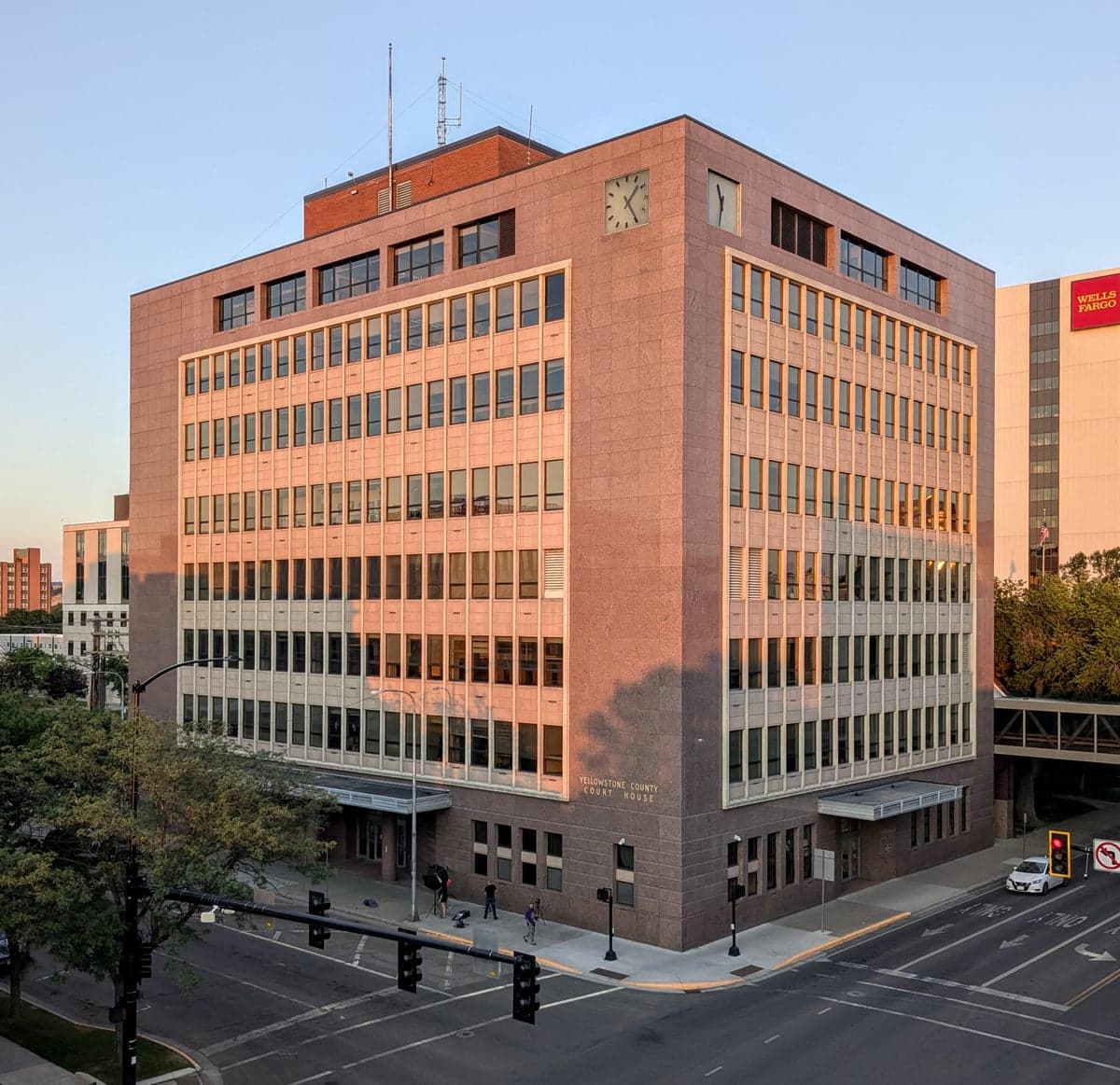
The people of Yellowstone County, Montana today number 167,340, forming a population that is overwhelmingly white (83.9%) and native-born (only 0.9% foreign-born), with a modest Hispanic minority of 6.4% and very small Black, East/Southeast Asian, and Native American communities. The county’s character is defined by its anchor city, Billings, which serves as a regional trade, medical, and energy hub for a vast rural hinterland, giving residents a mix of small-town familiarity and big-city amenities. Distinctive identity markers include a strong ranching and energy-industry heritage, a politically conservative tilt, and a sense of self-reliance rooted in the region’s frontier past. For a relocating individual or family, this is a place where community ties run deep and newcomers are expected to integrate into existing social and economic networks.
Settlement & growth (pre-1960)
Long before European settlement, the Yellowstone Valley was home to several Native American nations, most notably the Crow (Apsáalooke), who used the area as hunting grounds and seasonal camps, and the Cheyenne, who also ranged through the region. The Yellowstone River itself was a vital transportation and resource corridor. The first non-Native presence came with the Lewis and Clark Expedition (1804–1806), which passed through the area, followed by fur trappers and traders in the early 1800s. However, permanent American settlement did not begin until the 1870s, when the Northern Pacific Railroad pushed westward.
The railroad’s arrival in 1882 was the single most transformative event. The town of Billings, named after railroad president Frederick H. Billings, was platted that same year as a division point and supply center. The railroad brought a wave of Anglo-American settlers from the Midwest and East Coast, drawn by the promise of cheap land under the Homestead Act and the opportunity to raise cattle or farm dryland wheat. Many of these early settlers were of German, Scandinavian, and British Isles ancestry, and they established the ranching and agricultural economy that still defines the county’s rural areas. Towns like Laurel (founded 1882 as a railroad stop) and Worden (a farming community) grew as service centers for the surrounding homesteads.
By the early 1900s, the discovery of oil in the nearby Elk Basin and the development of the coal mines at Colstrip (though technically in adjacent counties) spurred further growth. Billings became the “Magic City” for its rapid expansion, attracting workers from the Midwest and a smaller number of Italian and Eastern European immigrants who labored in the mines, railroads, and refineries. The Dust Bowl of the 1930s pushed some displaced farmers from the Great Plains into the county, but the population remained overwhelmingly white and native-born. By 1960, Yellowstone County’s population had reached roughly 80,000, with Billings as the undisputed urban center and smaller towns like Huntley and Shepherd serving as agricultural satellites.
Modern era (post-1965)
The 1965 Hart-Cellar Act, which dramatically reshaped U.S. immigration, had a minimal direct effect on Yellowstone County. The county’s foreign-born population today is just 0.9%, far below the national average, and the immigrant communities that did arrive were small and dispersed. A modest number of Hmong and Vietnamese refugees resettled in Billings in the late 1970s and 1980s, drawn by church-sponsored programs and the availability of low-skill jobs in meatpacking and manufacturing. Today, the East/Southeast Asian population stands at 0.8%, with most families living in central Billings near the older industrial corridors. No significant Indian-subcontinent community exists (0.0% in the data).
The most significant demographic shift since 1965 has been domestic, not international. The energy boom of the 1970s and 1980s, driven by oil and coal development in the Powder River Basin, attracted workers from Texas, Oklahoma, and other energy-producing states. This influx reinforced the county’s conservative, pro-business culture. More recently, the 2010s and 2020s have seen a steady stream of domestic migrants from California, Colorado, and the Pacific Northwest, seeking lower housing costs, less congestion, and a more traditional lifestyle. These newcomers have concentrated in Billings’ newer suburban developments, particularly in the West End and around Lockwood, an unincorporated area east of Billings that has seen rapid residential growth. The Hispanic population, now 6.4%, has grown primarily through natural increase and some migration from the Southwest, with families settling in Billings’ south side and in Laurel, where agricultural and food-processing jobs are available.
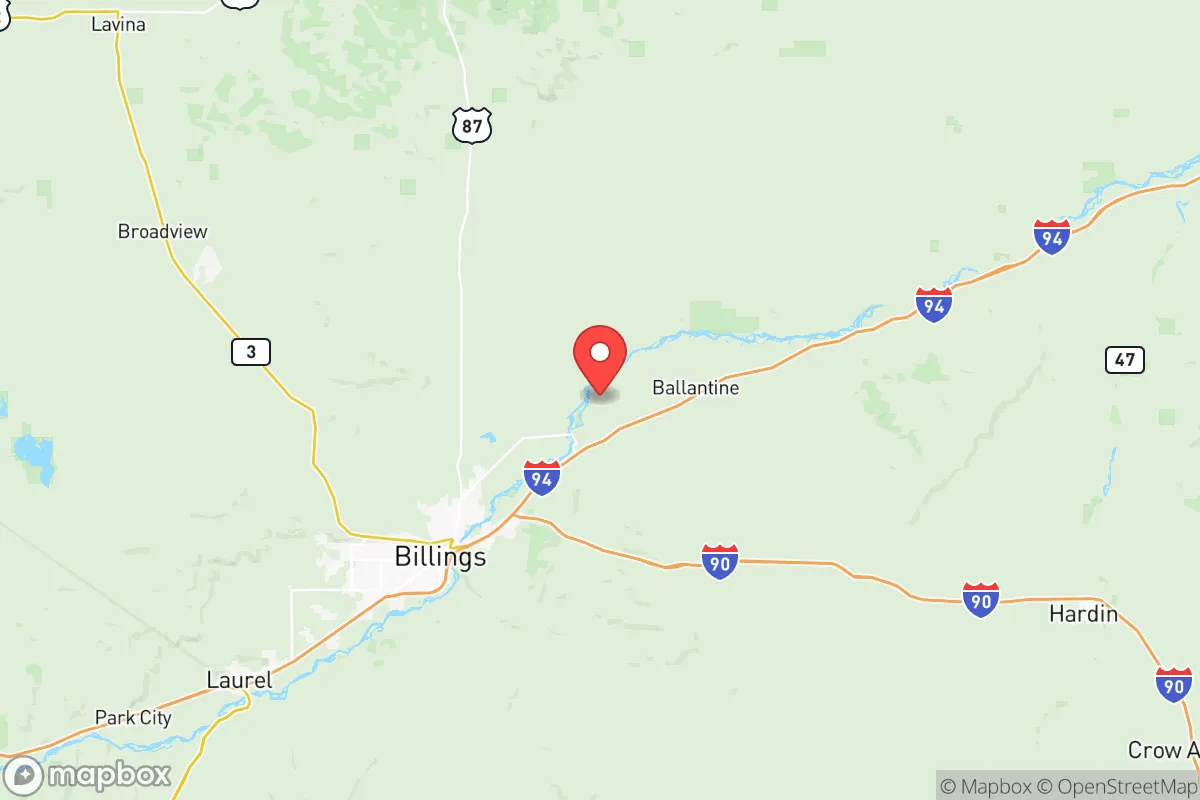
Suburbanization has been the dominant spatial trend. Billings’ downtown has retained its role as a commercial and medical hub, but the population has spread outward into subdivisions along the Interstate 90 corridor. The city’s Heights neighborhood, north of the Yellowstone River, has become a middle-class bedroom community, while the West End has attracted higher-income families and new retail development. The county’s rural areas—Ballantine, Pompeys Pillar, and Broadview—remain sparsely populated and overwhelmingly white, with economies tied to ranching and farming.
The future
Yellowstone County is likely to become slightly more diverse over the next 10–20 years, but the change will be gradual. The Hispanic population is projected to grow to perhaps 8–10% of the total, driven by higher birth rates and continued domestic migration from the Southwest. The East/Southeast Asian and Black populations will remain very small, as the county lacks the job base or social networks to attract significant numbers of new immigrants. The white population, while still dominant, will continue to age, with younger families moving to the suburbs and older residents retiring in place.
The most consequential trend is the continued domestic in-migration from high-cost states. If housing affordability remains a draw, the county could see its population approach 200,000 by 2040, with most growth occurring in Billings’ West End, Lockwood, and along the I-90 corridor toward Laurel. This growth will put pressure on infrastructure—schools, water, and roads—and may gradually shift the county’s political and cultural identity from deeply conservative to moderately conservative, as newcomers bring more diverse economic and social perspectives. The rural towns will likely stagnate or shrink, as younger residents move to Billings for jobs and services.
For someone moving in now, Yellowstone County is becoming a place where the old ranching and energy economy is slowly giving way to a more diversified base of healthcare, logistics, and professional services. The population will remain overwhelmingly native-born and white, with a growing Hispanic minority, and the cultural tone will stay conservative but with a pragmatic, live-and-let-live attitude. Newcomers who respect the region’s history and are willing to engage in community life—whether through church, school boards, or local business—will find a welcoming, if insular, society.

* Values derived from national, state, county, city and local statistics and may differ in a specific area. Last updated: 2026-06-16T02:20:33.000Z
Narrative content on this page is AI-generated and may contain mistakes. Verify any details that matter before acting on them.
ReloMaps may earn a commission from affiliate links at no extra cost to you.

