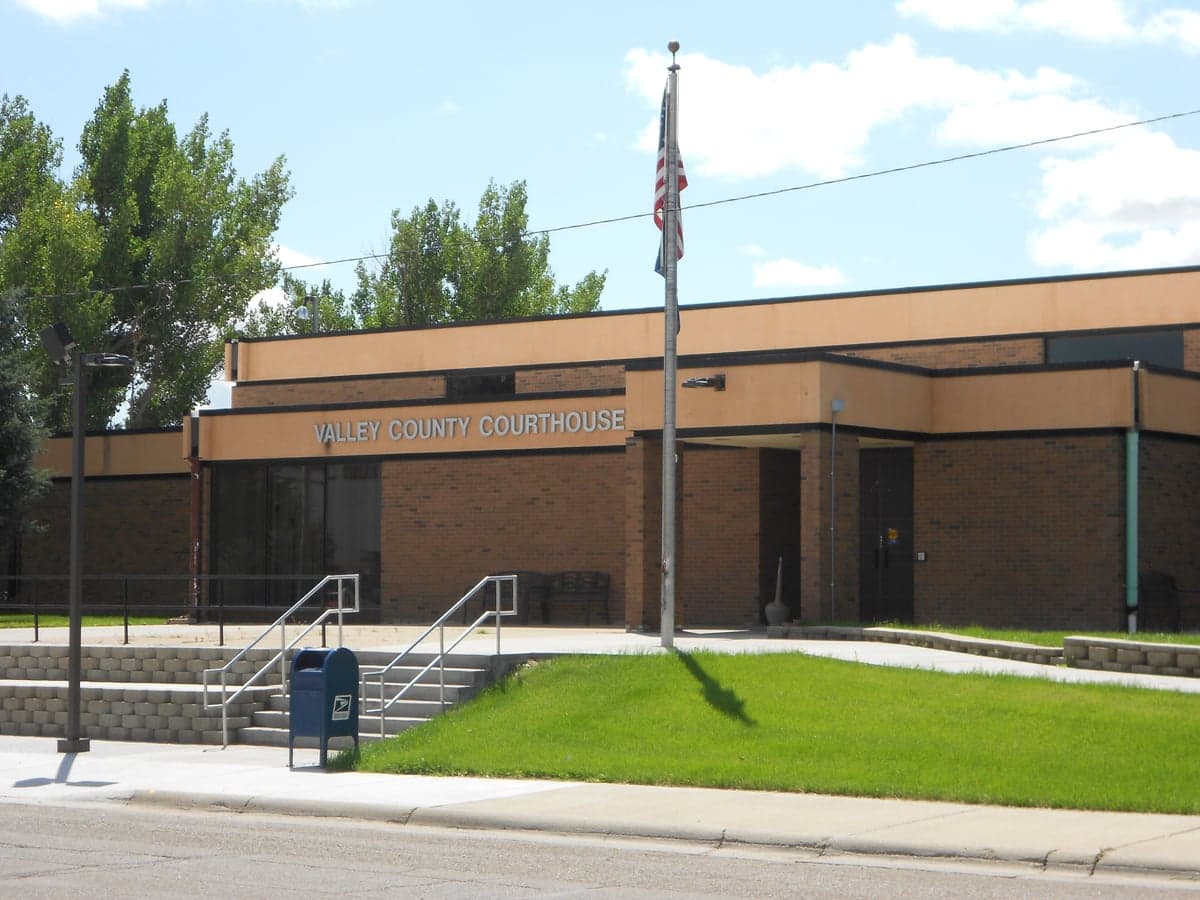
Photo: Wikipedia
Political ClimatePolitical Climate in Valley County
Showing district-level results — no local-only data available.
Local Political AnalysisPolitical Analysis of Valley County
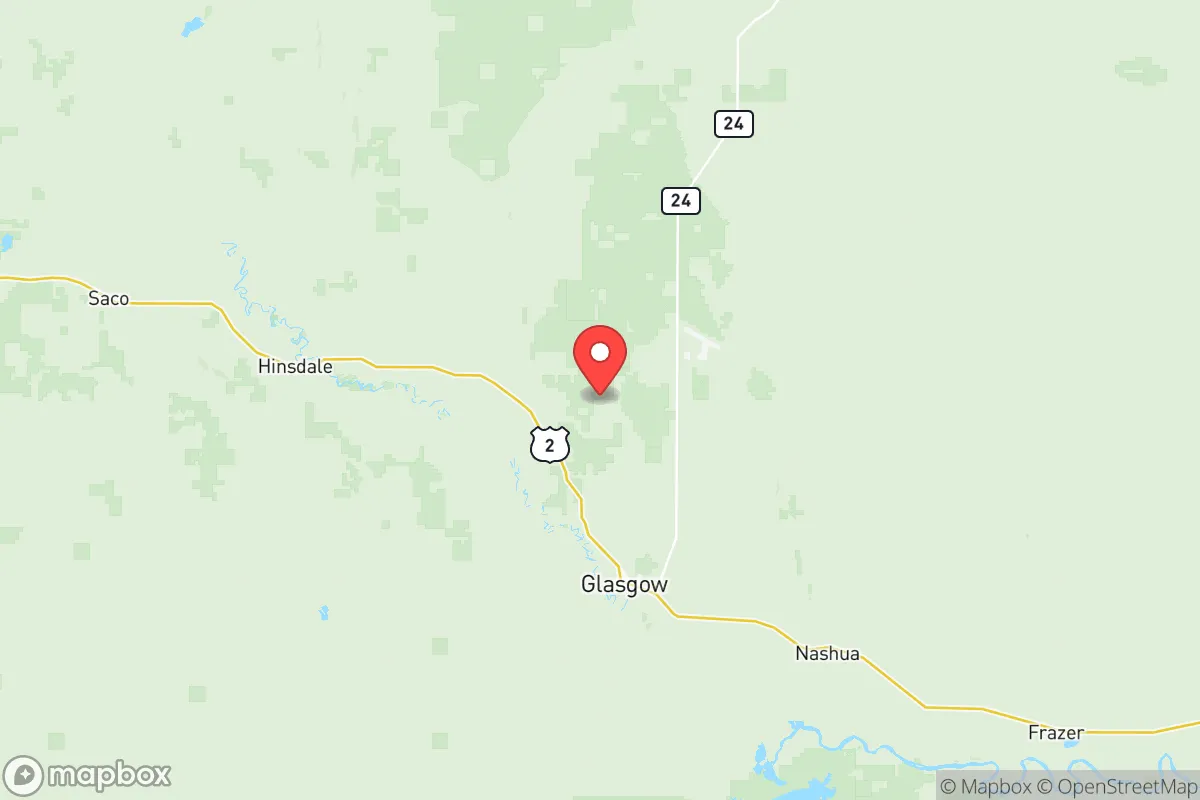
Valley County, Montana, leans solidly Republican with a Cook PVI of R+15, making it five points more conservative than the state of Montana as a whole, which sits at R+10. This isn’t a new development—the county has been a GOP stronghold for decades, but the margin has tightened slightly in recent years as new arrivals from out of state bring mixed political baggage. The real story lies in the split between the county seat, Glasgow, and the smaller farming communities like Fort Peck and Nashua. Glasgow’s precincts, especially around the hospital and schools, occasionally swing or vote closer to the margins, while rural areas like Hinsdale and Opheim reliably go deep red. This isn’t a blue county by any stretch, but there’s a subtle strain of independents in town who don’t always follow the party line.
How it compares to the rest of Montana
The state of Montana has a Cook PVI of R+10, meaning Valley County is significantly more Republican-leaning than the state average. The biggest difference is in presidential elections: in 2020, Donald Trump carried Valley County by about 40 points, while his statewide margin was a wider 16 points in Montana. That gap has narrowed over time—in 2012, Mitt Romney won Valley County by a similar 40-point margin, but statewide he won by only 13. So Valley County hasn’t gotten more conservative; the rest of the state has moved toward it. The biggest swing areas in Montana are the booming cities—Bozeman, Missoula, and Kalispell—which have seen influxes of out-of-state transplants, often more moderate or blue-leaning. Valley County, by contrast, has grown slower, and its politics remain rooted in agriculture, energy, and hunting culture. The result is that a Republican voter here may feel their voice is more typical of the old Montana, while a Democrat in Glasgow might find the county’s red hue a bit more isolating than in Missoula, but less intense than in places like Garfield County (PVI R+27) to the south.
What this means for residents
For conservative residents, Valley County’s political climate is mostly a non-issue. Local elections, from the school board to the county commission, are dominated by Republicans, and the cultural tone of public events like the Cottonwood Festival or high school rodeo reflects that. You won’t see much pushback on displaying the Gadsden flag or Trump signs in yards from St. Marie down to Frazer. For liberal residents, the reality is different but not oppressive. The Democratic Party in Glasgow is small but active, often organized around issues like public school funding (Valley County schools have seen budget cuts) and health care access, since the nearest hospital outside of Glasgow is over 100 miles away. There are no “blue islands” in the county—no town of note that leans Democrat. But there’s a pragmatic streak here: people tend to vote Republican but still support local government bonds for roads and water projects. The unincorporated community of Tampico, for instance, has no real political identity because its population is tiny and transient. In practice, what matters most is not party affiliation but whether you show up to community meetings and help with the harvest or fire management.
One cultural distinction worth noting: Valley County has a stronger connection to the Fort Peck Dam and Indian reservations than many other parts of Montana. The county borders the Fort Peck Indian Reservation, and issues of tribal sovereignty and environmental policy around the dam divide along more practical lines than partisan ones—even among Republicans. You’ll find ranchers and oil workers who oppose certain BLM land expansions, but they also side with tribal leaders on water rights. This creates a local politics that can confound a straight Republican-vs-Democrat framework. Looking ahead, if new housing development in Glasgow picks up—there’s a push for more worker housing—the county could see a slight moderating trend, but don’t expect a flip anytime soon. Valley County will likely stay R+15 or drift further right as surrounding rural counties continue to lose population and national politics polarize.

State Political ClimatePolitical Climate in Montana
State Political AnalysisPolitical Environment in the State
Montana is a solidly Republican state with a Cook PVI of R+10, but it’s a complicated red. The Big Sky State hasn’t voted for a Democratic presidential candidate since 1992, and that was only by a sliver. What you’re looking at is a deeply independent streak running through a conservative core. Over the last two decades, the state has shifted rightward, driven by in-migration of conservative-leaning transplants and a rural exodus from Democratic-leaning strongholds like Butte and Anaconda. But the picture isn’t uniform—there are real geographic and cultural fault lines, and they’re getting sharper as the state booms.
Urban vs. rural divide
The political map of Montana is a classic story of islands of blue in a sea of red. The state’s only real population center, the Missoula area (Missoula County), is reliably Democratic, driven by the university (University of Montana) and a strong environmentalist and arts scene. Bozeman (Gallatin County) is the real wildcard. It was historically red, but the explosive growth of Montana State University and the tech/outdoor industry influx has made it a purple-to-blue stronghold. Gallatin County was the only county in the state to vote for Hillary Clinton in 2016, and it’s been a battleground ever since. The other urban-ish area—Billings, the largest city—is reliably Republican but with a moderate, business-friendly edge, not the fire-breathing kind you see in rural precincts. The eastern two-thirds of the state, places like Miles City and Glendive, vote R+40 or more. Meanwhile, the Flathead Valley (Kalispell, Whitefish) has become a conservative stronghold, but Whitefish itself is a libertarian-leaning outlier, mixing ski-town progressives with property-rights absolutists. The key insight: the state’s growth is concentrated in Bozeman and Missoula, making those two counties the political fulcrum.
Policy environment
Montana’s policy environment is defined by a low-tax, limited-government ethos that’s baked into the state’s DNA. There’s no state sales tax—a huge draw for relocators from high-tax states. Property taxes are moderate, with assessments based on market value, and income taxes are a flat rate of 6.75% (with some credits). Education policy is local, but the state has leaned into school choice via public charter schools and open enrollment, though rural districts fight to keep their local schools. Healthcare is a mixed bag: Montana expanded Medicaid under the Affordable Care Act (a rare bipartisan move), but the state has resisted a state-based exchange and limits abortion access (more on that below). Election laws are relatively straightforward: no-excuse mail-in voting was widely used during COVID and remains popular, but the legislature has tightened ID requirements and ballot harvesting rules. Gun laws are among the most permissive in the nation—no permit needed for concealed carry, no magazine limits, and a strong “stand your ground” statute. For a conservative leaning family, the regulatory posture is business-friendly, with minimal zoning outside of cities like Bozeman and Missoula, and a “right-to-work” status on private-sector union membership.
Recent policy direction
The last five years have made Montana’s conservative tilt concrete. On gun rights, the 2021 Montana Firearm Freedom Act prohibits state and local enforcement of federal gun laws that don’t match state law—a nullification-like move. On parental rights, the 2023 Parental Bill of Rights (HB 267) requires parental consent for medical procedures and school materials involving sexuality or gender identity. Abortion access was restricted: the 2023 Life Act (HB 862) bans abortion after 15 weeks, with exceptions for rape, incest, and life of the mother—though a court challenge is pending. The state also passed a medical freedom law (HB 702) that prohibits vaccine mandates by private employers, a move that drew national attention. On property rights, a 2023 law (HB 241) limits the ability of homeowners associations to ban certain uses, while a new stream access law (SB 121) strengthens the public’s right to float rivers that cross private land—a major point of friction with wealthy out-of-state buyers. Voting saw a tightening: a 2023 law (HB 176) requires a state-issued ID to vote, and another (SB 169) prohibits ballot collecting by third parties. For a relocator, the policy direction is a clear move toward personal sovereignty on guns and medical choice, but a tightening of social regulations around abortion and transgender issues.
Civil unrest & political movements
Montana doesn’t have the protest culture of Portland or Seattle, but there are flashpoints. The Yellowstone Club and luxury development in Bozeman have sparked a renters’ movement (the “Bozeman Tenant Union”) and left-wing protests against housing speculation. On the right, the Montana Freedom Caucus has been extremely active, pushing for property tax caps and opposing county-level mask mandates. There was a notable standoff in 2021 at the State Capitol in Helena over COVID-19 restrictions, with armed protesters and a counter-protest from the “Montana Public Health Alliance.” Immigration politics are less heated—Montana’s foreign-born population is tiny (about 2%), but there’s been a surge in migrant workers in agriculture, particularly around Hardin and Shelby. The sanctuary city debate is absent; no Montana city has declared itself a sanctuary. There’s a strong secessionist whisper—the “Montana Freemen” and similar groups have a historical presence, but it’s fringe. The biggest flashpoint is election integrity: after the 2020 election, Montana was one of the few states where a recount (for the Secretary of State race) found a 160-vote margin, sparking a small but loud movement for hand-counting ballots. In practice, you won’t see daily protests, but the tension between Bozeman’s growing progressive activism and the rural conservative majority is real and visible in local board meetings.
Projection
Over the next 5-10 years, Montana is likely to become more purple, not more red. The in-migration is not a monolithic conservative wave—it includes wealthy tech workers from California and Washington who often bring moderate-to-liberal views on environment and social issues. The Bozeman and Missoula metros are projected to grow by 20-30% by 2030, while the eastern plains will lose population. This demographic shift will make Gallatin County a permanent battleground, and if redistricting continues to break along county lines, the state could see a Democratic congressional seat within a decade. However, the state legislature will remain heavily Republican for the foreseeable future due to rural overrepresentation. The policy direction will likely oscillate: expect further fights over property tax reform (to protect rural landowners), preemption of city-level green initiatives (like plastic bag bans in Bozeman), and a continued push on school choice and parental rights. The biggest wildcard is federal land management—Montana is 30% federally owned, and as climate change impacts snowpack and ranching, the political friction over grazing, logging, and public access will intensify. For a new resident, expect a state where you can live very free personally, but where local government power is heavily constrained by state preemption and the courts.
For a family or individual with a slightly conservative leaning, Montana is a strong practical choice. You get no state sales tax, low regulation, permissive gun laws, and a state that respects property rights—but you also pay for it with higher property taxes in growing areas and a healthcare system stretched thin by rural hospital closures. The political climate is competitive enough that you won’t feel isolated as a conservative in Bozeman, but you’ll be in the clear majority just 20 miles outside any city. The bottom line: if you want a state that leans red but still has real geographic diversity in lifestyle and politics, Montana delivers—just know that the urban centers are trending blue, and the state’s future will be fought out over growth, taxes, and how much the state preempts local control.
* Values derived from national, state, county, city and local statistics and may differ in a specific area. Last updated: 2026-07-06T03:14:01.000Z
Narrative content on this page is AI-generated and may contain mistakes. Verify any details that matter before acting on them.
ReloMaps may earn a commission from affiliate links at no extra cost to you.

