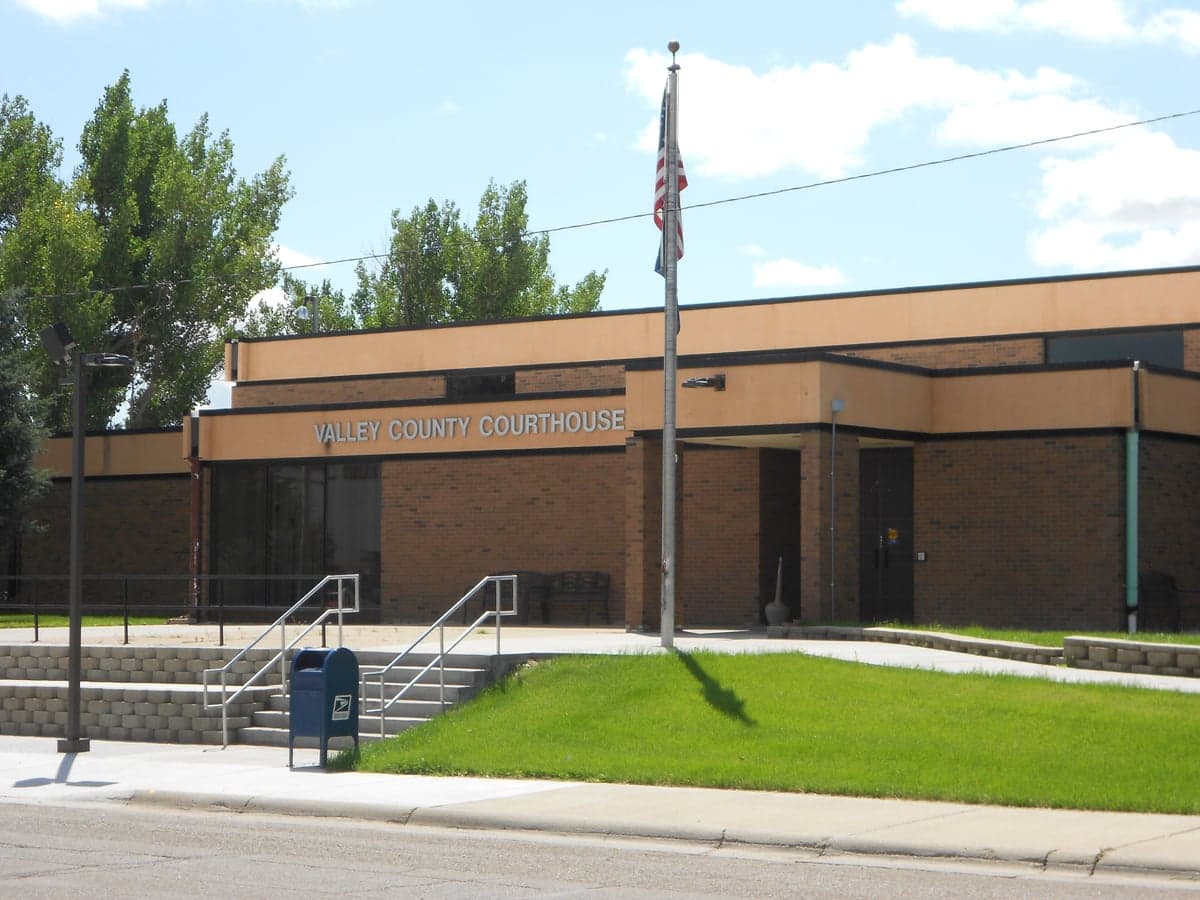
Photo: Wikipedia
Personal Sovereignty in Valley County
Viable for self-reliance. Generally workable, though some barriers may limit total independence.
What does Personal Sovereignty tell us?
Personal Sovereignty measures your capacity for self-reliance and independence with minimal government friction. Higher scores mean fewer barriers between you and the way you want to live... but it assumes you have the space you need and good neighbors.
What does this tell us?
Personal Sovereignty measures your capacity for self-reliance and independence with minimal government friction. Higher scores mean fewer barriers between you and the way you want to live... but it assumes you have the space you need and good neighbors.
State Policy
Energy independence: Net exporter (120% of energy produced in-state)
Personal Liberty
Homesteading

Personal Liberty Analysis
Valley County, Montana offers one of the most robust personal sovereignty environments in the Lower 48, shaped by its vast geography, sparse population (roughly 8,000 residents across 5,000 square miles), and a local governing culture that actively resists state and federal encroachment. This is a landscape where individual choice, land use freedom, and self-defense rights are treated as presumptive rather than conditional, making it a strong match for families and individuals who prioritize autonomy over convenience. However, the county is not monolithic — the regulatory posture and practical freedoms vary notably between its eastern agricultural hub around Glasgow, the recreational corridor of Fort Peck Lake, and the remote Hi-Line communities like Hinsdale and Frazer. Understanding these micro-differences is essential for anyone weighing relocation.
Tax burden and regulatory posture: How Valley County compares to Montana and the nation
Montana’s state-level tax environment is already light for those who value fiscal sovereignty, and Valley County amplifies that advantage through minimal local overreach. There is no state sales tax, and Valley County’s property tax rates are among the lowest in the state — the median property tax bill in Glasgow hovers around $1,800 annually on a $200,000 home, roughly half of what a similar property costs in Gallatin County near Bozeman. The county’s zoning code is lean: outside Glasgow’s municipal boundaries (and the smaller towns of Nashua and Opheim), there is effectively no county-wide zoning for agricultural or rural residential land. Building permits are required for new construction, but inspection schedules are sparse and the county’s planning department prioritizes consultation over enforcement. For readers coming from states with complex environmental review or subdivision regulations, the contrast is stark: a 40-acre parcel near Frazer can be split into two 20-acre lots without any subdivision review, provided it meets basic septic and water well standards. The regulatory posture is best described as “presumptive permission” — the county assumes you know what you’re doing until proven otherwise.
Self-defense and gun law specifics: Montana’s constitutional carry in practice
Montana is a constitutional carry state with no permit required for open or concealed carry, and Valley County’s local culture and enforcement practices align with that freedom. There is no county-level restriction on magazine capacities, firearm types, or ammunition purchases beyond what state and federal law impose. The sheriff’s office in Glasgow — the county seat and only incorporated city of significant size — is publicly on record as opposing “red flag” laws and has stated it will not enforce any federal orders it deems unconstitutional. For practical self-defense, Glasgow and the surrounding townships see negligible violent crime (the county’s violent crime rate is roughly 1.6 per 1,000, compared to the national average of 4.0), so the legal freedom to carry is less about reaction to danger and more about a baseline assumption of personal responsibility. One notable local nuance: while there are no “gun-free zones” mandated by the county, private businesses in Glasgow occasionally post signage restricting carry, though enforcement is informal and rarely contested. For homesteaders near Fort Peck or Saint Marie, discharging firearms on private land is standard practice, with no noise ordinances or discharge bans outside municipal limits. The Montana Legislature in 2021 also preempted local governments from regulating firearms more strictly than state law, so Valley County residents can expect this legal framework to remain stable.
Self-reliance and homesteading viability: Lot sizes, zoning, and off-grid feasibility
Valley County’s vast, low-population geography makes it one of the most homesteading-friendly areas in the northern Rockies, but the viability varies sharply depending on location. Glasgow proper has standard residential lot sizes (6,000-10,000 square feet) and requires connection to city water and sewer for new homes, which adds $5,000-$8,000 in tap fees. Go 15 miles out to Hinsdale or Vandalia, and the rules flip entirely: well and septic permits are the only requirements, and you can build on a 5-acre, 20-acre, or 160-acre parcel with no county plan review for single-family dwellings. Off-grid (no grid power) living is entirely legal countywide, though the county requires that any dwelling have an approved water source (well or hauled water with storage) and a compliant septic system — solar panels, propane, and wind turbines face no local restrictions. The growing season is short (under 100 days), so serious homesteading leans toward livestock and small-scale grain rather than vegetable gardens, but the BLM and state trust lands around Fort Peck and Saint Marie offer low-cost grazing leases for those with larger ambitions. The key differentiator is distance to services: a 40-acre parcel near Frazer may cost $500/acre and allow total self-reliance, but it’s also 90 minutes from Glasgow’s grocery store and medical clinic. Nashua and Hinsdale strike a balance — they’re within 20-40 minutes of Glasgow but still in unzoned territory, making them the sweet spot for most off-grid seekers.
Personal liberties: Parental rights, medical autonomy, speech, and property
Montana law and Valley County practice strongly tilt toward individual decision-making in medical and family matters. There are no vaccine mandates or shelter-in-place orders active at the county level, and the local health board has consistently voted against school mask mandates since 2021. Parental rights in education are explicitly protected by state law (Montana Code 20-5-118), meaning parents in Glasgow and Nashua can review all instructional materials and excuse their children from lessons they find objectionable without penalty. Medical autonomy is similarly broad: Montana is one of the few states with no law restricting alternative or experimental treatments, and Valley County’s lone hospital (Frances Mahon Deaconess in Glasgow) is a critical access facility that does not impose system-wide vaccine mandates on patients or non-employee visitors. On property rights, Valley County stands apart from western Montana counties that have imposed short-term rental caps or conservation overlays: there are no rental restrictions, no tree-cutting permits, and no aesthetic design reviews for rural properties. Free speech zones are a non-issue in a county where most public meetings are attended by fewer than 20 people and the county commission can be addressed directly at open meetings without prior sign-up. The only notable constraint is the Missouri River Breaks area, where federal BLM and USACE lands limit certain uses (like permanent structures or commercial timber harvest), but these cover less than 5% of the county’s total acreage.
Overall, Valley County ranks among the top 10% of U.S. counties for personal sovereignty when measured by tax burden, gun rights, land use freedom, and medical/parental autonomy. It lacks the lower regulatory baseline of some neighboring counties in western North Dakota (where even fewer building permits exist), but it compensates with a more stable, long-term legal environment — Montana’s preemption laws and pro-liberty state legislature create a ceiling on local overreach that places like Glasgow and Hinsdale rarely bump against. For a reader who values independence over convenience — and accepts that the nearest Whole Foods, Home Depot, or ER is an hour or more away — Valley County offers a sovereignty density that few areas in the continental U.S. can match.

* Values derived from national, state, county, city and local statistics and may differ in a specific area. Last updated: 2026-07-06T03:14:01.000Z
Narrative content on this page is AI-generated and may contain mistakes. Verify any details that matter before acting on them.
ReloMaps may earn a commission from affiliate links at no extra cost to you.

