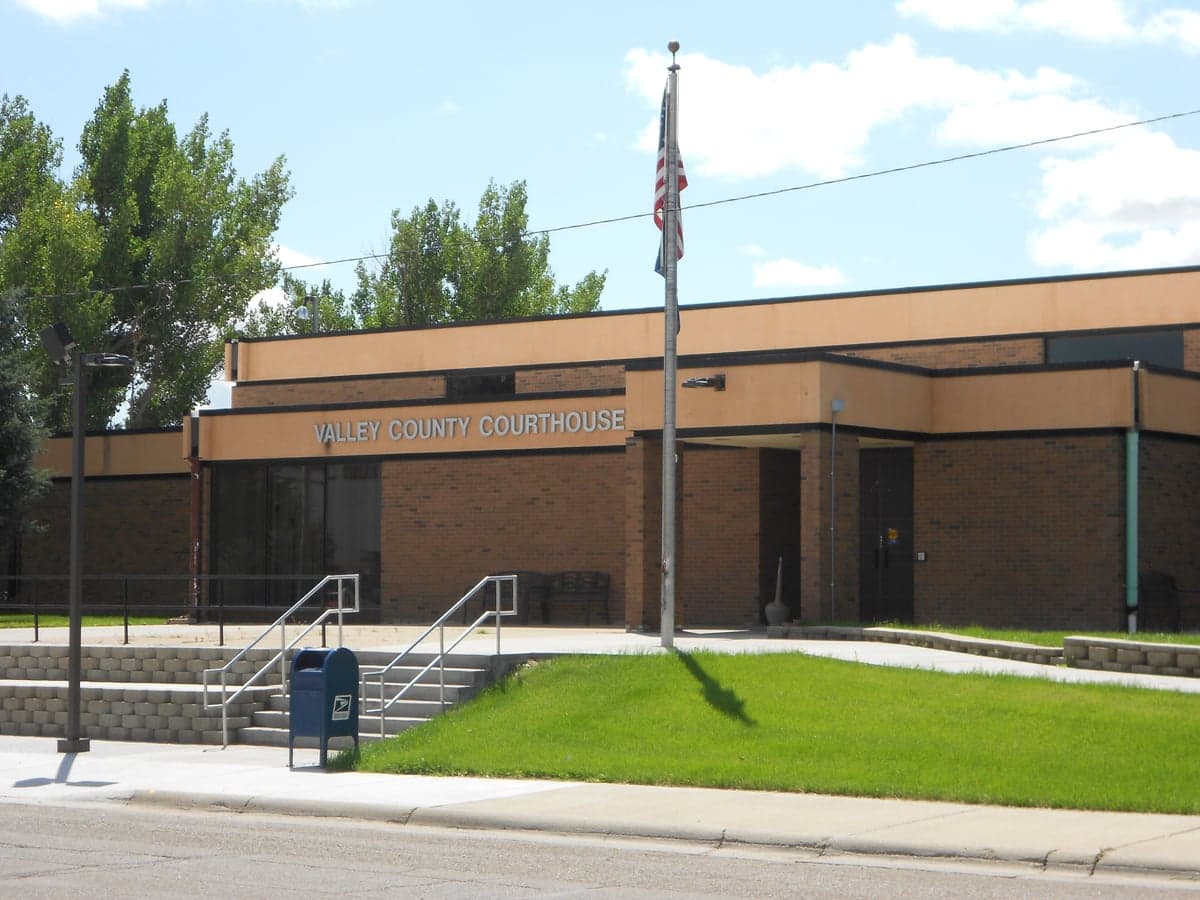
Photo: Wikipedia
Quality of Life in Valley County
A livable area that tracks near national norms for affordability, walkability, and neighborhood health.
What does Quality of Life tell us?
Quality of Life measures an area by evaluating factors like cost of living, nearby amenities, country club access, airport proximity, socioeconomic signals and neighborhood character. For large states, this is a general average — quality of life can vary dramatically between metro areas, suburbs, and rural communities within the same state.
What does this tell us?
Quality of Life measures an area by evaluating factors like cost of living, nearby amenities, country club access, airport proximity, socioeconomic signals and neighborhood character. For large states, this is a general average — quality of life can vary dramatically between metro areas, suburbs, and rural communities within the same state.
Cost of Living
32% below national average
114%
The Real Cost of Living in Valley County for 2026
| Tier | Individual | Family (4) |
|---|---|---|
| Survival | $12k | $23k |
| Comfortable | $39k | $57k |
| Luxury | $91k+ | $141k+ |
| Elite (Top 5%) | $107k+ | $165k+ |
Quality-of-Life Analysis
Valley County, Montana, offers a distinct quality-of-life spectrum that runs from the modest commercial hub of Glasgow to the quiet, unincorporated Missouri River breaks and prairie homesteads that define much of the county. This northeastern Montana county, with a population around 7,500, draws people who want affordable land and a slower pace, while its single larger town provides essential services and a modest social scene. The range of options — from a rent of $769/month in town to the solitude of a farmstead near Hinsdale or Frazer — means the county serves both those who need walkable amenities and those who prioritize space and self-reliance.
Largest town(s) & population centers
Glasgow is the undisputed population center of Valley County, home to roughly 3,200 residents and the county seat. Daily life here revolves around a compact downtown along U.S. Highway 2, anchored by the Frances Mahon Deaconess Hospital, the Glasgow Public Schools (serving around 900 students), and a cluster of retail and service businesses that include a Super 1 Foods grocery, a regional bank branch, and a handful of diners and bars. The town’s economy leans on the county government, the school district, and the Glasgow Army Air Base (now the Glasgow Industrial Park), which hosts light manufacturing and the Glasgow Air National Guard Station. Commute times in Glasgow average around 15 minutes countywide, with most residents traveling less than 10 miles to work within the town or out to nearby grain elevators or rail yards. The median home value of $198,600 and a cost-of-living index of 68 (32% below the national average) make Glasgow one of the most affordable county seats in Montana for young families or retirees seeking a lower overhead, though housing stock is tight and older homes often need updating.
Smaller towns & rural pockets
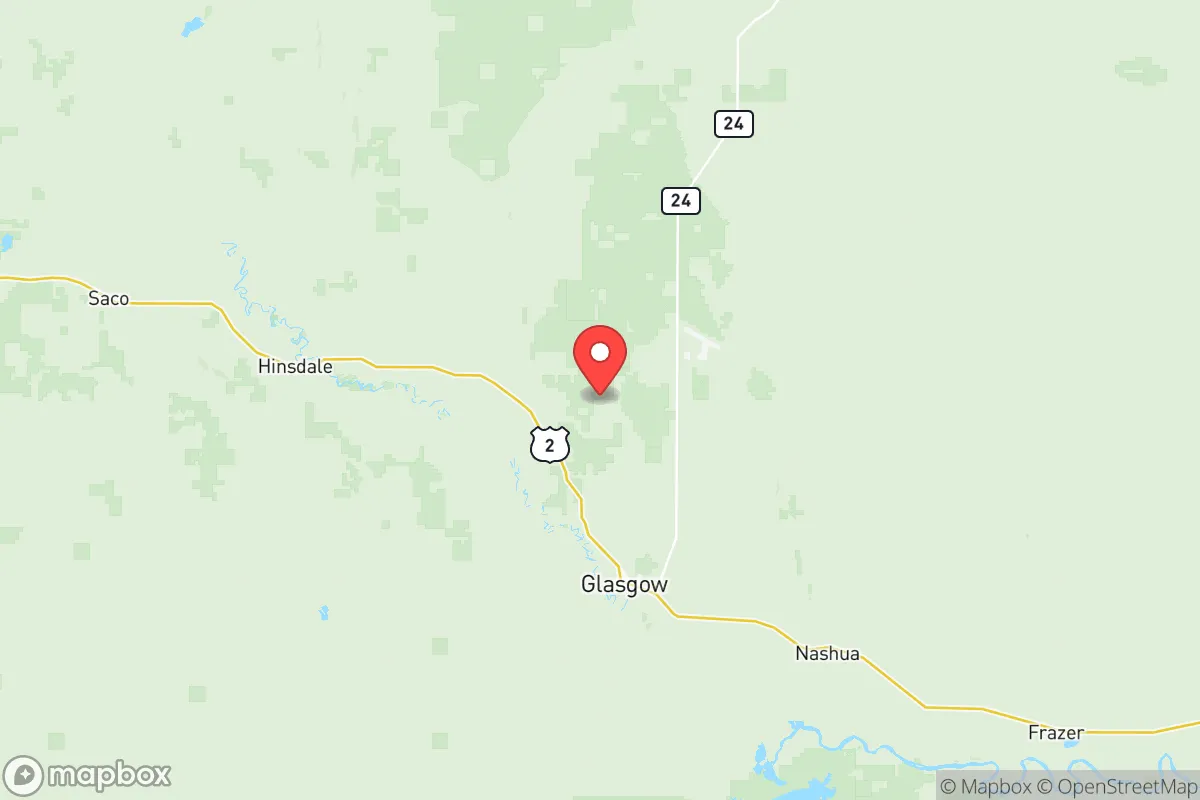
West of Glasgow along the Hi-Line lie Hinsdale (population ~180) and Frazer (population ~360), both unincorporated census-designated places that offer a more stripped-down rural lifestyle. Hinsdale, at the junction of the Milk River and Highway 24, has a small K-8 school, a post office, a bar, and little else — residents commute 20 to 30 minutes east to Glasgow for most shopping and healthcare. Frazer, which sits on the Fort Peck Indian Reservation (home to the Assiniboine and Sioux Tribes), is even more isolated, with a single gas station, a tribal health clinic, and a K-12 school that serves the surrounding ranch families. South of Glasgow, along the Missouri River, the unincorporated area of Fort Peck (population ~230) is a recreation-oriented pocket centered on the Fort Peck Dam and Lake — home to the Fort Peck Theatre, a small museum, and seasonal summer cabins. Farther east, the unincorporated town of Vandalia (population under 20) sits on the High Line and is essentially a crossroads with a grain elevator, a church, and a few homes, representing the most remote end of the county’s housing spectrum where homes can sell for under $60,000 but require a 45-minute drive to Glasgow for basic needs.
Cost & lifestyle range
The cost-of-living spread across Valley County is remarkably narrow in absolute terms — the county’s COL index of 68 applies broadly — but the lifestyle trade-offs are sharp. At the higher end, Glasgow offers a median gross rent of $769/month and newer or renovated homes in the $200,000 to $280,000 range on the east side of town near the golf course, with walkable access to the library, the hospital, and the county courthouse. At the lower end, rural properties near Hinsdale or Vandalia can be found for under $100,000, but buying in these areas often means living in a manufactured home on leased land or an older farmhouse that lacks central air or modern plumbing. Property taxes are low across the county (among the lowest in Montana), but so are county services: there is no public transit beyond a senior-citizen van in Glasgow, and winter road maintenance on gravel roads south of the Missouri River can be inconsistent. For those who live in the rural pockets, the affordable housing comes with a real commitment to self-sufficiency — hauling water, maintaining septic systems, and driving 20 to 45 minutes for a gallon of milk.
The person who thrives in Valley County is generally someone who values low cost of living and wide-open spaces over proximity to urban amenities. Young families on a tight budget gravitate to Glasgow for its schools and hospital, while ranchers and outdoor enthusiasts (hunters, anglers, snowmobilers) are drawn to the Missouri River Breaks and the remote farmsteads near Nashua or Frazer. Retirees with a moderate pension can live comfortably on a fraction of the national average, but should be comfortable with limited shopping, a four-hour drive to Billings for specialty medical care, and a climate that sees below-zero temperatures for weeks at a time. Valley County is not for everyone — but for those who want affordable solitude or tight-knit small-town life, it delivers exactly that.

Crime in Valley County
Generally safer than 57% of comparable U.S. locations.
Violent CrimeViolent Crime Analysis
Property CrimeProperty Crime Analysis
Crime Analysis
Valley County, Montana, presents a mixed safety picture that diverges sharply between its two main population centers, the county seat of Glasgow and the smaller community of Nashua. With a violent crime rate of 419.9 per 100,000 residents and a property crime rate of 1,463.9 per 100,000, the county's overall statistics are elevated compared to the rest of rural Montana, though the distribution of crime is far from uniform. The vast, sparsely populated ranchlands and the Fort Peck Indian Reservation add further complexity to the county's public safety landscape.
Crime in context
Valley County's violent crime rate of 419.9 per 100,000 is significantly higher than the Montana state average of roughly 380 per 100,000 and well above the national rate of approximately 380 per 100,000. The property crime rate of 1,463.9 per 100,000 also exceeds the state average of about 1,200 per 100,000. These figures are heavily influenced by incidents reported in Glasgow, which as the county's largest town and commercial hub sees a disproportionate share of thefts, burglaries, and assaults. The county's location along the Hi-Line corridor and U.S. Highway 2 contributes to transient property crime, with vehicle theft and break-ins being recurring issues. It is important to note that crime data from the Fort Peck Indian Reservation, which occupies a large portion of southern Valley County, is often reported separately by tribal law enforcement and the FBI, meaning the county-level statistics may not fully capture the safety reality for residents in those areas.
What residents experience
Daily life in Valley County varies dramatically by location. In Glasgow, residents report a visible police presence and a generally safe downtown, but property crime—particularly theft from vehicles and unlocked garages—is a common nuisance. The Glasgow Police Department has been proactive in community policing, but the town's role as a regional service center means it attracts both legitimate visitors and those passing through with criminal intent. In contrast, the smaller community of Nashua experiences far fewer incidents, with residents often leaving doors unlocked and enjoying a quieter, more insular environment. The town of Fort Peck, home to the historic Fort Peck Dam and a small year-round population, sees very low crime rates, though seasonal tourism can bring occasional petty theft. The unincorporated areas and ranchlands between these towns are among the safest in the county, with crime largely limited to isolated domestic disputes or agricultural theft. The judicial system in Valley County operates under the Montana 17th Judicial District, which covers both Valley and Daniels counties. Unlike larger, more liberal jurisdictions such as Missoula or Billings, the district attorneys in this region have historically pursued tougher sentencing for property and violent crimes, which helps keep recidivism rates lower than in urban areas with progressive prosecutorial policies. However, the county's proximity to the Fort Peck Indian Reservation introduces jurisdictional complexities, as crimes committed by or against tribal members can fall under federal jurisdiction, sometimes leading to slower case resolutions and less consistent sentencing outcomes.
Neighborhood-level variation is most pronounced in Glasgow, where the older residential areas near the hospital and the golf course are considered the safest, while the areas closer to the railroad tracks and the industrial park see higher rates of reported theft and occasional vandalism. The Glasgow Housing Authority's low-income developments have been associated with a disproportionate share of police calls, though violent incidents remain rare. For those considering relocation, the safest choice is to look at properties in the outlying rural areas or in Nashua, where the combination of low population density and strong community ties creates a natural deterrent to crime. Prospective residents should also be aware that the county's distance from major law enforcement resources in Great Falls or Billings means response times in remote areas can exceed 30 minutes, making personal security measures and neighborhood watch participation more important than in suburban settings.
* Values derived from national, state, county, city and local statistics and may differ in a specific area. Last updated: 2026-07-06T03:14:01.000Z
Narrative content on this page is AI-generated and may contain mistakes. Verify any details that matter before acting on them.
ReloMaps may earn a commission from affiliate links at no extra cost to you.

