Photo: Wikipedia
Demographics of Valley County
Affluence Level in Valley County
A middle-class area roughly in line with national averages across income, home values, education, and employment.
People of Valley County
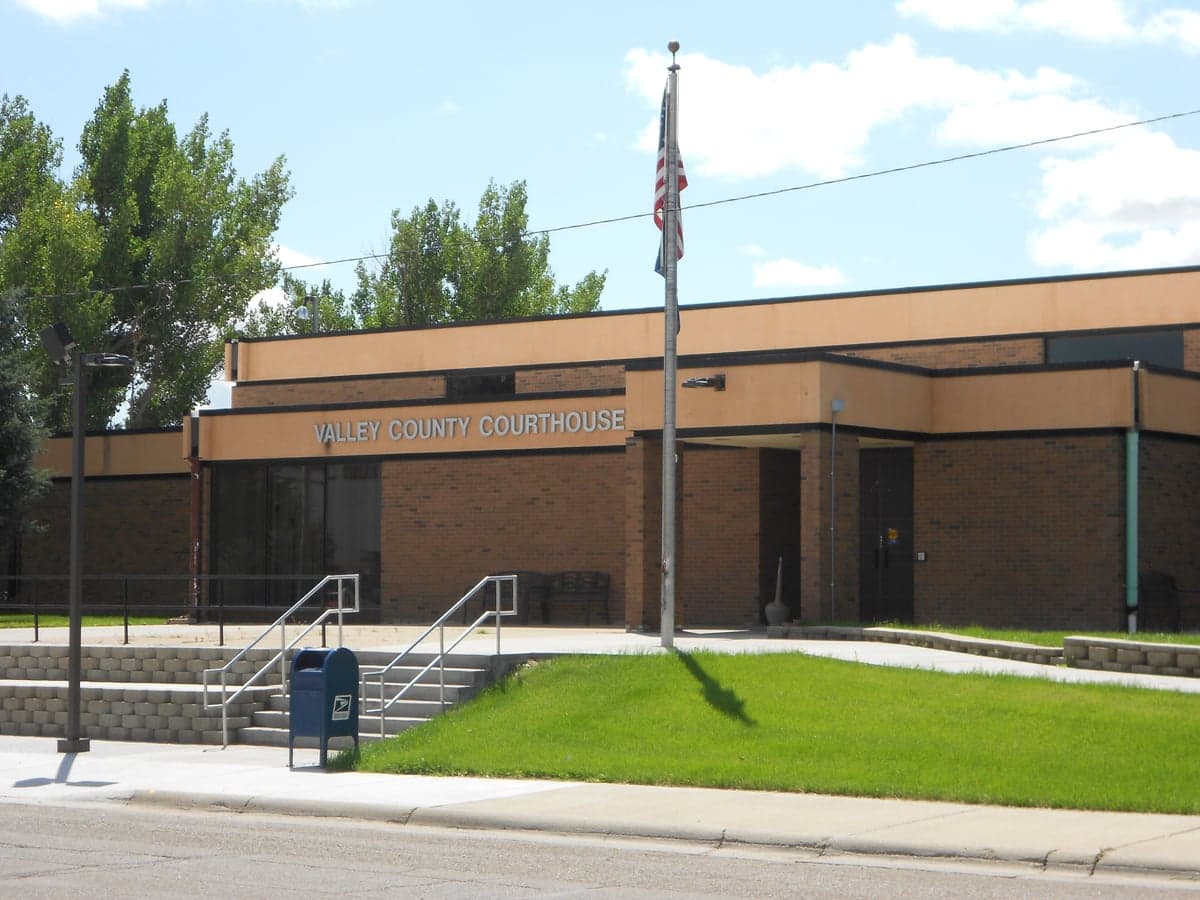
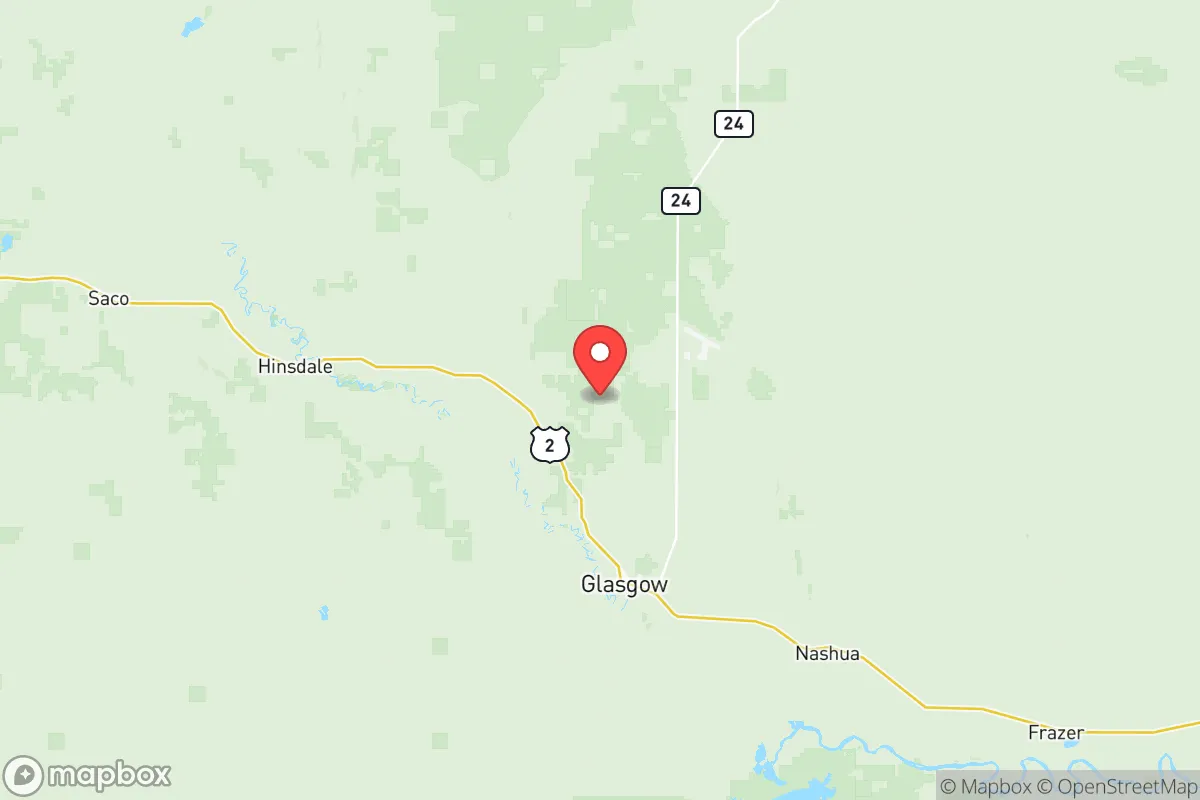
Valley County, Montana, is a sparsely populated rural county where 84.8% of its 7,540 residents identify as white, and the foreign-born population stands at just 0.6%. The county's identity is rooted in its agricultural and ranching heritage, with a population that is older and less diverse than the national average, and a strong sense of community centered around the county seat of Glasgow and smaller towns like Fort Peck and Nashua. With only 21.5% of adults holding a college degree, the economy is heavily tied to farming, ranching, and government services, creating a distinctively conservative, self-reliant character that has persisted for generations.
Settlement & growth (pre-1960)
Long before European settlement, the area now known as Valley County was the traditional territory of the Assiniboine and Sioux (Lakota) peoples, who followed bison herds across the vast plains. The first significant non-Native presence came with the fur trade in the early 19th century, but permanent American settlement did not begin in earnest until the 1880s, when the Great Northern Railway pushed westward. The railroad's arrival in 1887 established the town of Glasgow as a division point and supply hub, drawing in a wave of homesteaders—primarily of Northern European descent, including Scandinavians, Germans, and Canadians—who were lured by the promise of cheap land under the Homestead Act.
The early 20th century saw a second wave of settlement driven by dryland farming and the expansion of the railroad. Towns like Nashua, Fort Peck, and Hinsdale sprang up as agricultural service centers, with grain elevators and general stores serving the surrounding homesteads. The Dust Bowl and Great Depression of the 1930s hit the region hard, causing many homesteaders to abandon their claims, but the construction of the Fort Peck Dam (1933-1940) brought a temporary population boom. Thousands of workers—many from the Upper Midwest and Great Plains—flooded into the area, and the town of Fort Peck was built to house them, briefly becoming one of the largest communities in Montana. After the dam's completion, most workers left, and the county's population settled into a stable, agriculture-based pattern dominated by families of Northern European ancestry.
Modern era (post-1965)
The post-1965 era, shaped by the Hart-Cellar Act, had minimal impact on Valley County's demographics. Unlike urban centers that saw waves of immigration from Asia and Latin America, the county's foreign-born population remains negligible at 0.6%, and its racial composition has changed little. The Hispanic population, at 2.6%, and the Black population, at 0.6%, are small and dispersed, with no distinct ethnic enclaves forming. The East/Southeast Asian population is virtually nonexistent at 0.1%, and the Indian subcontinent population is 0.0%. Domestic migration has also been limited; the county has experienced a slow, steady population decline since its peak in the 1930s, as younger residents leave for college and jobs in larger Montana cities like Billings or out of state.
The most notable demographic shift has been the aging of the population, as the remaining residents are disproportionately older, with many farms and ranches passing to the next generation or being consolidated into larger operations. The closure of Glasgow Air Force Base in 1968 removed a major economic driver and a source of in-migration, further cementing the county's rural, agricultural character. Today, the population is overwhelmingly white and native-born, with a cultural identity that remains deeply tied to the land, hunting, and conservative values.
The future
Valley County's population is projected to continue its slow decline, with the county becoming slightly older and less diverse over the next 10-20 years. The lack of significant economic diversification—beyond agriculture, energy (oil and gas), and government services—offers few pull factors for new residents, particularly younger families or immigrants. The small Hispanic population may grow modestly as agricultural labor needs persist, but it is unlikely to transform the county's demographic profile. New residents who do arrive are typically retirees seeking a low-cost, rural lifestyle or remote workers drawn by the area's quiet and outdoor recreation opportunities, such as fishing on the Missouri River and hunting in the nearby Charles M. Russell National Wildlife Refuge.
For someone moving in now, Valley County offers a stable, traditional community where neighbors know each other and life moves at a slower pace. The cultural identity is unlikely to shift dramatically; it will remain a predominantly white, conservative, and agricultural region. The trade-off for this stability is limited economic opportunity and a shrinking population base, meaning newcomers should be prepared for a tight-knit but aging community with fewer services and amenities than more urbanized parts of Montana.

* Values derived from national, state, county, city and local statistics and may differ in a specific area. Last updated: 2026-07-06T03:14:01.000Z
Narrative content on this page is AI-generated and may contain mistakes. Verify any details that matter before acting on them.
ReloMaps may earn a commission from affiliate links at no extra cost to you.

