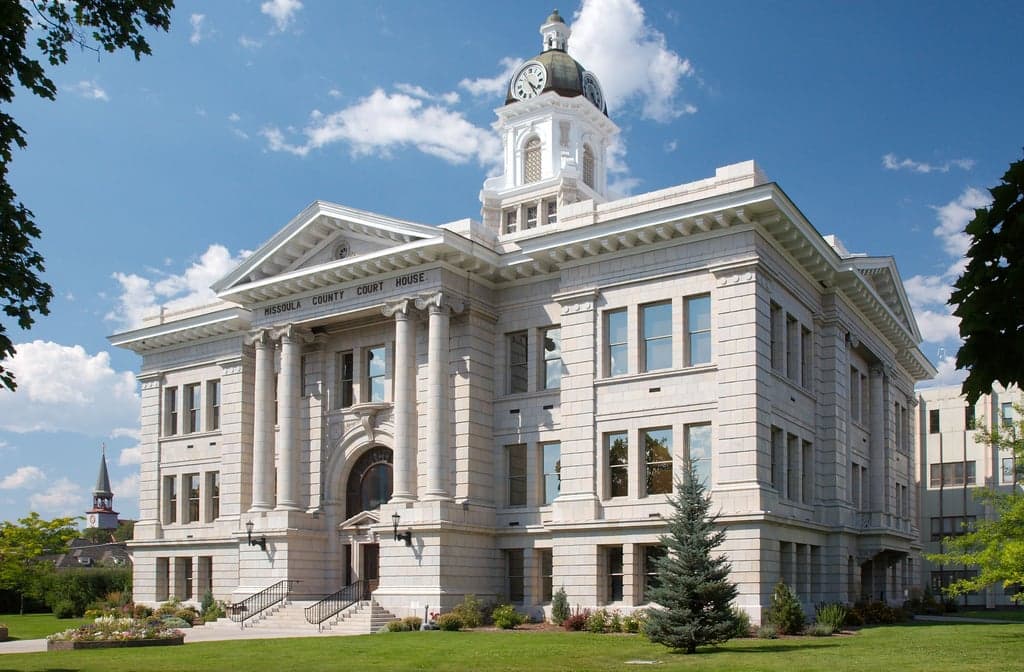
Photo: Wikipedia
Political ClimatePolitical Climate in Missoula County
Showing district-level results — no local-only data available.
Local Political AnalysisPolitical Analysis of Missoula County
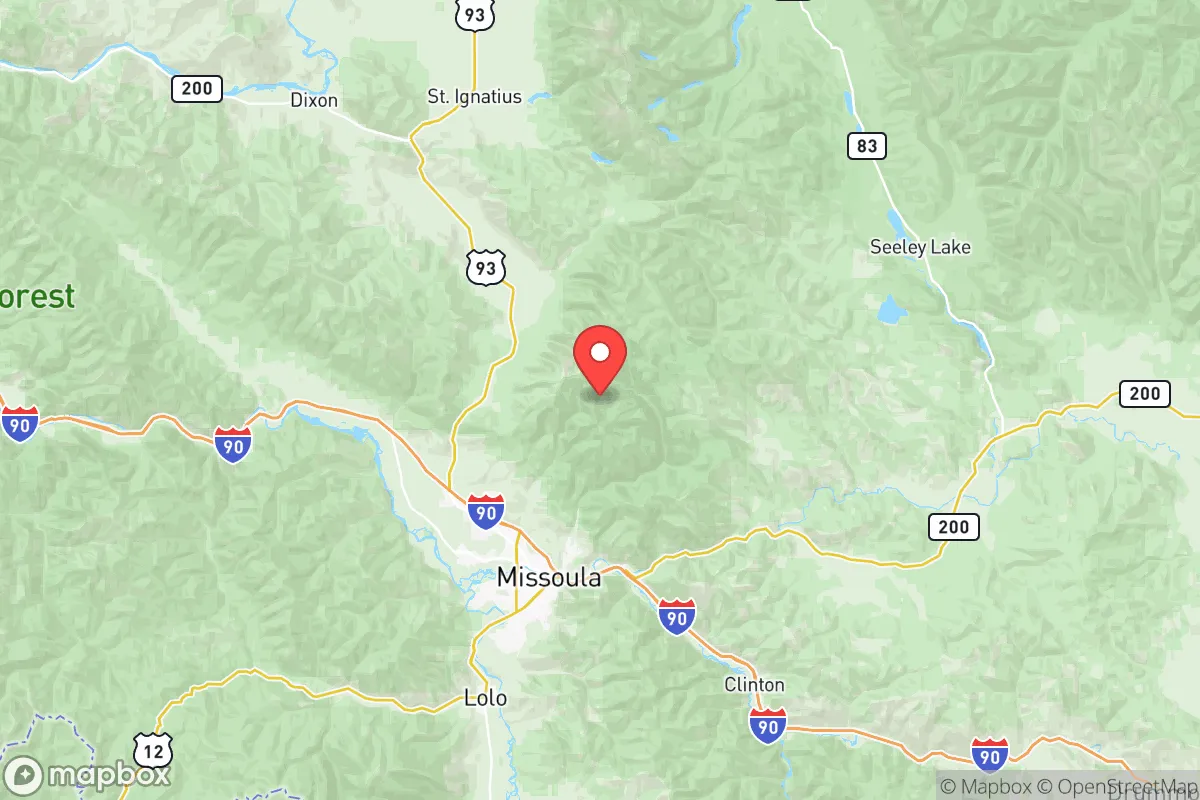
Missoula County is a classic blue island in a deep red state, and that tension defines its politics. The county has a Cook PVI of R+5, meaning it leans Republican overall, but that number masks a sharp urban-rural split. The city of Missoula itself votes reliably Democratic, while the surrounding towns and unincorporated areas — places like Frenchtown, Seeley Lake, and Clinton — are heavily Republican. This makes Missoula County one of the few places in Montana where a statewide Democrat can still run competitive numbers, but the county's overall trajectory has been slowly shifting rightward as the state's rural and exurban growth outpaces the city's liberal gains.
How it compares
Compared to Montana as a whole, which has a Cook PVI of R+10, Missoula County is about five points more Democratic-leaning. That gap is significant but not as wide as it was a decade ago. In 2012, Missoula County voted for Barack Obama by a comfortable margin; by 2020, it only narrowly preferred Joe Biden over Donald Trump. The surrounding counties — Ravalli, Granite, and Powell — are all R+20 or deeper, so Missoula's blue tint is entirely driven by the city's precincts near the university and downtown. The swing precincts are in the suburban fringe: areas like the Wye, East Missoula, and the Lolo corridor, where growth is fastest and voters are more moderate. These precincts often decide county commission races and bond measures, and they tend to break Republican in presidential years but split on local issues like land use and school funding.
What this means for residents
For liberal residents, Missoula offers a rare sanctuary in Montana: a city where progressive policies on housing, climate, and social services are debated seriously, even if they don't always pass. The city council and county commission often have Democratic majorities, so issues like rent control, public transit expansion, and environmental protections get real traction. For conservative residents, the county can feel like a frustrating outlier. Gun rights, property taxes, and development regulations are constant flashpoints, and the rural towns often feel ignored by the city-dominated county government. That said, the county's R+5 lean means conservatives still have real influence — they can block tax increases and slow down zoning changes, especially when they turn out for local elections, which they often do.
In practice, the political divide shows up in daily life. Missoula's downtown is visibly liberal — think bike lanes, farmers markets, and pride flags — while Frenchtown and Seeley Lake are more traditional, with a strong ranching and logging culture. The University of Montana anchors the city's progressive tilt, but the county's growth is happening in the redder suburbs, which is slowly pulling the overall numbers rightward. Longtime residents will tell you that the county used to be more purple, with a stronger moderate Republican presence, but national polarization has hardened the lines. Looking ahead, the near-term trend is a slow drift right, driven by out-of-state migration from conservative-leaning areas, but the city's core will likely stay blue for the foreseeable future. The real wildcard is whether the swing precincts in the Lolo and Wye corridors continue to lean red or start splitting more evenly as they densify.

State Political ClimatePolitical Climate in Montana
State Political AnalysisPolitical Environment in the State
Montana is a solidly Republican state with a Cook PVI of R+10, but that number tells only part of the story. Over the past 20 years, the state has shifted from a purple-leaning-red battleground—where Democrats held both U.S. Senate seats as recently as 2006—to a reliably conservative stronghold, driven by rural consolidation, in-migration from Western states, and a growing libertarian streak. The dominant coalition is a blend of traditional ranchers and farmers, outdoor recreationists, and a new wave of remote workers and retirees who moved here for lower taxes and fewer regulations, not for progressive politics.
Urban vs. rural divide
The political map breaks down sharply between a few small, blue-leaning islands and a vast red sea. Missoula and Bozeman are the state’s two most liberal metros, with Missoula County voting about 60% Democratic in recent presidential cycles and Gallatin County (Bozeman) flipping from red to purple as the population boomed. Helena, the capital, leans slightly left due to state government workers. But everywhere else—from Billings, the largest city, to Great Falls, Butte, and Kalispell—votes reliably Republican. The rural-urban divide is stark: counties like Petroleum and Garfield in the east routinely give Republicans 85-90% of the vote, while Missoula and Bozeman are the only counties that consistently back Democrats. The suburbs of Billings and Kalispell are solidly conservative, with no real swing suburbs to speak of.
Policy environment
Montana’s policy environment is defined by low taxes, light regulation, and a strong emphasis on individual liberty. There is no state sales tax, and the income tax is a flat 5.9% (recently cut from a progressive top rate of 6.75%). Property taxes are moderate but vary by county. The state has a Republican trifecta—governor, Senate, and House—and has passed a slew of conservative legislation in the last five years. Education policy leans toward school choice, with a new tax-credit scholarship program for private schools, though rural districts remain the backbone of the system. Healthcare is a mixed bag: Montana expanded Medicaid under the Affordable Care Act in 2015, a move that remains popular even among many conservatives, but the state also passed a law requiring parental consent for minors seeking abortions. Election laws have tightened: voter ID requirements are strict, same-day registration was eliminated in 2021, and mail-in ballots are still widely used but face new signature verification rules.
Recent policy direction
The last few legislative sessions have pushed Montana sharply right on multiple fronts. Gun and self-defense law is among the most permissive in the nation: permitless carry was signed into law in 2021, and the state has a strong “stand your ground” statute. Parental and education rights saw a major win with the 2021 “Parental Rights” law, which requires schools to notify parents about curriculum changes and allows them to opt their children out of certain materials. Speech and privacy are broadly protected, though the state has no specific law shielding online speech from platform censorship. Medical and bodily autonomy is a flashpoint: abortion is banned after 20 weeks, and a 2023 law prohibits gender-affirming care for minors, though it’s currently blocked by court order. Property rights are strong, with a 2021 law limiting local governments’ ability to impose rent control or zoning restrictions that reduce property values. Taxation is trending downward: the 2023 session cut the top income tax rate and expanded the property tax exemption for veterans. Voting and ballot access has tightened, with a 2021 law requiring a photo ID to vote and limiting ballot collection to family members or caregivers.
Civil unrest & political movements
Montana has seen relatively little civil unrest compared to larger states, but there are active movements on both sides. The Yellowstone County (Billings) area has been a hub for conservative activism, including large “Freedom Rally” protests against COVID-19 mandates in 2020-2021. The Flathead Valley (Kalispell) has seen a rise in anti-government sentiment, with some residents pushing for county-level nullification of federal gun laws. On the left, Missoula has hosted climate protests and pro-choice rallies, but they are small by national standards. Immigration politics are muted—Montana has a tiny foreign-born population (about 2%)—but the state passed a law in 2023 requiring local law enforcement to cooperate with federal immigration authorities. There are no sanctuary cities. Election integrity controversies flared after 2020, with some Republican legislators calling for a full audit, but no major fraud was found. A new resident would notice the strong presence of “Don’t Tread on Me” flags and pro-Second Amendment signage, especially in rural areas, but actual conflict is rare.
Projection
Over the next 5-10 years, Montana is likely to become more Republican, not less, despite the influx of new residents. The in-migration wave—mostly from California, Washington, and Oregon—tends to be conservative-leaning or libertarian, not progressive. Bozeman and Missoula will continue to grow and may become more Democratic, but they are already surrounded by deep-red counties that will keep the state’s overall lean solid. The state’s population is aging and becoming more rural in political character, even as the economy diversifies. Expect further tax cuts, continued expansion of school choice, and more restrictions on abortion and transgender rights. The biggest wildcard is the state’s housing crisis: if affordability worsens, it could slow in-migration and shift the political calculus. But for now, someone moving in should expect a state that is reliably conservative, with a strong libertarian streak, and a political culture that values local control and individual freedom over government intervention.
Bottom line for a new resident: If you’re conservative, you’ll find a state that largely aligns with your values—low taxes, strong gun rights, and a government that stays out of your business. If you’re liberal, you’ll find two or three welcoming towns (Missoula, Bozeman, parts of Helena) but a state government that will consistently oppose your priorities on most issues. Either way, Montana’s politics are less polarized and more personal than in bigger states—you can disagree with your neighbor and still help him fix a fence. That’s the Montana way.
* Values derived from national, state, county, city and local statistics and may differ in a specific area. Last updated: 2026-06-29T00:04:19.000Z
Narrative content on this page is AI-generated and may contain mistakes. Verify any details that matter before acting on them.
ReloMaps may earn a commission from affiliate links at no extra cost to you.

