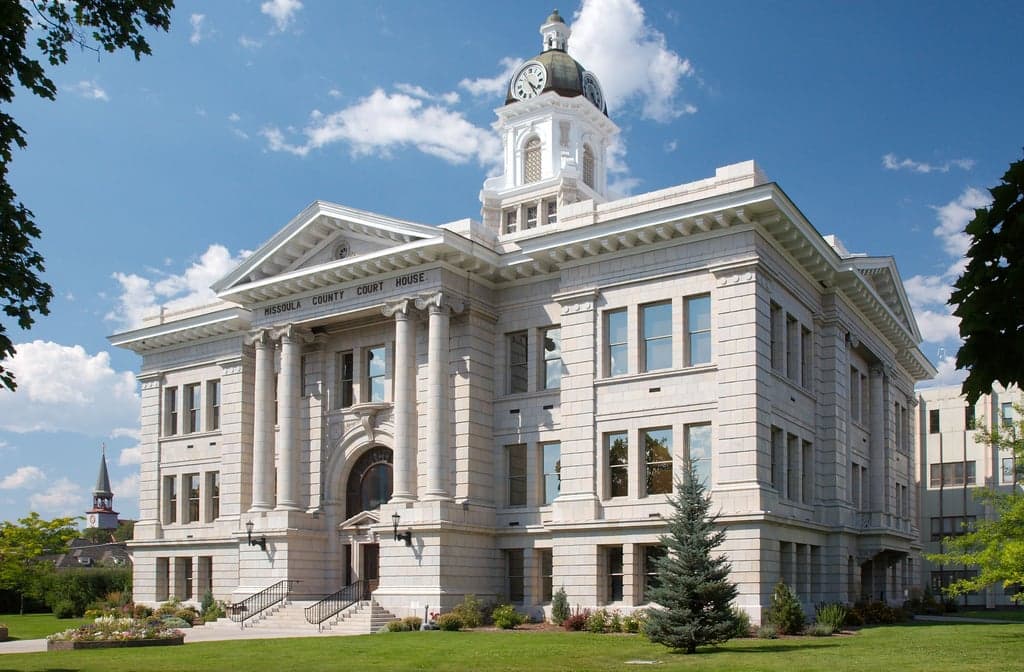
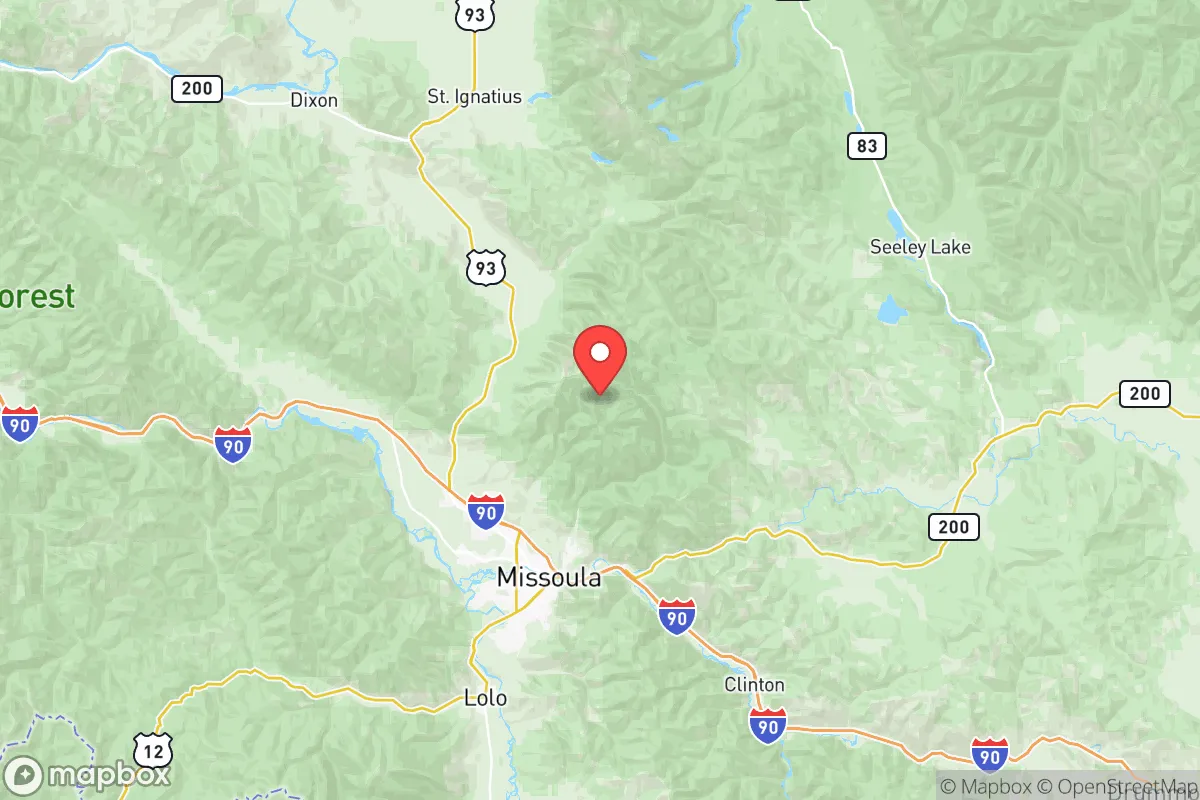
Photo: Wikipedia
Personal Sovereignty in Missoula County
Viable for self-reliance. Generally workable, though some barriers may limit total independence.
What does Personal Sovereignty tell us?
Personal Sovereignty measures your capacity for self-reliance and independence with minimal government friction. Higher scores mean fewer barriers between you and the way you want to live... but it assumes you have the space you need and good neighbors.
What does this tell us?
Personal Sovereignty measures your capacity for self-reliance and independence with minimal government friction. Higher scores mean fewer barriers between you and the way you want to live... but it assumes you have the space you need and good neighbors.
State Policy
Energy independence: Net exporter (120% of energy produced in-state)
Personal Liberty
Homesteading

Personal Liberty Analysis
Missoula County presents a complex personal sovereignty environment where Montana’s strong state-level protections for gun rights, property use, and medical autonomy intersect with a more progressive county government that tends to favor land-use regulations and higher local taxes than neighboring rural counties. For the freedom-minded individual or family, the trade-off is clear: you gain access to a vibrant, amenity-rich community with robust constitutional protections, but you must navigate a permitting-heavy approach to development and a tax base that funds active public services. The county’s autonomy profile is best understood as a spectrum, with the city of Missoula itself leaning interventionist, while outlying towns like Frenchtown, Lolo, and Seeley Lake offer a noticeably lighter regulatory touch.
Tax burden and regulatory posture in Missoula County
Montana’s overall tax burden is among the lowest in the nation—no state sales tax, a flat income tax rate of 5.9% (as of 2026), and property taxes that average around 0.83% of assessed value statewide. However, Missoula County’s property tax rates are consistently higher than the state average, driven by voter-approved levies for schools, open space bonds, and county services. A home valued at $400,000 in Missoula city limits can carry an annual property tax bill near $3,800, while a comparable property in Frenchtown (still within the county but outside city jurisdiction) might be $200–$400 less due to lower mill levies. The regulatory posture is similarly tiered: the city of Missoula enforces a strict growth policy, urban growth boundary, and detailed subdivision regulations that can add months and thousands of dollars to a new home build. In contrast, unincorporated areas like Lolo and Seeley Lake operate under county zoning that is less prescriptive, though still more involved than in neighboring Mineral or Granite counties. Business licensing is straightforward for most trades, but home-based businesses face extra scrutiny within city limits. For a reader prioritizing minimal government interference, the county’s regulatory density is moderate—not as light as eastern Montana, but far from the bureaucratic weight of a Pacific Northwest metro.
Self-defense and gun law specifics in Missoula County
Montana is a constitutional carry state, meaning no permit is required to carry a concealed firearm for anyone 18 or older who can legally possess a gun. Missoula County fully respects this state preemption, and local law enforcement does not enforce any additional restrictions. The county has no local gun registration, no waiting periods, and no bans on standard-capacity magazines or common semi-automatic rifles. However, the cultural climate is notably different from the rest of the state: Missoula city itself is the most politically liberal area in Montana, and open carry in downtown businesses or at university events may draw unwanted attention or private property restrictions. Gun ranges are available, with the Deer Creek Shooting Range (south of Missoula) and the Lolo Creek Shooting Area (on national forest land) providing public options. Stand-your-ground and castle doctrine laws apply statewide, with no duty to retreat in any place where a person is lawfully present. For the self-defense-minded, the legal framework is excellent, but the social environment in Missoula proper may feel less welcoming than in Frenchtown or Seeley Lake, where gun ownership is more culturally normalized and visible.
Self-reliance and homesteading viability across Missoula County
Homesteading and off-grid living are legally viable in Missoula County, but the feasibility varies dramatically by location. The county’s subdivision and sanitation regulations are the primary hurdles: any parcel under 20 acres typically requires a septic system permit and a well permit, and the county health department enforces strict setback requirements. Off-grid power (solar, wind, micro-hydro) is legal and common, but connecting to the grid is often required for new construction within city water/sewer service areas. Seeley Lake, located 45 minutes northeast of Missoula, is a hotspot for self-reliant living, with many properties on 5–40 acres, minimal zoning enforcement, and a year-round community accustomed to wood heat, generators, and long-distance commutes. Lolo and Frenchtown offer more affordable land (often $8,000–$15,000 per acre for raw parcels) with fewer restrictions than inside the Missoula urban growth boundary. However, the county does enforce a minimum lot size of 1 acre in most rural zones, and any dwelling must meet International Residential Code standards—meaning no true “off-grid cabins” without permits. For serious homesteaders, the best strategy is to buy 20+ acres in the Potomac or Clinton areas, where county oversight is lighter and the land is more affordable. Water rights are a critical consideration: most new wells require a permit from the Montana Department of Natural Resources, and groundwater availability is good but not guaranteed in the higher elevations near Seeley Lake.
Personal liberties in Missoula County: parental rights, medical autonomy, speech, and property
Montana’s state constitution includes a strong right to privacy, which the state supreme court has interpreted to protect medical autonomy, including access to reproductive healthcare and gender-affirming care. Missoula County is home to the state’s largest hospital system (Providence St. Patrick Hospital) and a robust network of independent healthcare providers, giving residents broad medical choice. Parental rights are protected under state law, with Montana requiring parental consent for minors seeking abortion and allowing parents to opt children out of sex education. Vaccine mandates are not enforced at the county level, and school districts in Frenchtown and Seeley Lake have been more accommodating of parental choice than Missoula’s public schools. Free speech is robustly protected; the University of Montana campus in Missoula has seen occasional controversies over speaker invitations, but the city itself has no local ordinances restricting public expression beyond standard time-place-manner rules. Property rights are where the county’s progressive tilt is most felt: Missoula County has an active open space bond program that purchases development rights on private land, and the city’s inclusionary zoning ordinance requires a percentage of affordable units in new developments. For a landowner wanting to subdivide or build, the county’s subdivision review process can take 6–12 months and cost $5,000–$15,000 in fees and studies. In contrast, Clinton and Potomac see far fewer regulatory hurdles, as they are outside the urban growth boundary and have less demand for county services.
Overall, Missoula County offers a moderate-to-high personal sovereignty environment relative to most of the United States, but it is the least freedom-friendly county in Montana by several measures. The state’s constitutional protections for guns, privacy, and property create a strong baseline, but the county’s land-use regulations, higher taxes, and progressive social climate in the city of Missoula itself mean that the autonomy experience is highly location-dependent. For the reader who values self-reliance and minimal government, the outlying towns of Frenchtown, Lolo, Seeley Lake, Potomac, and Clinton offer a much closer match to the classic Montana freedom ideal than the county seat does. If you are willing to trade some regulatory convenience for cultural alignment and lower costs, the county’s rural pockets deliver strong personal sovereignty—just be prepared to drive 30–60 minutes for groceries and services.

* Values derived from national, state, county, city and local statistics and may differ in a specific area. Last updated: 2026-06-29T00:04:19.000Z
Narrative content on this page is AI-generated and may contain mistakes. Verify any details that matter before acting on them.
ReloMaps may earn a commission from affiliate links at no extra cost to you.

