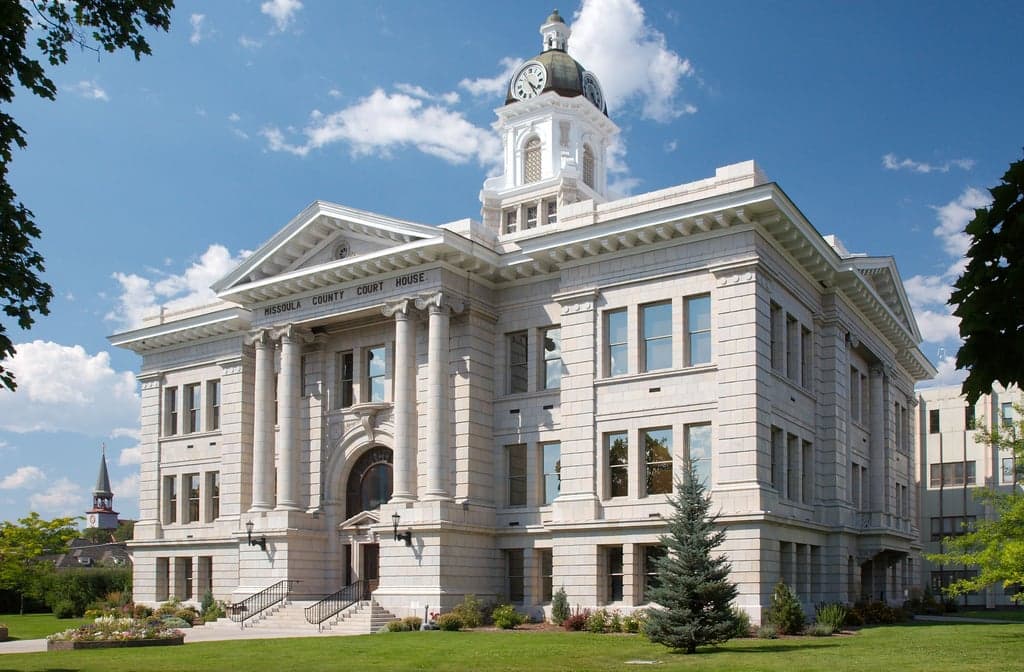
Photo: Wikipedia
Demographics of Missoula County
Affluence Level in Missoula County
A middle-class area roughly in line with national averages across income, home values, education, and employment.
People of Missoula County
Today, Missoula County’s 119,639 residents form a predominantly white, highly educated, and politically moderate-to-liberal population centered on the city of Missoula, with a distinctive character shaped by its university, outdoor recreation economy, and a history of boom-and-bust resource extraction. The county is 85.8% white, with a foreign-born population of just 1.3%—among the lowest in Montana—and a college-educated rate of 45.9%, nearly double the state average. This is a place where the legacy of the Salish and Kootenai tribes, the arrival of Euro-American settlers during the mining and railroad era, and a modern influx of out-of-state professionals and retirees have created a community that is both deeply rooted and increasingly cosmopolitan, yet remains one of the least ethnically diverse counties in the United States.
Settlement & growth (pre-1960)
The human history of Missoula County begins with the Salish, Kootenai, and Pend d’Oreille peoples, who inhabited the Clark Fork River valley for thousands of years before European contact. The Salish called the area Nłʔay, meaning "place of the small bull trout," and used the valley as a seasonal gathering and hunting ground. The arrival of the Lewis and Clark Expedition in 1805 marked the first recorded Euro-American contact, but sustained settlement did not begin until the 1850s, when Jesuit missionaries established St. Mary’s Mission in the Bitterroot Valley, just south of present-day Missoula. The Hellgate Treaty of 1855 forced the Salish and Kootenai onto the Flathead Reservation to the north, clearing the way for American homesteaders.
The first major wave of Euro-American settlers arrived in the 1860s and 1870s, drawn by the discovery of gold in nearby Grasshopper Creek and the construction of Fort Missoula in 1877. These early settlers were overwhelmingly of Northern European stock—English, Irish, Scots-Irish, and German—who established farms and ranches in the fertile valleys around Missoula, Bonner, and Frenchtown. The arrival of the Northern Pacific Railroad in 1883 transformed Missoula from a frontier outpost into a regional transportation and supply hub, attracting a second wave of immigrants: Scandinavian loggers and millworkers, Italian and Slavic miners, and Chinese laborers who built the railroad and later worked in laundries and restaurants. By 1900, Missoula’s population had reached 4,366, with a small but visible Chinese enclave along Front Street.
The timber industry dominated the early 20th century, with the Anaconda Copper Mining Company’s lumber operations in Bonner and the establishment of the University of Montana in Missoula in 1895. The 1910s and 1920s saw an influx of Finnish and Swedish immigrants who worked in the logging camps and sawmills of Seeley Lake and Lolo, while the Great Depression brought Dust Bowl refugees from the Great Plains—many of them of German and Scandinavian descent—who settled on small farms in the county’s rural townships. World War II and the postwar era saw a modest expansion of the population, driven by the growth of the university and the establishment of the U.S. Forest Service’s Northern Region headquarters in Missoula. By 1960, the county’s population stood at 44,663, still overwhelmingly white and native-born, with a small but established Black community centered around Fort Missoula and the railroad.
Modern era (post-1965)
The 1965 Hart-Cellar Act had minimal direct impact on Missoula County, given its remote location and lack of industrial job base for new immigrants. The foreign-born population remained below 2% through the 1990s, and the county’s racial composition changed little until the 21st century. Instead, the major demographic shift after 1965 was domestic: the rise of the University of Montana as a regional draw for out-of-state students, and the beginning of the "amenity migration" that would reshape the Rocky Mountain West. From the 1970s onward, Missoula began attracting college-educated professionals from California, the Pacific Northwest, and the East Coast, drawn by the outdoor lifestyle, relatively low cost of living, and the university’s cultural offerings.
This domestic in-migration accelerated after 2000, with the county adding roughly 20,000 residents between 2000 and 2020. The new arrivals were overwhelmingly white and highly educated, settling primarily in the city of Missoula and the suburbanizing areas of East Missoula, Orchard Homes, and Grant Creek. The Hispanic population grew from 1.5% in 2000 to 4.9% by 2024, driven largely by Mexican and Central American immigrants working in construction, hospitality, and agriculture, with small concentrations in Bonner and Frenchtown. The East/Southeast Asian population—primarily Chinese, Japanese, and Vietnamese—rose to 1.6%, concentrated among university faculty, medical professionals at Providence St. Patrick Hospital, and students. The Black population remained negligible at 0.6%, and the Indian subcontinent population at 0.0%.
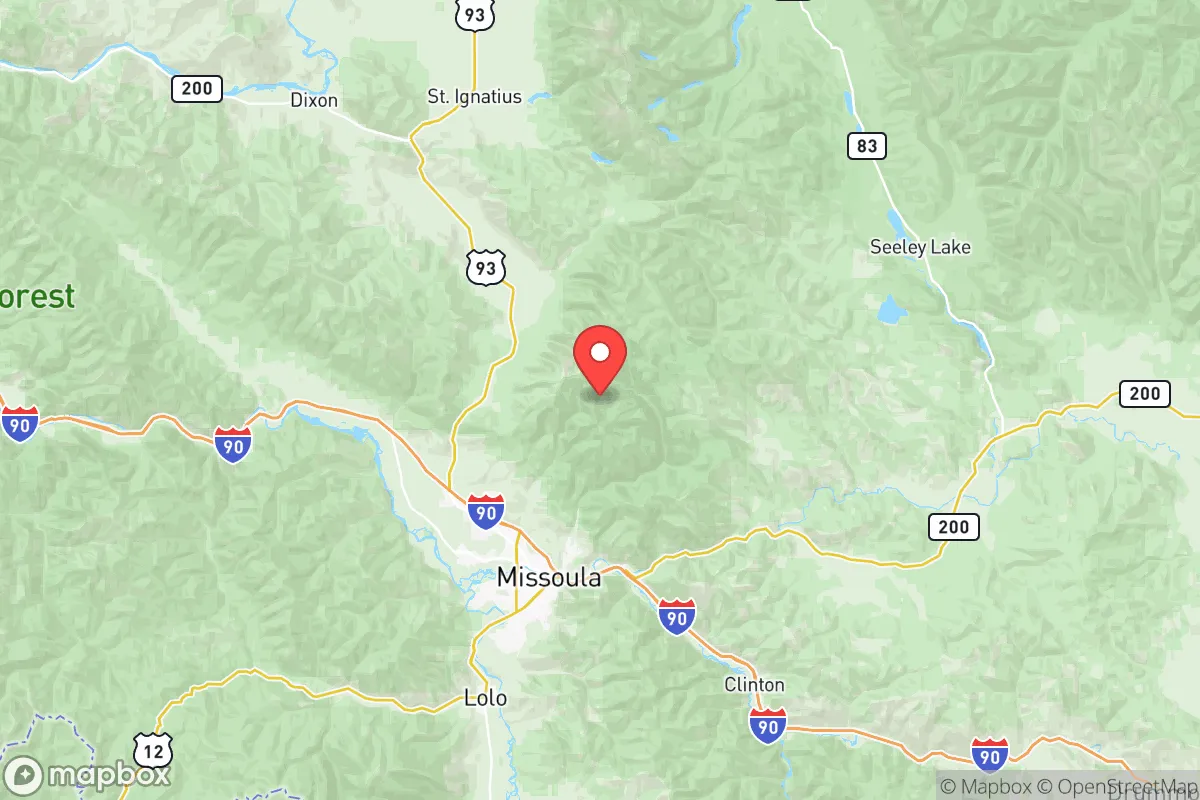
The most notable modern trend has been the suburbanization of the county’s population. While the city of Missoula itself grew by only 12% between 2000 and 2020, the unincorporated areas—particularly along the Highway 93 corridor toward Lolo and the Highway 200 corridor toward Bonner—saw rapid residential development. This pattern reflects a broader Western dynamic: newcomers seeking proximity to Missoula’s amenities but priced out of the city’s increasingly expensive housing market. The county’s racial and ethnic diversity remains concentrated in the city core, while the outlying areas are even more heavily white.
The future
Missoula County is likely to become slightly more diverse over the next 10–20 years, but the pace of change will remain slow compared to the national average. The Hispanic population is projected to grow to 7–8% by 2040, driven by natural increase and continued labor migration, with new concentrations likely in Frenchtown and Seeley Lake as the construction and service sectors expand. The East/Southeast Asian population may grow modestly to 2–3%, tied to university recruitment and healthcare hiring, but the Indian subcontinent population is expected to remain below 0.5% due to the absence of a tech or engineering job base. The white share of the population will decline gradually, from 85.8% to perhaps 80–82%, as younger, more diverse cohorts age into the population.
The bigger story is domestic migration. Missoula County continues to attract out-of-state residents from California, Washington, and Colorado, drawn by remote work opportunities and the outdoor recreation economy. This influx is driving up housing costs and pushing lower-income residents—disproportionately Native American and Hispanic—into more affordable areas like Arlee and St. Ignatius on the Flathead Reservation. The county’s cultural identity is evolving from a working-class timber and railroad town into a college town and lifestyle destination, with the university and the outdoor industry replacing the sawmill as the economic and social anchor. For a newcomer, this means moving into a community that is increasingly expensive, increasingly educated, and increasingly oriented toward recreation and environmental values, but still one of the most demographically homogeneous counties in the West.
Missoula County is becoming a place where the old Montana of loggers and ranchers is giving way to a new Montana of remote workers and retirees, with the university serving as a bridge between the two. The population is growing, aging, and slowly diversifying, but the county’s essential character—white, college-educated, and nature-focused—is likely to persist for at least another generation. For someone moving in now, the key trade-off is between the county’s high quality of life and natural beauty, and its limited racial and economic diversity, rising housing costs, and the cultural tensions that come with rapid change.

* Values derived from national, state, county, city and local statistics and may differ in a specific area. Last updated: 2026-06-29T00:04:19.000Z
Narrative content on this page is AI-generated and may contain mistakes. Verify any details that matter before acting on them.
ReloMaps may earn a commission from affiliate links at no extra cost to you.

