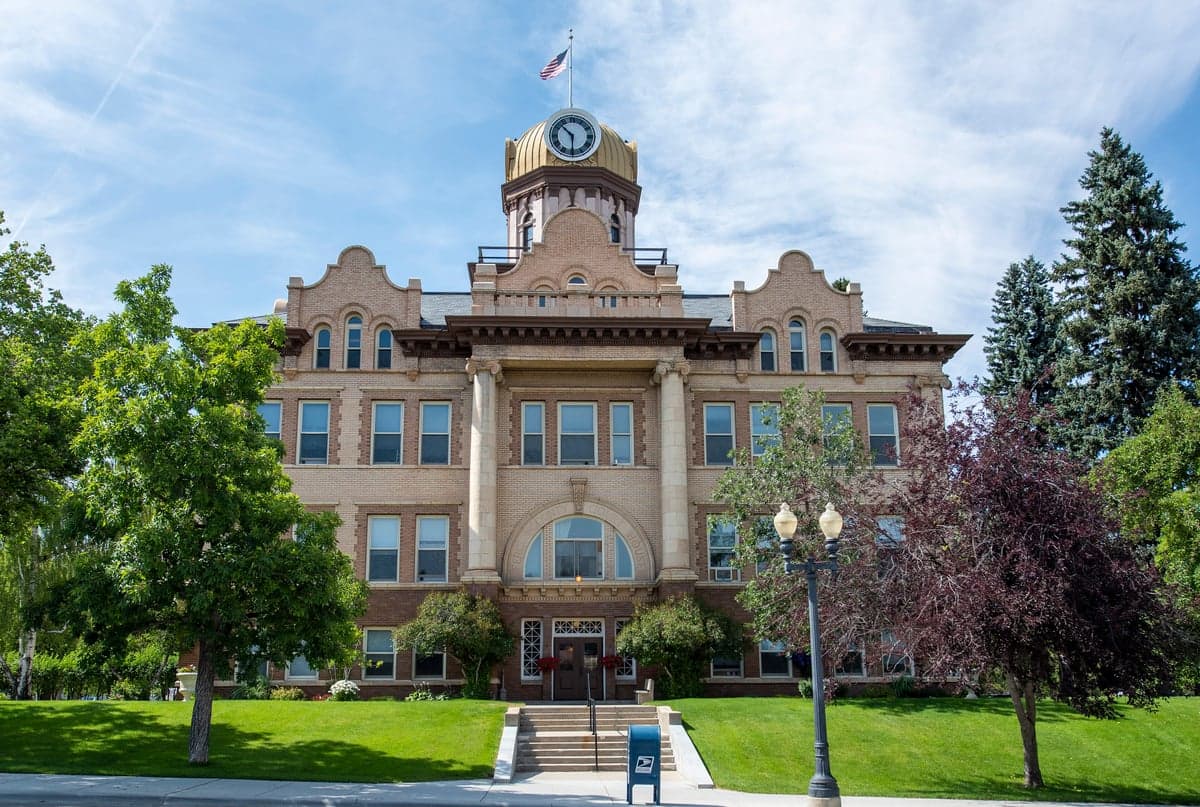
Photo: Wikipedia
Political ClimatePolitical Climate in Fergus County
Showing county-level results — no local-only data available.
Lean and PVI are calculated from this county’s 2020 and 2024 presidential results, Cook-style.
Political rankings in Montana
- Most Conservative Cities in Montana
- Most Liberal Cities in Montana
- Best Liberal-Leaning Towns in the Mountain West
- Safest Liberal-Leaning Towns in the Mountain West
- Safest Conservative-Leaning Cities in the Mountain West
- Affordable Small Towns for Conservatives
- Most Affordable Liberal-Leaning Small Towns in the U.S.
- Safest Conservative-Leaning Cities in the U.S.
- Most Conservative Counties in Montana
- Most Liberal Counties in Montana
Local Political AnalysisPolitical Analysis of Fergus County
Fergus County is a reliably Republican stronghold, with a Cook PVI of R+15 that places it significantly to the right of Montana as a whole (R+10). This isn't a recent shift; the county has voted for the GOP presidential candidate by wide margins for decades, and the trend has only solidified since the 2010s. The real story isn't about whether the county is red—it's about the shades of red within it, and how the local political culture differs from the more libertarian or populist strains found elsewhere in the state.
How it compares
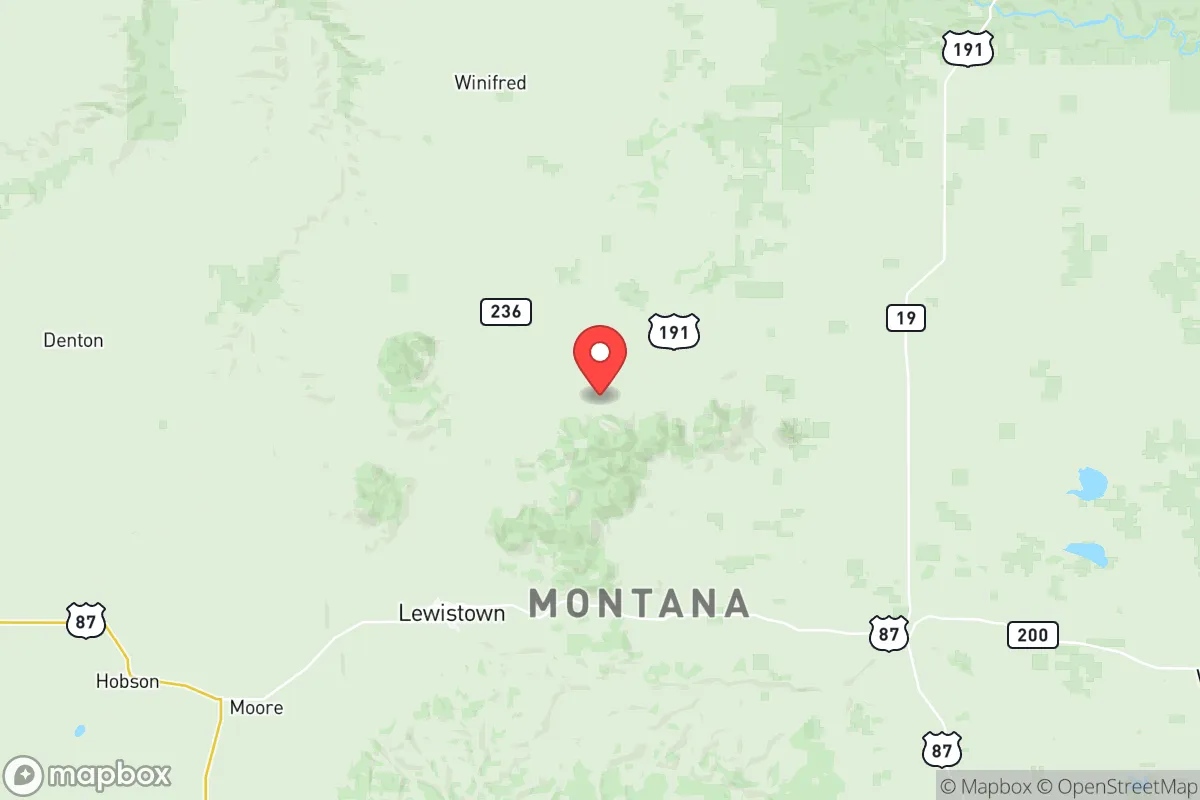
The R+15 rating means Fergus County is about 5 points more conservative than the state average, a meaningful gap in a state that is already solidly Republican. To put it in local terms, Lewistown, the county seat and largest town, is the political and cultural anchor. It votes reliably red, but its precincts show a slightly more moderate, establishment-Republican pattern compared to the rural outlying areas. Drive 20 miles in almost any direction—to Denton, Winifred, or Grass Range—and the vote margins become dramatically more lopsided. These smaller agricultural communities often deliver 80-85% of their votes to the GOP, reflecting a deep-seated cultural conservatism that is less visible in Lewistown's more diverse economy (which includes healthcare, education, and a growing retirement community). There are no true "blue" towns in Fergus County; the closest thing to a swing precinct might be found in the more transient, service-industry-heavy parts of Lewistown, where a handful of Democratic votes can occasionally tip a local race, but never a countywide one. This contrasts with parts of western Montana, like Missoula or Bozeman, where urban centers create genuine two-party competition.
What this means for residents
For conservative residents, Fergus County offers a political environment where their views are the clear default. Local government, school boards, and county commissions are dominated by Republicans, and policy debates tend to focus on tax rates, agricultural regulations, and property rights rather than fundamental ideological battles. For liberal residents, the reality is more isolating. While they are not actively persecuted, they are a distinct minority. Socially, it means being careful about political discussions in casual settings. Practically, it means their votes rarely influence state or national outcomes, though they can have a real impact in local nonpartisan races like school board or hospital district elections, where turnout is low and a small bloc of motivated voters can make a difference. The county's political homogeneity also means that national culture-war issues often feel distant; local politics is overwhelmingly about roads, bridges, the hospital, and the school levy, not the hot-button topics dominating cable news.
Cultural and policy distinctions
Fergus County's conservatism has a distinct flavor. It is less about the libertarian "leave me alone" ethos found in parts of eastern Montana and more about a communitarian, agrarian conservatism. There is strong support for the Lewistown Public Schools and the local hospital, even if it means higher local taxes—a pragmatic streak that sometimes surprises outsiders. Gun rights are a given, but the conversation is usually about hunting access and landowner liability, not constitutional carry. The county's political trajectory is stable: it will remain deeply red, but the internal dynamics may shift as Lewistown attracts more remote workers and retirees from bluer states. These newcomers tend to be fiscally conservative but socially moderate, which could slowly nudge local GOP primaries toward more pragmatic candidates. For now, though, Fergus County remains a place where the political temperature is low, the community ties are strong, and the partisan divide is more of a gentle slope than a sharp cliff.

State Political ClimatePolitical Climate in Montana
State Political AnalysisPolitical Environment in the State
Montana has shifted from a purple swing state to a solidly Republican stronghold over the past two decades, with a Cook PVI of R+10 reflecting a decisive rightward lean. The state’s political identity is now driven by a coalition of rural conservatives, libertarian-leaning ranchers, and a growing influx of out-of-state transplants, many of whom are fleeing blue states. While Democrats once held statewide offices and competitive congressional seats as recently as the 2010s, the last decade has seen a steady consolidation of GOP power, with Republicans now holding every statewide executive office, both U.S. Senate seats, both U.S. House seats, and supermajorities in the state legislature.
Urban vs. rural divide
The political map of Montana is a textbook case of urban-rural polarization. The state’s largest city, Billings, is a conservative stronghold in Yellowstone County, consistently voting Republican by double digits and serving as the economic and political hub of eastern Montana. Missoula, home to the University of Montana, is the state’s most reliably liberal city, with Missoula County often the only county to vote Democratic in statewide races. Bozeman and Gallatin County have become a fascinating battleground: once a conservative ranching area, the tech and outdoor recreation boom has brought in younger, more moderate voters, but the county still leans Republican overall, though by narrower margins than a decade ago. Helena, the state capital, is a moderate blue dot in a sea of red, with Lewis and Clark County often splitting tickets between conservative fiscal policies and more liberal social views. The rural counties—like Phillips County in the northeast, Beaverhead County in the southwest, and Valley County along the Hi-Line—routinely deliver 70-80% of their votes to Republicans, driven by strong opposition to federal land management, gun control, and environmental regulations.
Policy environment
Montana’s policy environment is defined by a low-tax, limited-government ethos. There is no state sales tax, and the state income tax is a flat 5.9% after recent reforms. Property taxes are moderate but vary significantly by county, with Gallatin County seeing rapid increases due to soaring home values. The regulatory posture is business-friendly, with no statewide zoning and minimal occupational licensing requirements compared to coastal states. Education policy is a flashpoint: the state has a robust school choice movement, with a new Education Savings Account (ESA) program passed in 2023 that allows families to use public funds for private school tuition, homeschooling, or tutoring. Healthcare is mixed—Montana expanded Medicaid under the Affordable Care Act in 2015, a decision that remains politically contested, but the state also has some of the most restrictive abortion laws in the nation, with a near-total ban after 20 weeks and a 2023 law requiring parental consent for minors. Election laws have tightened: voter ID requirements are strict, same-day voter registration was eliminated in 2021, and mail-in voting, once universal during COVID, was rolled back to require an excuse. Gun laws are among the most permissive in the country: no permit is needed to carry a concealed firearm, and the state passed a “constitutional carry” law in 2021. There is no red flag law, and a 2023 law prohibits state and local law enforcement from enforcing federal gun bans.
Recent policy direction
The last three legislative sessions have seen a dramatic acceleration of conservative policy. In 2023, Governor Greg Gianforte signed a package of bills that included the ESA program, a ban on transgender athletes in K-12 and college sports, a law prohibiting gender-affirming care for minors, and a “parents’ bill of rights” that requires schools to notify parents of any curriculum involving sexuality or gender identity. On property rights, the state passed a law in 2021 limiting the ability of counties to impose growth restrictions, a direct response to the housing crisis in Bozeman and Missoula. On taxation, the 2023 session cut the top income tax rate from 6.75% to 5.9% and expanded the property tax exemption for primary residences. On privacy and surveillance, Montana was one of the first states to ban TikTok on government devices and passed a law requiring warrants for drone surveillance over private property. On medical and bodily autonomy, the state has resisted federal vaccine mandates and passed a law in 2021 prohibiting employers from requiring COVID-19 vaccines as a condition of employment. On voting and ballot access, the 2021 law requiring a photo ID to vote and eliminating same-day registration was upheld by the state supreme court in 2023, though a lawsuit over mail-in ballot restrictions is ongoing.
Civil unrest & political movements
Montana has seen relatively low levels of civil unrest compared to larger states, but political movements are active and visible. The Montana Freedom Caucus, a hardline conservative faction in the state legislature, has pushed for more aggressive nullification of federal laws, including a 2023 resolution asserting state sovereignty over public lands. The Yellowstone County area has seen periodic protests over federal land management, particularly around the use of public lands for grazing and energy extraction. Immigration politics are less heated than in border states, but Billings and Missoula have seen small pro-immigrant rallies in response to federal enforcement actions. There are no sanctuary cities in Montana, and a 2023 law requires local law enforcement to cooperate with federal immigration authorities. Election integrity controversies flared after the 2020 election, with a Republican-led audit of the 2020 results in Flathead County finding no evidence of widespread fraud, though the effort fueled ongoing distrust among some conservative activists. The Montana Human Rights Network and other progressive groups have organized counter-protests at the state capitol, particularly around LGBTQ+ rights and abortion access, but these remain smaller than in more populous states.
Projection
Over the next 5-10 years, Montana’s political trajectory points further right, but with important nuances. In-migration from California, Washington, and Oregon is accelerating, particularly to Gallatin County and Missoula County. While many of these newcomers are conservative-leaning, a significant minority are moderate or liberal, which could slowly shift the urban counties toward purple status. However, the state’s rural counties are depopulating, meaning the political weight of cities like Billings and Bozeman will grow. The state’s Republican supermajority is likely to hold through the 2020s, but internal divisions between the Freedom Caucus and more establishment Republicans could produce legislative gridlock on issues like property tax reform and education funding. The housing crisis in Bozeman and Missoula is likely to become a major political issue, potentially pushing some voters toward more moderate candidates who promise to address affordability. Expect continued battles over public lands, with the federal government’s role in managing national forests and parks remaining a central wedge issue. A new resident moving in now should expect a state that is overwhelmingly conservative in its rural areas, with pockets of liberalism in the college towns, and a political culture that prizes individual liberty, low taxes, and resistance to federal authority.
For a new resident, the bottom line is straightforward: if you align with conservative values on taxes, guns, and limited government, you will find Montana deeply welcoming. If you lean liberal, you will find a small but active community in Missoula and Bozeman, but you should expect to be in the political minority and to see policies that may conflict with your views on social issues and environmental regulation. The state’s political climate is stable but not static—the influx of new residents is the wild card that could reshape the map over the next decade. Either way, Montana offers a level of personal freedom and low-tax living that is increasingly rare in the United States, and that is unlikely to change anytime soon.
* Values derived from national, state, county, city and local statistics and may differ in a specific area. Last updated: 2026-10-25T23:19:56.000Z
Narrative content on this page is AI-generated and may contain mistakes. Verify any details that matter before acting on them.
ReloMaps may earn a commission from affiliate links at no extra cost to you.

