Photo: Wikipedia
Demographics of Fergus County
Affluence Level in Fergus County
A middle-class area roughly in line with national averages across income, home values, education, and employment.
People of Fergus County
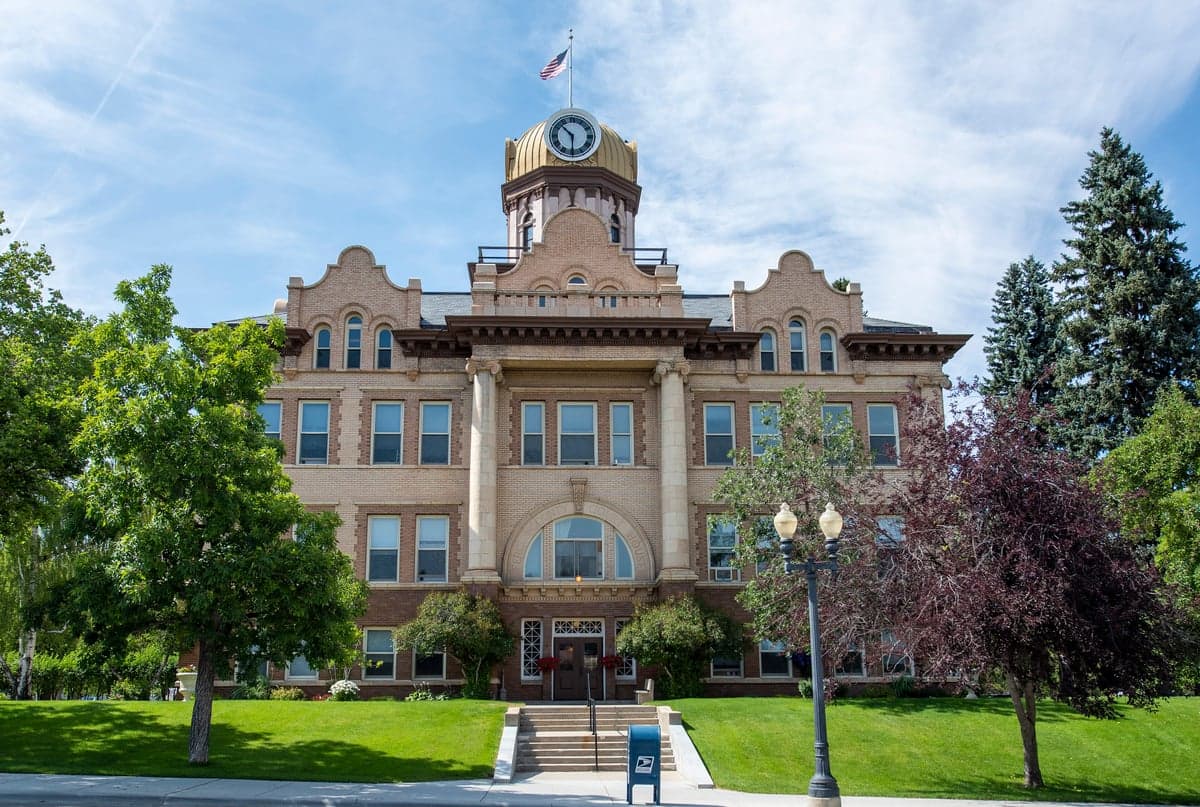
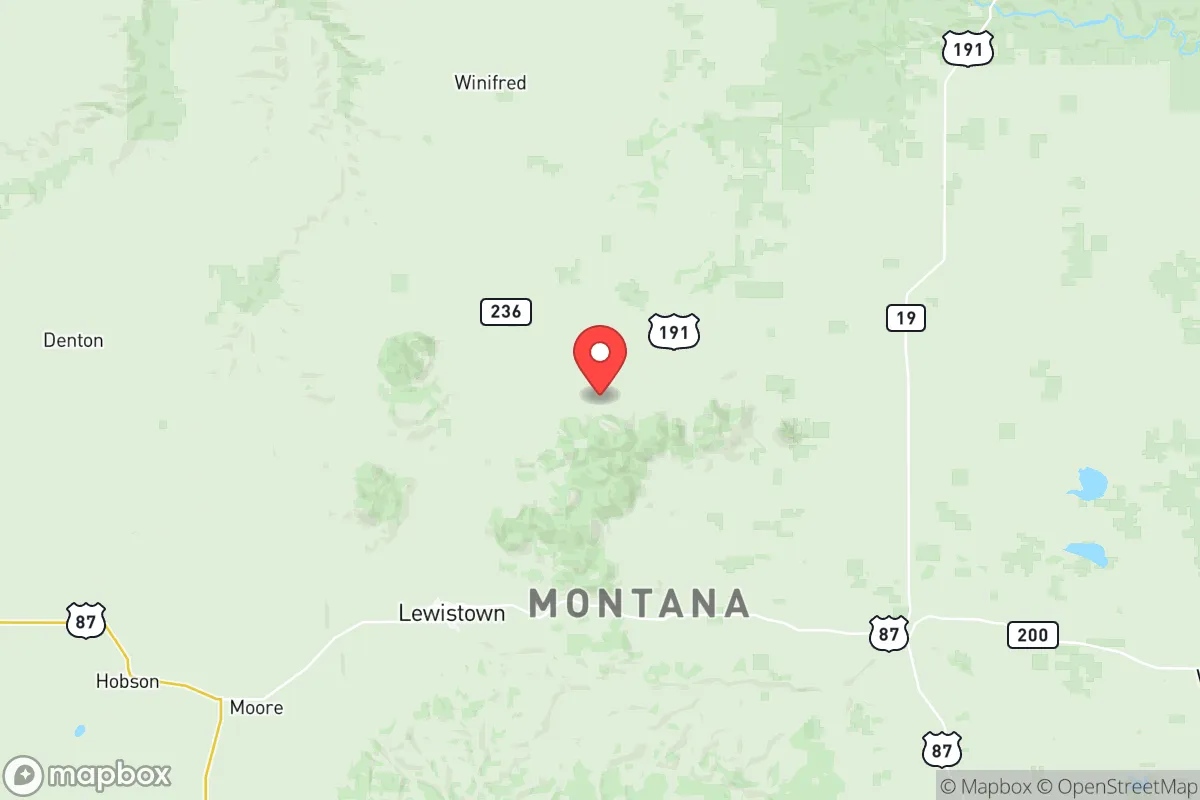
The people of Fergus County, Montana today number 11,581, making it one of the state's more sparsely populated rural counties, with a population density of just over two people per square mile. The county is overwhelmingly white (92.7%) and native-born (99.6% U.S.-born), with a small Hispanic minority (2.2%) and even smaller Black, East/Southeast Asian, and Indian-subcontinent communities each representing less than 1% of residents. The county's distinctive identity is rooted in its ranching and agricultural heritage, with Lewistown—the county seat and only incorporated city—serving as the commercial and cultural hub, while smaller towns like Denton, Grass Range, and Winifred maintain a strong sense of frontier independence and self-reliance.
Settlement & growth (pre-1960)
Before Euro-American settlement, the area now known as Fergus County was part of the traditional territory of several Plains Indian nations, most notably the Apsáalooke (Crow), who used the Judith River basin for hunting and seasonal camps, and the Niitsitapi (Blackfeet), who ranged into the northern portions. The region was also traversed by the Assiniboine and Sioux. The first non-Native presence came with the Lewis and Clark Expedition in 1805, but sustained Euro-American contact did not begin until the 1840s, when fur trappers and traders—many of French-Canadian and Métis background—established posts along the Missouri River and its tributaries, including the Judith River. The U.S. government formally acquired the area through the Louisiana Purchase (1803), but it remained largely unorganized until the creation of Montana Territory in 1864.
The first major wave of permanent settlement came in the 1880s, driven by the expansion of the Great Northern Railway and the federal government's decision to open former Native lands to homesteading under the Dawes Act and subsequent allotment policies. The town of Lewistown was founded in 1881 as a trading post and quickly became the county's anchor, named after a local fur trader, Lewis. The Homestead Act of 1862, followed by the Enlarged Homestead Act of 1909, drew thousands of settlers—primarily of Northern European stock—to the area. The dominant groups were Scots-Irish and English from the Upper Midwest and Great Plains, along with significant numbers of German and Scandinavian immigrants (Norwegians, Swedes, and Danes) who arrived directly from Europe or via earlier settlements in Minnesota and the Dakotas. These homesteaders established farms and ranches across the county, founding small communities like Denton (settled 1880s), Grass Range (1900s), and Winifred (1910s), each serving as a service center for surrounding agricultural operations.
The early 20th century brought a second wave, this time of Irish and Italian immigrants who worked on railroad construction and in the region's nascent coal mines, particularly around the town of Hilger and the mining camp of Kendall (now a ghost town). The 1910s and 1920s saw a brief oil boom in the Cat Creek area, drawing workers from Oklahoma and Texas, but the Great Depression and the Dust Bowl of the 1930s hit Fergus County hard, causing a population decline from a peak of roughly 18,000 in 1920 to about 14,000 by 1940. The post-World War II era saw modest growth as returning veterans took advantage of the GI Bill to purchase farms and ranches, but the county's population remained stable rather than booming, as younger generations increasingly left for urban centers in Billings, Great Falls, and beyond.
Modern era (post-1965)
The 1965 Hart-Cellar Act, which dramatically reshaped U.S. immigration patterns, had almost no direct impact on Fergus County. The county's foreign-born population today stands at just 0.4%, one of the lowest rates in the nation, and the overwhelming majority of residents are native-born descendants of the original homesteader waves. The most significant demographic shift since the 1960s has been domestic out-migration of younger adults to larger Montana cities and out of state, coupled with a modest influx of retirees and second-home buyers drawn by the county's low cost of living and outdoor recreation opportunities. This has led to a gradual aging of the population—the median age is now 47.5, well above the national average of 38.8.
The Hispanic population, while small at 2.2%, has grown slightly since the 1990s, primarily through the arrival of Mexican-American families working in the agricultural sector, particularly in the Lewistown area and in the Judith River valley. These families are largely dispersed rather than concentrated in a single enclave, reflecting the county's low density and the nature of ranch labor. The East/Southeast Asian community (0.4%) and Indian-subcontinent community (0.4%) are tiny and consist almost entirely of professionals—doctors, engineers, and university faculty—associated with the Central Montana Medical Center in Lewistown and the local school system. The Black population (0.6%) is similarly small and largely composed of military-affiliated families connected to the Montana Air National Guard's 120th Airlift Wing, which has a presence at Lewistown's airport.
Suburbanization has been minimal in Fergus County. The only notable development has been the growth of unincorporated subdivisions on the outskirts of Lewistown, such as the Spring Creek and Cottonwood areas, where new single-family homes have been built on former ranchland. These areas attract both retirees and younger families seeking larger lots and a rural lifestyle while remaining close to Lewistown's schools and services. The county's other towns—Denton (population ~250), Grass Range (~110), and Winifred (~150)—have seen population declines as their agricultural economies have consolidated and young people have left for larger towns.
The future
Fergus County's population is projected to remain stable or decline slightly over the next 10-20 years, as the aging of the current population is not offset by significant in-migration. The county's cultural identity is likely to remain deeply rooted in its ranching and agricultural heritage, with a strong conservative political leaning—Fergus County voted +44 points for Donald Trump in 2024, one of the most Republican margins in Montana. The small Hispanic and other minority populations are expected to grow slowly, if at all, as the county's economy—dominated by agriculture, healthcare, and education—does not offer the kind of job growth that attracts large numbers of new immigrants.
The most likely demographic change is a continued influx of remote workers and retirees from more expensive states, particularly California, Washington, and Colorado, who are drawn by the county's low housing costs and open spaces. This trend, already visible in Lewistown's real estate market, could modestly increase the county's population and bring a slightly more diverse set of political and cultural views, but it is unlikely to fundamentally alter the county's character. The county's school enrollment has been declining for decades, and several small-town schools have consolidated, a trend that is expected to continue.
For someone moving in now, Fergus County offers a stable, low-density, and culturally homogeneous environment where the pace of life is slow, community ties are strong, and the dominant values are self-reliance, neighborliness, and a deep connection to the land. It is not a place of rapid change or demographic transformation, but rather a place where the past—the homesteaders, the ranchers, the small-town merchants—remains very much alive in the present. The county's future, like its past, will be shaped by the rhythms of agriculture, the seasons, and the quiet determination of its people to maintain their way of life.

* Values derived from national, state, county, city and local statistics and may differ in a specific area. Last updated: 2026-10-25T23:19:56.000Z
Narrative content on this page is AI-generated and may contain mistakes. Verify any details that matter before acting on them.
ReloMaps may earn a commission from affiliate links at no extra cost to you.

