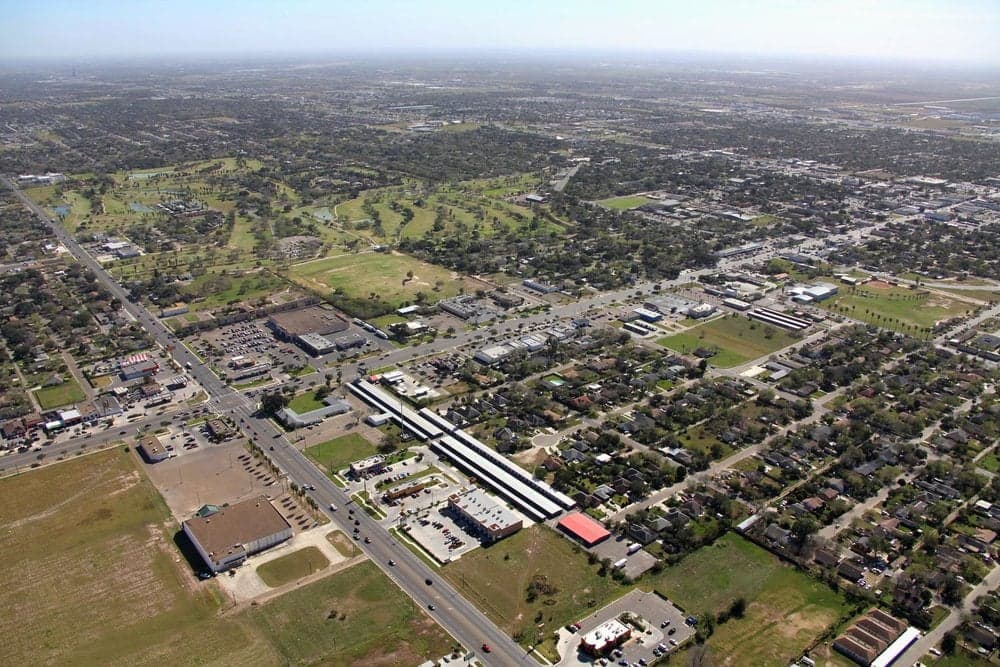
Photo: Wikipedia
Political ClimatePolitical Climate in Mission, TX
District shown is the primary district for this city’s centroid. Cities may span multiple districts.
* Lean and PVI are calculated from Mission, TX’s own 2020 presidential results (precinct returns summed to the city), with 2024 estimated from the surrounding county’s 2020–2024 shift, Cook-style. Sources: state election offices; VEST 2020 precinct results (CC BY 4.0).
Political rankings in Texas
- Most Conservative Cities in Texas
- Most Liberal Cities in Texas
- Best Liberal-Leaning Towns in the South
- Safest Liberal-Leaning Towns in the South
- Safest Conservative-Leaning Towns in the South
- Affordable Small Towns for Conservatives
- Most Affordable Liberal-Leaning Small Towns in the U.S.
- Safest Conservative-Leaning Cities in the U.S.
- Most Conservative Counties in Texas
- Most Liberal Counties in Texas
Local Political AnalysisPolitical Analysis of Mission, TX
Mission, Texas, sits in a political landscape that’s been shifting underfoot for the past decade. The area’s Cook Partisan Voting Index (PVI) of R+2 means it leans slightly Republican, but that’s a relatively recent development—historically, Hidalgo County was a Democratic stronghold, and you can still feel that old loyalty in local races and community events. The real story here is the trajectory: as the Rio Grande Valley has grown and attracted more retirees and suburbanites, the Republican edge has crept in, but it’s not a deep red wave. Mission itself feels more like a purple patch, where a candidate’s personal touch and local ties often matter more than their party label.
How it compares
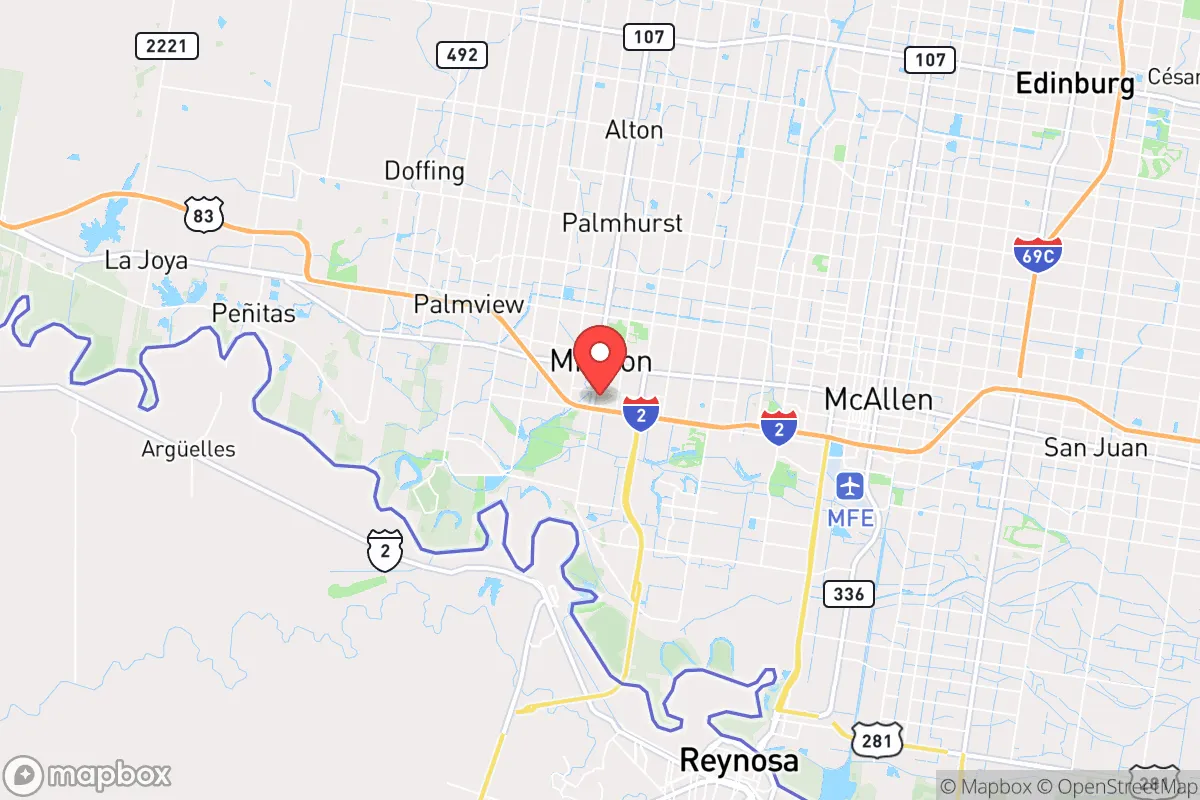
Compared to the rest of Texas, Mission is a moderate outlier. The state as a whole has a Cook PVI that’s unknown in your data, but anyone who’s lived here knows Texas leans solidly Republican—think R+10 or more in most statewide races. Mission’s R+2 is a far cry from that. Drive 20 miles north to Edinburg or McAllen, and you’ll find a similar mix, but head west to Starr County or east to Cameron County, and the Democratic roots run deeper. The contrast is sharpest with places like San Antonio or Dallas, where the politics are more polarized; here, you’ll see a lot of ticket-splitting. For instance, in 2020, Hidalgo County went for Biden by about 8 points, while statewide Texas went for Trump by nearly 6. That gap tells you Mission isn’t following the state’s script—it’s writing its own, more cautious one.
What this means for residents
For conservative residents, the R+2 lean means you’re not in a deep-red bubble, but you’re also not fighting an uphill battle. Local GOP candidates often win by narrow margins, so your vote carries real weight—especially in city council or school board races, where turnout is low. You’ll find a few solid Republican clubs and churches that host voter drives, but don’t expect the same intensity as in, say, Tarrant County. For liberal residents, the picture is more nuanced. You’re in a county that still leans Democratic in presidential years, but local offices are often held by more moderate Democrats or even Republicans. That can feel frustrating if you’re pushing for progressive policies, but it also means you’re not isolated—there’s a strong network of community organizers and advocacy groups, especially around immigration and labor rights, that keep the conversation alive. The practical upshot: both sides have to work for it, and that keeps the political temperature lower than in many other parts of Texas.
Culturally, Mission’s politics are shaped by its border location and deep Catholic roots. You’ll see a lot of emphasis on family values and local business, but also a pragmatic approach to immigration—most people here know someone who crossed the border, so the national rhetoric often feels abstract. Policy-wise, the city tends to focus on infrastructure and economic development rather than hot-button social issues. The school board, for example, has been more concerned with bilingual education and vocational training than with book bans. Looking ahead, the trajectory seems to be a slow drift rightward as the population ages and new subdivisions go up, but the Valley’s strong sense of community and history will likely keep Mission from ever becoming a deep-red outpost. It’s a place where you can still have a civil conversation about politics over a plate of tacos, and that’s rarer than you might think.

State Political ClimatePolitical Climate in Texas
State Political AnalysisPolitical Environment in the State
Texas has been a reliably Republican state for the past three decades, with no Democrat winning statewide office since 1994. The GOP holds every statewide elected position and both chambers of the Legislature, but the margin has been shrinking: Donald Trump won the state by 9 points in 2016, 5.5 points in 2020, and about 5.5 points again in 2024. The dominant coalition is a mix of rural conservatives, suburban moderates, and evangelical voters, but explosive growth in the urban crescent—from Dallas-Fort Worth down through Houston and San Antonio to Austin—is slowly shifting the ground beneath the state’s politics.
Urban vs. rural divide
The political map of Texas is a study in contrasts. The state’s five biggest metros—Houston, Dallas-Fort Worth, San Antonio, Austin, and El Paso—are increasingly Democratic-leaning, especially in their urban cores. Austin and El Paso are solid blue, with Travis County giving Biden 71% in 2020 and El Paso County giving him 65%. Harris County (Houston) and Dallas County have trended blue for a decade, though they still have competitive pockets. The real story is the suburbs: Collin County (north of Dallas) voted for Trump by 15 points in 2016 but only 7 points in 2024, while Tarrant County (Fort Worth) flipped to Biden in 2020 and stayed competitive in 2024. Meanwhile, rural and exurban counties like East Texas’s Smith County (Tyler) and the Panhandle’s Lubbock County routinely vote 70-80% Republican. The divide isn’t just urban vs. rural—it’s also about growth: fast-growing suburbs like Frisco, McKinney, and Kyle are becoming political battlegrounds, while shrinking rural counties are doubling down on conservative identity.
Policy environment
Texas operates under a low-tax, low-service model. There is no state income tax, and the state relies heavily on property taxes and sales taxes (state rate 6.25%, local add-ons can push it over 8%). The regulatory posture is business-friendly: no state-level minimum wage above the federal $7.25, no state-level paid leave mandate, and a right-to-work law that limits union power. Education policy is dominated by school choice debates: the 2023 legislative session saw a major push for education savings accounts (ESAs), which passed the Senate but stalled in the House. Healthcare is a perennial flashpoint: Texas has the highest uninsured rate in the nation (about 18%), and the state has refused to expand Medicaid under the Affordable Care Act. Election laws have tightened: the 2021 Senate Bill 1 restricted mail-in voting, added ID requirements, and banned 24-hour and drive-through voting. The state’s abortion ban (trigger law from 2021, effective 2022) prohibits the procedure from fertilization, with narrow exceptions for medical emergencies.
Recent policy direction
The last few legislative sessions have pushed Texas sharply to the right on several fronts. On gun rights, the 2021 permitless carry law (HB 1927) allows most adults to carry a handgun without a license or training. On parental rights and education, the 2023 HB 900 (the “READER” act) requires book vendors to rate materials for “sexually explicit” content, and the 2021 “critical race theory” law (HB 3979) restricts how teachers can discuss race and current events. On speech and privacy, the 2023 HB 20 (the “age verification” law) requires pornographic sites to verify users’ ages, and the 2021 “social media censorship” law (HB 20) prohibits large platforms from moderating content based on viewpoint. Medical and bodily autonomy is heavily restricted: the abortion ban has no exceptions for rape or incest, and the 2023 SB 14 bans gender-affirming care for minors. Property rights are generally strong, though the 2023 SB 2038 limits local governments’ ability to regulate short-term rentals. On voting, the 2021 SB 1 remains the baseline, and the 2023 HB 1240 (the “election integrity” bill) created a new election audit unit. The overall direction is toward more state preemption of local control, especially on issues like abortion, immigration, and education.
Civil unrest & political movements
Texas has seen significant protest activity on both sides. The 2020 Black Lives Matter protests in Austin, Houston, and Dallas were among the largest in the country, with some turning violent in Austin. The 2022 abortion ban protests drew thousands to the state capitol. On the right, the “Constitutional Carry” movement successfully pushed permitless carry through the legislature, and the “Save Our Schools” movement mobilized against school choice and library book restrictions. Immigration politics are a constant flashpoint: Governor Abbott’s Operation Lone Star has deployed state troopers and National Guard to the border, bused migrants to Democratic-led cities, and installed razor wire along the Rio Grande. Sanctuary city policies are banned statewide (SB 4, 2017), and the 2023 SB 3 allows state police to arrest people suspected of illegal entry. Secession rhetoric flares up periodically—the Texas Nationalist Movement has some grassroots support—but it remains fringe. Election integrity controversies have been persistent: the 2020 election saw Trump’s legal challenges fail in court, but the 2021 SB 1 was passed in response to those claims. A new resident would notice the heavy police presence in border towns like El Paso and McAllen, and the constant political ads in competitive suburbs.
Projection
Over the next 5-10 years, Texas is likely to become more competitive at the statewide level, but not necessarily blue. The key demographic driver is in-migration: about 1,000 people move to Texas every day, many from California and other blue states. These newcomers tend to be younger, more diverse, and more moderate than the existing population. The suburbs of Dallas, Houston, and San Antonio are the battlegrounds—places like Fort Bend County (already purple) and Williamson County (north of Austin, trending purple) will decide the state’s future. However, the state’s political map is gerrymandered at the congressional and legislative levels, so even if the statewide vote tightens, the GOP is likely to hold the legislature through 2030. The biggest wildcard is the Hispanic vote: Texas’s Latino population is growing fast, but it’s not monolithic—many Hispanic voters in the Rio Grande Valley (like Hidalgo County) shifted toward Trump in 2020 and 2024. A new resident moving in now should expect a state that remains Republican-controlled but with increasingly competitive elections, especially in the suburbs. The policy direction will likely continue to be conservative on social issues and business-friendly on economics, but with more internal GOP fights over school choice, property tax reform, and how hard to push on immigration enforcement.
For a new resident, the bottom line is that Texas offers a low-tax, low-regulation environment with strong property rights and a conservative social framework. If you’re a conservative, you’ll find a state government that largely aligns with your values, especially on guns, abortion, and education. If you’re a liberal, you’ll find blue enclaves in Austin, Houston, Dallas, and El Paso where your views are the local majority, but you’ll have limited influence on state policy. The practical takeaway: choose your city carefully. The political reality of living in Lubbock is very different from living in Austin, even though both are in the same state. The state’s trajectory is toward more competition, but not toward a quick flip—so expect the current policy environment to persist for at least another decade.
* Values derived from national, state, county, city and local statistics and may differ in a specific area. Last updated: 2026-11-11T17:26:40.000Z
Narrative content on this page is AI-generated and may contain mistakes. Verify any details that matter before acting on them.
ReloMaps may earn a commission from affiliate links at no extra cost to you.

